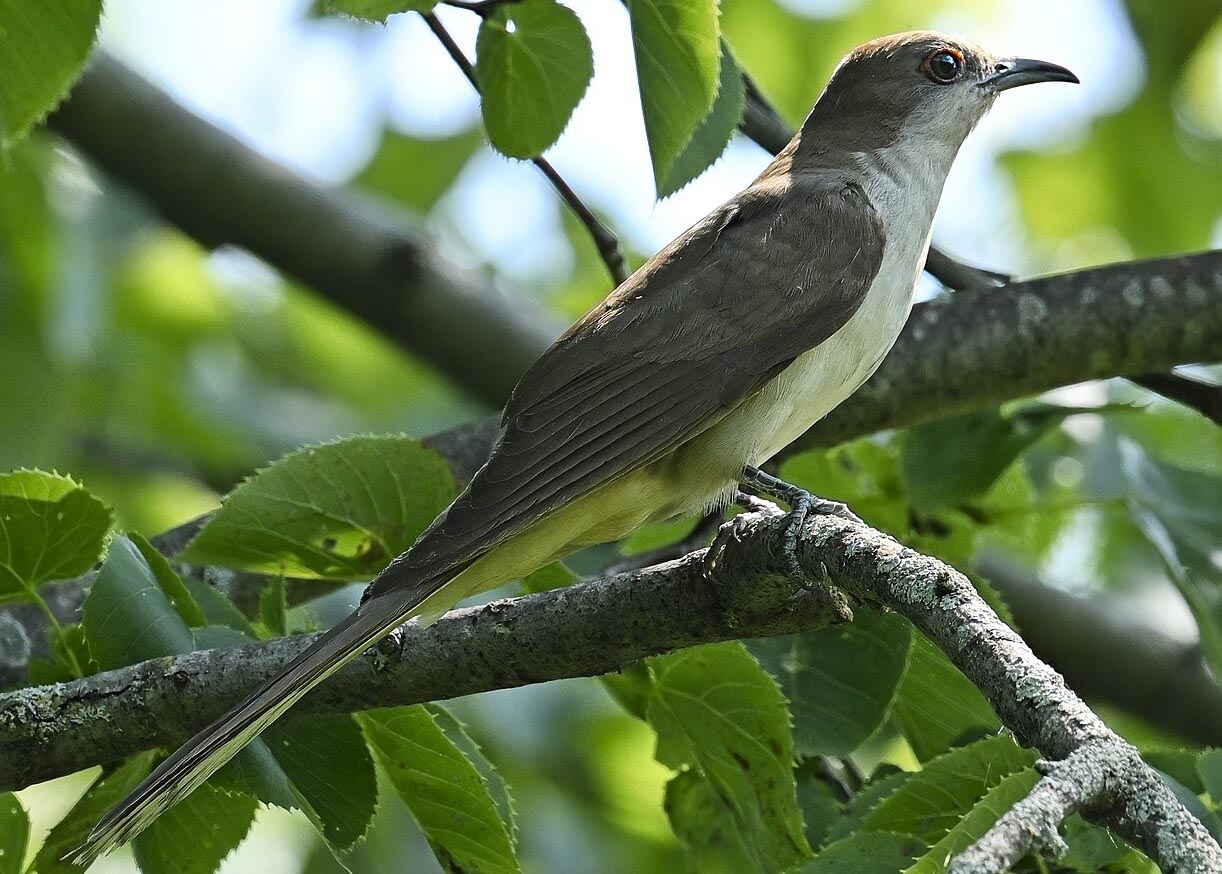
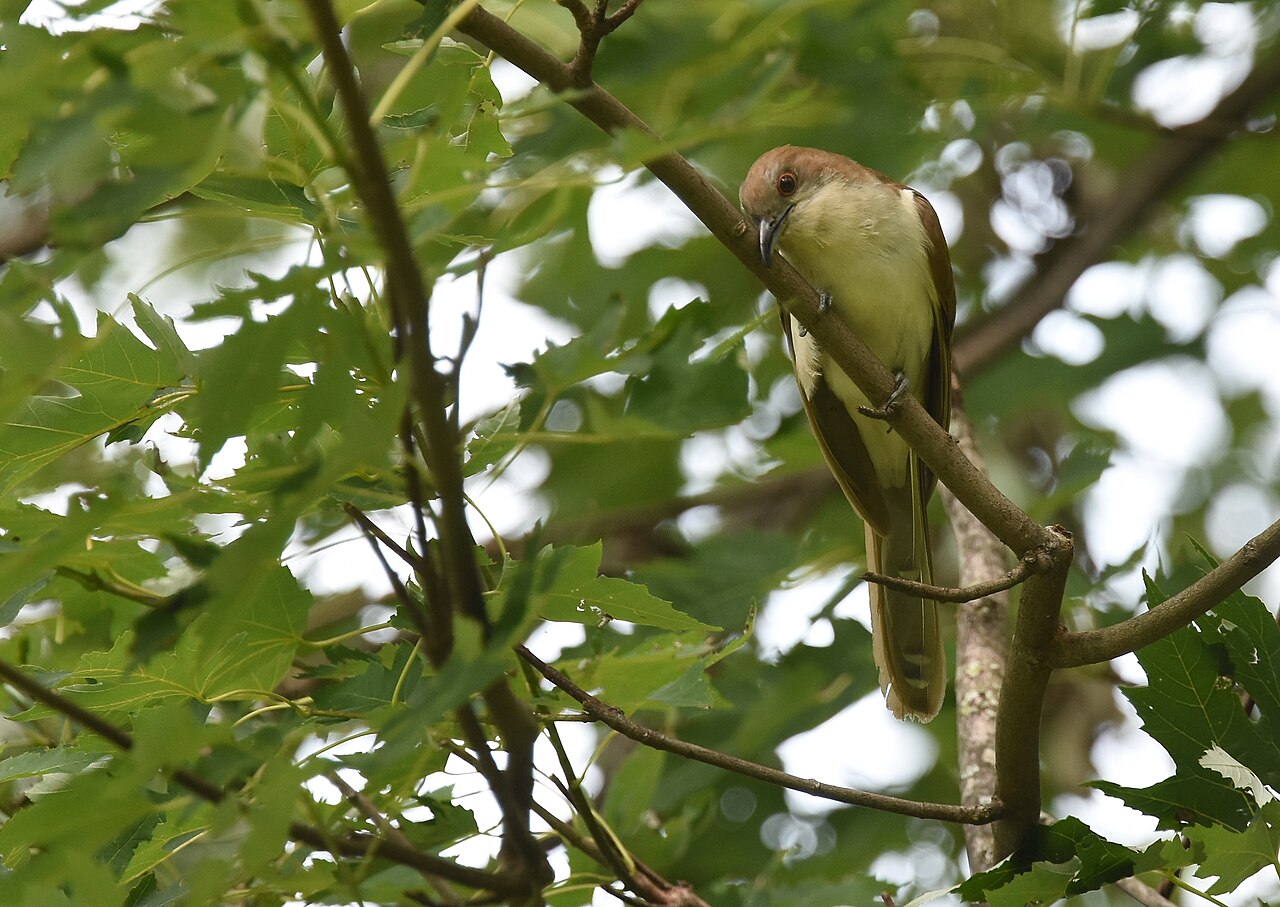
The black-billed cuckoo is a slender bird, 11-12.2 inches (27.9-31 cm) in length, with a wingspan of 13.4-15.8 inches (34-40.1 cm).
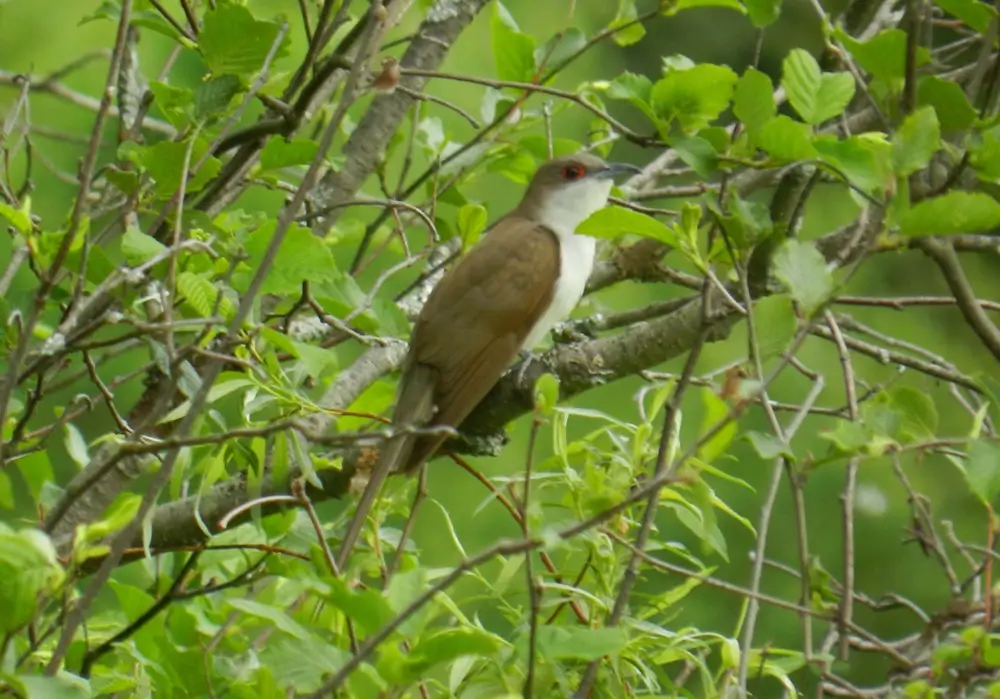
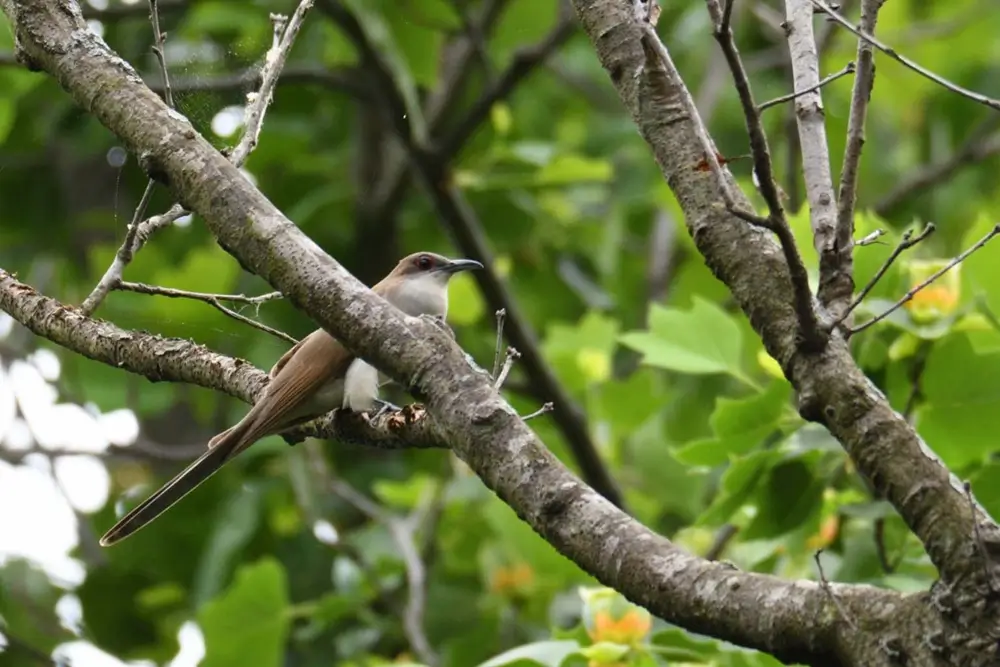
It has a long white-tipped tail with gray undersides. It has a down-curved black bill and a ring of red skin around its eyes.
It is a soft brown on its head, back, and wings. It has a light, sandy-brown throat and a white breast and belly. Males and females look alike.
The black-billed cuckoo is found in thickets*, orchards, groves of trees, marshes, and forest edges.
*A thicket is a dense group of bushes, shrubs, or small trees that grow very close together.
Caterpillars make up a large part of the black-billed cuckoo’s diet. It also eats other large insects, bird eggs, berries, fruits, and seeds.
The black-billed female lays 2-4 eggs in a messily arranged cup of twigs and grasses that is placed low in a tree or bush.
Both parents incubate the eggs for 10 to 13 days. The chicks fledge (develop flight feathers) when they are 7 to 9 days old.
The black-billed cuckoo is often heard but not seen. It stays hidden in dense vegetation.
Its call is a “coo-coo-coo-coo” sound, usually repeated a few times.
Support for NatureWorks is provided by:
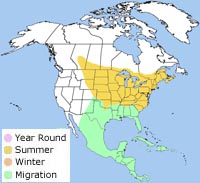
The black-billed cuckoo breeds across New Hampshire.
The black-billed cuckoo breeds from Alberta, Canada, east to Nova Scotia, Canada, and south through the United States.
It winters in South America.