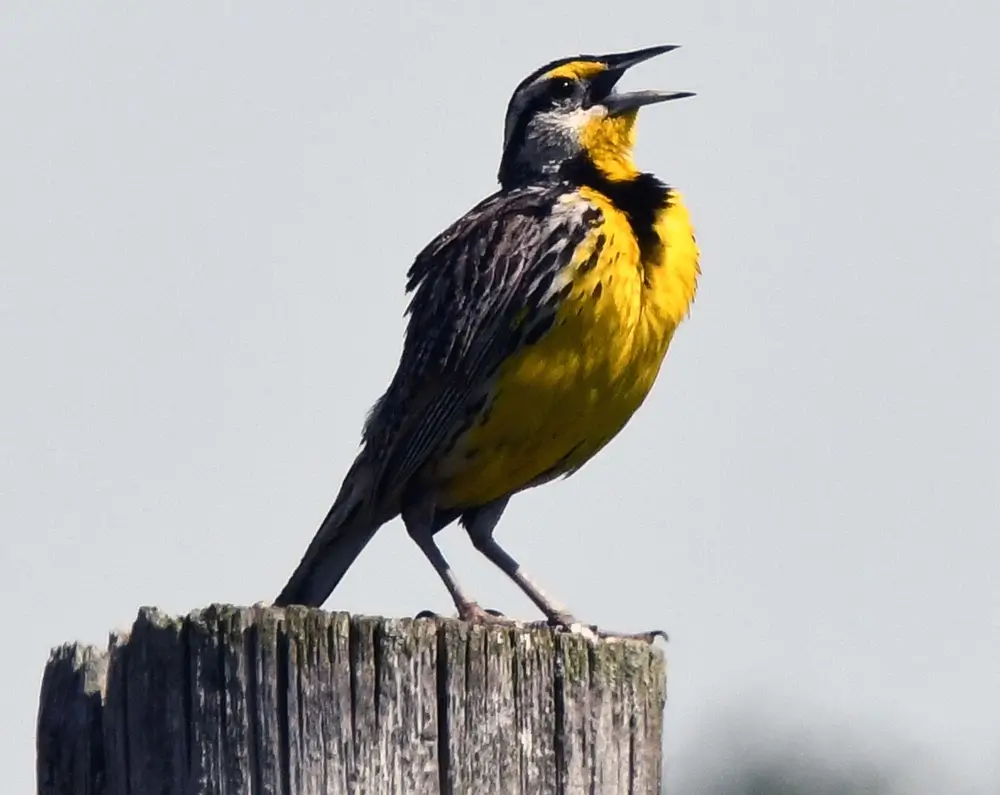
The eastern meadowlark is 7.5 to 10.2 inches (19.1-25.9 cm) in length and has a wingspan of 13.8-15.8 inches (35-40.1 cm).
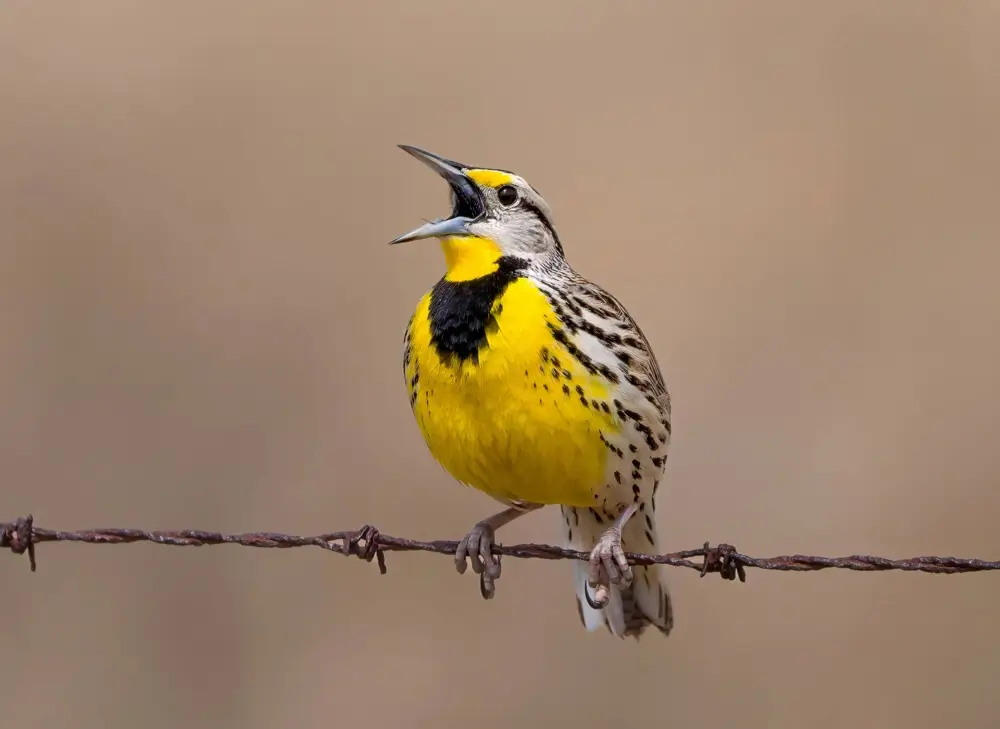
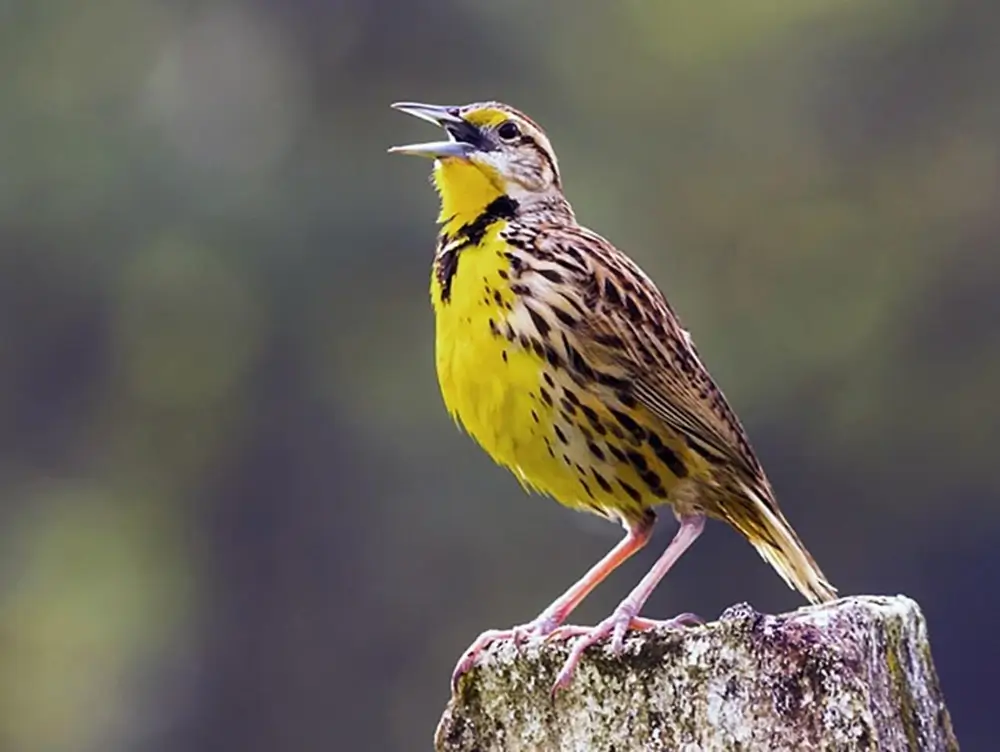
It has a yellow belly and a black “V” shaped band on its chest. It has a brown back with black streaks and a spear-shaped black bill.
The eastern meadowlark needs a large grassy habitat for nest building, and the species has been impacted by the loss of undisturbed meadows and grasslands.
The eastern meadowlark is found in open spaces like farm fields, grasslands, and wet fields. It prefers large areas of land but will live in grassy areas of at least six acres in which to establish a territory.
The eastern meadowlark builds its nest on the ground and sings on perches such as treetops, fence posts, and power lines.
The eastern meadowlark walks on the ground looking for food to grab with its sharp, pointed bill. It eats insects such as crickets, grasshoppers, caterpillars, and grubs.
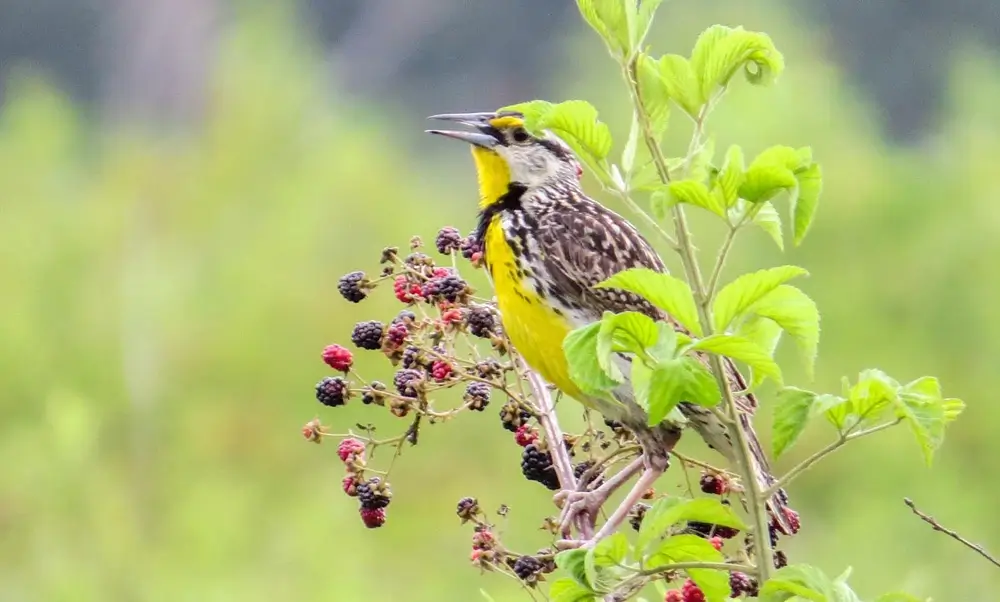
In the winter, it also eats seeds and wild fruit.
The female builds the nest on the ground using dead grasses, plants, and bark. It takes her about a week to complete the nest, which may include a roof and tunnels. When she is done, she lays 2-7 white, speckled eggs.
The chicks have closed eyes and just a few feathers when they hatch. They will begin to leave the nest after 10-12 days.
The eastern meadowlark has a lifespan of around 5 years in the wild.
The eastern meadowlark male can sing many versions of its song. In New York, a male was observed singing over 100 different song patterns.
The eastern meadowlark is very similar to the western meadowlark. The western meadowlark’s yellow color extends a little further onto its cheek. The songs of the two meadowlarks are the easiest way to tell them apart.
The song of the western meadowlark is a series of flute-like gurgling notes that go down the scale. The eastern meadowlark’s call is a simpler series of whistles.

The eastern meadowlark is found in meadows and grasslands across New Hampshire, but it is threatened by loss of habitat due to development and the conversion of hayfields to row crops.
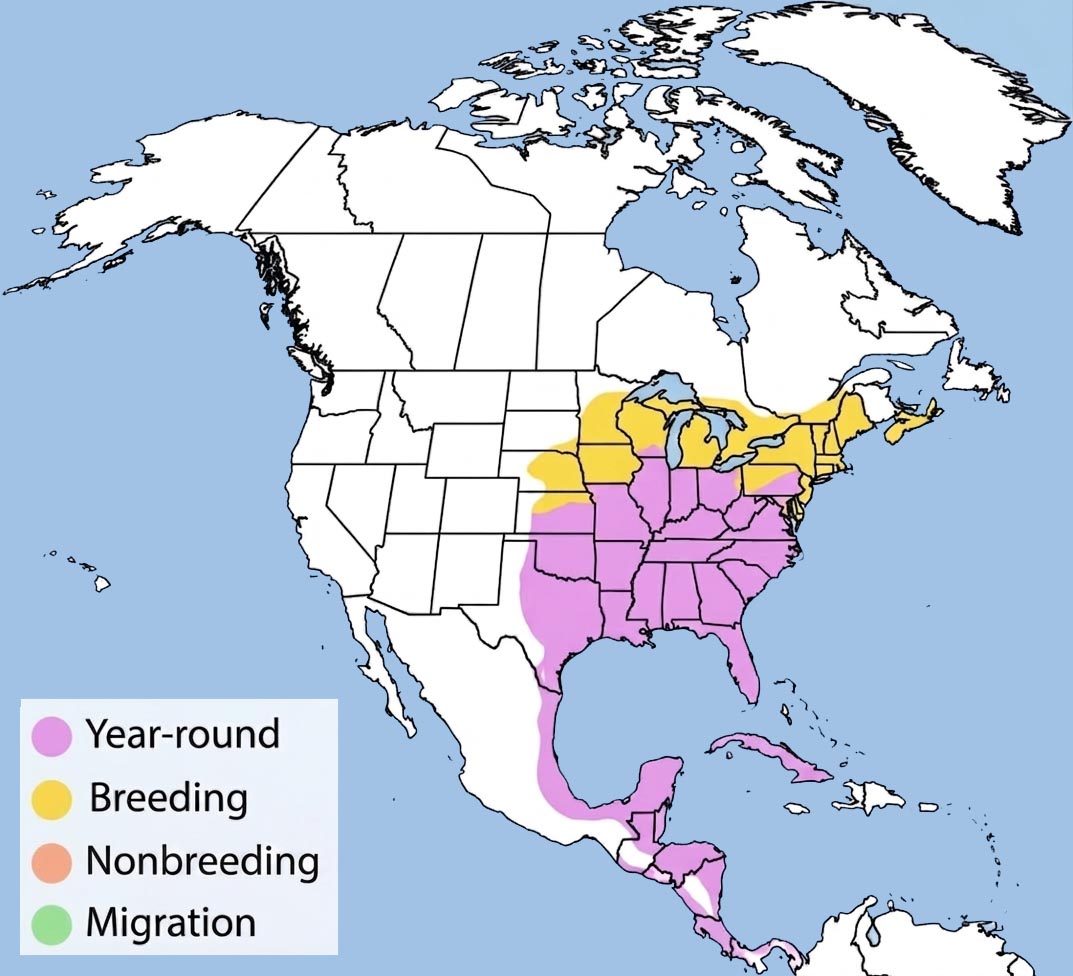
The eastern meadowlark is found in much of the eastern United States year-round.
It also breeds in the northeastern United States and southeastern Canada.
The eastern meadowlark is also found in Mexico, Central America, the Caribbean, and the northern tip of South America.
NHPBS inspires one million Granite Staters each month with engaging and trusted local and national programs on-air, online, in classrooms and in communities.