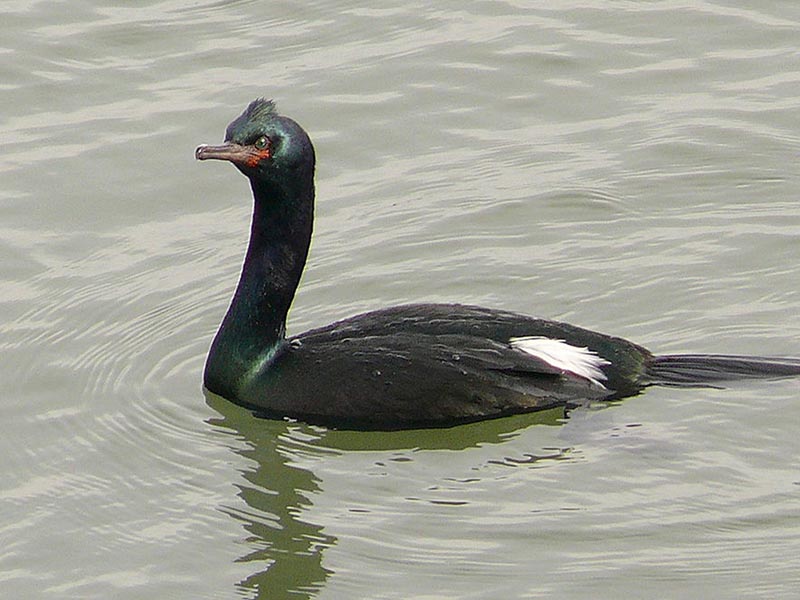
The pelagic cormorant is smaller than other cormorants. It is about 25-30 inches in length and has glossy black feathers and a dark, curved bill and a long, slender neck. It holds its neck straight out when in flight. Breeding adults have a red face patch and a white patch on their flanks. Males and females look alike, although the male is slightly larger.
Habitat
The pelagic cormorant lives in both offshore and inshore waters. It nests on sea cliffs and rocky islands.
Diet
The pelagic cormorant eats fish and crustaceans. It can dive to depths of over 100 feet to catch its prey.
Life Cycle
The female lays three to seven eggs in a nest of seaweed, feathers and other debris. Nests can be quite large, often five or six feet high, and they are used year after year.
Behavior
The pelagic cormorant can spring straight up out of the water and into the air. It often perches with its wings spread to dry them.
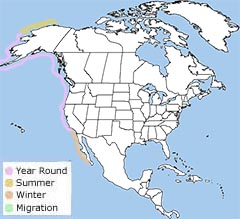
The pelagic cormorant breeds from the Bering Sea south to northern Baja California. It winters south from southern Alaska. It is also found in northeastern Asia.