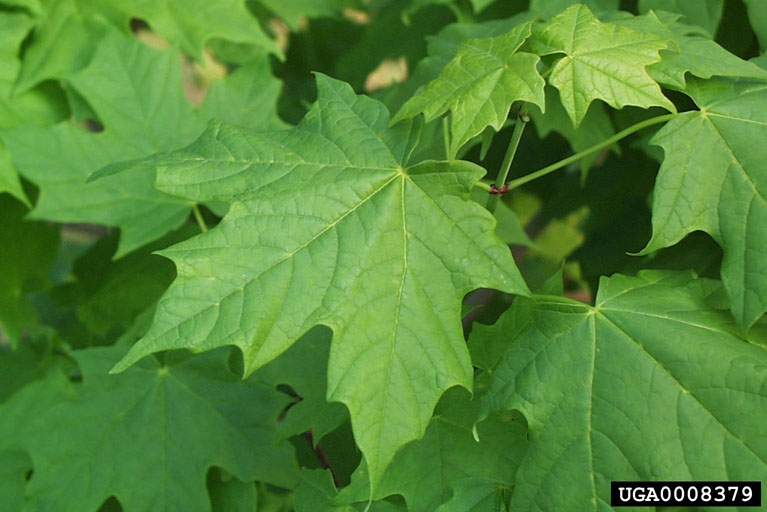
Leaves in this family are usually toothed or lobed. (Sugar Maple)
There are about 200 species of trees and shrubs in this family. Leaves in this family are usually toothed or lobed. Some plants in this family have a sweet sap that is used to make sugar and syrup.
The flowers are usually only one sex and the fruit is a winged samara.. Plants in this family include the sugar maple, box elder, vine maple, Siebold maple, big-toothed maple, paperbark maple, Norway maple, silver maple, striped maple and the red maple.
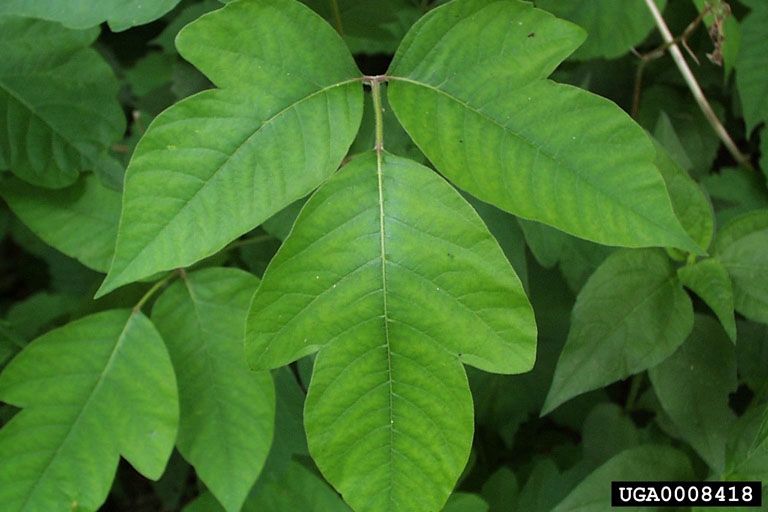
Plants in this family include poison ivy. (Eastern Poison Ivy)
There are about 650 species in this family. Plants include the sumac, mango, cashew and pistachio as well as poison oak, poison sumac and poison ivy.
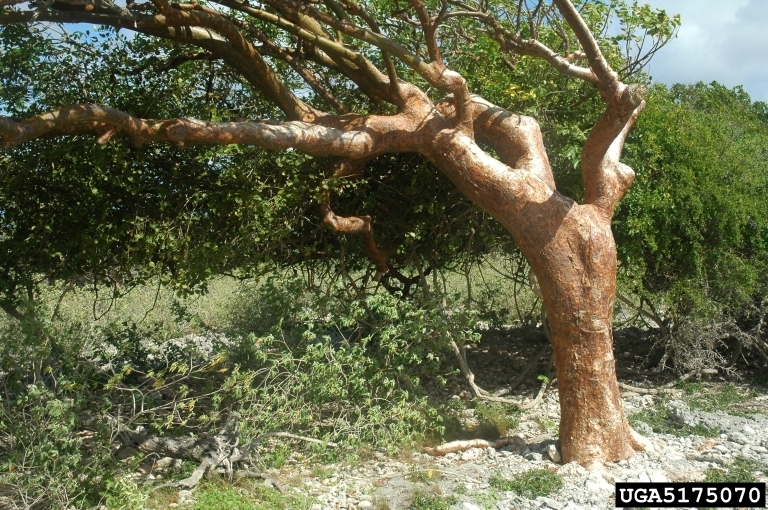
The gumbo-limbo tree is found in southern Florida and the Caribbean as well as from Mexico to South America.(Gumbo Limbo)
This family of trees and shrubs are found tropical regions of Africa, Asia and North, Central, and South America. Plants in this family, like frankincense and myrrh, are known for their fragrant bark. The gumbo-limbo tree is found in southern Florida and the Caribbean as well as from Mexico to South America. Some people call it the tourist tree because it has peeling red bark that looks like a peeling sunburn.
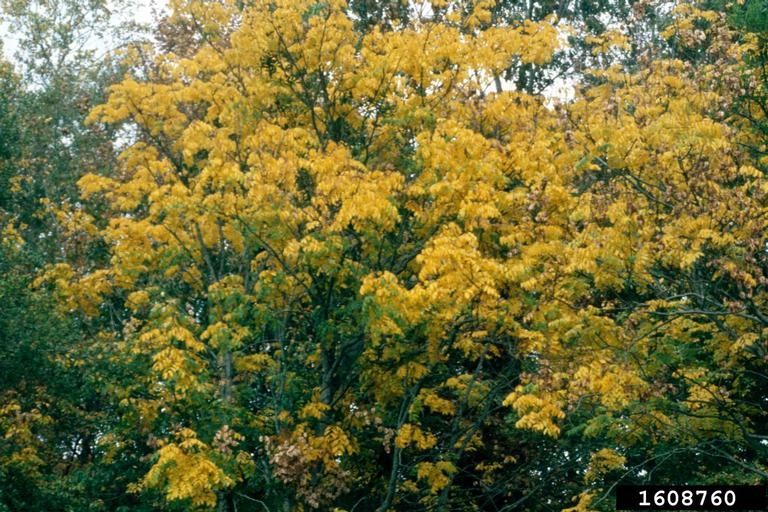
There are over 1,500 species of trees, vines and shrubs in this family. (Golden Rain Tree)
There are over 1,500 species of trees, vines and shrubs in this family. Flowers have four to five petals. Most plants in this family grow in tropical and subtropical regions.
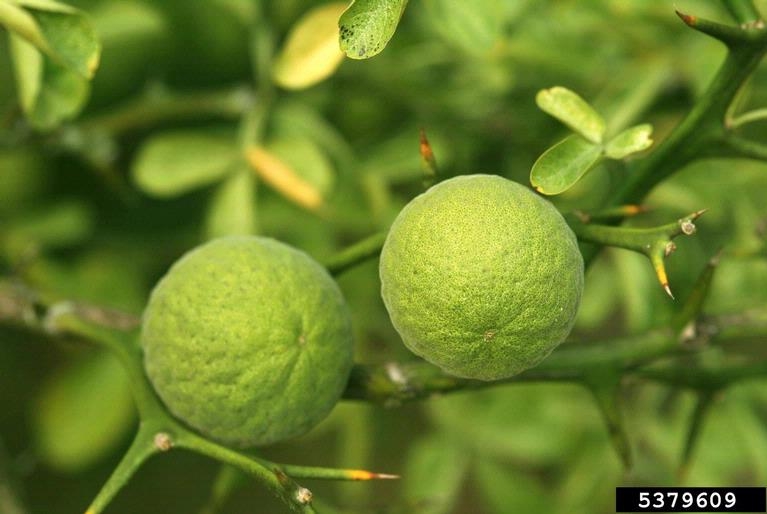
The fruits of the trees in the citrus family are really just large berries! (Trifoliate Orange)
There are over 1,500 species of trees, herbs and shrubs in the citrus family. Plants in this species are usually found in temperate and tropical regions. Flowers have four to five petals and have both stamens and pistils in the same flower. The fruits of the trees in the citrus family are really just large berries! Plants include lemon trees, orange trees, grapefruit trees. tangerine trees, kumquat, orange jessamine, burning bush and Japanese skimmia.
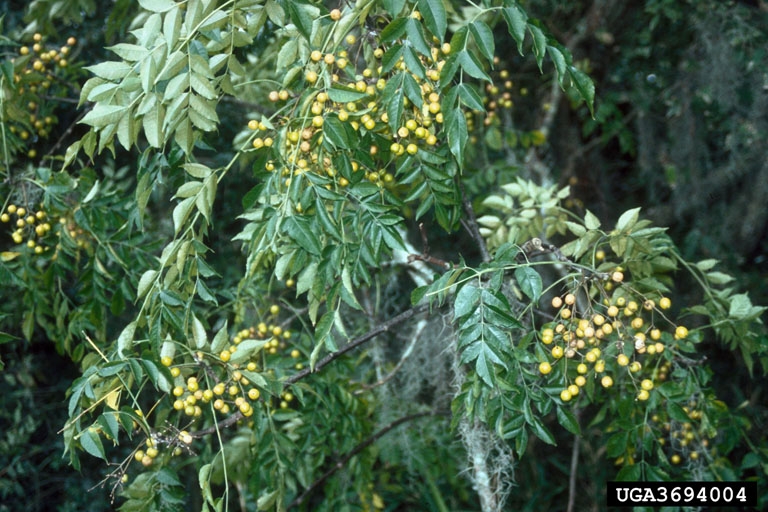
The mahognay family is best known for its beautiful wood, which is used in furniture. (China Berry Tree)
This family is best known for its beautiful wood, which is used in furniture. There are about 575 species. Plants include the mahogany tree, the Chinaberry tree and the Melia egyptica tree.
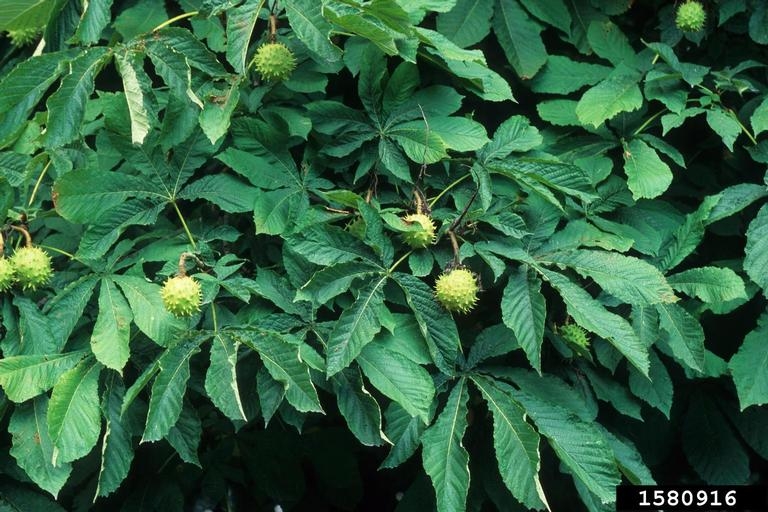
Trees in this family are called buckeyes in North America. In Eurasia they are called horse-chesnuts.(Common Horse Chestnut)
This family includes buckeyes and horse-chestnuts. There are about 25 species in this family. They are all deciduous trees and shrubs that grow in the Northern Hemisphere. Trees in this family are called usually called buckeyes in North America. In Eurasia they are called horse-chesnuts. The name buckeye was given to the trees because their seeds look like the eyes of a male deer or buck. Ohio is known as the Buckeye State because of the buckeye trees that were once common there.