

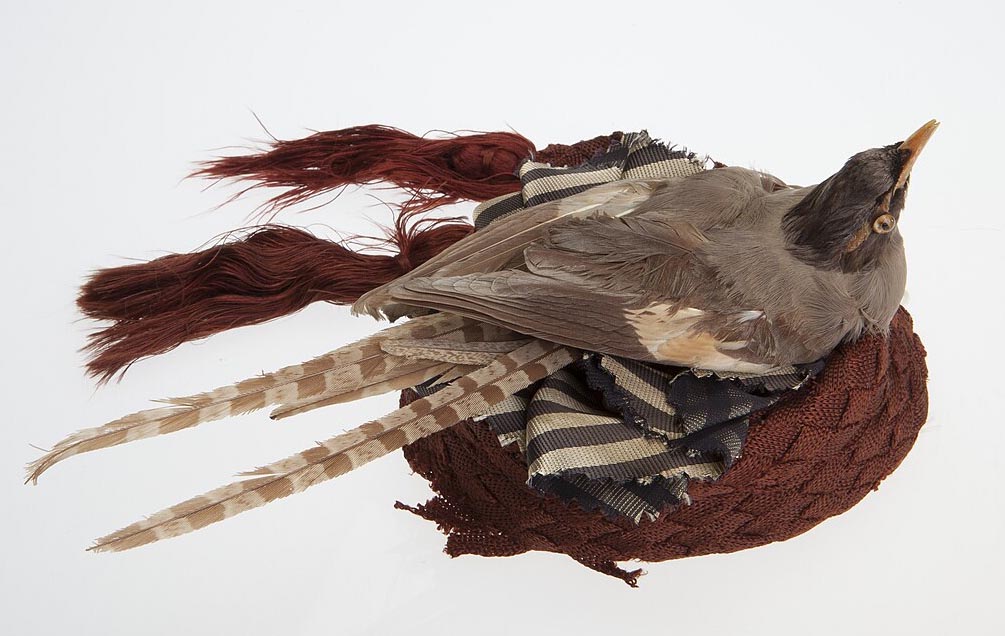
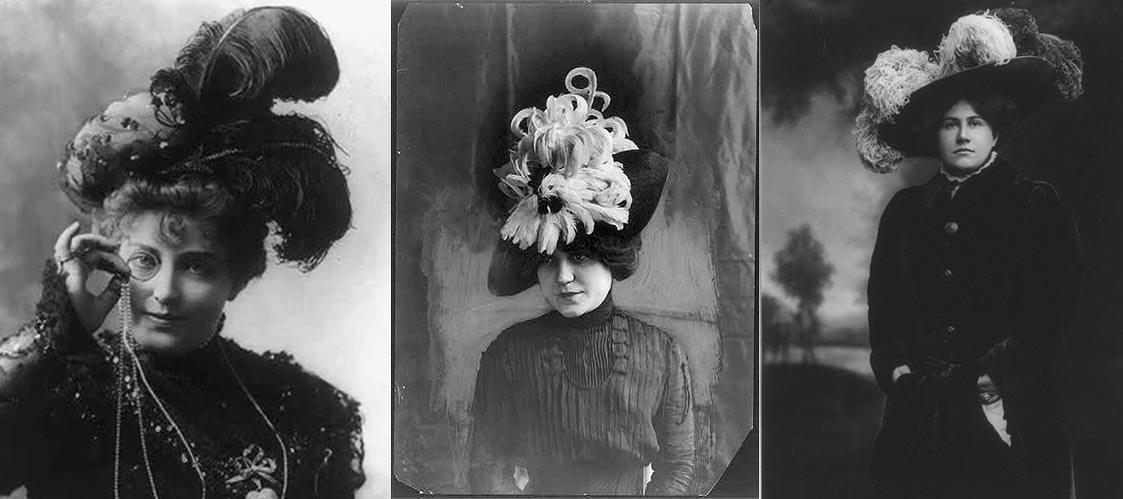
Feathers on hats were all the rage.
In the late 1800s and early 1900s, millions of North American birds were killed for their feathers. These feathers were often used to decorate women’s hats and clothing, and fashionable feathered hats became very popular during this time.
Hunters shot large numbers of birds and removed their feathers, sometimes leaving helpless chicks alone in nests without parents to feed or protect them.
Bird colonies along the Atlantic Coast were especially hard hit because many species nested together in large groups, making them easy targets for hunters.
Populations of terns, herons, and egrets dropped sharply, and in some places, entire nesting colonies disappeared.
Scientists, bird lovers, and conservationists became alarmed by the destruction and warned that some species could disappear forever if hunting continued.
The widespread killing of birds shocked many Americans and helped inspire some of the first wildlife protection laws in the United States.
Conservation groups worked to stop the feather trade, protect nesting areas, and educate people about the importance of birds in nature.
These efforts eventually helped save many bird species from being pushed toward extinction.
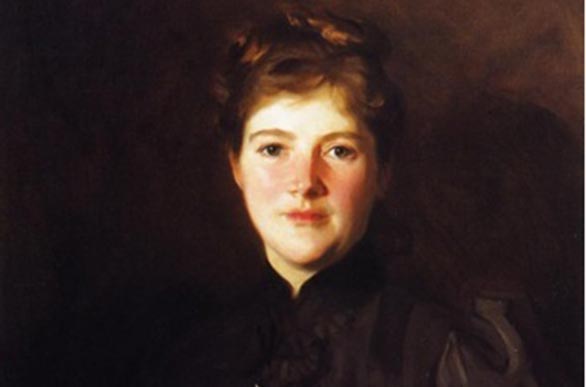
Harrtiet Lawrence Hemenway
In 1896, wealthy Boston socialite Harriet Lawrence Hemenway (1858–1960) read an article about the killing of birds for their feathers. Shocked by what she learned, she decided to take action.
Hemenway and her cousin, Minna B. Hall, organized a series of ladies’ teas and encouraged women to stop wearing hats decorated with bird feathers. Soon, about 900 Boston women joined their boycott.
At the time, women could not vote and had little political power. Hemenway realized she would need wider support, so she worked with scientists and other influential men to create the Massachusetts Audubon Society, the oldest Audubon Society in the United States.
In 1897, the group helped convince Massachusetts lawmakers to ban the wild bird feather trade. Similar Audubon Societies soon formed across the country, many started by women.
These organizations helped change people’s attitudes about killing birds for fashion and played an important role in protecting bird populations.
Harriet Lawrence Hemenway showed that one person’s actions can inspire major change.
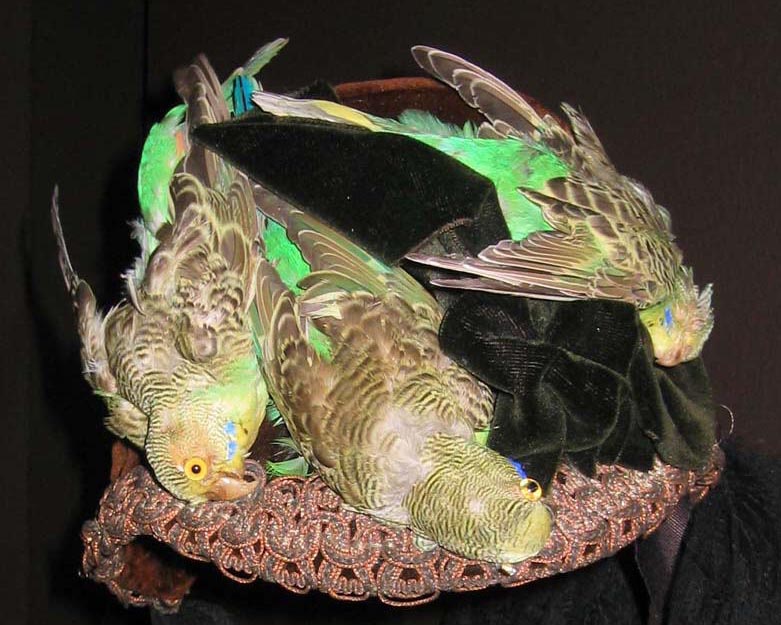
1890 bonnet decorated with parakeets.
On two days in 1886, ornithologist Frank Chapman walked the streets of New York City and recorded the types of birds he saw on ladies’ hats.
On his walks, he counted the wings, feathers, heads, and entire bodies of 174 birds representing 40 different species decorating the hats of ladies, including 21 hats decorated with parts of the common tern.
Frank Chapman went on to start the annual Christmas Bird Count in 1890.
