

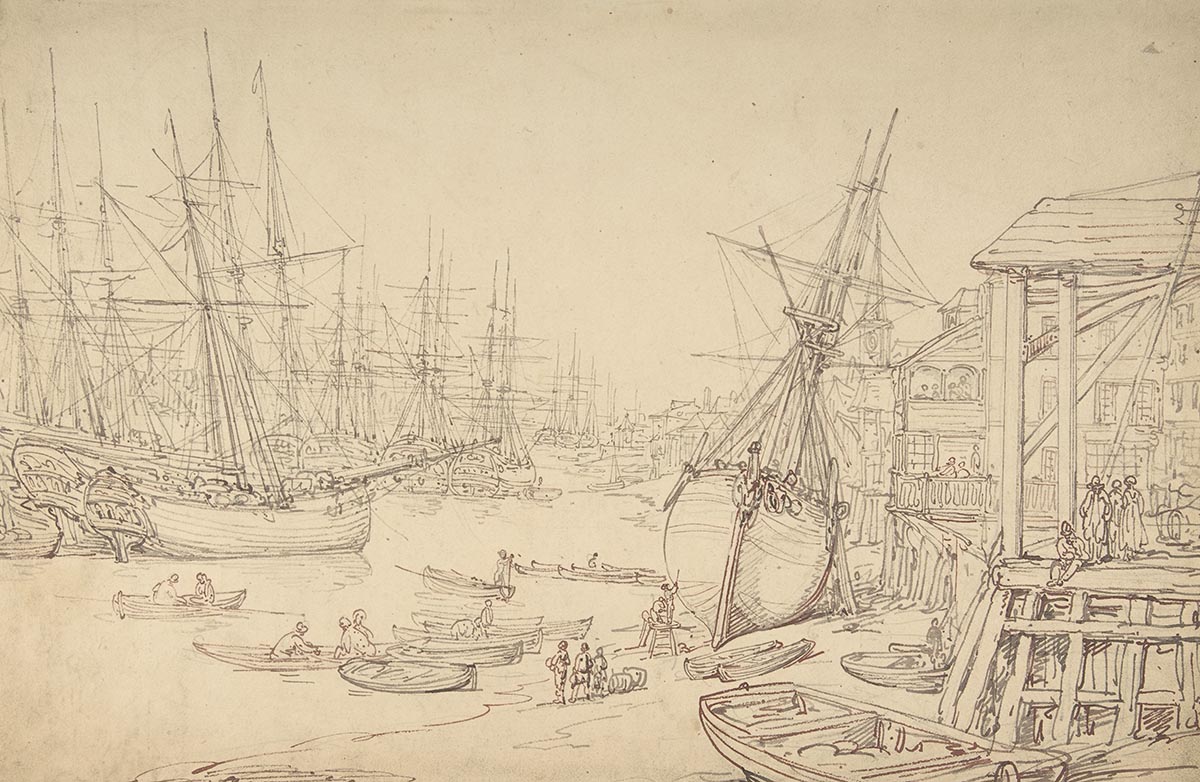
By the late 1600s, England had few forests left that could provide suitable trees for the giant masts, support timbers, and lumber for their growing Royal Navy and merchant ships.
In the early 1700s, more and more people were leaving England and other parts of Europe to settle in the American colonies. Towns along the coast of New Hampshire grew into busy trading centers where colonists bought supplies from England. They also sold goods to ships returning across the Atlantic.
One of the colonies’ most important natural resources was trees. By the late 1600s, England had cut down most of its forests and no longer had enough large trees for building ships. The growing Royal Navy and merchant fleet needed strong wood for masts, support beams, and lumber.
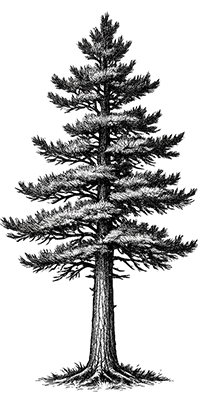
Tall, straight white pine trees were especially valuable because they could be used to make “single-stick” masts. These masts were made from a single solid tree rather than being joined from smaller pieces. A single-stick mast was stronger and could hold full sails even in powerful storms.
As demand for timber grew, colonists began moving away from the coast and into the interior. In the mid-1700s, Governor Benning Wentworth gave large areas of land to his friends and approved new towns west of the Merrimack River. Families made the difficult journey inland, cleared forests for farms, and built roads to connect their new communities.
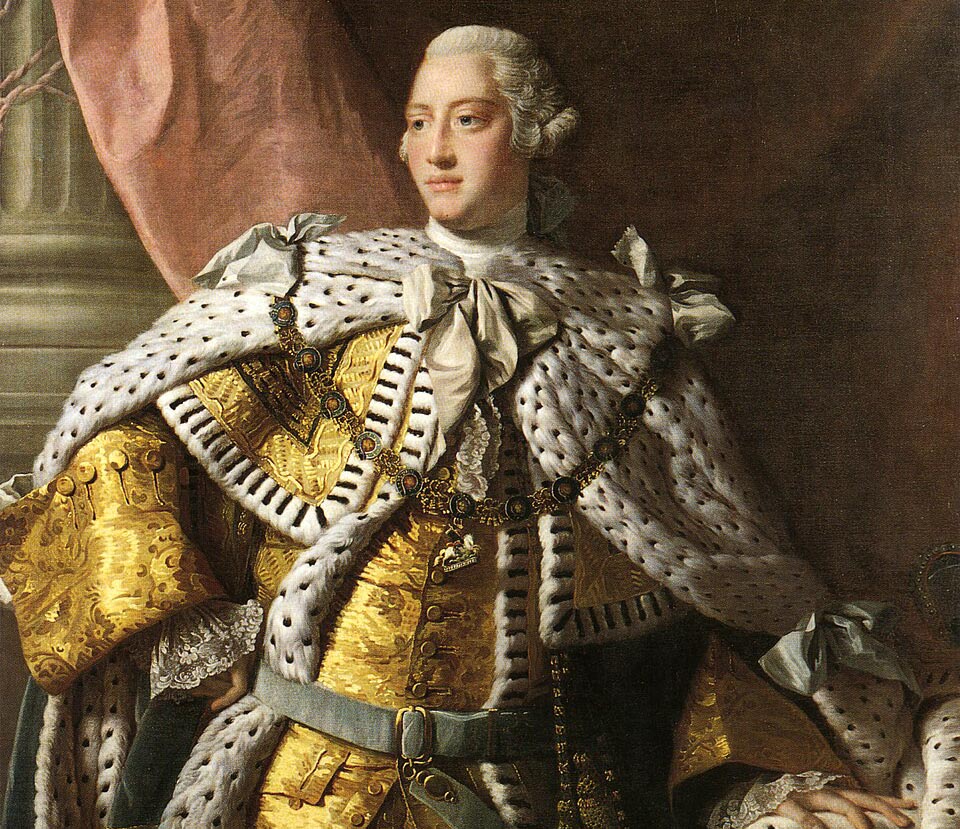
No matter who owned or cleared the land, the white pines on the land belonged to the King of England.
No matter who owned or cleared the land, the white pine trees growing on it belonged to the King of England. In 1772, the British Parliament and King George III passed a law protecting any white pine tree that was at least twelve inches in diameter. Earlier laws had already protected the largest trees.
Because of these laws, settlers were not allowed to cut down white pines on their own. First, a Deputy Surveyor had to mark certain trees with the king’s “broad arrow,” which meant they were reserved for ship masts. Then, settlers had to pay money for a royal license before they could cut any of the remaining trees—even on their own land.
Governors chose Deputy Surveyors of the King’s Woods. They and their crews could mark any white pine trees they thought were valuable with a special symbol called the “broad arrow.” They also inspected sawmills.
If they found white pine logs or lumber that had been cut without a license, they marked those as well. The sheriff could take the wood, and the sawmill owner might have to pay a large fine or even go to jail.
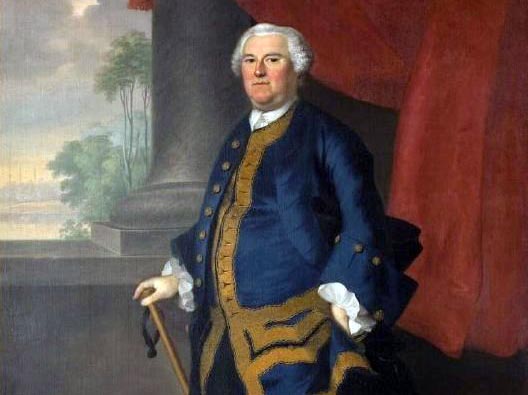
While Benning Wentworth was governor of New Hampshire, he did little to enforce the pine tree laws.
While Benning Wentworth was governor of New Hampshire, he did not strongly enforce the pine tree laws. He rarely sent the Deputy Surveyor to faraway towns like Dunbarton, Weare, and Henniker. Because these towns were so distant from Portsmouth, it was harder to check on them.
The governor also saw little reason to stop settlers from using the trees, as long as enough large pine trees were still being sent to Portsmouth to be used as masts for the Royal Navy.
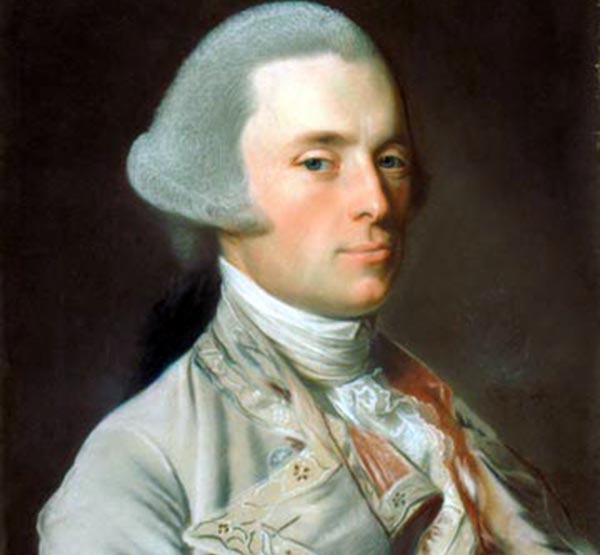
Governor John Wentworth
Benning Wentworth’s nephew, John Wentworth, became governor in 1766. He quickly noticed that the colony was losing money because license fees and fines from the pine tree laws were not being collected in the newer towns.
To fix this, he ordered the Deputy Surveyors to do their jobs more carefully and enforce the laws.
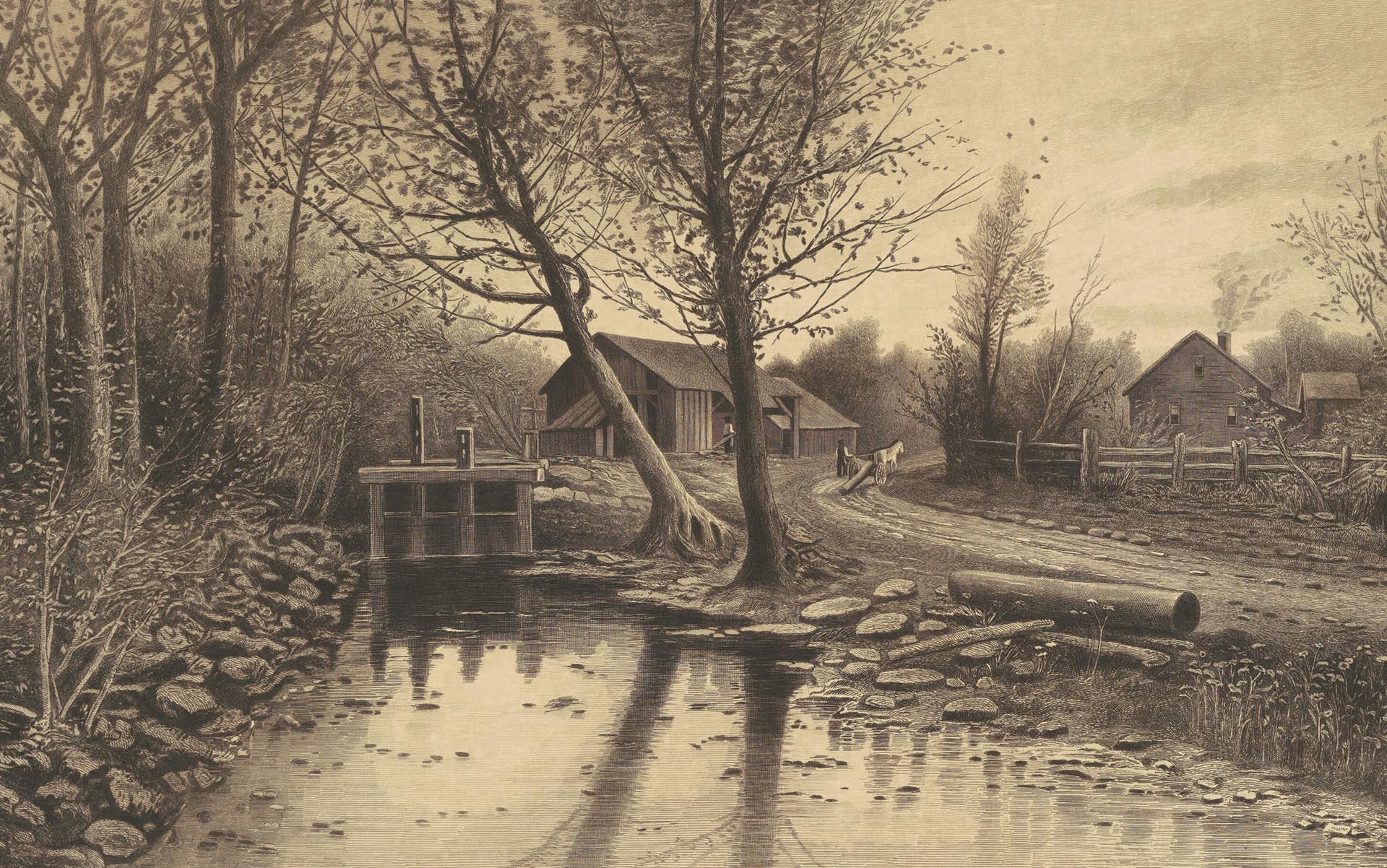
In the winter of 1771–1772, John Sherburn, a Deputy Surveyor of the King’s Woods, visited sawmills in towns along the Piscataquog River Valley. Sherburn found exactly what he was looking for—large white pine logs measuring 15 to 36 inches (38.1-91.4 cm) in diameter at six different mills in Goffstown and Weare. He claimed them as “the King’s White Pine Trees” and marked each log with the broad arrow, a symbol showing they belonged to the king. The mill owners were warned not to use the logs and were ordered to appear before the Court of Vice Admiralty in Portsmouth on February 7, 1772, to pay fines.
The sawmill owners hired Samuel Blodget, a lawyer from Goffstown, to represent them in court. However, Blodget did not do a very good job. When the governor offered him a job as a Surveyor of the King’s Woods, he put his own interests first instead of fully supporting the mill owners. Still, he did help arrange for them to pay their fines and get their logs back.
The mill owners from Goffstown paid their fines right away and got their logs returned. The sawmill owners from Weare, however, refused to do so. Even though Blodget warned them in letters, they chose to resist and were described as being “obstinate and notorious.”
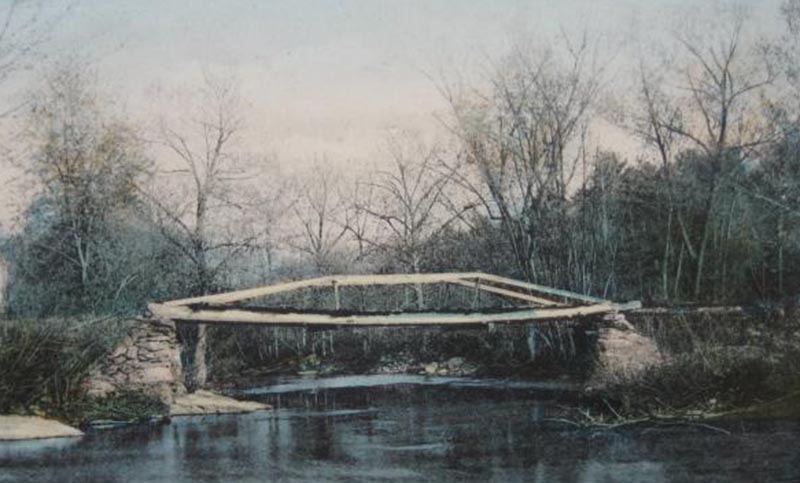
Old Bridge near Weare, NH
On April 13, 1772, Sheriff Amin Whiting and his deputy, John Quigley, rode into the village of South Weare, New Hampshire. They carried a warrant for the arrest of a sawmill owner, Ebenezer Mudgett.
Mudgett was an important leader among the local mill owners. Sheriff Whiting believed that if he arrested Mudgett, the others would be more likely to give in and pay what they owed.
It was nearly dark when the sheriff and his deputy finally found Mudgett.
Instead of resisting, Mudgett calmly agreed to meet them the next morning at Aaron Quimby’s Inn, where he said he would pay the fine.
But word of the sheriff’s arrival spread quickly through Weare. The conflict over land and authority had already angered many people, and they were unwilling to see one of their leaders taken away.
That night, dozens of local men gathered at Mudgett’s house. Together, they came up with a bold plan—one that the sheriff would never forget.
At dawn, Mudgett rode to Quimby’s Inn and burst into the sheriff’s room while he was still in bed. Soon, more than twenty townsmen—some with their faces darkened with soot to hide their identities—rushed in and attacked him with tree branches. Sheriff Whiting tried to reach his guns to defend himself, but he was badly outnumbered. He later said he feared they might kill him. In another room, Deputy Quigly was also dragged out and attacked by a different group.
The attackers brought the men’s horses to the inn. They cut the horses’ ears and sheared off their manes and tails, damaging the horses’ value. The two men were forced to ride away and were shouted at and slapped as they were driven down the road toward Goffstown.
The sheriff did not give up. He went to Colonel John Goffe and Colonel Edward Goldstone Lutwyche and asked for help. They organized a group of soldiers to return to Weare and arrest Mudgett and the others involved. However, by the time they arrived, the attackers had already fled into the woods and could not be found.
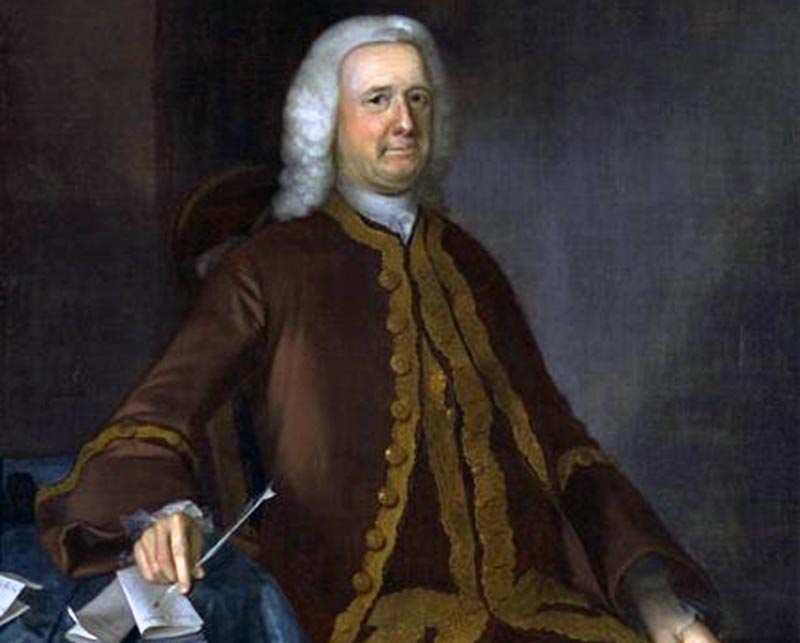
Theodore Atkinson was one of the judges in the case.
But Sheriff Whiting didn’t give up on the whole matter. Later in the spring, he was able to capture one of the rioters, so the rest of the men agreed to pay the bail money and appear in court to accept their punishment.
In September, eight men from Weare were brought before His Majesty’s Superior Court. They were Timothy Worthley, Jonathan Worthley, Caleb Atwood, William Dustin, Abraham Johnson, Jotham Tuttle, William Quimby, and Ebenezer Mudgett. They were charged with being rioters and disturbers of the peace and with “making an assault upon the body of Benjamin Whiting, Esq., Sheriff, and that they beat, wounded, and evilly intreated him and other injuries did so that his life was despaired of.” They were also charged with going “against the peace of our Lord the King, his crown and dignity.”
Four judges heard the case in the Superior Court in Amherst. They were Theodore Atkinson, Meshech Weare, Leverett Hubbard, and William Parker. The rioters were very humble and submitted themselves to the grace of the court and king. They were lucky. The judges fined each of the men 20 shillings and ordered them to pay the cost of the court hearing.
It was certainly a light punishment for the crimes they had committed. The small fine ordered by the judges showed that they understood why the men from Weare attacked the sheriff and deputy. The judges, like many other citizens of New Hampshire, thought the pine tree laws were oppressive and unfair. The pine tree laws were just another way of making the colonists pay taxes to the British king.
The Pine Tree Riot, the raid on Fort William and Mary in Newcastle, the threats against the Tax Stamp Master in Portsmouth, and many other acts of rebellion grew out of the anger that New Hampshire citizens felt over these laws. They all helped to bring New Hampshire into the Revolutionary War against Great Britain.
