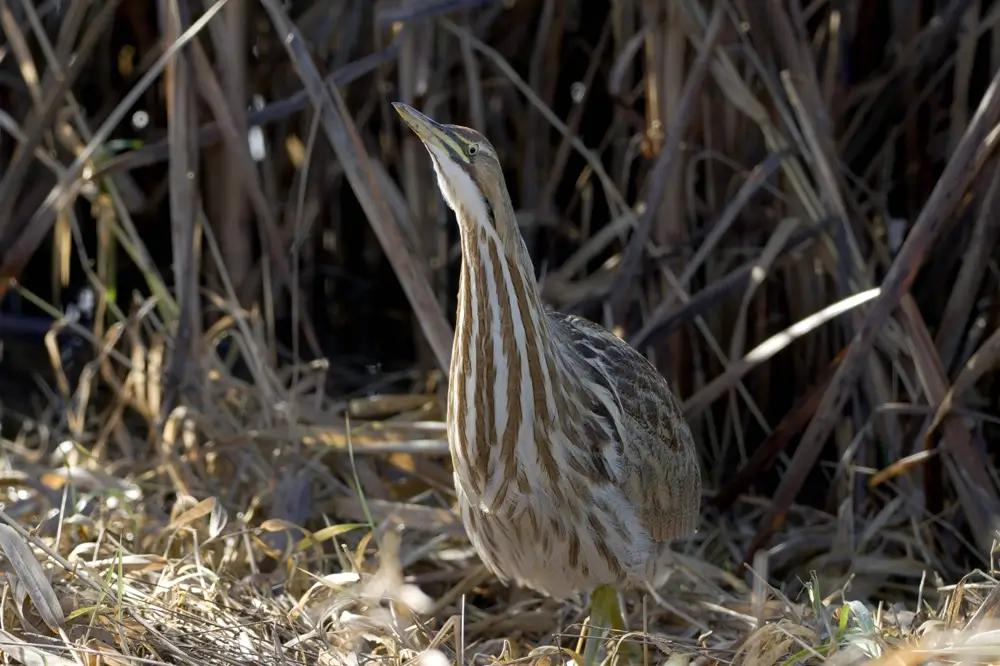
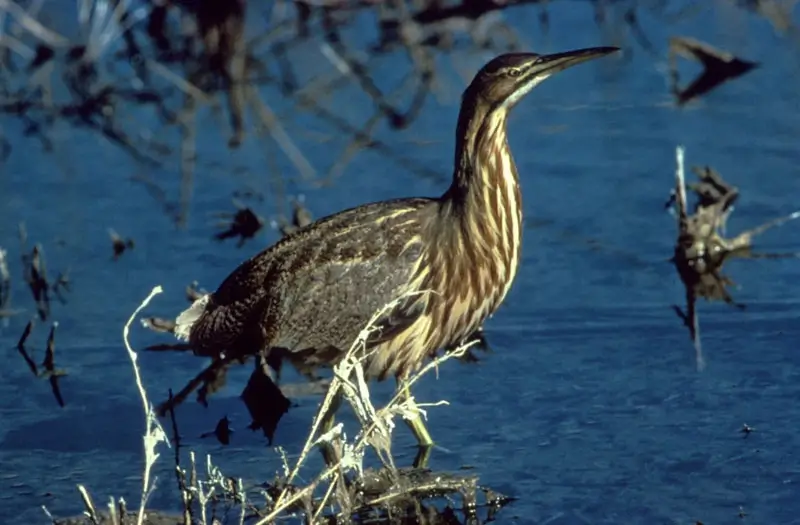
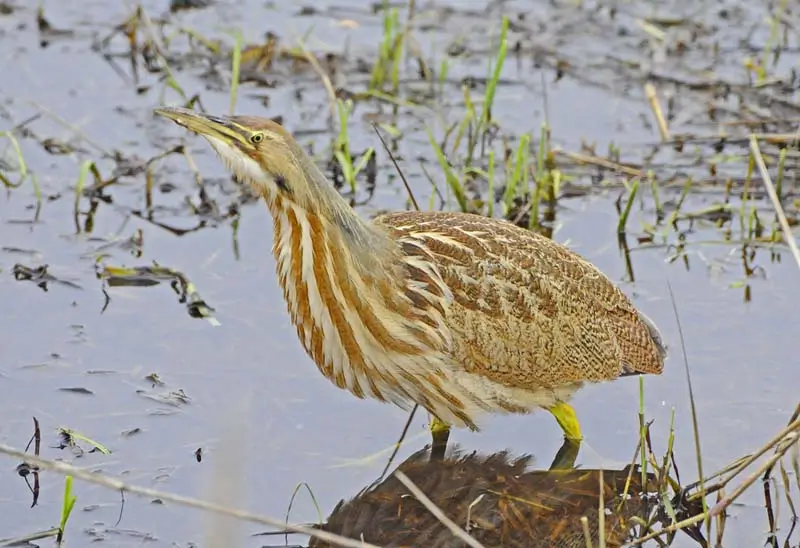
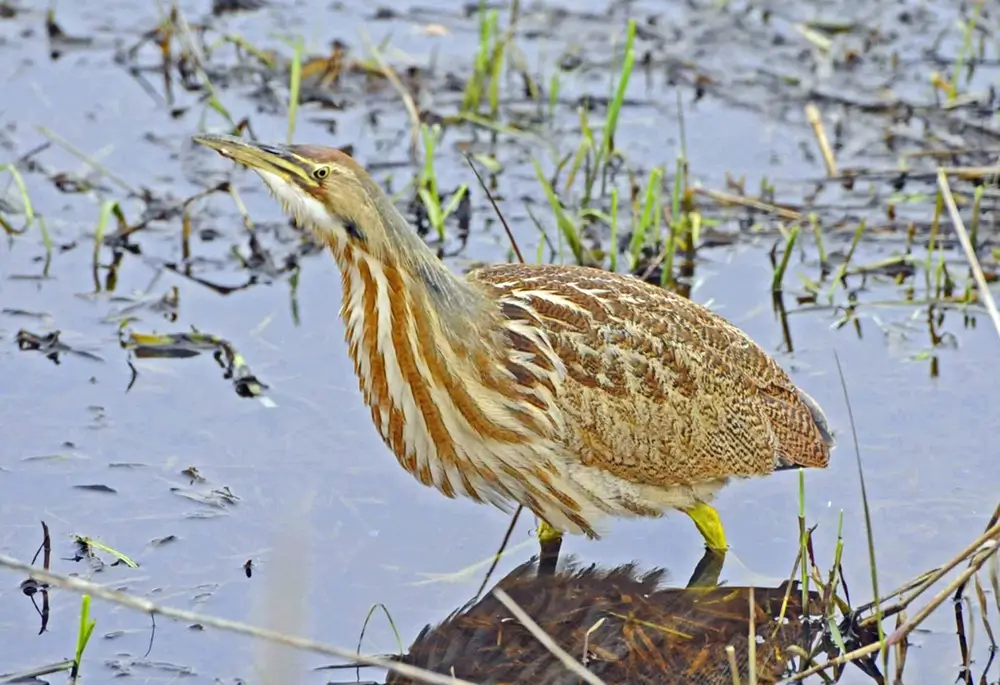
The American bittern is a medium-sized wading bird that is 23.6-33.5 inches (60-85 cm) in tall with a wingspan of three feet (0.91 m).
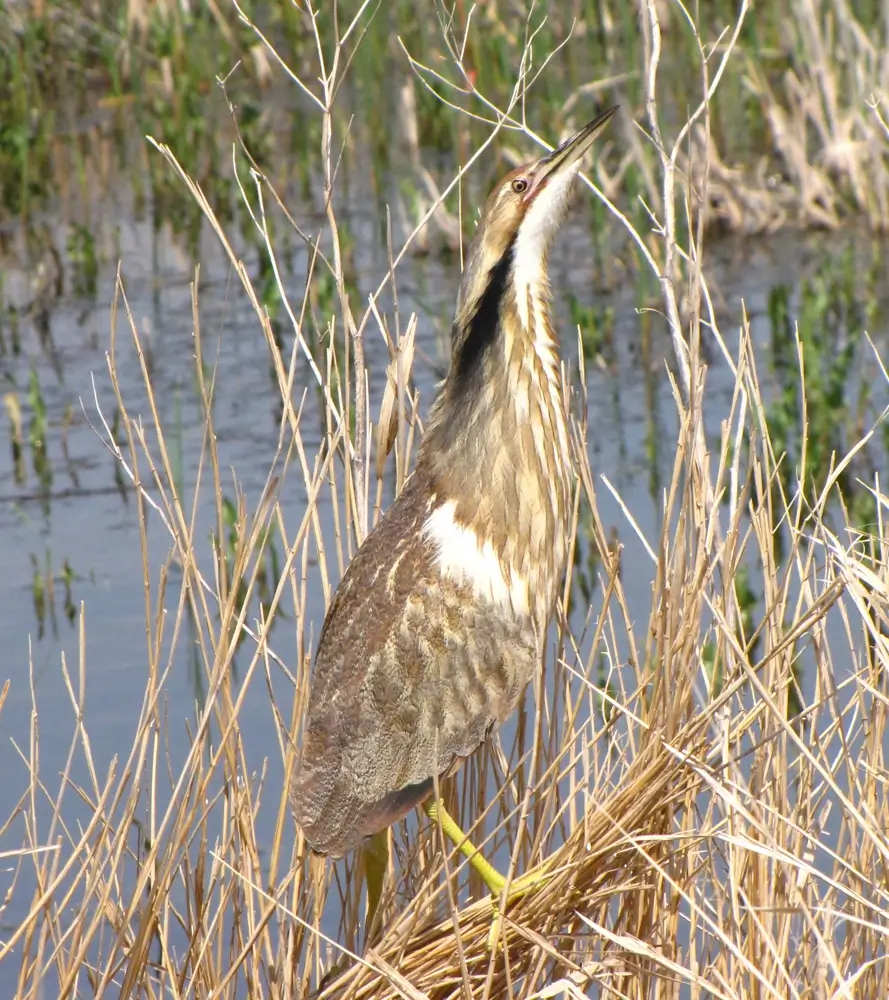
It is dark brown on its uppersides. Its underparts are streaked with brown, tan, and white. It has a pointed yellow bill, long legs, and a black stripe on the side of its throat. Males and females look alike.
Habitat
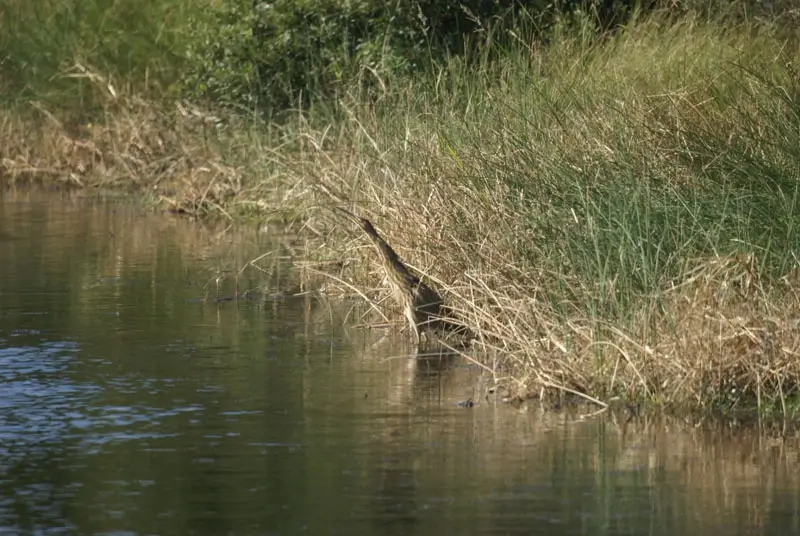
The American bittern is found in freshwater and brackish marshes and swamps. In the winter and during migration, it can be found in salt marshes. It prefers areas with thick clumps of tall plants such as bulrushes, cattails, or sedges.
While the American bittern is not listed as a federally endangered or threatened species, its population has decreased due to habitat loss.
Diet
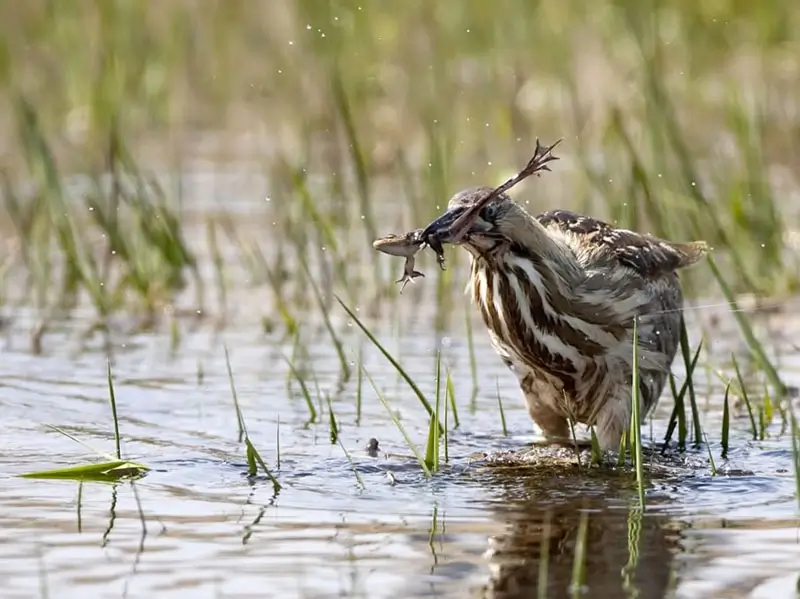
The American bittern eats small fish, eels, small snakes, salamanders, insects, frogs, crayfish, and small mammals. It stands still in the water and waits for its prey. When it spots something, it quickly goes after it and catches it in its bill. It then swallows its catch whole.
Life Cycle
The American bittern mates in early May. The female chooses a nesting site and builds a platform nest of reeds, cattails, sedges, and other plant matter near the water. She lays 2-6 eggs at a rate of one egg a day.
The female incubates the eggs and cares for the young. The eggs hatch in 24-28 days, and the chicks leave the nest when they are one to two weeks old. The female continues to care for them for another two or three weeks.
The oldest American bittern on record was over 8 years and 4 months old.
Behavior
The American bittern has a distinctive loud booming “unk-a-chunk, unk-a-chunk” call that sounds like a machine. You are more likely to hear an American bittern than to see one.
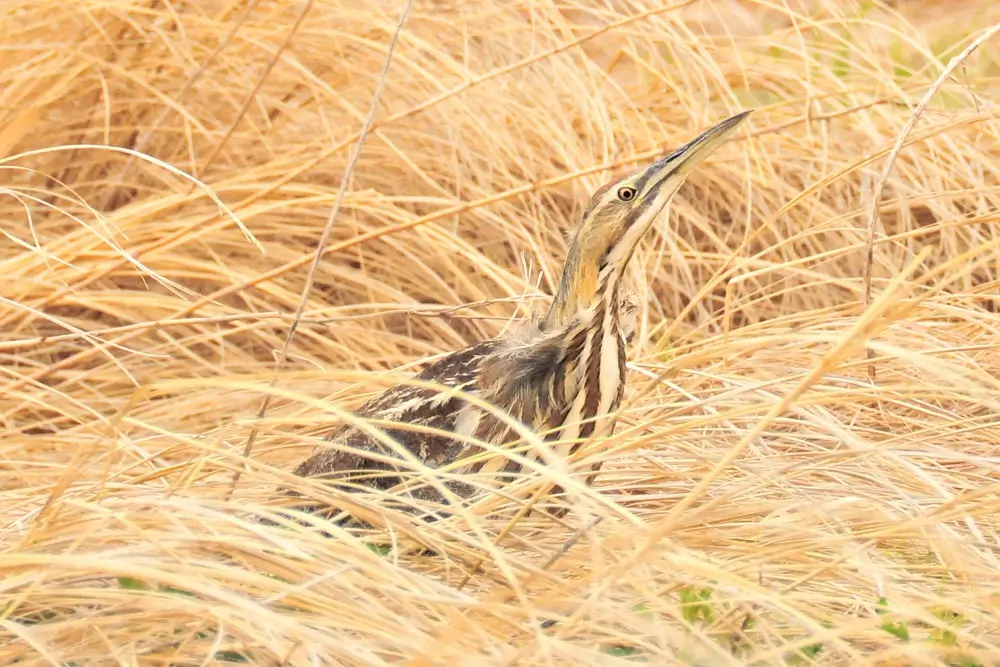
The American bittern relies on camouflage coloration to protect itself from predators. It spends most of its time hidden in the reeds. When a threat approaches, it either freezes in place or stretches its neck up toward the sky and sways back and forth.
The stripes on its breast and belly look like reeds waving in the breeze, and a predator may be fooled. If that doesn’t work, the American bittern calls out with its loud booming voice and flies away.
Did You Know?
Support for NatureWorks is provided by:
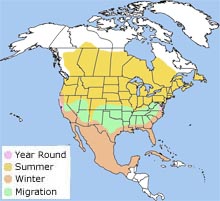
The American Bittern in NH
The American bittern breeds in marshy wetlands in much of New Hampshire.