The American coot is 15.5-16.9 inches (39.4-42.9 cm) in length with a wingspan of 23.0-25.0 inches (58.4-63.5 cm)
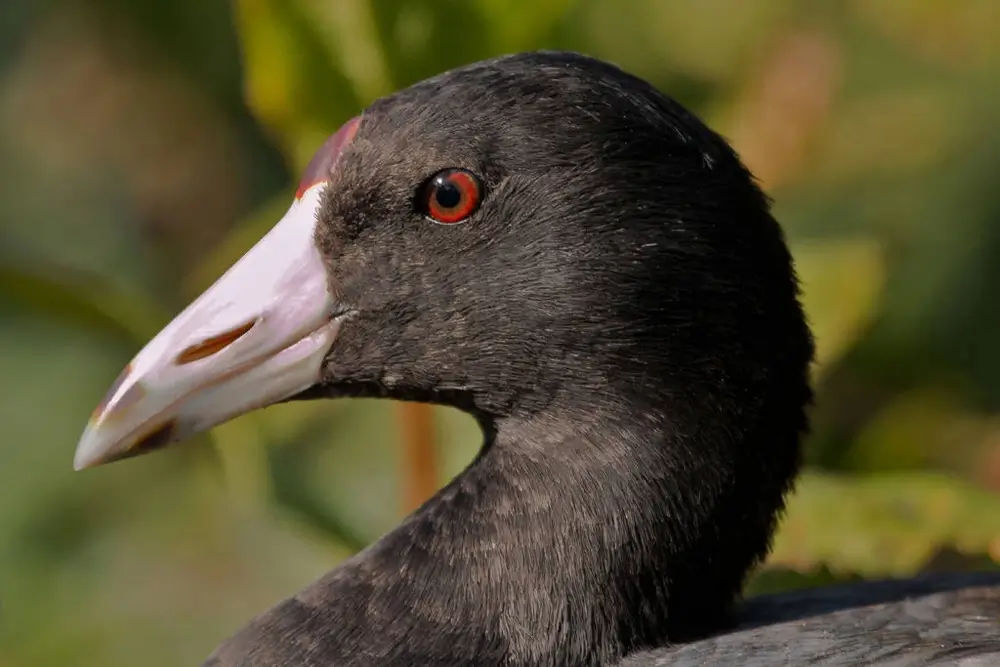
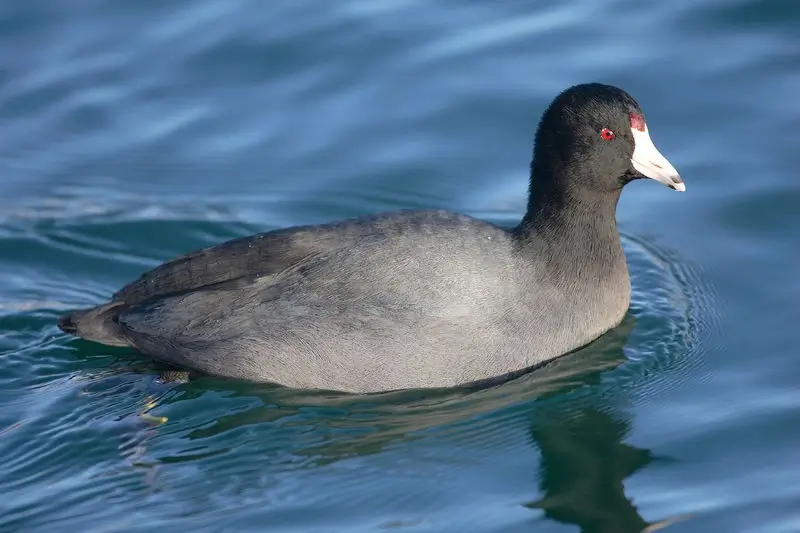
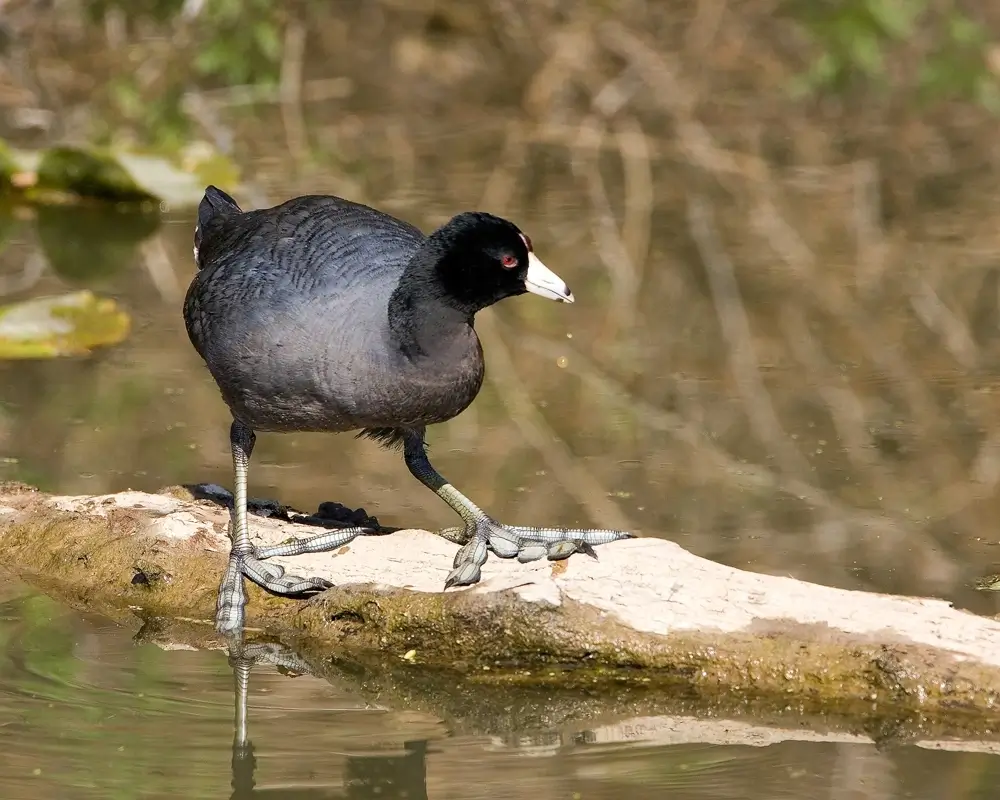
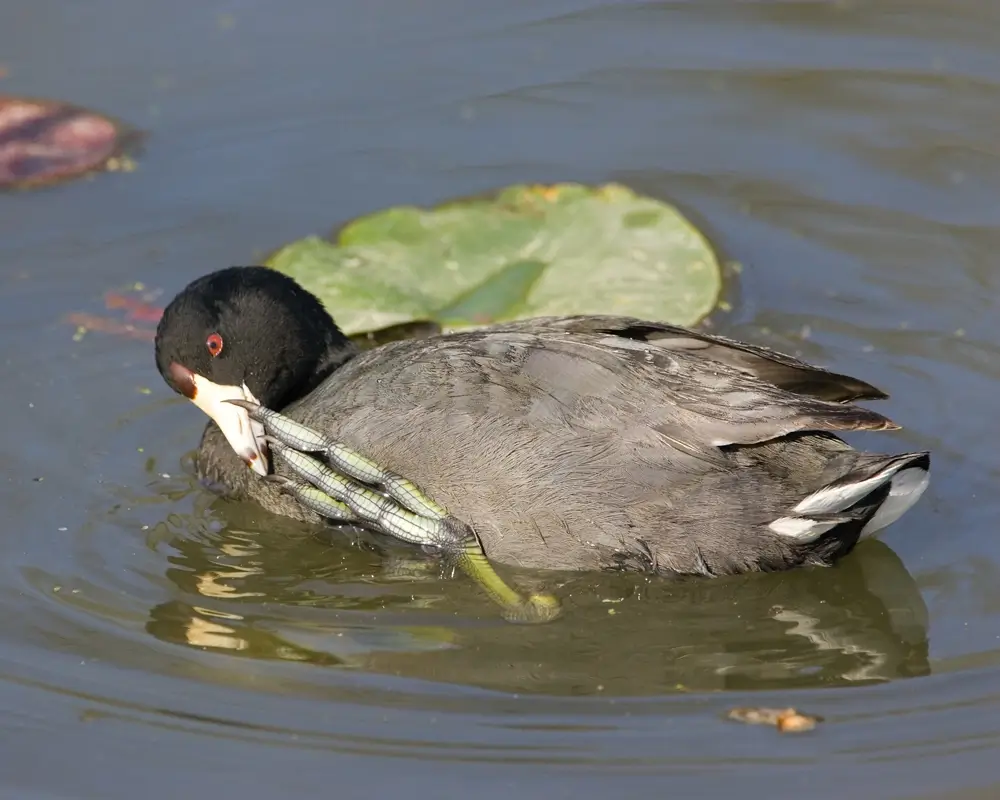
It is dark gray to black in color with a bright white bill. It has bright red eyes and a red bump on the top of its bill. It has large feet with lobed toes.
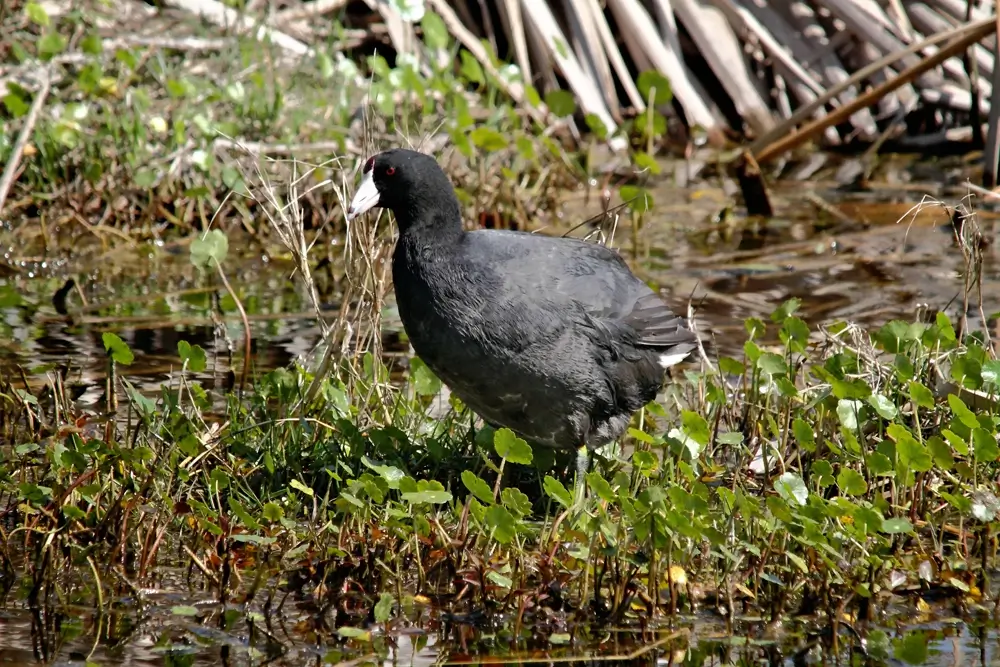
Even though the American coot swims like a duck, once it is on land, it looks more like a chicken. Its short wings make it difficult for it to take off, but once it is in the air, the coot is a good flier.
Habitat
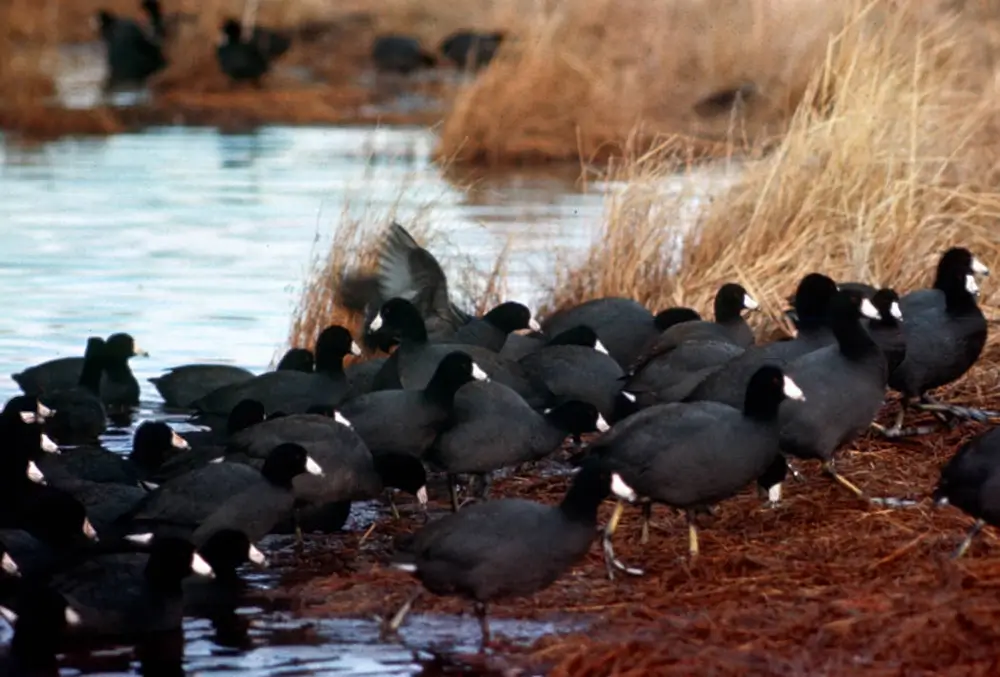
The American coot lives in shallow freshwater lakes, ponds or marshes. Sometimes, it is seen in brackish water. It is commonly seen in city parks, reservoirs, and sewage treatment ponds.
Diet
The American coot eats small aquatic animals like fish and tadpoles as well as insects and vegetation. The coot dives to retrieve plants that grow on the bottom of ponds. The American coot is known to steal food from other birds.
Life Cycle
Breeding begins in May and June. The male and female build a nest together at the edge of a pond, usually in an area with large reeds that will hide the nest. The female lays 8-10 pink eggs with brown spots. Both parents take turns incubating the eggs, which hatch in about 23 days.
After a month, chicks can dive for their own food. After 5-6 weeks, the chicks can fly. The young leave their parents after two months.
American coots typically live up to nine years, but the oldest known coot lived to be 22 years old.
Behavior
The American coot builds its nest with a ramp leading into the water, so it’s easier for its young to get in and out.
Did You Know?
Support for NatureWorks is provided by:
The American Coot in NH
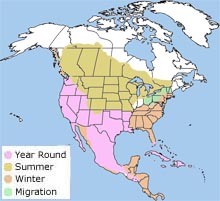
The American coot does not breed in New Hampshire, but it may be spotted during its migration.