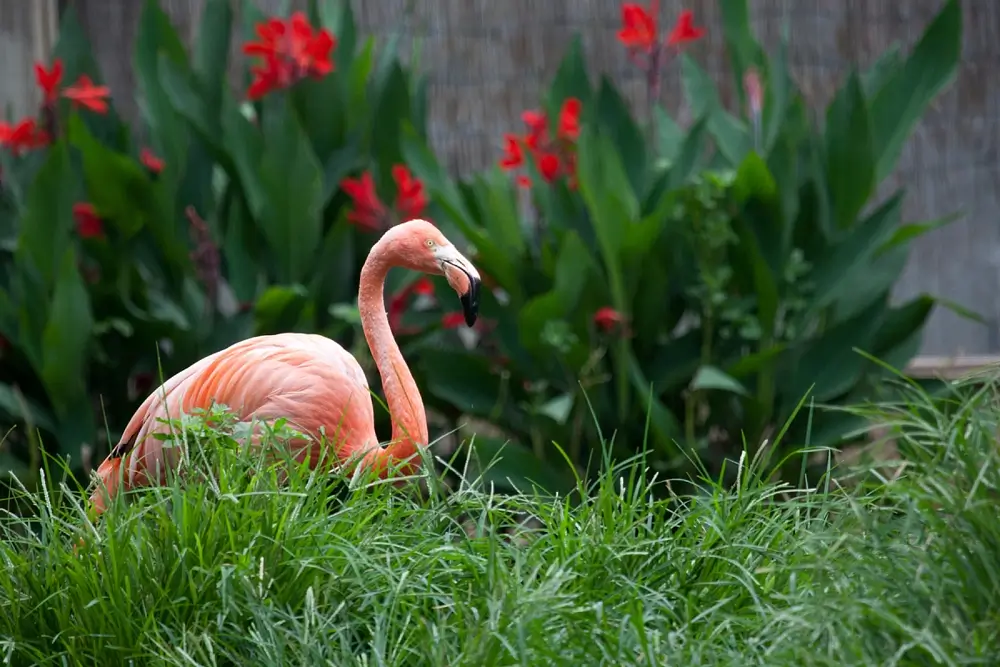
The American flamingo is also known as the greater flamingo. It can grow up to 5 feet (1.5 m) tall and has a wingspan of about five feet (1.5 m).
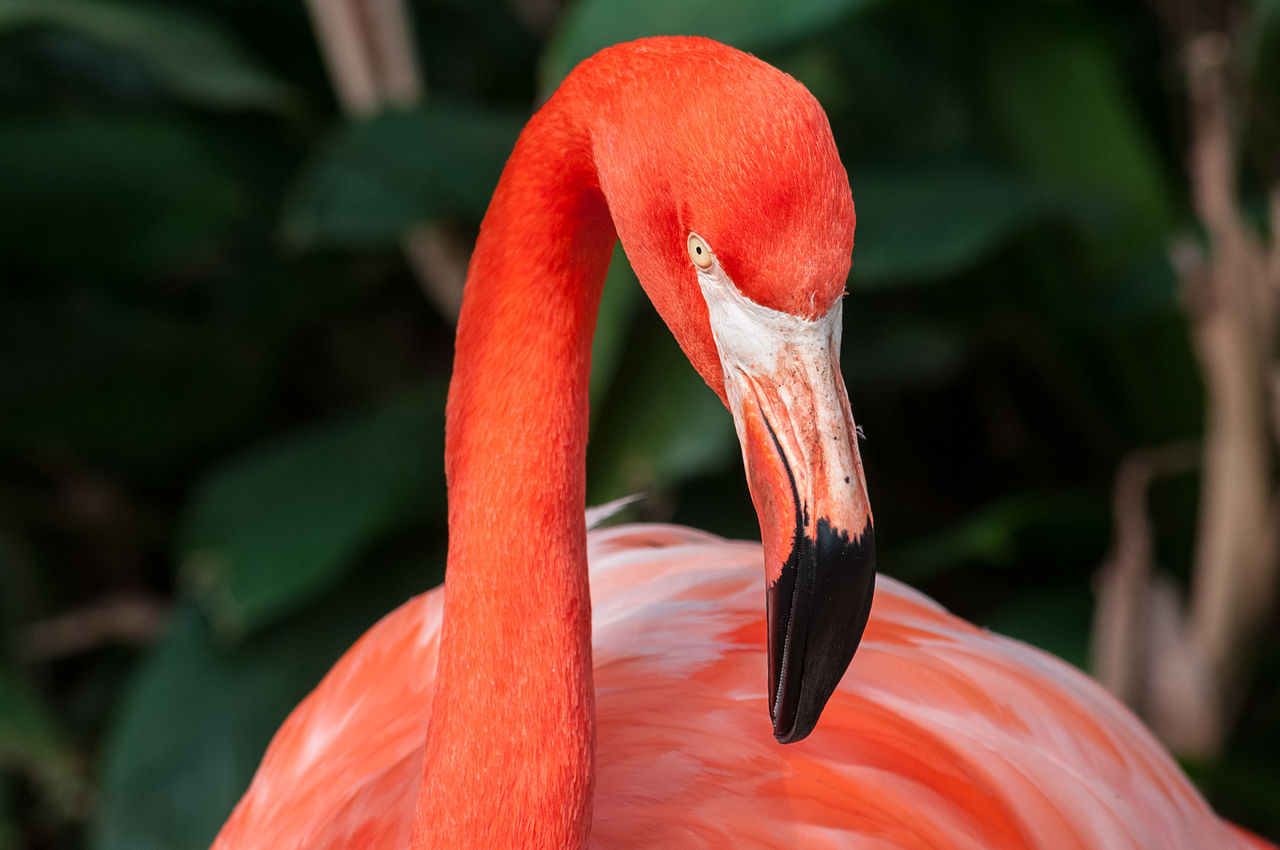
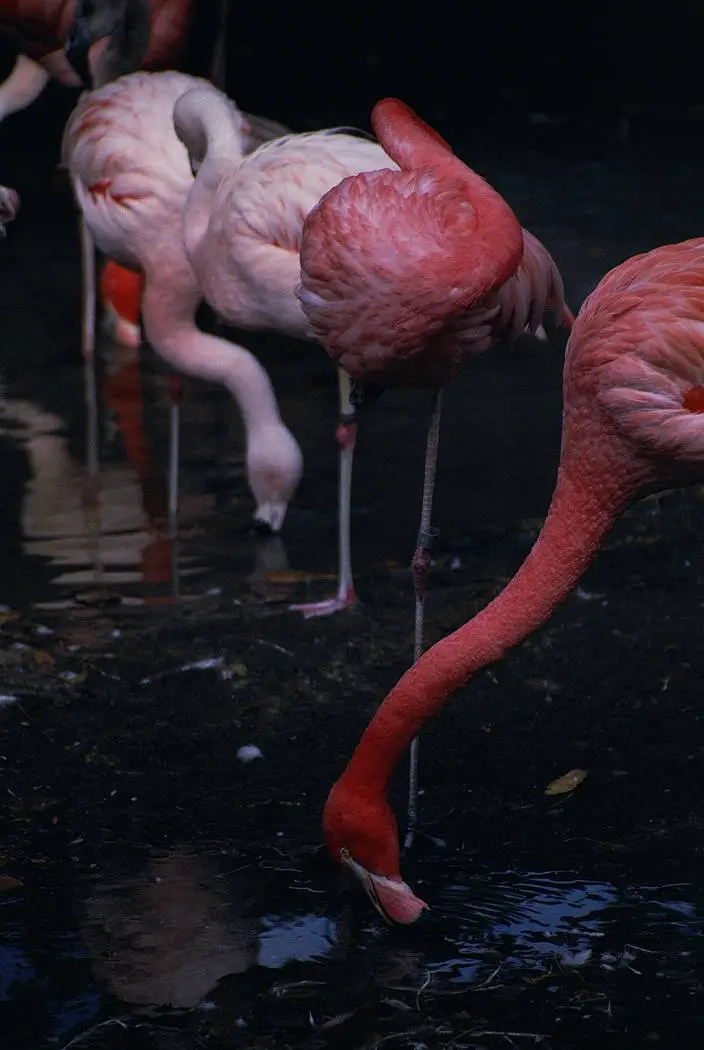
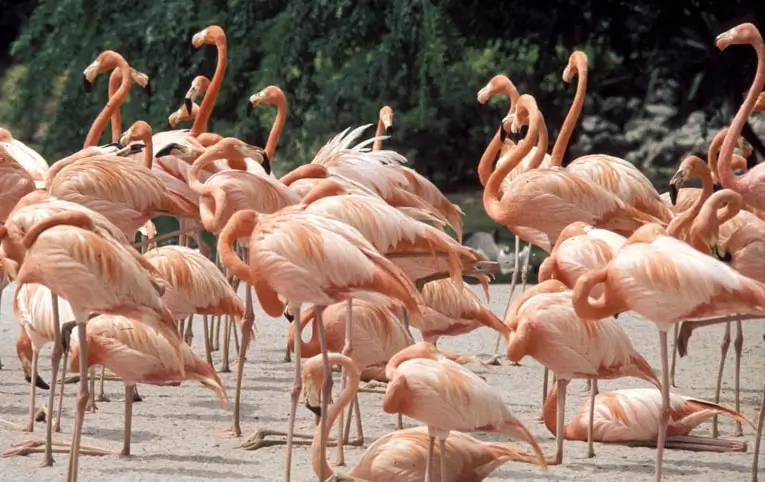
The American flamingo has pink feathers and black-tipped wings. It has a very long neck, long pink legs, and webbed pink feet with three toes. It has a large hooked bill with a black tip that is curved down. Males and females look alike, although males are a little larger.
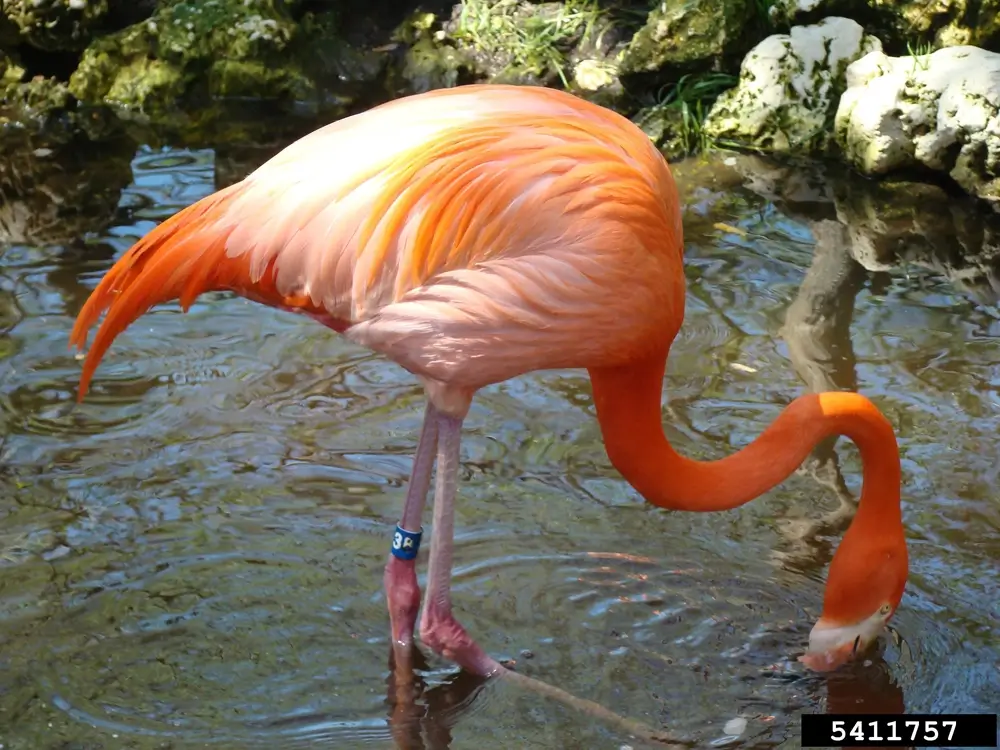
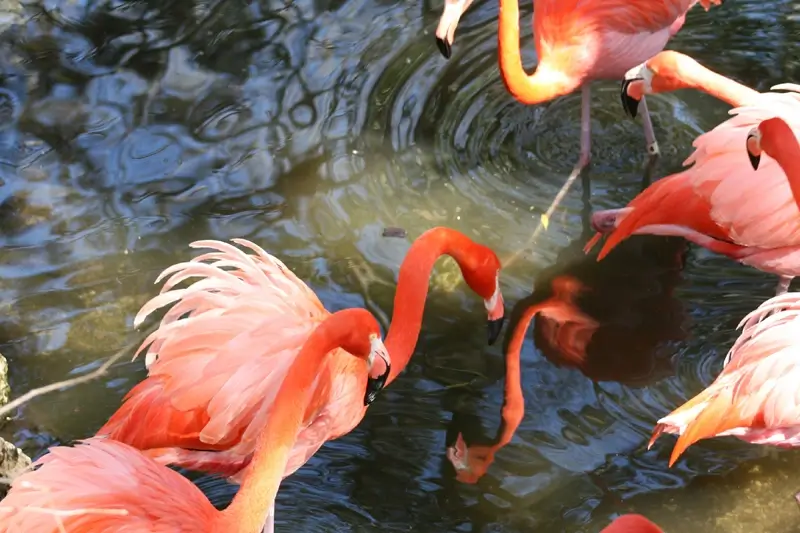
The flamingo is a filter feeder, and it has a number of structural adaptations that help it feed. It has two rows of lamellae or comb-like bristles that line the inside of its bill. It also has bristles on its tongue that help it filter food out of the water. The flamingo’s long neck and legs also help it to feed in deep water, and its webbed feet help it stand on mud.
Habitat
The American flamingo lives in mudflats and shallow coastal lagoons with salt water. A lagoon is shallow water separated from the sea by land.
Diet
The American flamingo uses its feet to stir up the mud, then it sucks water through its bill and filters out small shrimp, seeds, blue-green algae, microscopic organisms, and mollusks.
The flamingo’s color is partly determined by its diet. Some of the food the flamingo eats contains carotenoid pigments. These pigments are broken down in the liver and are then deposited into the feathers, skin, and egg yolk of the flamingo. Flamingos in the wild are usually more brightly colored than flamingos in captivity.
Life Cycle
American flamingos nest in large colonies. Male and female flamingos court each other with a variety of display behaviors that involve head movements, wing displays, and vocalizations. The female flamingo lays one or two eggs on a mound of mud that can be as much as a foot (0.3 m) tall. The eggs take about a month to incubate.
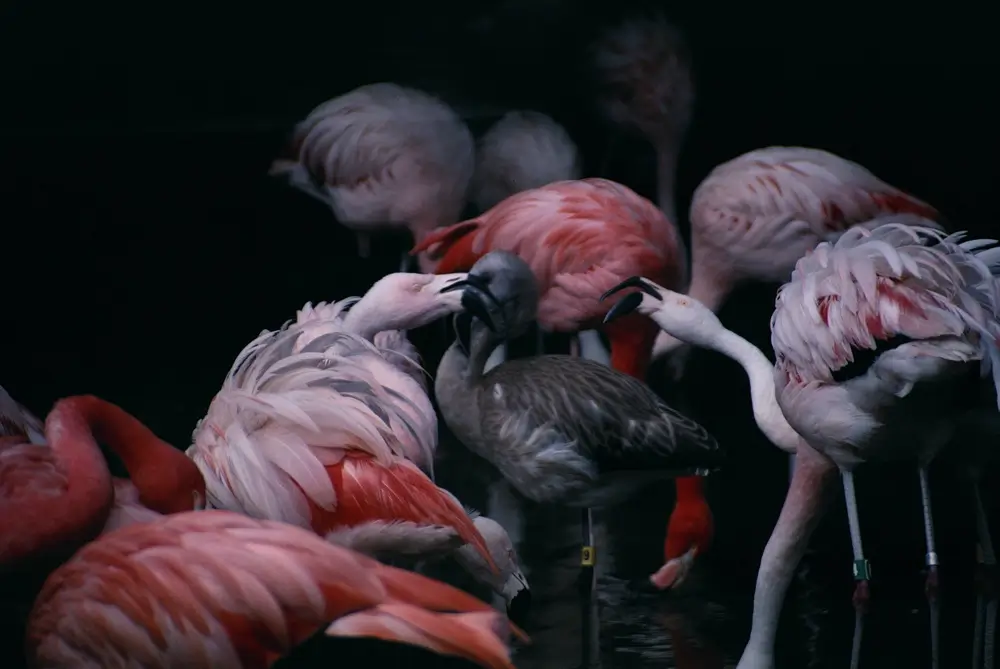
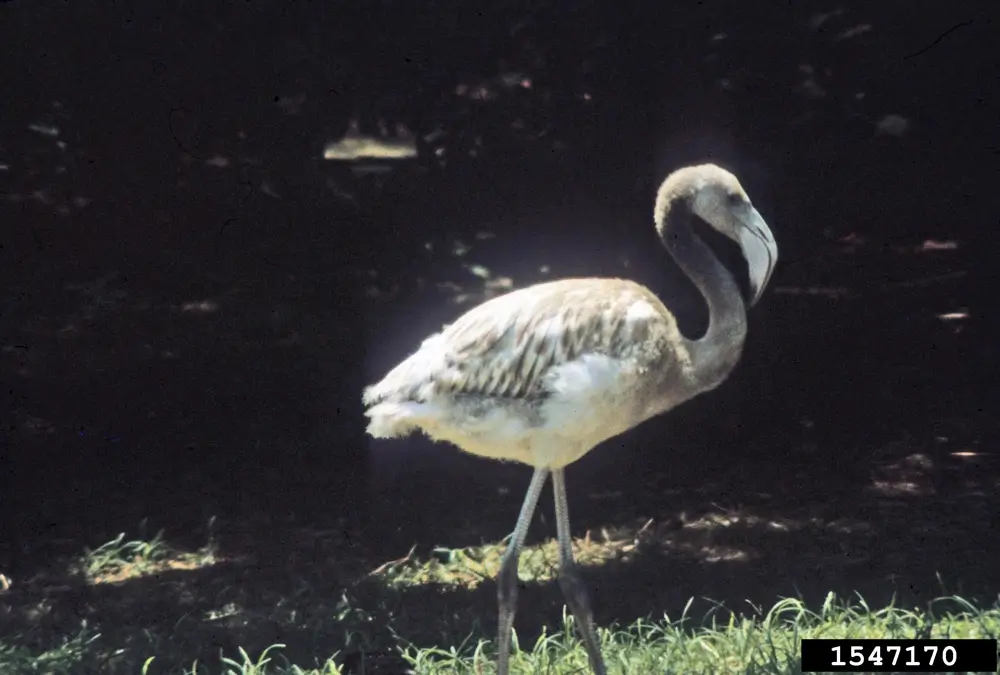
Both males and females incubate the eggs. They fold their long legs and straddle the nest. Chicks are downy gray and have a straight bill when they are born. Both parents feed the chicks.
The chicks fledge (develop flight feathers) in about 70-75 days. Chicks won’t reach their full adult size for 1 ½ to 2 years, and they won’t have adult plumage for 2-4 years. Male and female pairs usually mate for life.
The flamingo can live for up to 20-30 years in the wild and up to 50 years in captivity
Behavior
American flamingos live in large social groups that have as many as 10,000 birds. They spend most of the day feeding. When an area no longer provides enough food, the flamingos migrate at night to another location.
Flamingos are very skittish and fly away if they are disturbed.
They are also very vocal and have several different calls. Breeding pairs have location calls to help locate each other, and alarm calls are used to warn the group of danger.
When flamingos fly in large groups, they are often mistaken for geese because of the loud honking sound they make. The chicks even make calls while they are in the egg that their parents learn to recognize.
Did You Know?
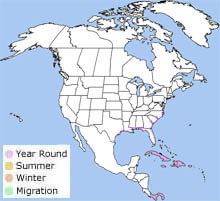
The American flamingo is the only flamingo species found in North America.
The American flamingo is found in Central and South America and the Caribbean. It is also occasionally seen in Florida and along the Gulf Coast as a vagrant.
The American flamingo doesn’t breed in the United States.
The American flamingo was once considered to be the same species as the greater flamingo (Phoenicopterus roseus) found in Africa, Asia, and parts of southern Europe, but it is now considered a separate species.