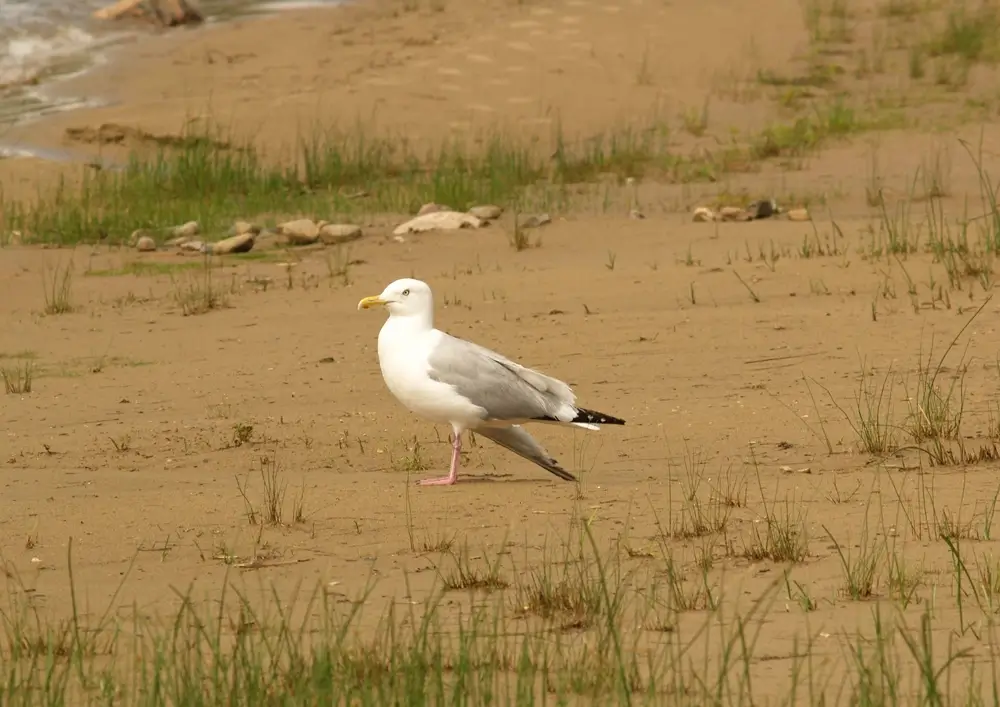
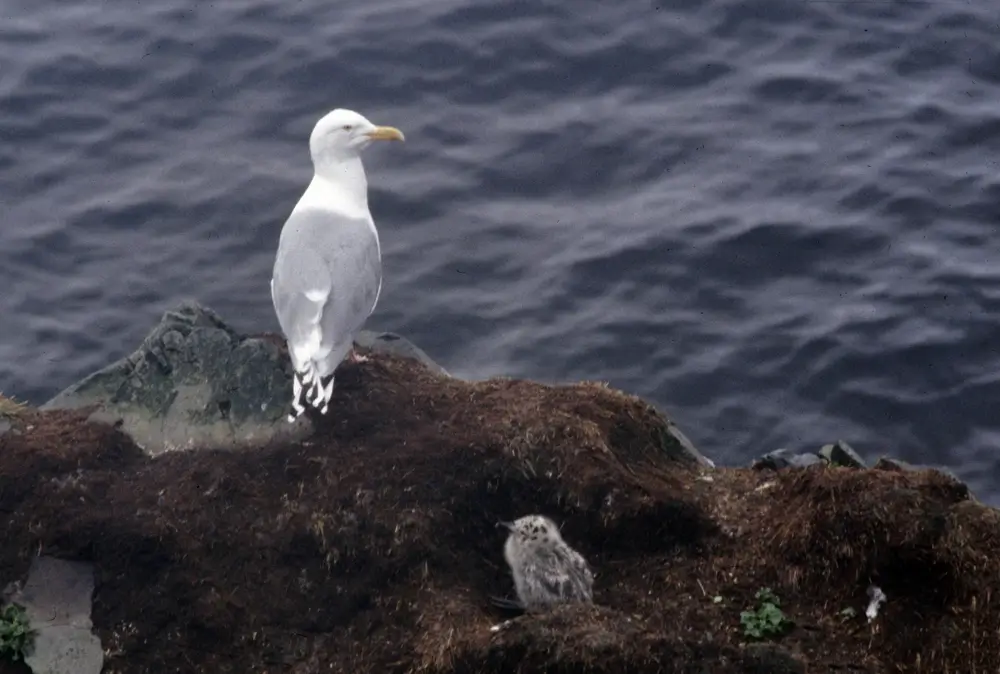
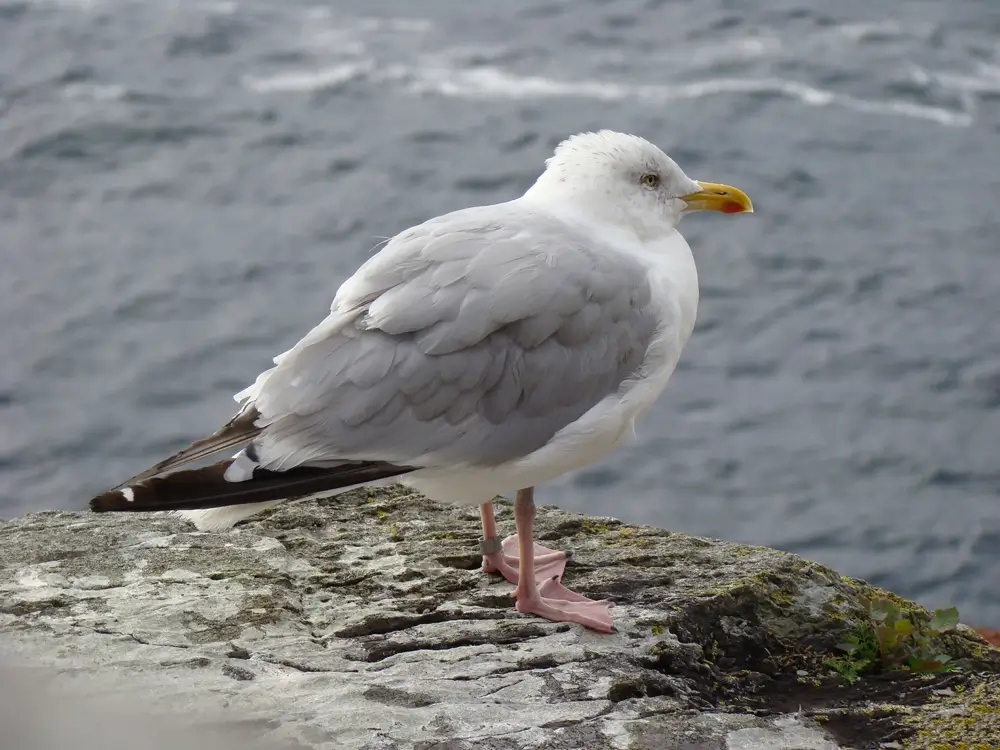
The American herring gull is a large gull, 22.1-26.0 inches (56-66 cm) in length with a wingspan of 4-5 feet (1.2-1.5 m).
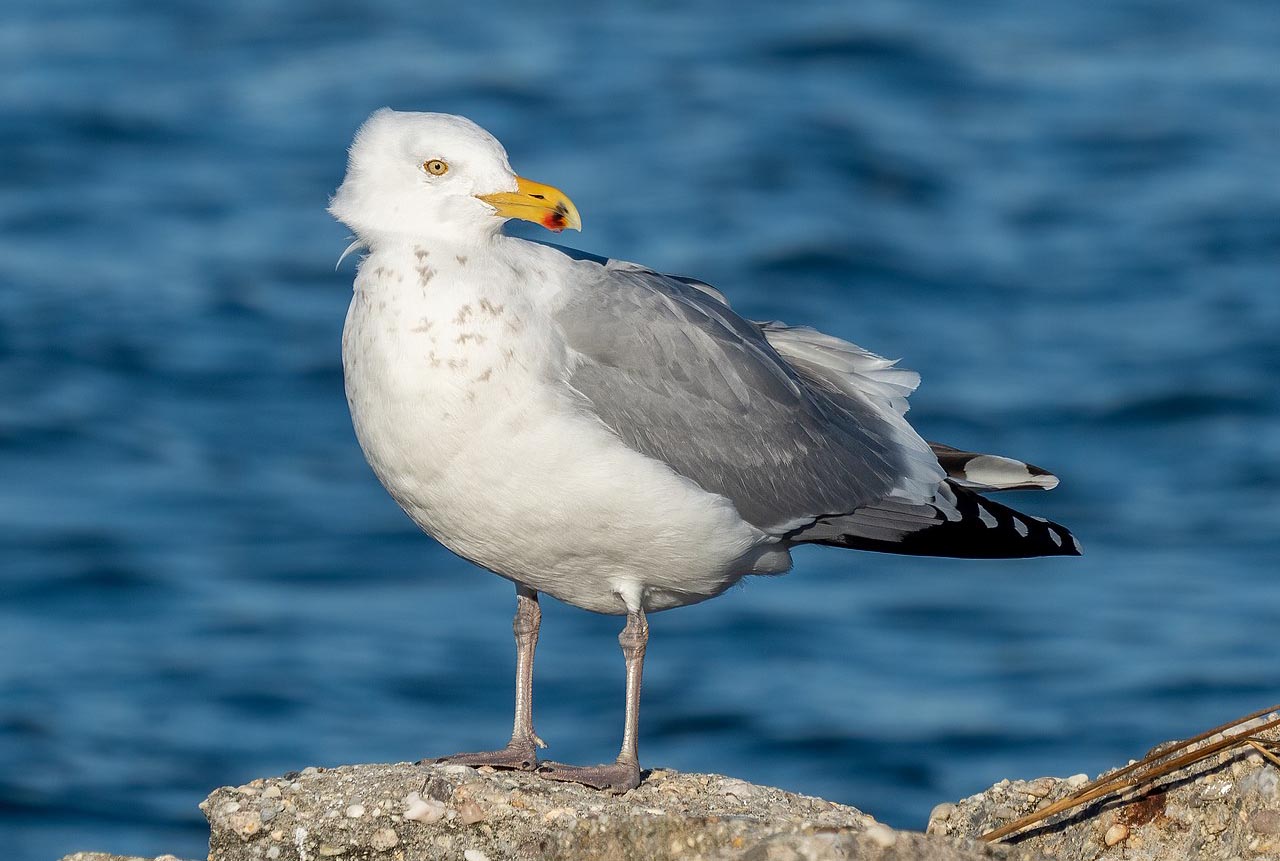
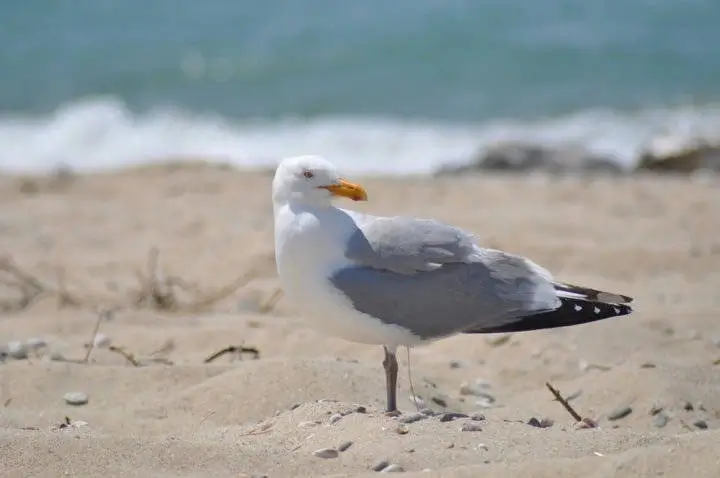
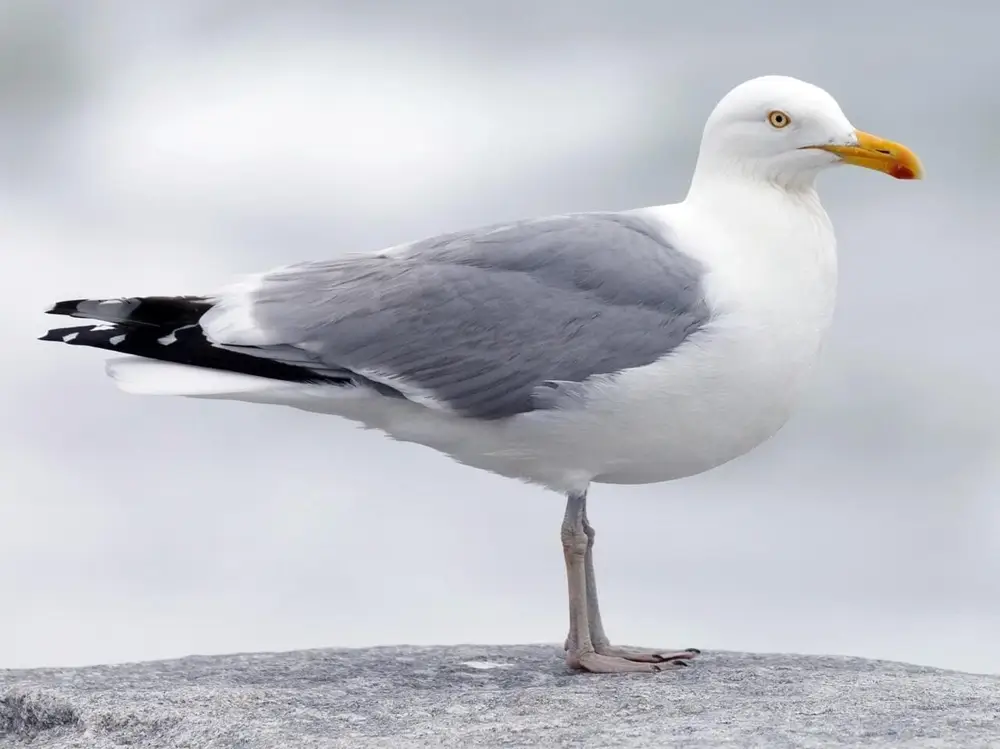
It has a white head, throat, breast, and belly. It has a gray back and gray wings with black tips. It has pale pink legs and feet, yellow eyes, and a slightly hooked yellow bill with a red spot on the end. Males and females look alike.
Habitat
The herring gull is found on islands, beaches, mudflats, fields, meadows, golf courses, beside lakes and rivers, in the grassy areas of airports, and in landfills.
Diet
Although the American herring gull is named for the herring, it eats more than just fish. It is an omnivore, and there isn’t much it won’t eat, including shellfish, small mammals, insects, birds, eggs, carrion, and garbage.
It dives into the water for food or takes it from the surface of the water. It also captures prey on land. It sometimes drops shellfish, clams, and mussels on rocks to break them open. It also steals food from other birds.
Life Cycle
The American herring gull nests in colonies in a variety of habitats, including islands, cliffs, and beaches. The nest site is always near water. It sometimes even builds its nest on the window ledges or roofs of buildings.
The nest is made in a scrape in the sand or dirt and is lined with grass, moss, pieces of plastic, and other trash, and feathers. The female lays 1-3 eggs. The eggs are incubated for 26-28 days by both parents. The chicks fledge when they are 42 to 45 days old.
The American herring gull has a lifespan of 10 to 12 years in the wild. The oldest American herring gull on record lived to be 29 years and three months old.
Behavior
The American herring gull has adapted very well to human activity. It scavenges for food around dumpsters, landfills, restaurant parking lots, and fishing harbors.
Did You Know?
Support for NatureWorks is provided by:
The American Herring Gull in NH
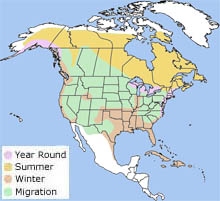
The American herring gull is found in New Hampshire, although its nesting range in the state is probably limited to the Isles of Shoals.
The American herring gull was once found in greater numbers in Hampshire in the 1970s and 1980s. Their numbers are lower now, in part because there are fewer landfills in the state.