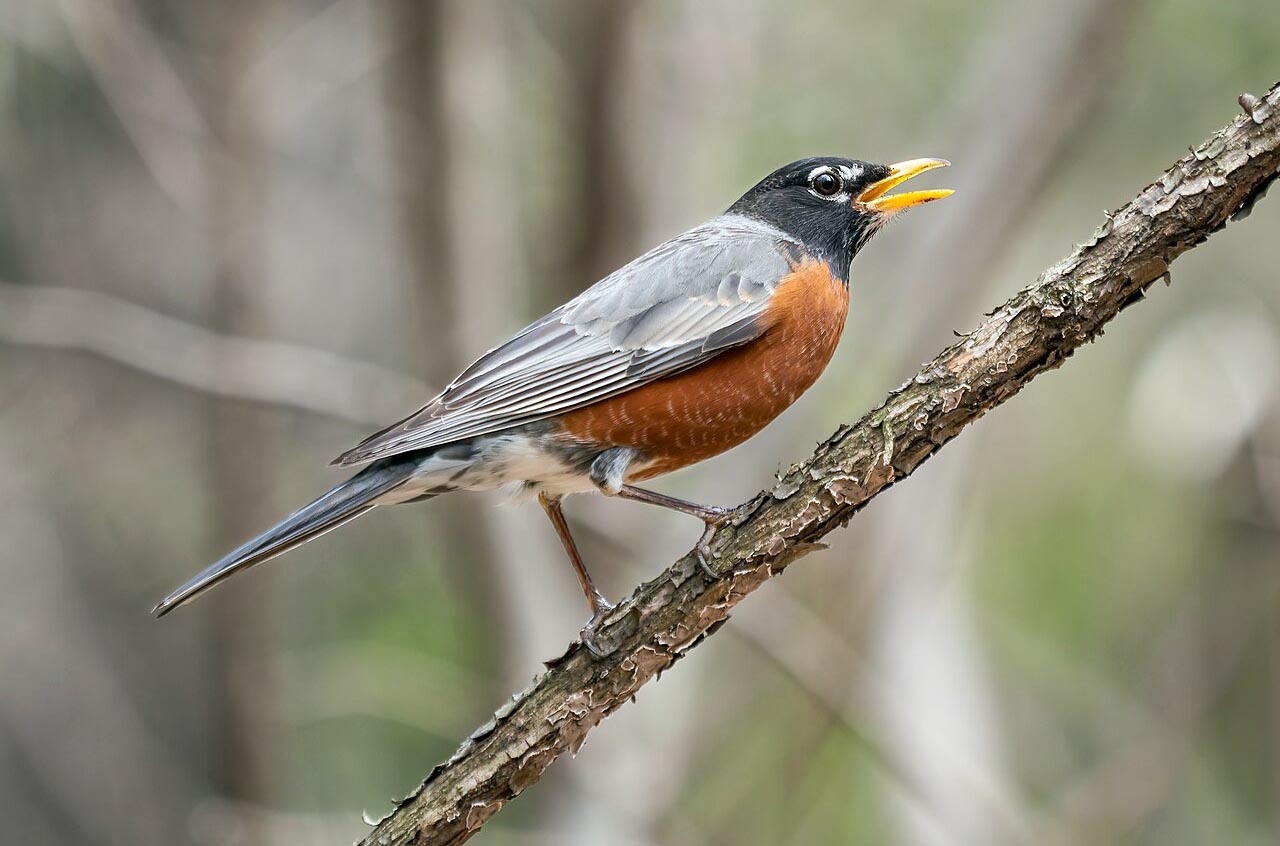
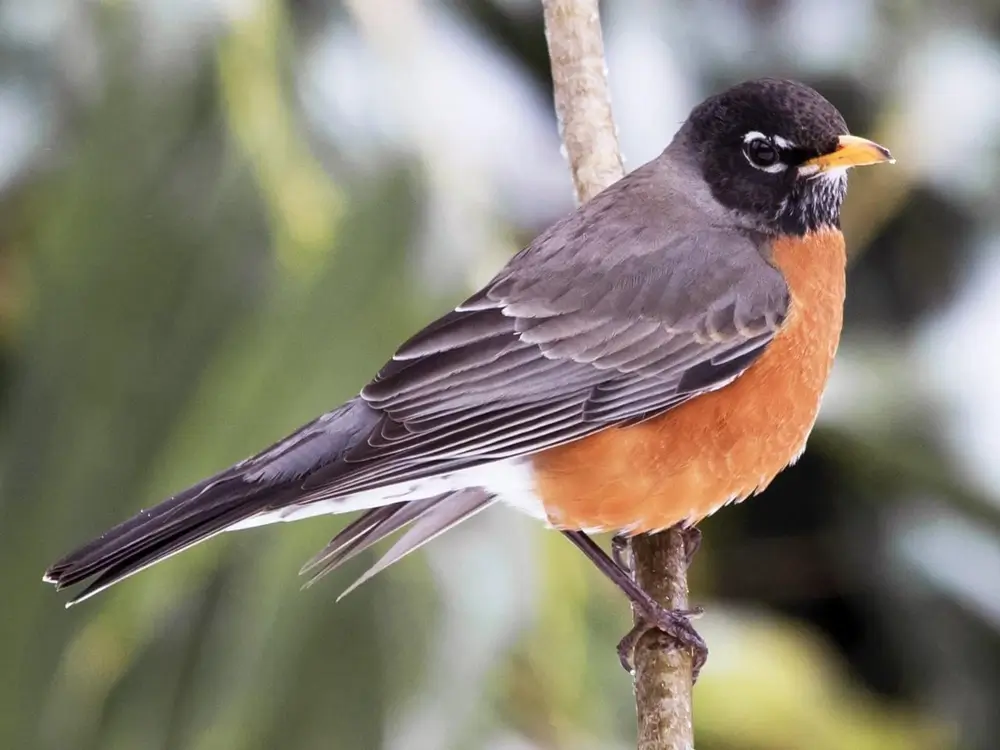
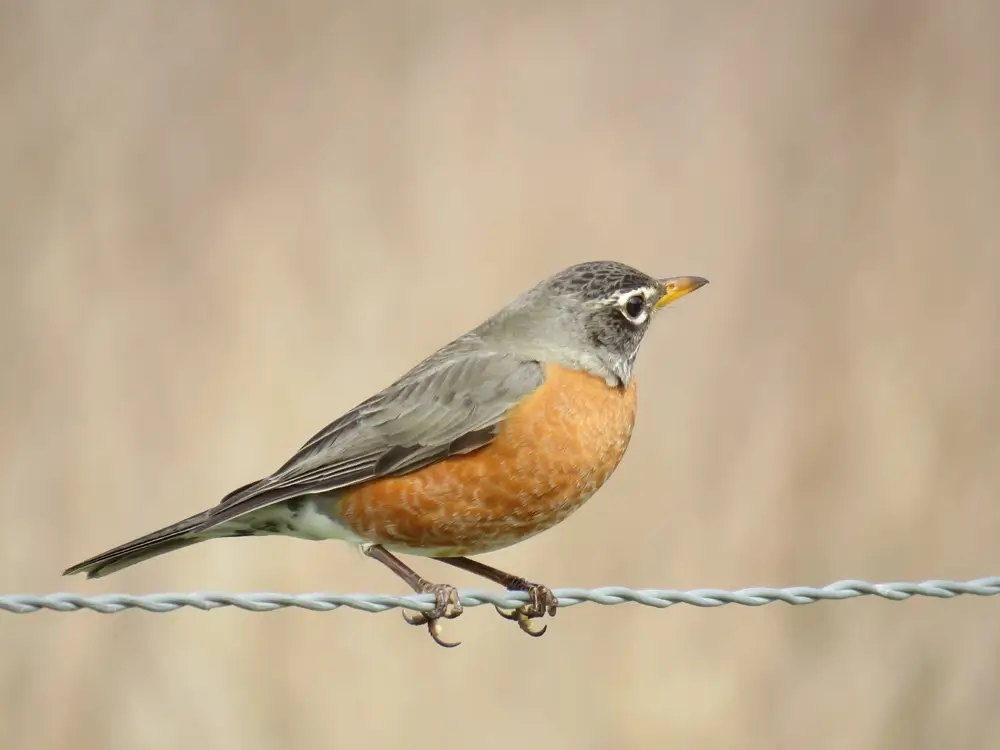
The American robin is 7.9-11.0 in (20-28 cm) in length and has a wingspan of 12.2-15.8 in (31-40 cm).
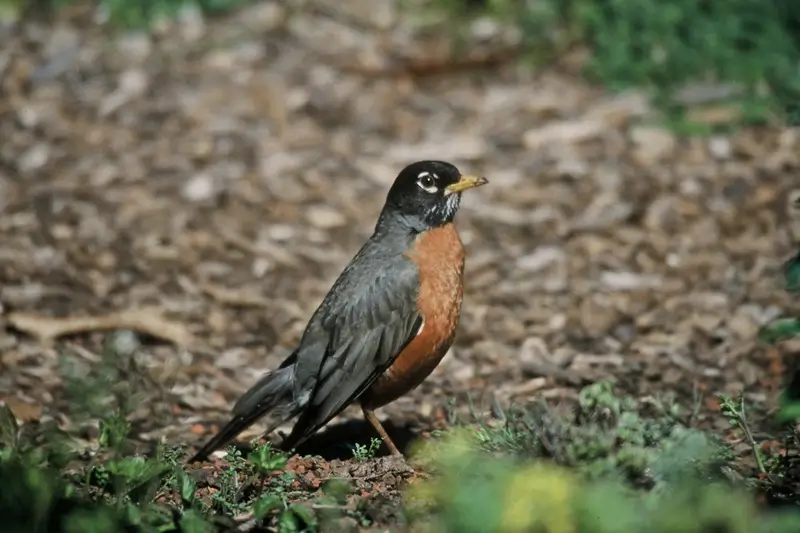
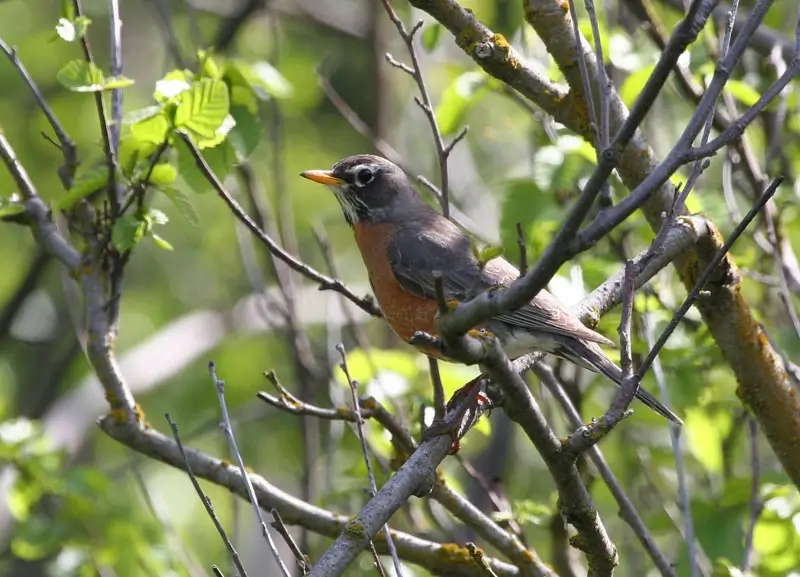
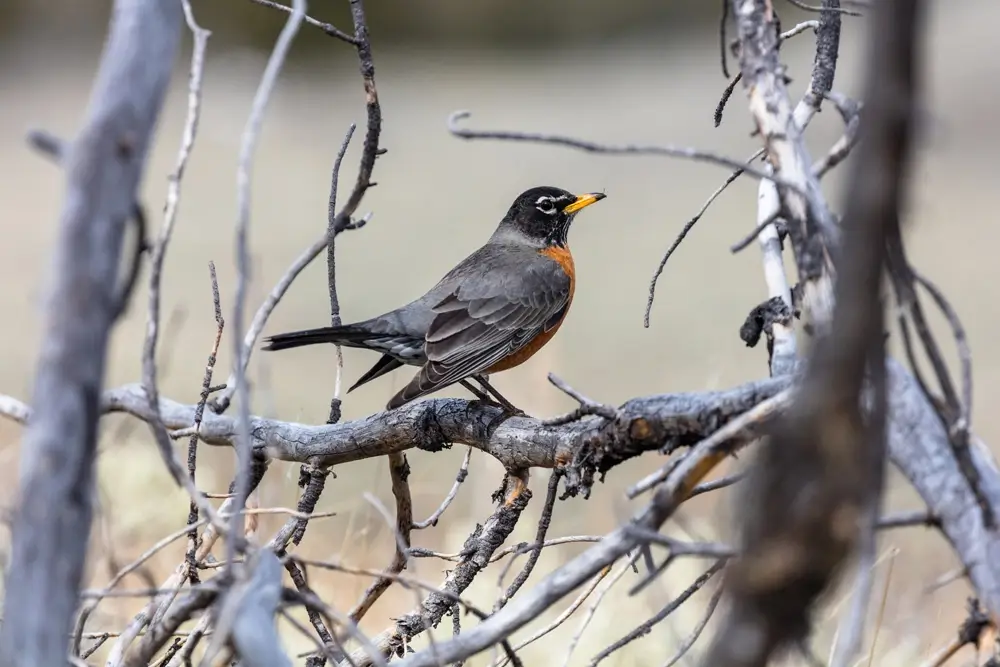
The male American robin has dark gray or brown back and wing feathers and reddish-orange breast feathers. The female has the same color pattern, but she is a little duller in color.
Habitat
The American robin lives in open woodlands, fields, gardens, and yards.
Diet
The American robin eats a variety of foods including fruits and berries, worms, grubs, and caterpillars. In winter, its diet is made up largely of berries. It is often seen on lawns in the morning looking for earthworms.
Life Cycle
Robins mate in the spring from April through July. A female may have two or three broods a season. The female builds a cup-shaped nest with twigs, grass, and feathers. She spreads mud on the inside of the nest with her breast. After she lines the nest with mud, she adds grass and other soft materials. Sometimes the male helps collect materials for the nest.
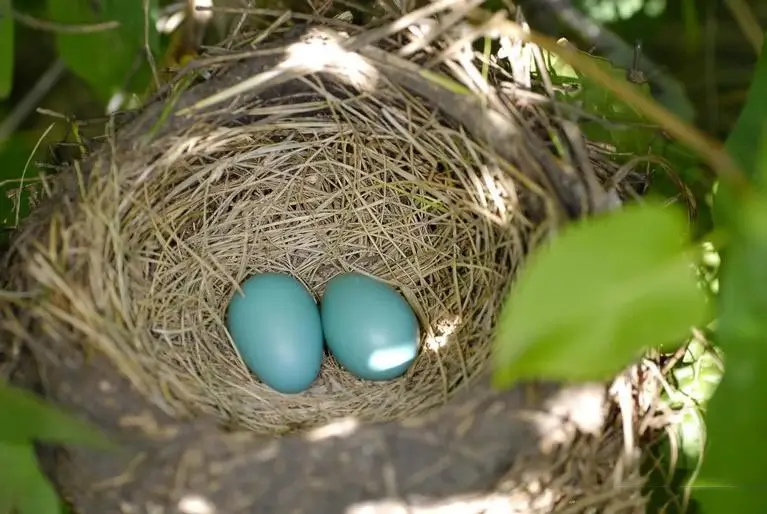
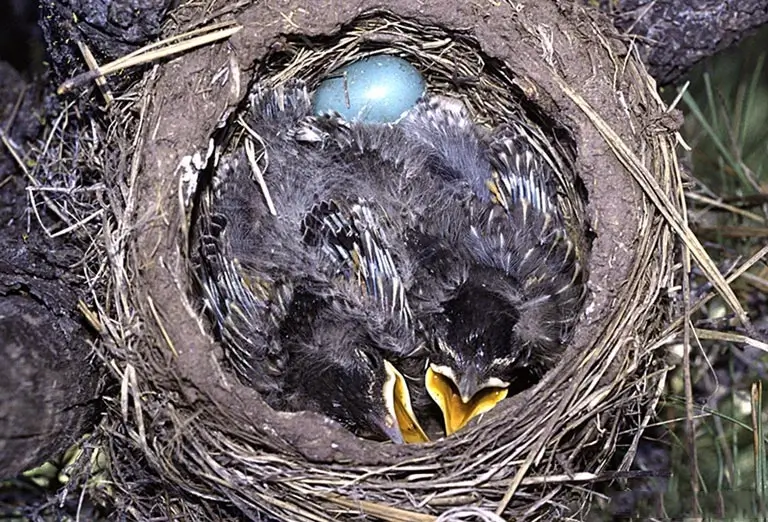
The nest is built 5-15 feet (1.5-4.6 m) above the ground in a tree or bush. Sometimes a robin builds its nest on a window ledge. The female lays two to five light blue eggs. The female incubates the eggs for about two weeks. Once the chicks hatch, the male and the female feed and care for them.
When they are about two weeks old, the chicks leave the nest for the first time. They will still beg for food from their parents as they nest under cover on the ground. They can fully fly about two weeks after leaving the nest.
American robins live for about two to six years in the wild, although there is a record of one American robin in the wild that lived to be 14 years old.
Behavior
The male robin uses its voice to protect its territory and to attract a mate. It is often one of the first birds heard in the spring.
Did You Know?
Support for NatureWorks is provided by:
The American Robin in NH
The American robin is found year-round except in much of Coos County and the White Mountains.
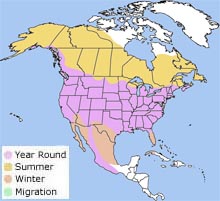
The American robin is found in all of the United States and Canada, except for Hawaii and the northernmost parts of Alaska and Canada. It is also found in parts of Mexico and Central America.
The American robin is migratory, and populations move south in the winter, although some populations remain in place.