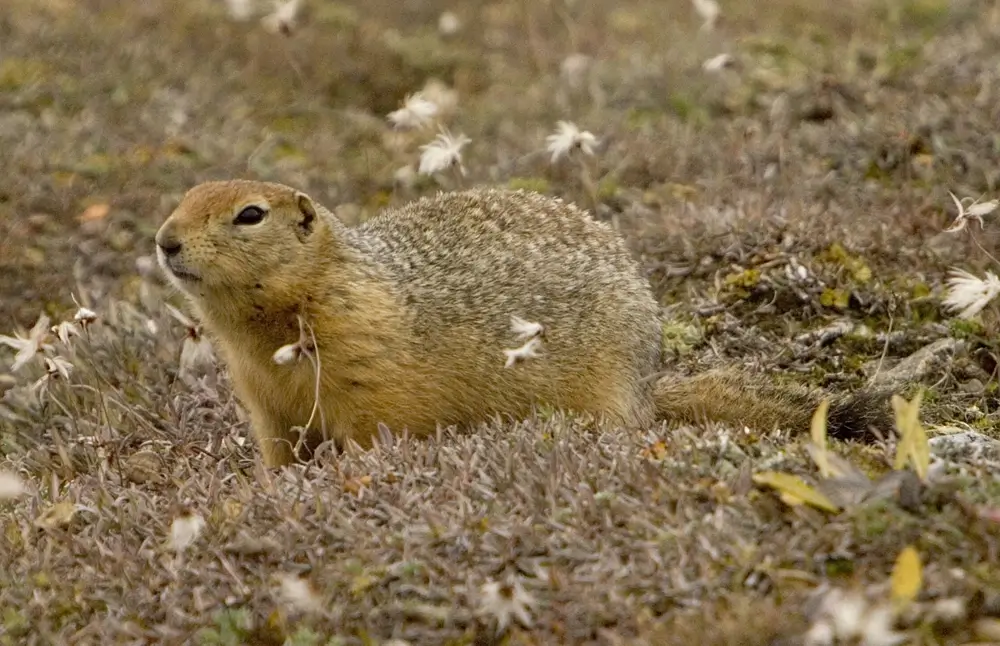
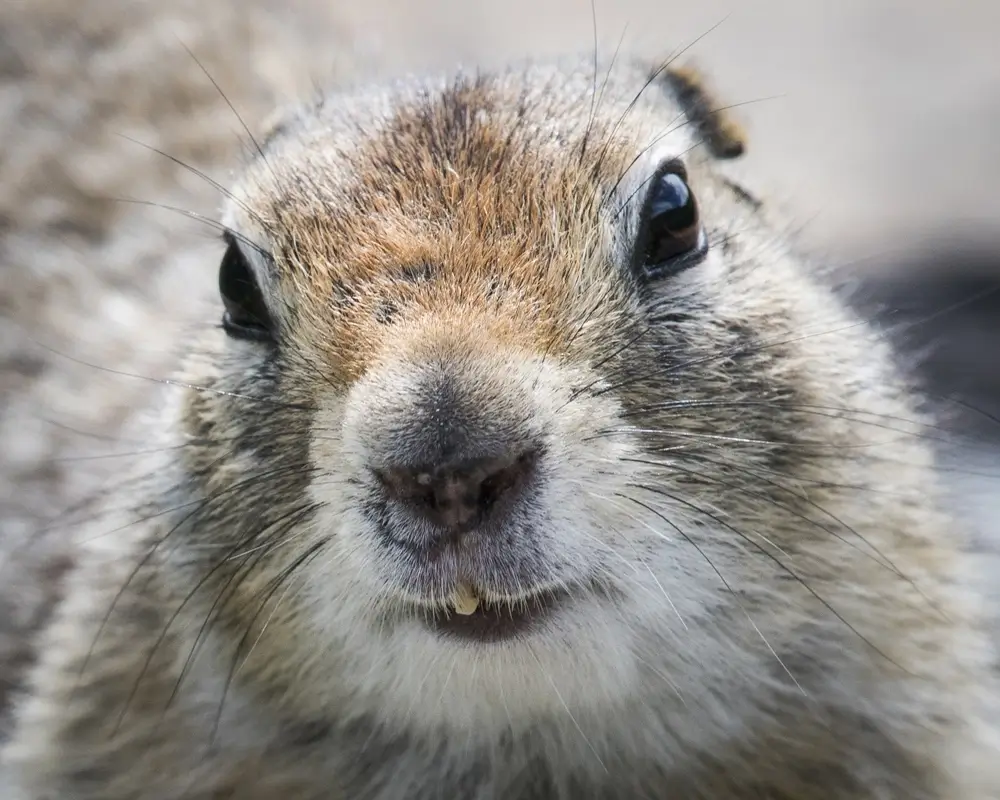
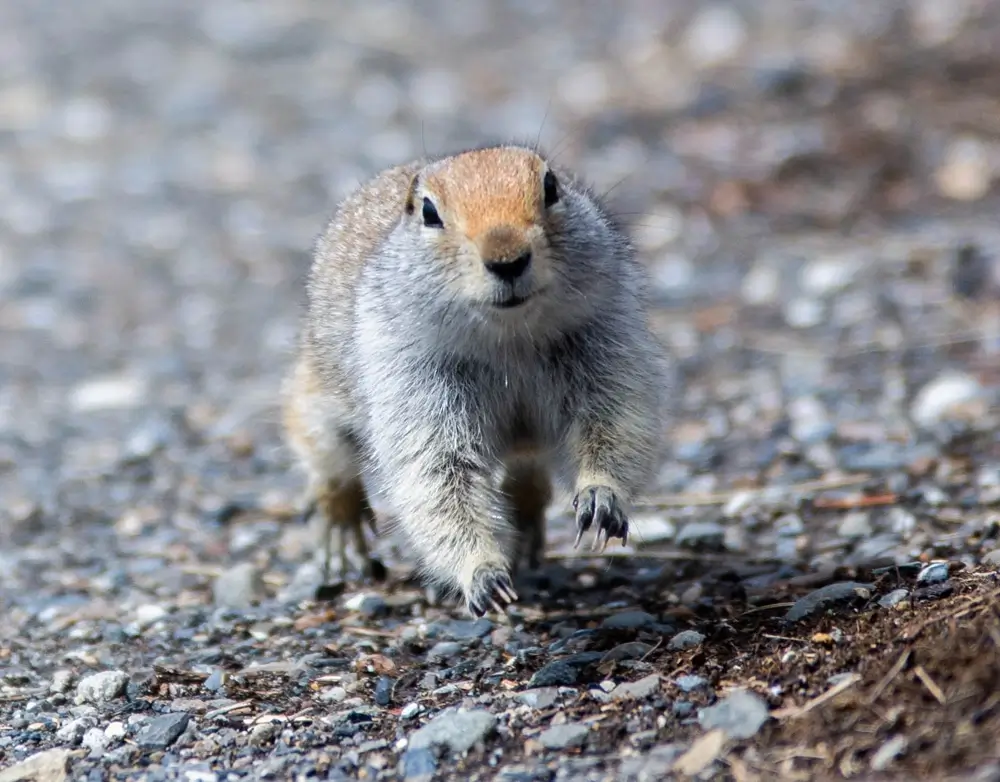
The Arctic ground squirrel is the largest North American ground squirrel. It is 13–19.5 inches (332–495 mm) in length and weighs between 1.2-3.3 pounds (524–1,500 g). It weighs more before it goes into hibernation. Males are usually larger than females.
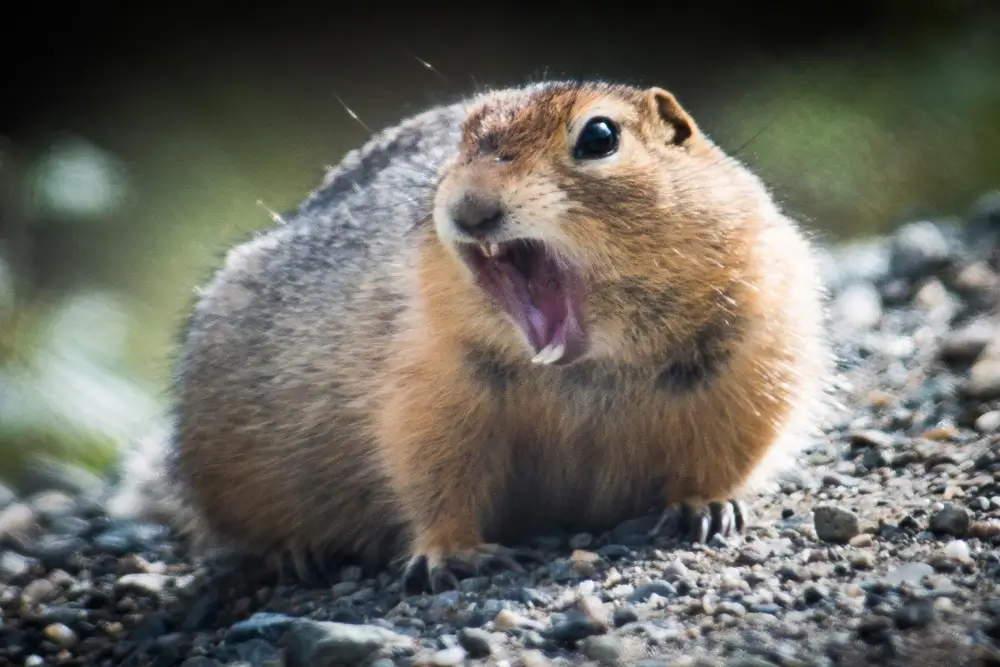
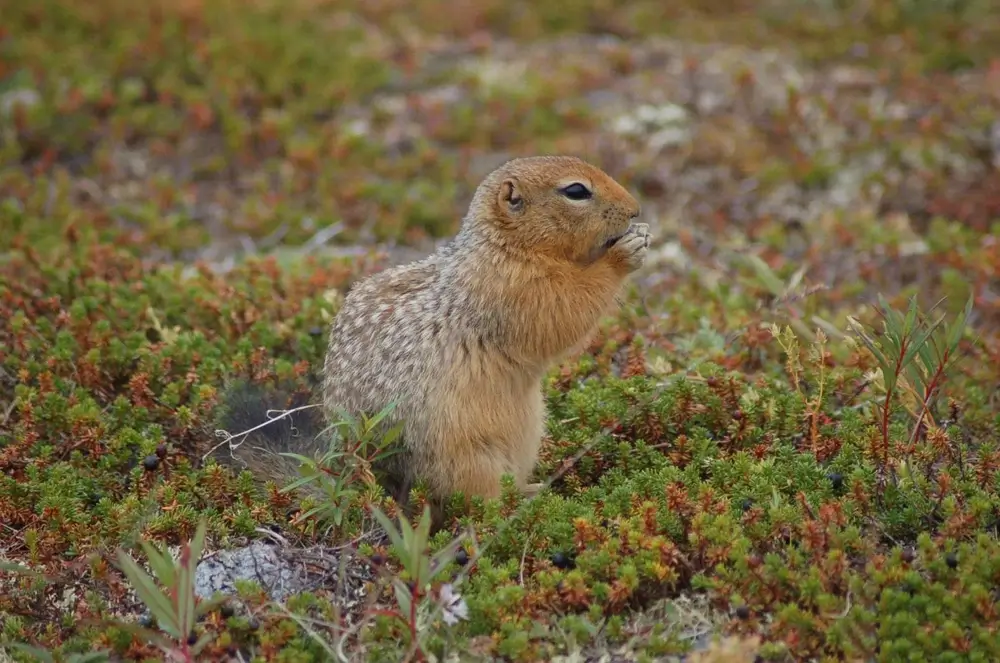
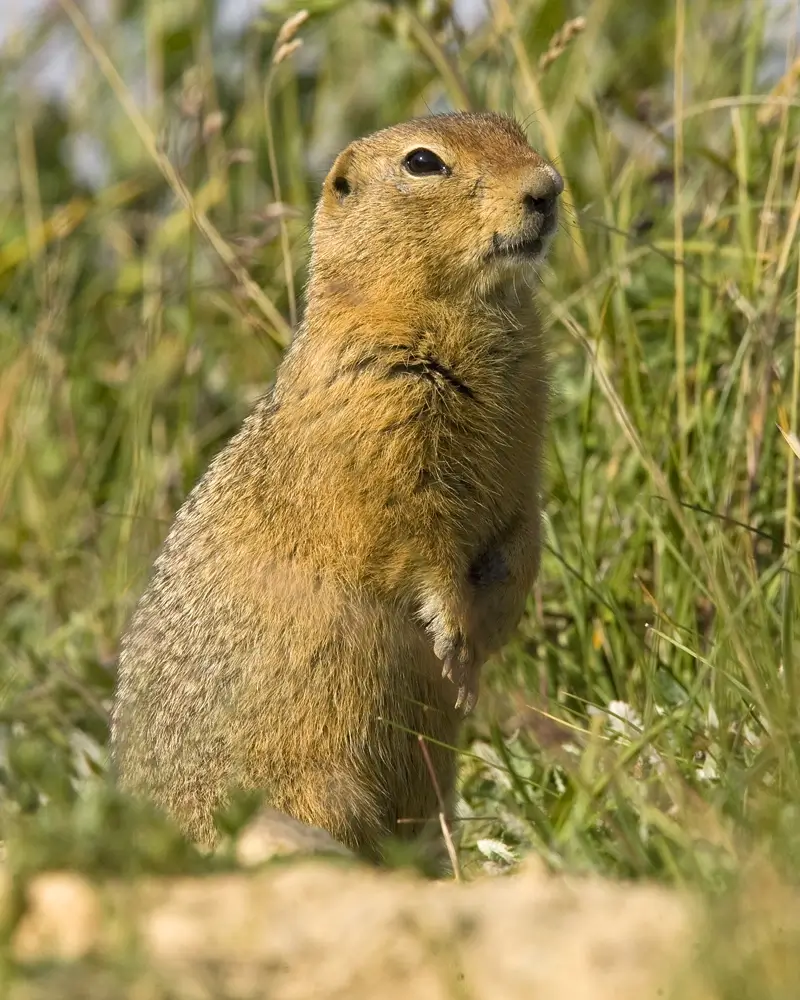
It has reddish fur on its face and sides and white-specked, gray to brown fur on its back. Its belly and the undersides of its legs are light brown. It has white fur around its eyes and a short, bushy tail. It has strong front paws that are well-adapted for digging and burrowing.
Habitat
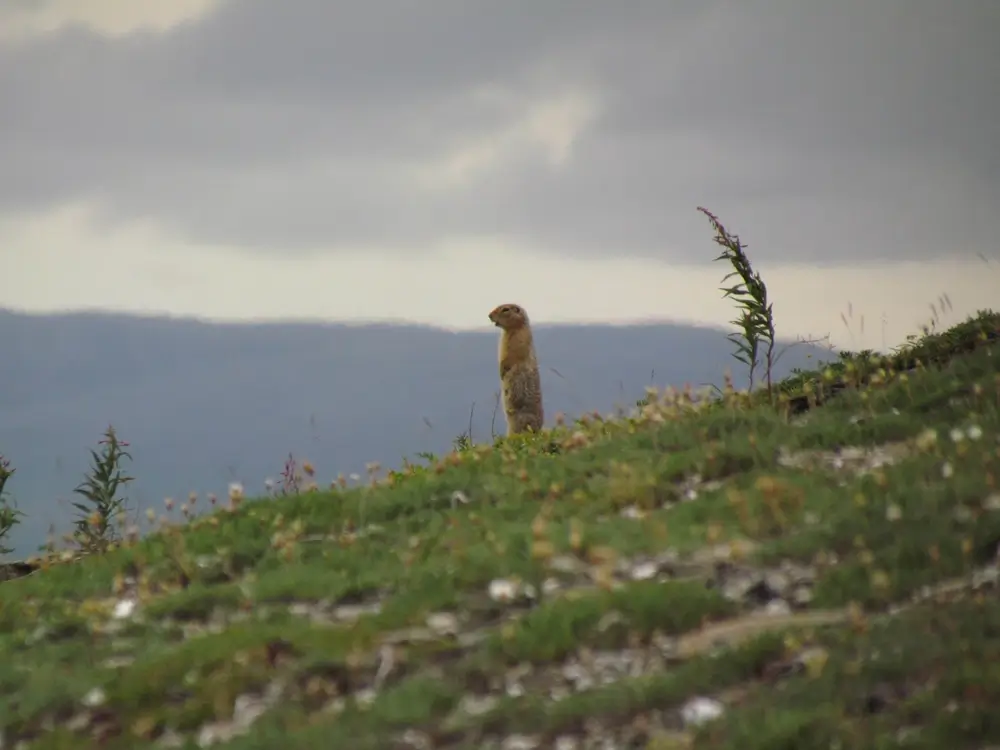
The Arctic ground squirrel lives in bushy meadows, riverbanks, lakeshores, and sandbanks in alpine and Arctic tundra. They prefer areas with well-drained soil. This helps keep their underground burrows protected from flooding during heavy rains. They also prefer locations with good places for keeping watch for predators.
Diet
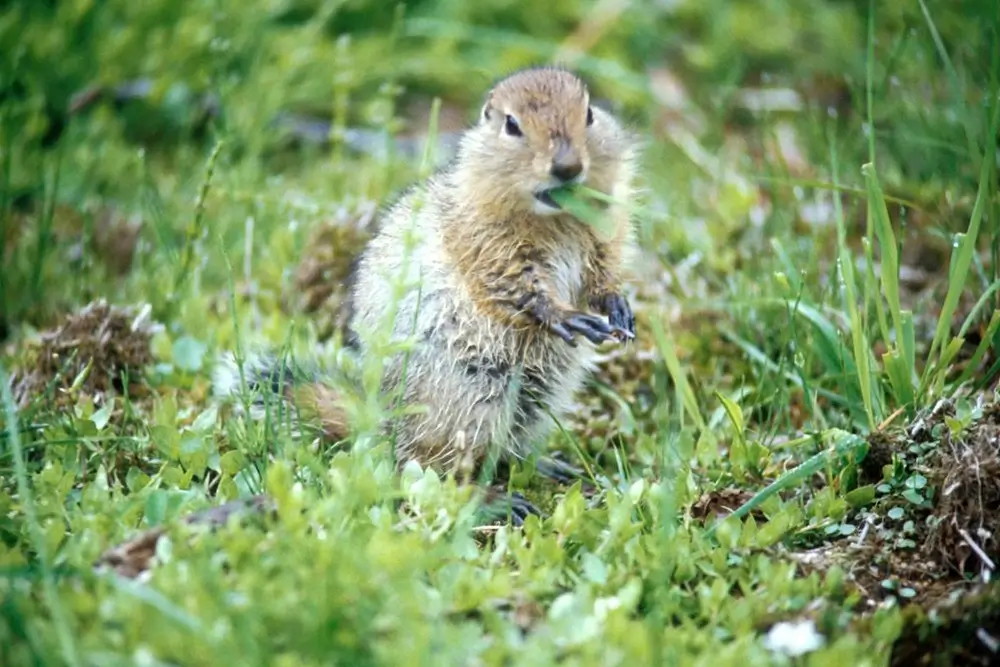
The Arctic ground squirrel is an herbivore. It eats a variety of plants, including seeds, berries, willow leaves, mushrooms, grasses, and flowers. In the summer, it begins to store willow leaves, seeds, and grasses in its burrow.
The Arctic ground squirrel hibernates in the winter and uses this store of food after it wakes up while it is waiting for spring plants to grow. The Arctic ground squirrel hibernates for up to seven months, from September through April.
Life Cycle
The Arctic ground squirrel mates in May. The female has 5-10 babies. Baby Arctic ground squirrels are known as kits. The kits are born blind and hairless in late June. The kits begin to grow hair after about eight days, and their eyes open after about twenty days.
They leave the burrow to explore their surroundings after their eyes open. The kits are fully weaned by September and leave their mother to find or make their own burrow.
The Arctic ground squirrel has a lifespan of 8-10 years in the wild.
Behavior
Arctic ground squirrels live in colonies of hundreds of squirrels. Each colony has a couple of dominant males that control the territory. Arctic ground squirrels are usually active between four in the afternoon and nine or ten at night. On rainy and cloudy days, they stay in their burrows.
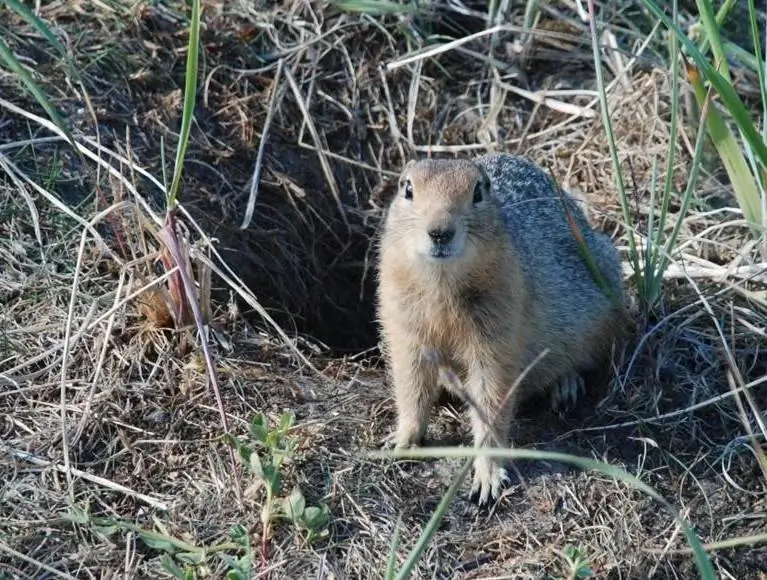
An Arctic ground squirrel colony is made up of burrows that are dug about three feet (0.91 m) under the ground. A series of tunnels connects the burrows. Brown bears often dig up a whole system of burrows to catch the squirrels.
Arctic ground squirrels are very vocal. In fact, they are called “tsik-tsik” by the Inupiat people in Alaska because of the sounds they make.
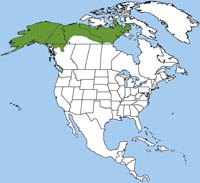
In the United States, the Arctic ground squirrel is found in Alaska. In Canada, it is found in the Yukon Territory, northern British Columbia, and the mainland of the Northwest Territory. The Arctic ground squirrel is also found in Siberia.