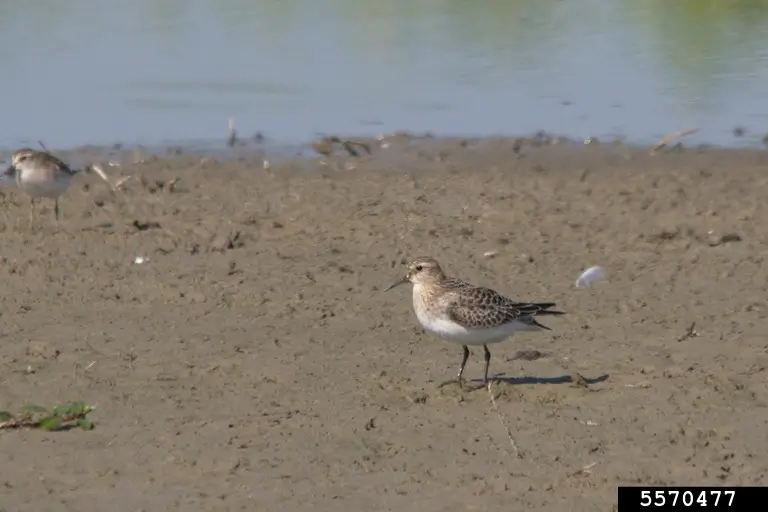
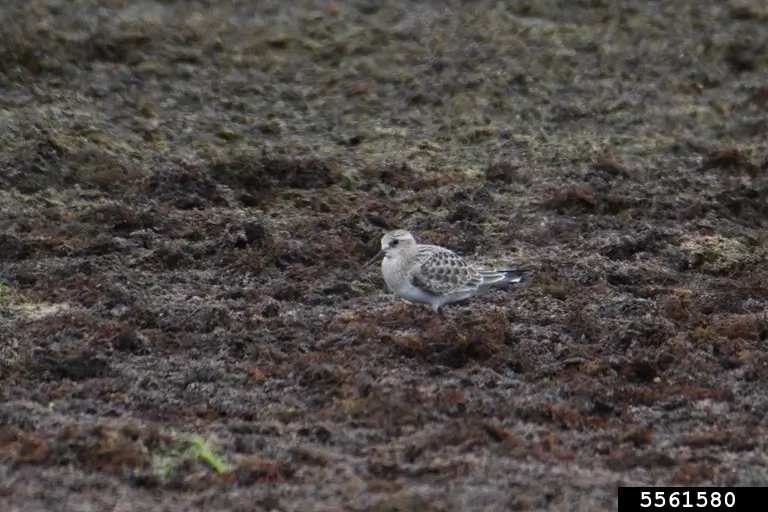
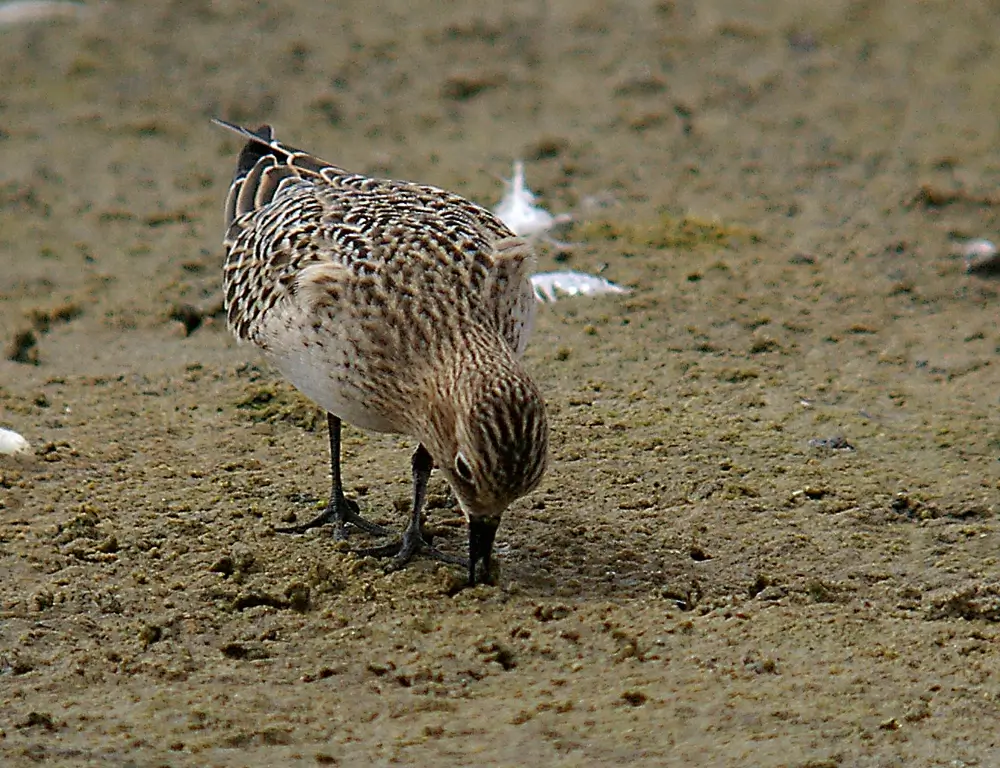
Baird’s sandpiper is a small shorebird. It is 5.5-7.1 inches (14-18 cm) in length with a wingspan of 13.8-15.0 inches (35-38 cm).
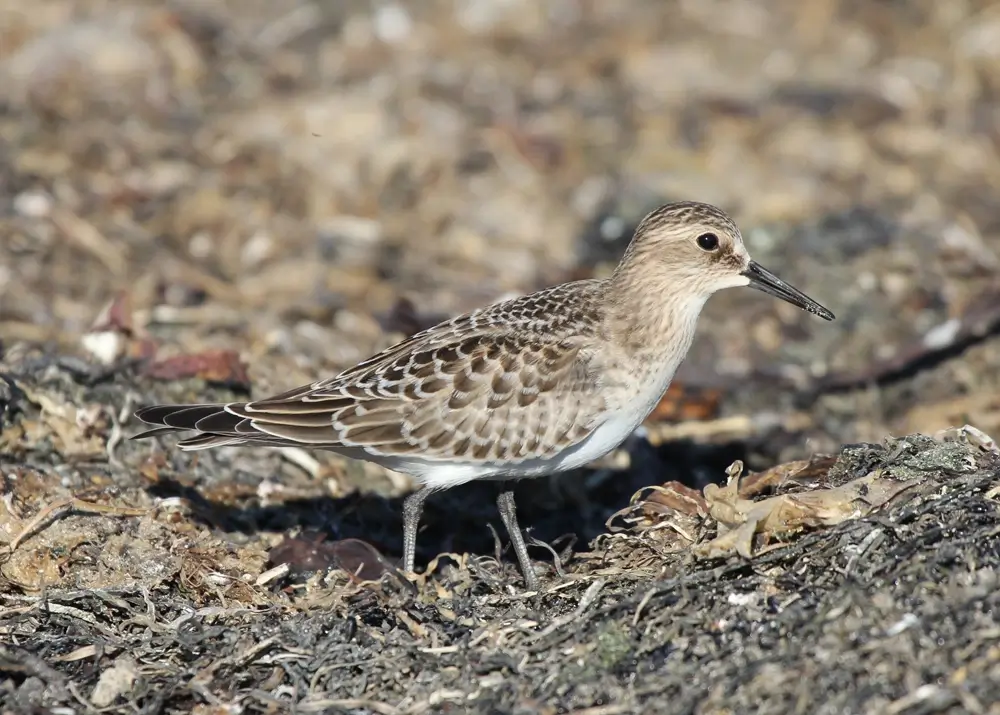
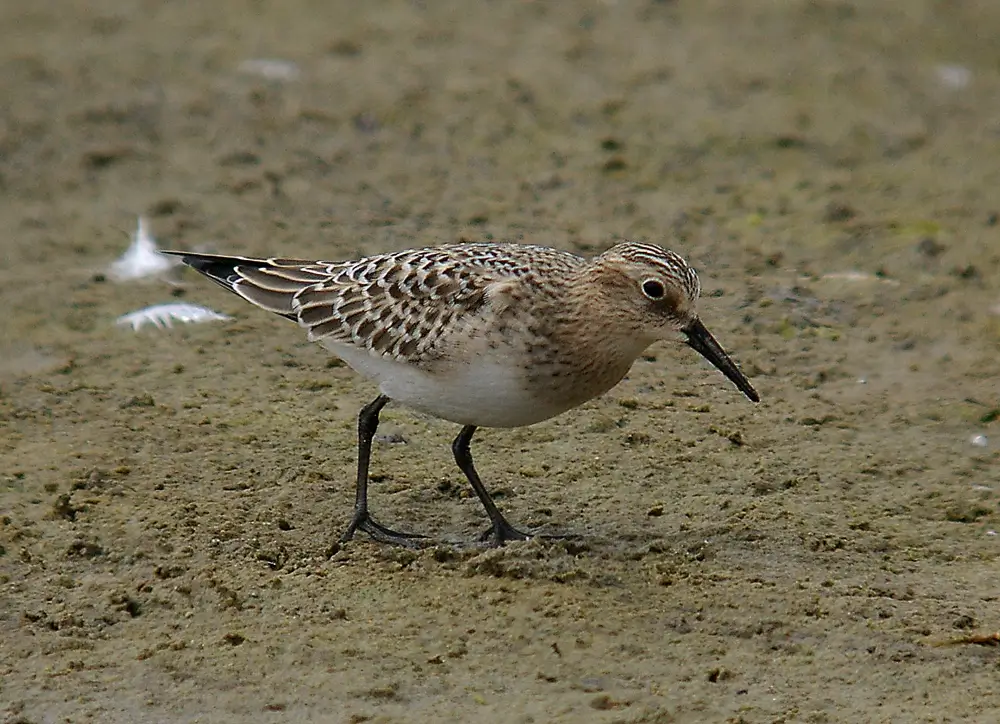
It has a medium-sized, straight, thin bill; a short neck; a round head; long black legs; and wings that extend beyond its tail. It is white on its undersides and lightly marked with grayish-brown on its neck and breast.
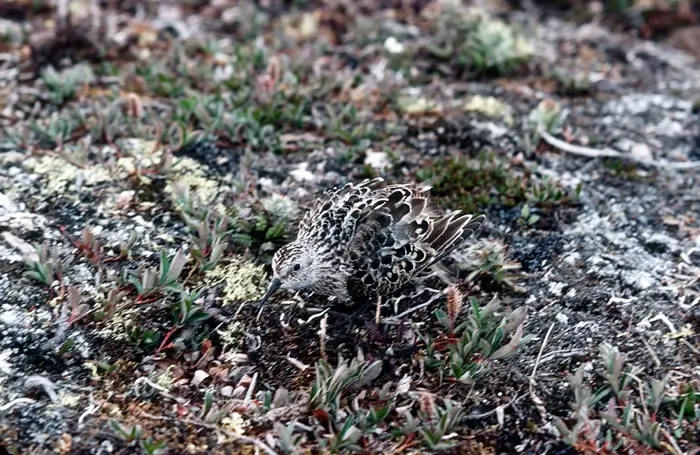
It has scallop-shaped brown and black markings edged with white on its back and wings, and white wing stripes that are visible when it is in flight.
Males and females look alike.
Baird’s sandpiper eats larvae, beetles, grasshoppers, and spiders. It feeds mostly on land, but it sometimes feeds in shallow water.
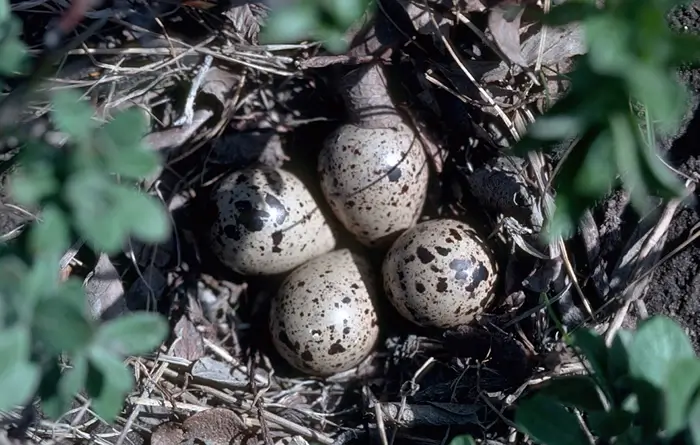
The male builds a shallow scrape lined with lichen, grass, and leaves among the rocks or in a clump of vegetation. The female Baird’s sandpiper lays 4 spotted brown eggs.
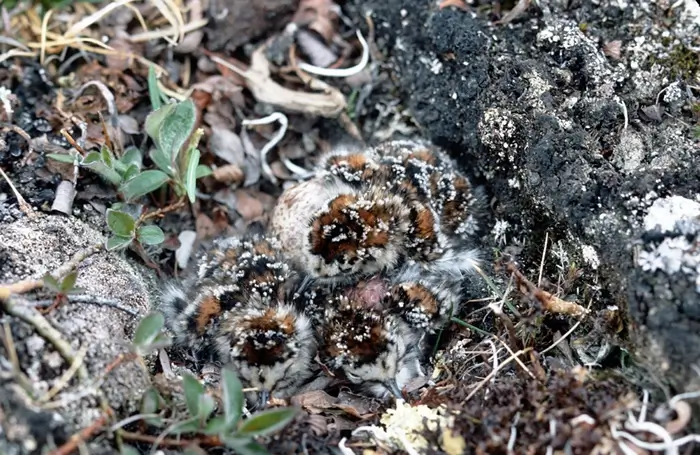
Both parents incubate the eggs for 21-22 days. The chicks are precocial and leave the nest and feed themselves shortly after hatching.
Both the male and female care for the chicks, but the female usually leaves them to begin her migration. The male stays with them until they fledge at 16-21 days old.
Baird’s sandpiper has a lifespan of 3-5 years in the wild.
Baird’s sandpiper is sometimes called the grasspiper because, unlike most shorebirds, it feeds mostly on dry land.
Baird’s sandpiper is named for Spencer Fullerton Baird, who was a professor of natural sciences and the Secretary of the Smithsonian Institution.
He also headed the Bureau of Fisheries, which later became the National Marine Fisheries Service.

Support for NatureWorks Redesign is provided by:
Baird’s sandpiper does not breed in New Hampshire, but it is sometimes spotted on the coast of New Hampshire in the fall.
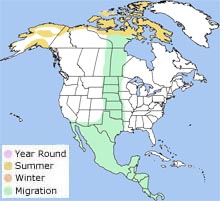
Baird’s sandpiper breeds in the Arctic regions of Alaska and Canada. It migrates through the Great Plains and winters in South America.
During migration, it often gathers in flocks in the Great Plains and then flies nonstop, sometimes traveling as far as 4,000 miles (6437.4 km), to South America.
In the fall, small numbers of Baird’s sandpipers can be found on the Atlantic Coast, including the coast of New Hampshire.
Baird’s sandpiper is also found in the Arctic regions of Greenland and Siberia.
NHPBS inspires one million Granite Staters each month with engaging and trusted local and national programs on-air, online, in classrooms and in communities.