The Baltimore oriole is 6.7-7.5 inches (17-19 cm) in length with a wingspan of 9.1-11.8 in (23-30 cm).
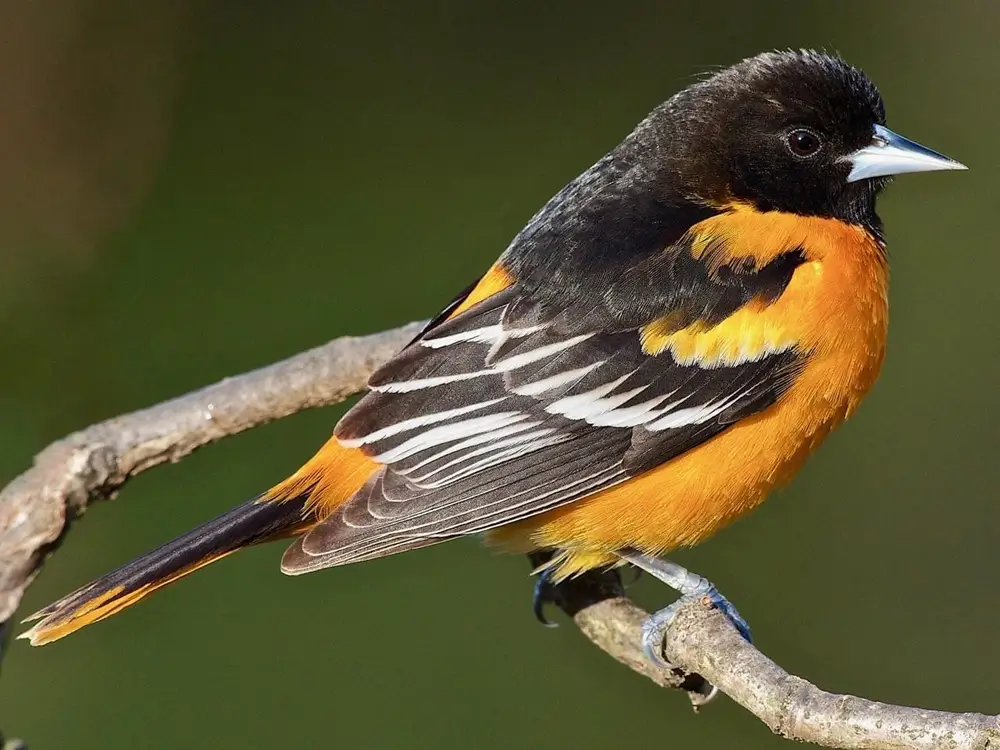
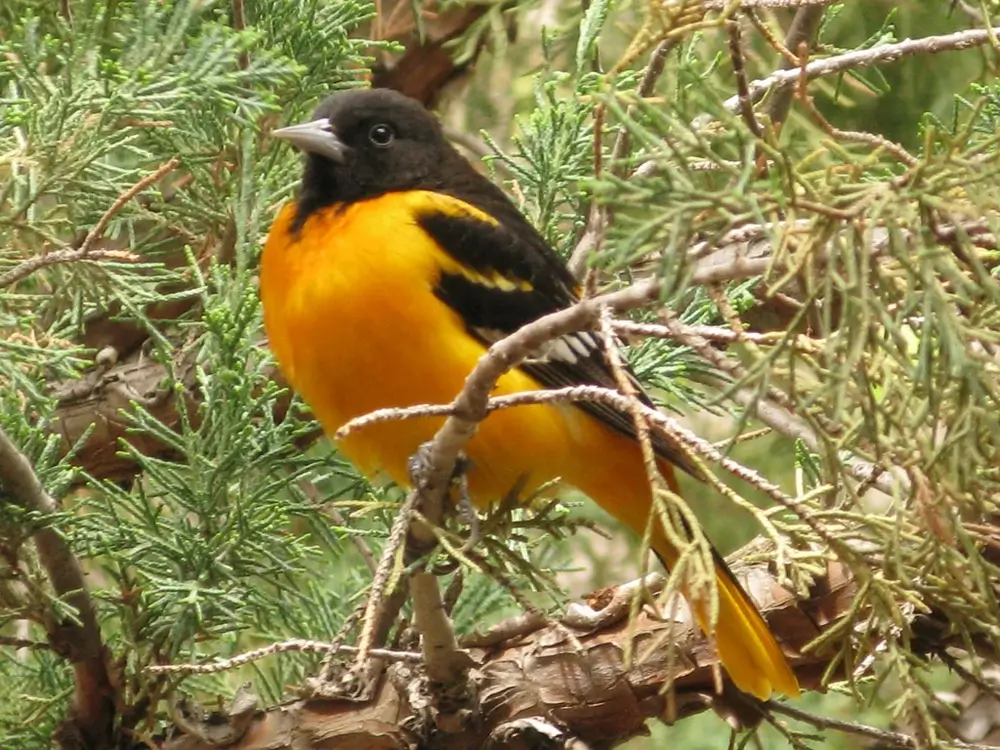
It is one of the brightest birds in the forest. The male has a black head, back, wings, and tail, and an orange breast and shoulder patch.
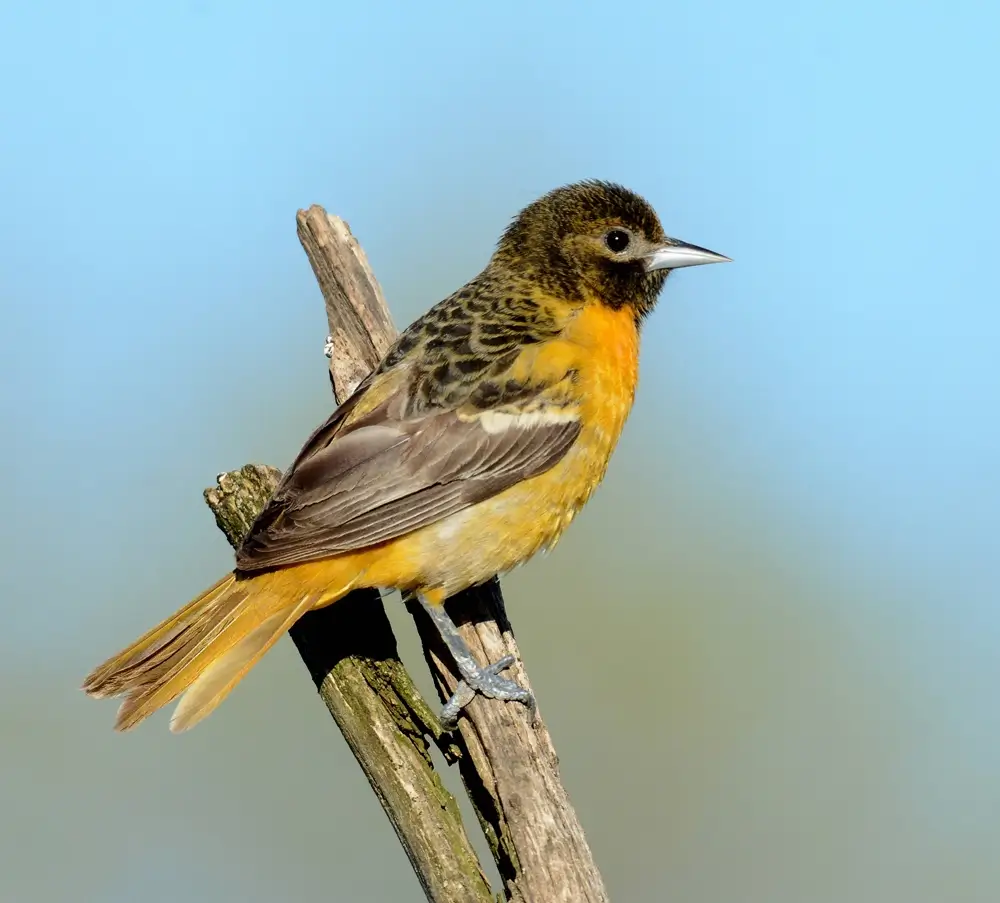
The male is much more colorful than the female, who is olive-brown with a dull yellow front.
The Baltimore oriole spends its time high in deciduous trees looking for fruit and insects. It is found in open woodlands, on forest edges, in orchards, along rivers, and in parks and backyards.
In its winter habitat in Central America, it can be found in shady coffee and cocoa plantations.
The Baltimore oriole is an omnivore, it eats insects, fruit, and nectar from flowers. It eats caterpillars and other insects during the summer when it is breeding and feeding its young.
During the spring and fall, the Baltimore oriole eats fruit to gain energy for migration. The oriole prefers dark, ripe fruit like cherries and deep purple grapes.
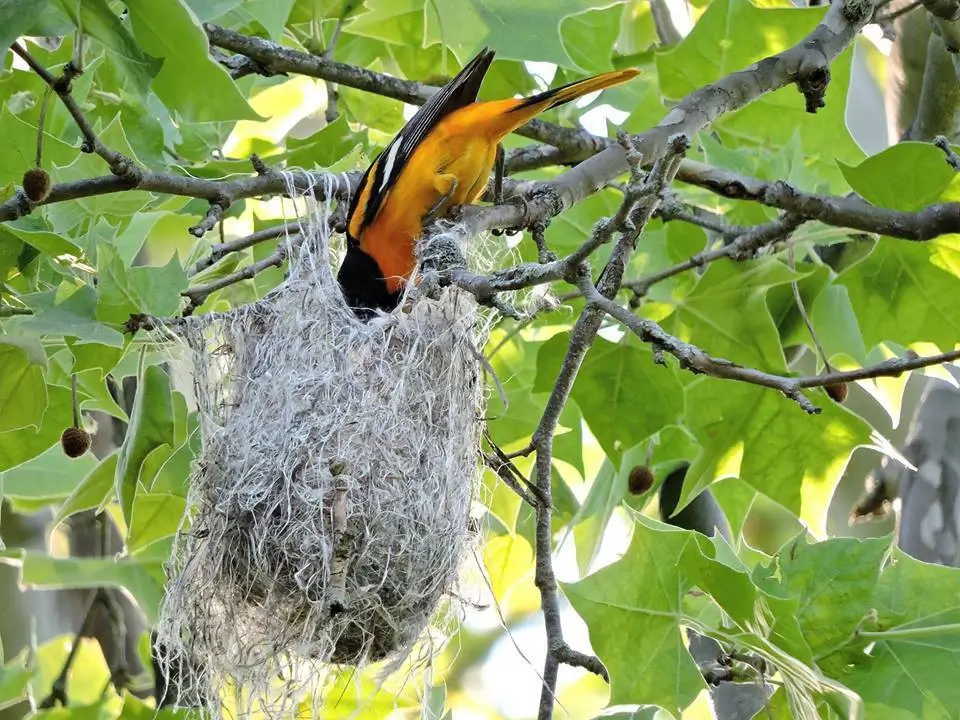
The female builds a remarkable nest 25-30 feet (7.6-9.1 m) above the ground. Its nest looks like a hanging basket. The nests are much easier to see in the winter after trees have lost their leaves.
The Baltimore oriole lays 4-6 speckled gray-blue eggs and incubates them for 11-14 days. Both parents feed the young chicks, who stay with their parents for two weeks after hatching.
The Baltimore oriole has a lifespan of up to 11 years in the wild. One Baltimore oriole in captivity lived for 14 years.
Sometimes, the Baltimore oriole feeds in an odd way called gaping. It stabs its closed bill into a soft fruit and then opens its mouth, catching the juice inside to drink with its tongue.
The Baltimore oriole takes its name from the family colors, orange and black, of Cecil Calvert, Lord Baltimore, who founded the colony of Maryland as a refuge for English Catholics.
The Major League Baseball team in Baltimore is called the Baltimore Orioles.

Support for NatureWorks Redesign is provided by:
The Baltimore oriole begins arriving in New Hampshire in May.
They breed across New Hampshire, except in Coos County and the northern parts of Grafton and Carroll Counties.
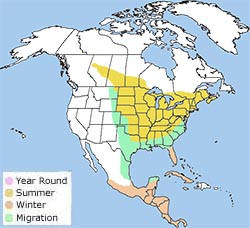
The Baltimore oriole breeds in the eastern U.S. and southern Canada.
It winters in Florida, the Caribbean, Mexico, and Central and South America.
It arrives in its breeding in early spring and may leave as early as July.
NHPBS inspires one million Granite Staters each month with engaging and trusted local and national programs on-air, online, in classrooms and in communities.