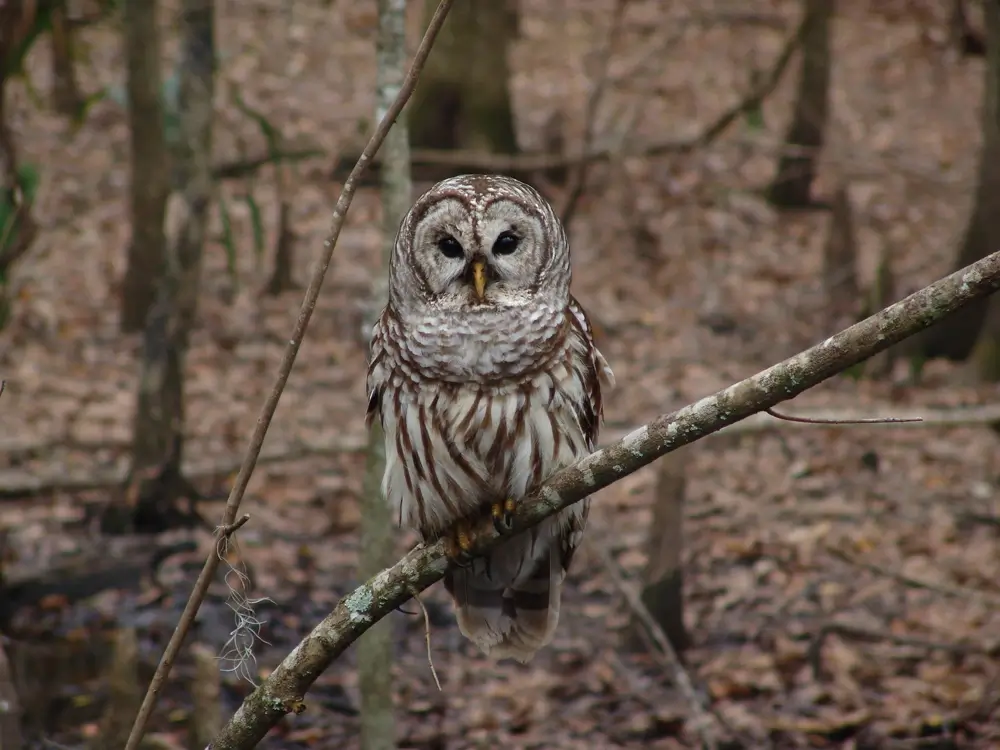
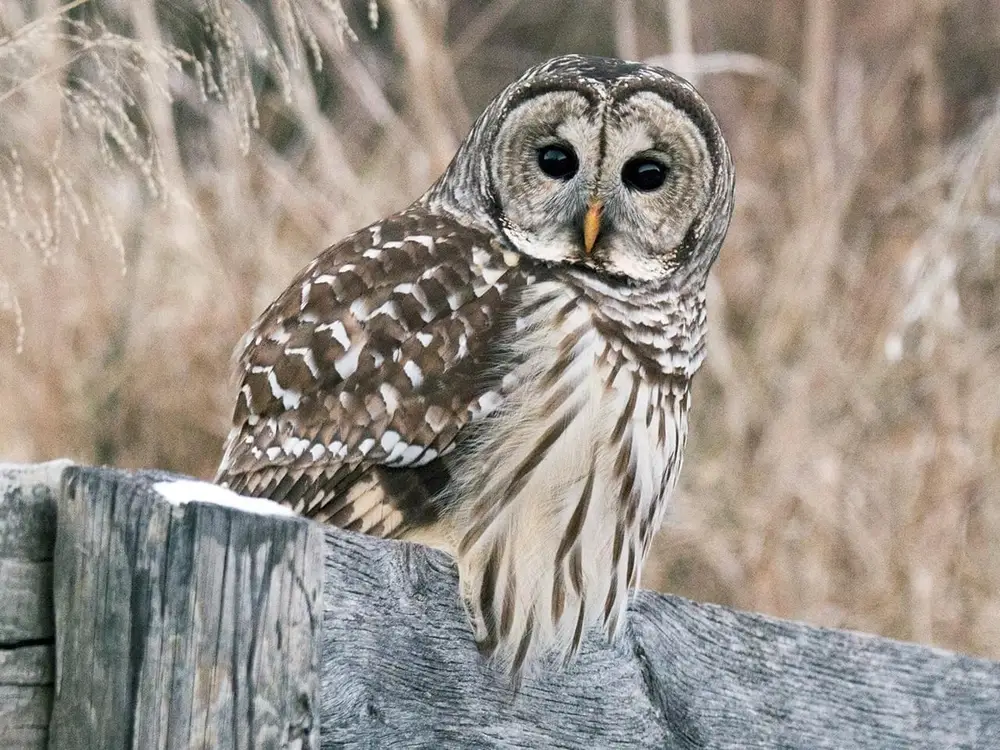
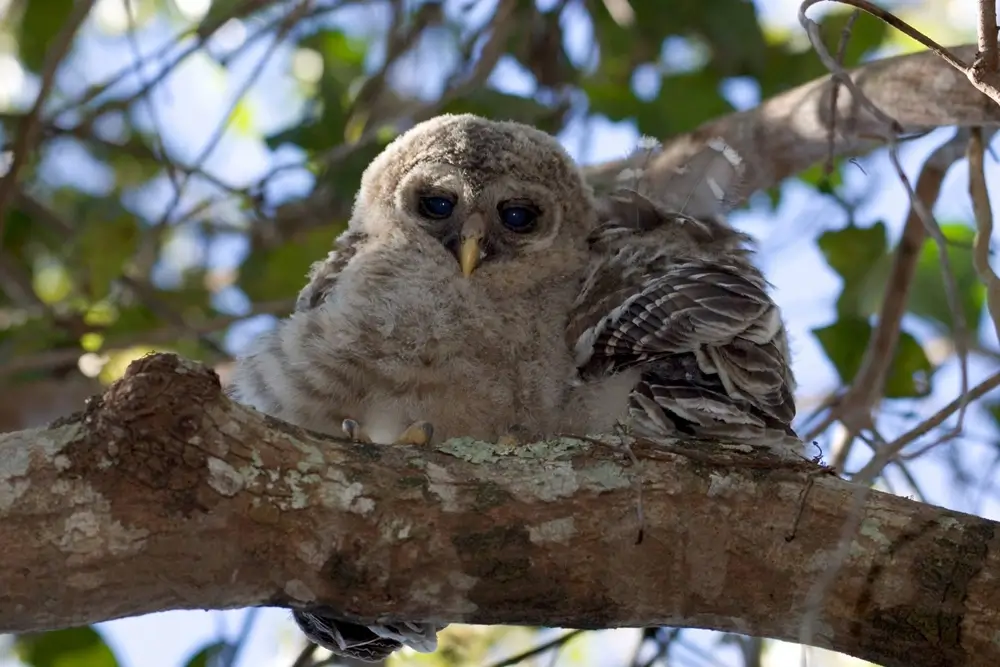
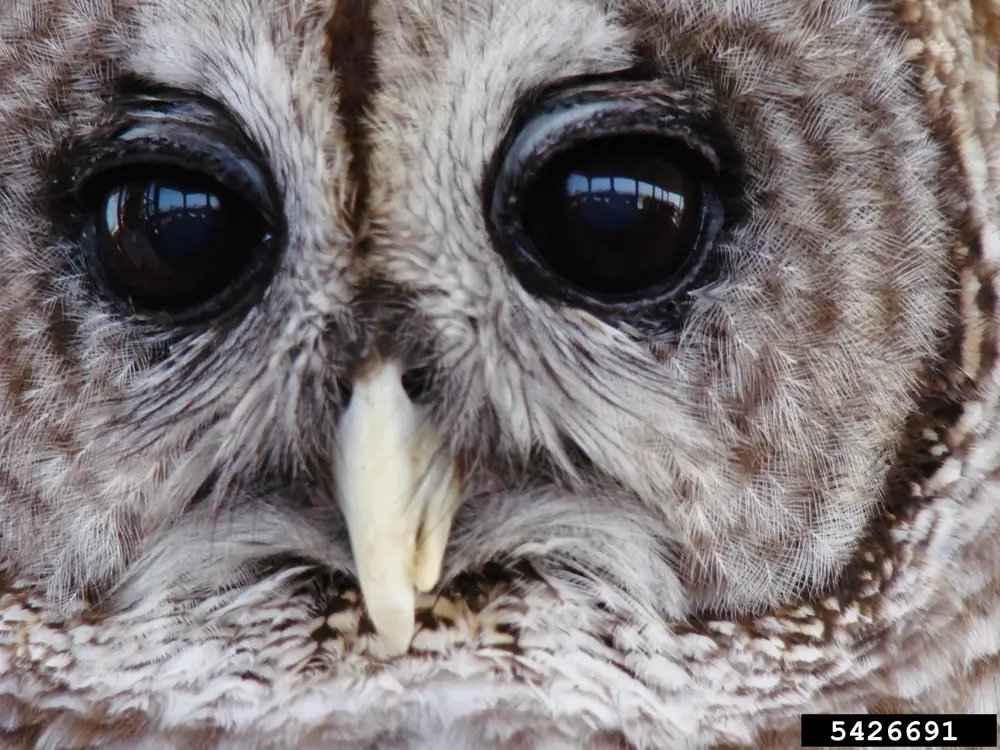
The barred owl is a large, stocky owl with a round head and no ear tufts. It is 16.9-19.7 inches (43-50 cm) in length and has a wingspan of 3.25-4 feet (0.99-1.2 m).
The barred owl has brown and white feathers that make a vertical pattern on its front and a horizontal pattern on its throat. It has a yellow beak and talons.
Females are larger than males.
Habitat
The barred owl is arboreal. Arboreal animals live in trees. It prefers large, old-growth forests made of deciduous and evergreen trees.
The barred owl makes its nest in tree cavities or holes in trees. The best tree cavities are found mostly in large, old trees, and that is why the barred owl is usually found in old-growth forests.
Diet
The barred owl eats small mammals, like mice, squirrels, and rabbits. It also preys on birds, reptiles, amphibians, and insects. It only eats food that it can swallow whole.
It hunts at night from a perch in a tree. It noiselessly swoops down and takes its prey in its sharp talons.
Sometimes, the barred owl stores food in its nest or in the crook of a tree to eat later.
Life Cycle
The barred owl breeds once a year, from December to March. The female lays two to three eggs and will incubate them for 28-33 days. While the female incubates her eggs, the male hunts for food.
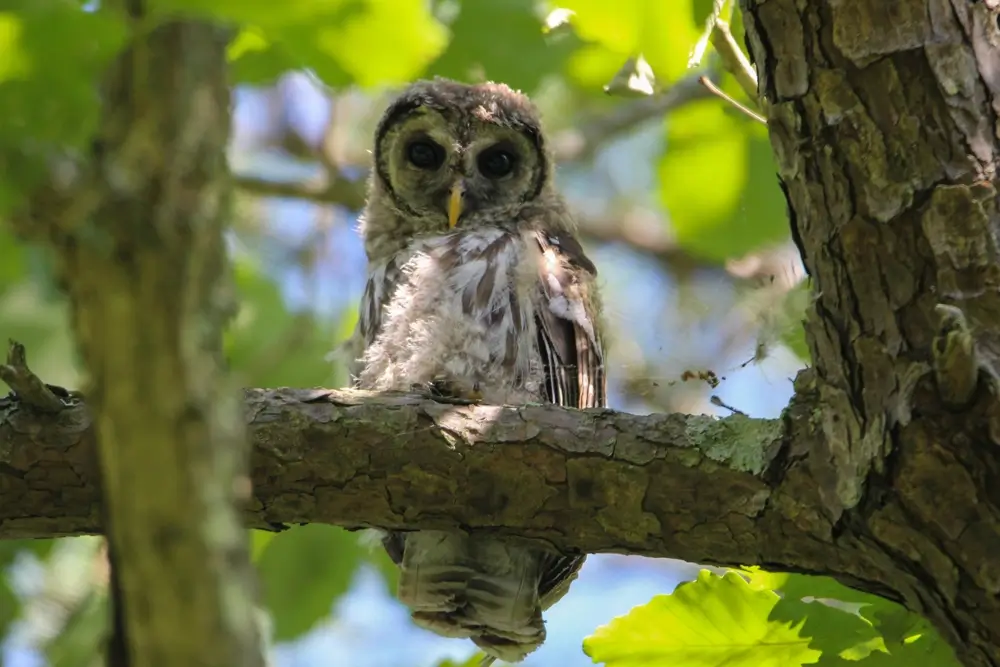
Once the eggs hatch, the chicks stay in the nest for three weeks and are fed by the male. When the chicks are six weeks old, they learn to fly. Chicks stay with their parents for about six months before leaving the nest.
The barred owl has a lifespan of around 10 years in the wild. In captivity, they can live to be around 20 years old.
Behavior
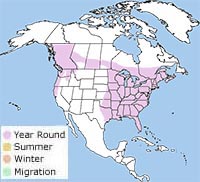
As the barred owl range spreads to the Pacific Northwest, it is being forced to compete for resources with a related species, the endangered spotted owl.
Did You Know?
The barred owl is often identified by its call that sound like “Who cooks for you? Who cooks for you-all?”
Support for NatureWorks is provided by:
The Barred Owl in NH
The barred owl is a year-long resident of New Hampshire and is the most common owl in the state.