Barrow’s goldeneye is 16.9-19.1 inches (43-48.4 cm) in length with a wingspan of 27.6-28.7 inches (70-73 cm).
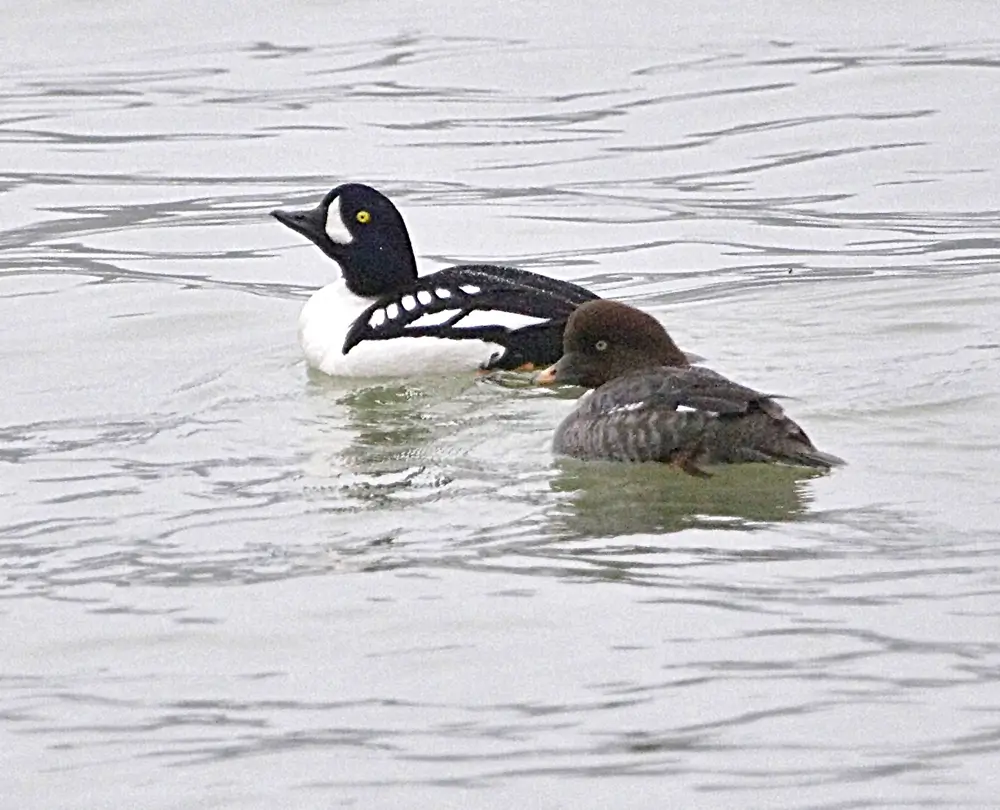
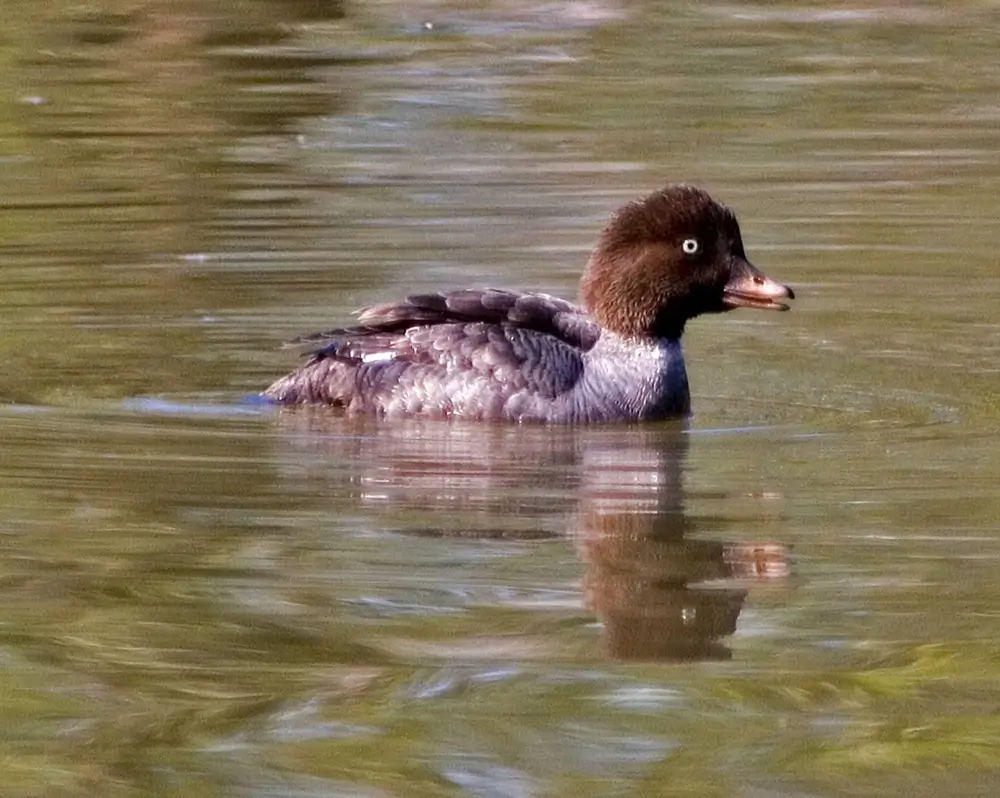
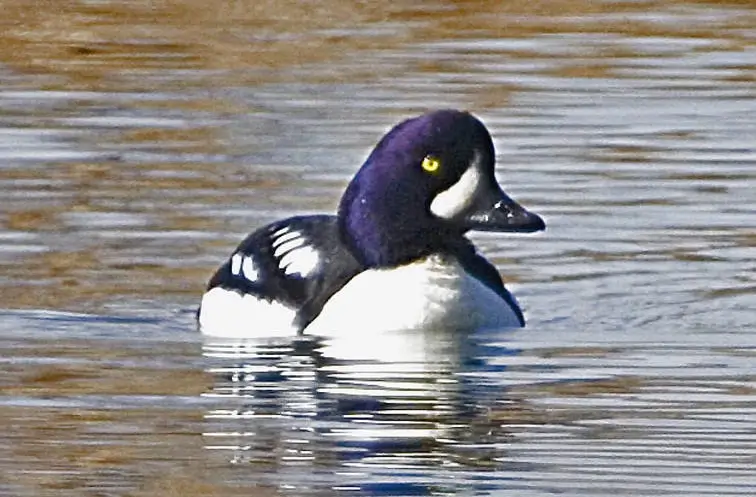
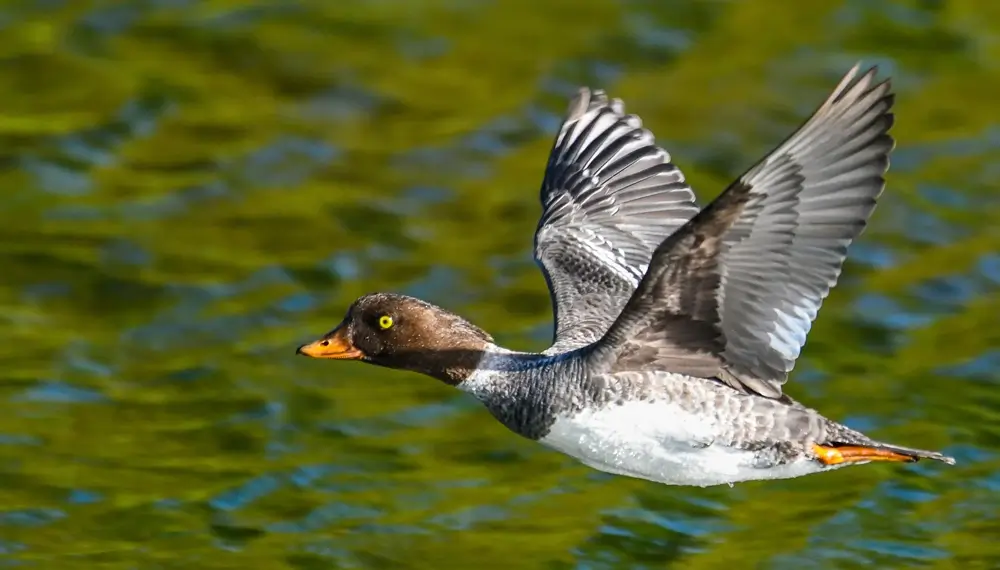
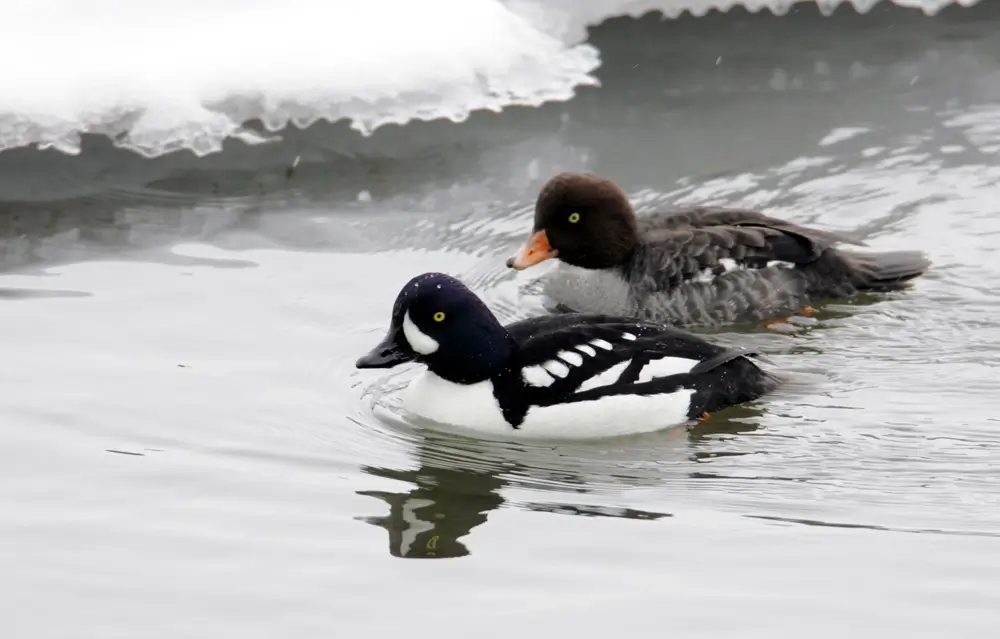
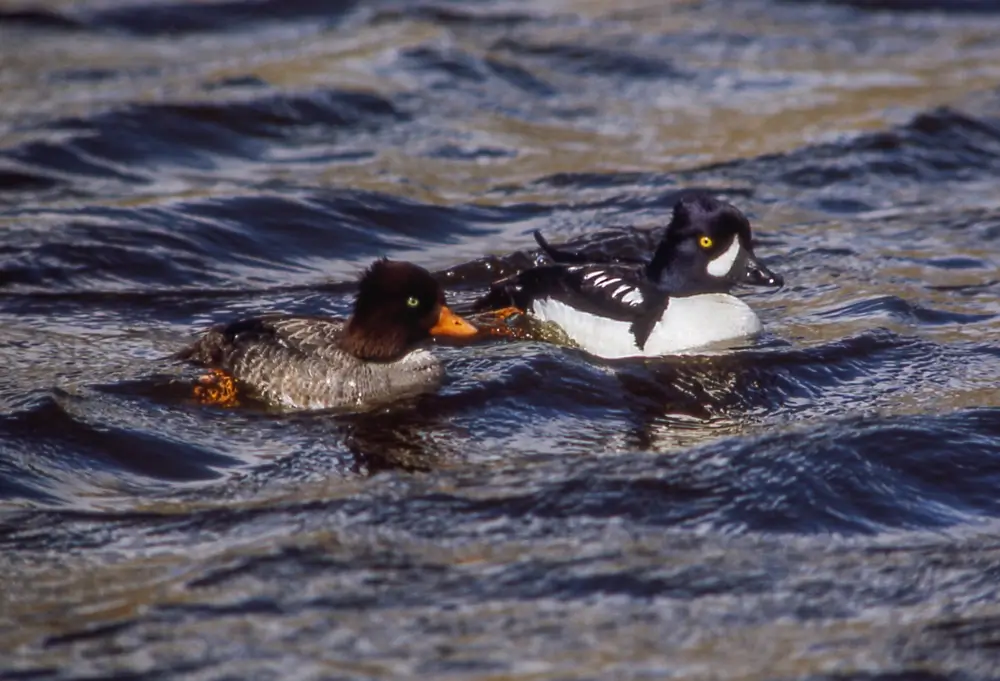
The male has a white body, a purple-black head, and a white crescent-shaped mark on the side of his face. The female has a gray body with a reddish-brown head and a white collar around her neck.
The male and the female have a stubby black bill. The female’s bill has a yellow-orange tip. Both the male and the female have high, sloping foreheads; white patches on their wings; and gold eyes.
Habitat
Barrow’s goldeneye breeds on forested lakes and rivers. It winters on open bays and estuaries along the coast.
In its breeding range, it is usually found on small, clear alpine lakes at altitudes of up to 10,000 feet (3,048 m).
Diet
Barrow’s goldeneye is a diving duck. It dives underwater to catch its prey. It often feeds in flocks. It eats insects, mollusks, crustaceans, fish, and fish eggs.
Life Cycle
The female is ready to breed when she is three years old. She usually returns to the area where she hatched to breed. Breeding pairs form in the late winter or early spring.
The female lays 5-15 light green eggs in a tree cavity lined with down. Sometimes, the female lays her eggs in the nest of other ducks. The eggs hatch in 32-34 days. The male leaves before the eggs hatch.
The ducklings are precocial and feed themselves shortly after birth. Often, after the ducklings hatch, they join with other groups of ducklings, and a single female takes care of all of the ducklings.
The female leaves her young when they are 5-6 weeks old, before they can fly. The ducklings fledge when they are 8-9 weeks old. The male and female mate again in the next season.
The oldest known Barrow’s goldeneye was a female who lived to be 18 years old.
Behavior
Barrow’s goldeneye can be very aggressive and territorial. It is mostly a silent bird, only letting out a quiet “ka-kaa” during courtship.
Did You Know?
Support for NatureWorks is provided by:
The Barrow's Goldeneye in NH
Small numbers of Barrow’s goldeneyes winter in southern New Hampshire.
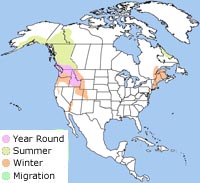
Barrow’s goldeneye breeds in the western United States in the mountains from Alaska south to Oregon and Colorado. In the east, it breeds in Quebec and Labrador.
It winters along the Pacific Coast from Alaska to California and along the Atlantic Coast from the Maritime Provinces in Canada south to Long Island, New York.
Barrow’s goldeneye is also found in Greenland and Iceland.