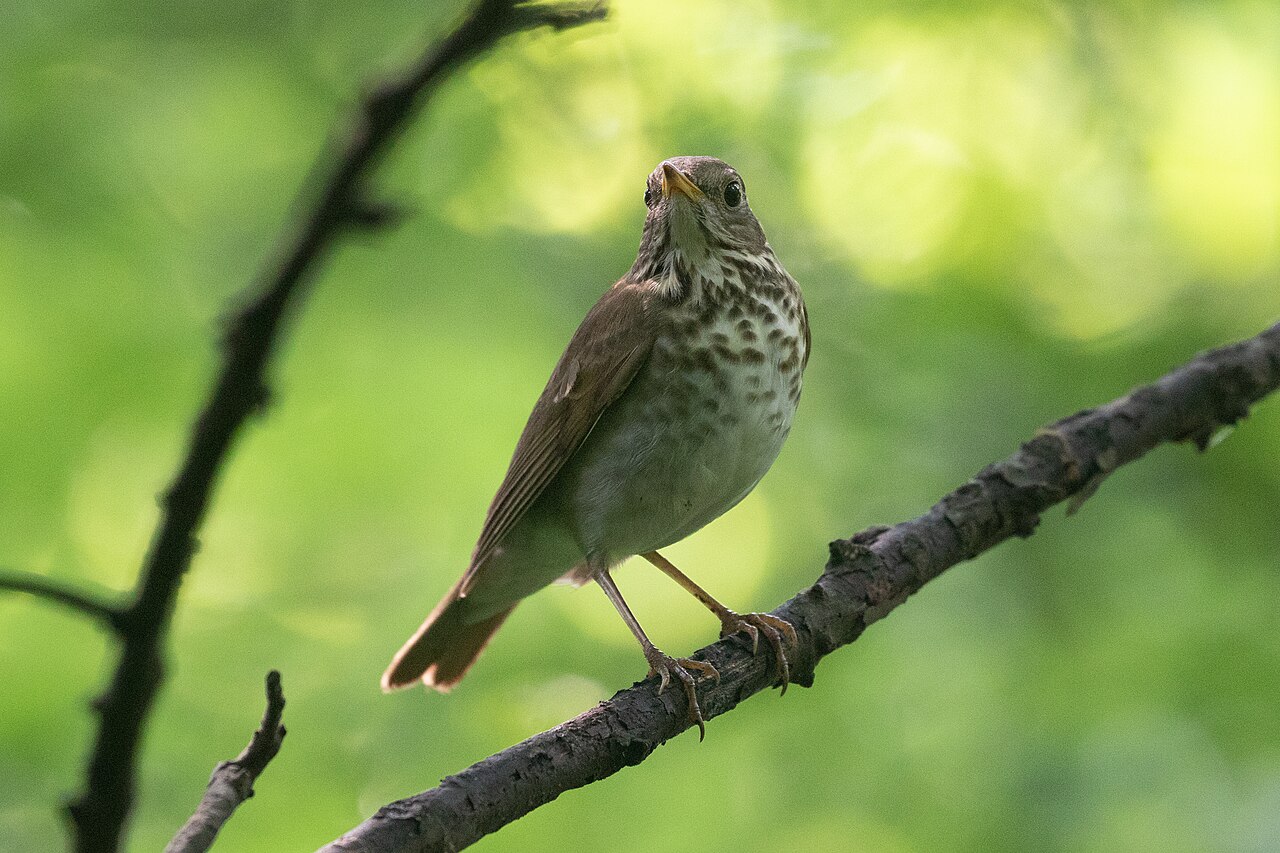
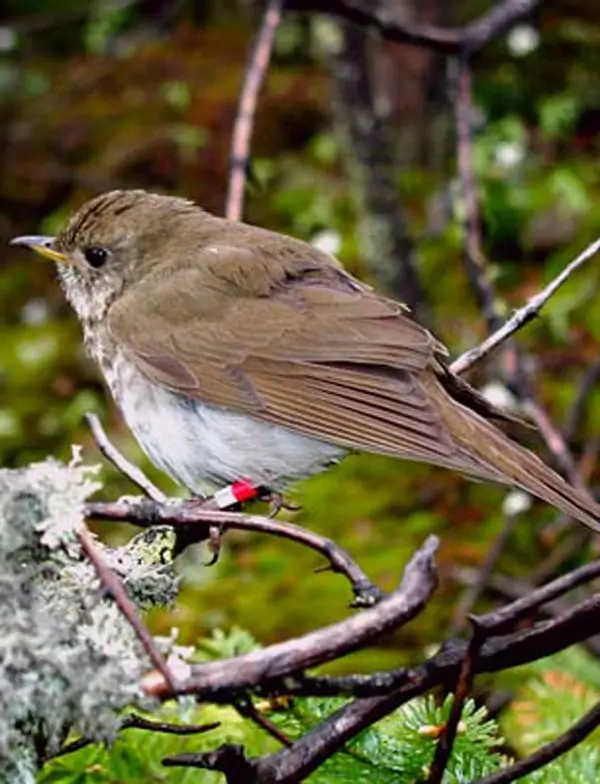
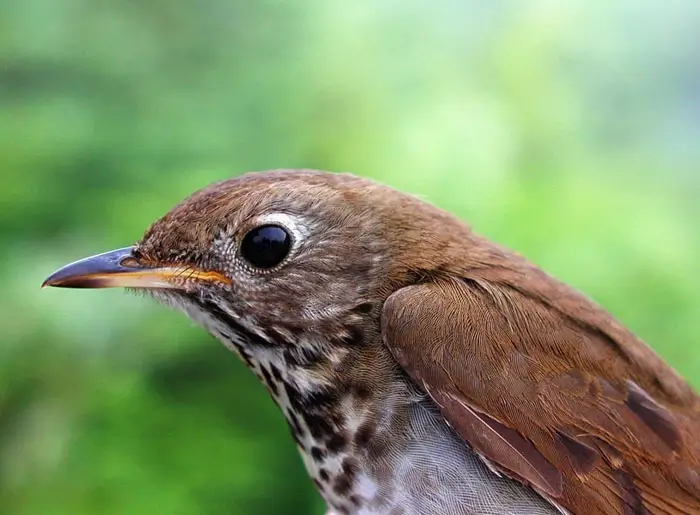
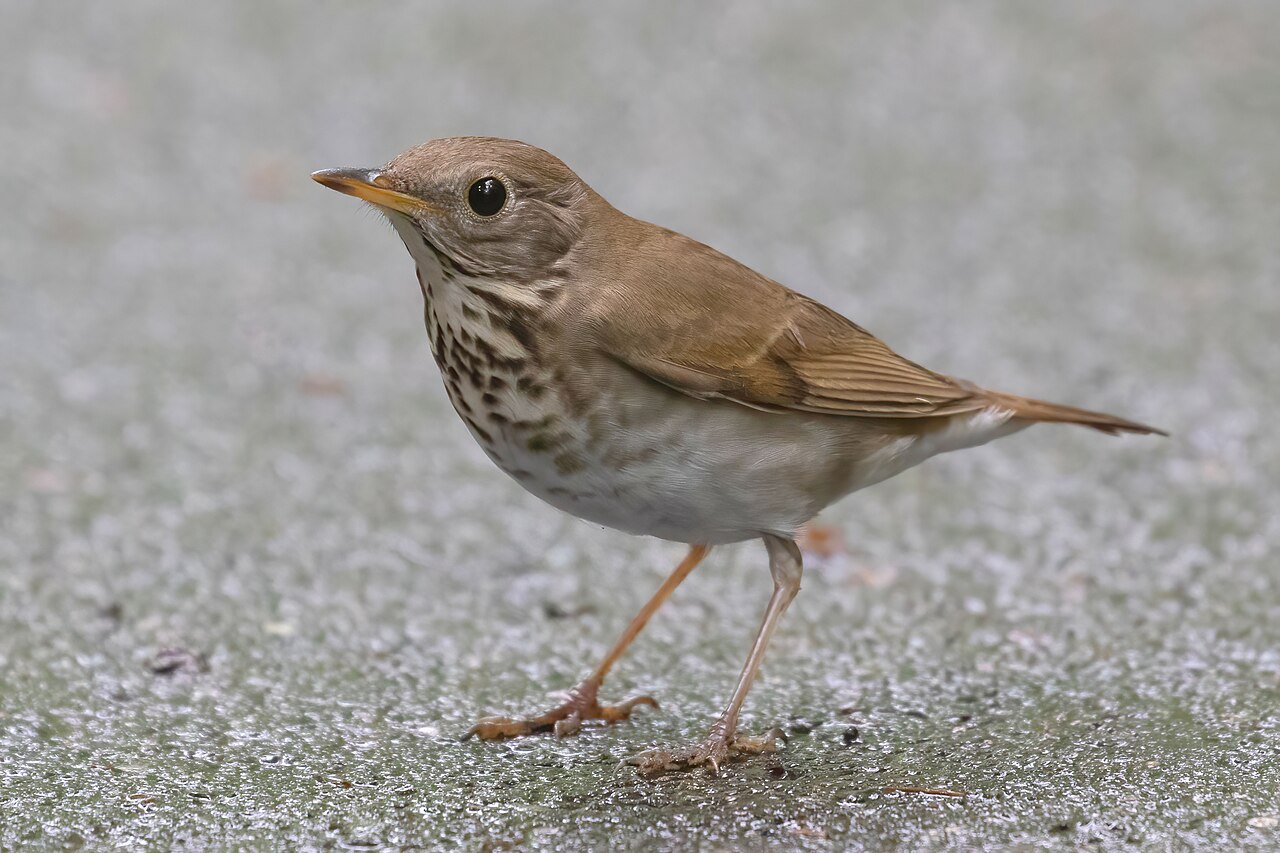
Bicknell’s thrush is 6.3-6.7 inches (16-17 cm) in length with a wingspan of 11.0-11.8 inches (28-30 cm).
It has an olive-brown head, back, and wings, and a whitish-gray belly with brown spots.
It can be hard to spot, but easy to hear. It likes to sing from the tops of dead trees that stand high above other trees and shrubs.
Habitat
Bicknell’s thrush breeds in fir and spruce forests in the mountains and along the coast. It seems to prefer recently disturbed areas, such as places that have just been logged.
In the winter, Bicknell’s thrush lives in broadleaf forests in the Caribbean.
Diet
Bicknell’s thrush hops along the ground making short flights between trees looking for food. It eats insects and other invertebrates found on the forest floor. It also eats fruit.
Life Cycle
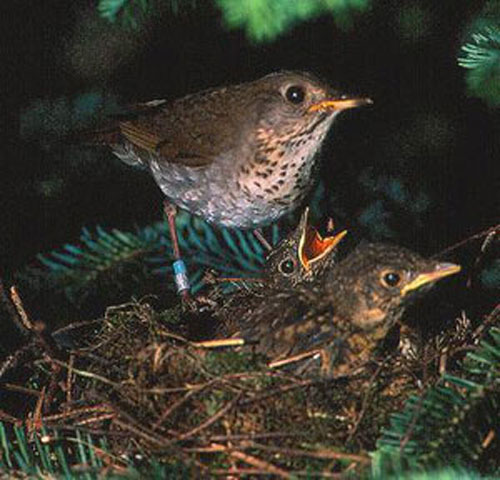
Bicknell’s thrush builds a nest of twigs and moss in the shape of an open cup. The female lays 3-4 bluish-green eggs with light brown spots.
The chicks don’t have any feathers and are helpless when they hatch They rely on their parents for food until they leave the nest after 9-13 days.
Bicknell’s thrush has a lifespan of 5-6 years in the wild.
Behavior
Due to its small range and specific habitat, scientists believe that there are only 50,000 Bicknell’s thrushes today.
Habitat loss in both its summer and winter range is contributing to its vulnerability.
Did You Know?
Support for NatureWorks is provided by:
The Bicknell's Thrush in NH
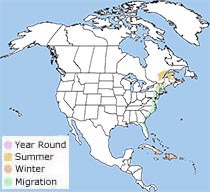
The Bicknell’s thrush breeds in the White Mountains of New Hampshire, with a smaller population found north near the Canadian border.
During migration, it can be found in other regions of the state.
Bicknell’s thrush has a very small, fragmented range. In the summer, it lives in southeastern Canada and mountainous areas in New England and northern New York.
In the winter, Bicknell’s thrush is found on the Caribbean islands of Cuba, Haiti, the Dominican Republic, and Puerto Rico.