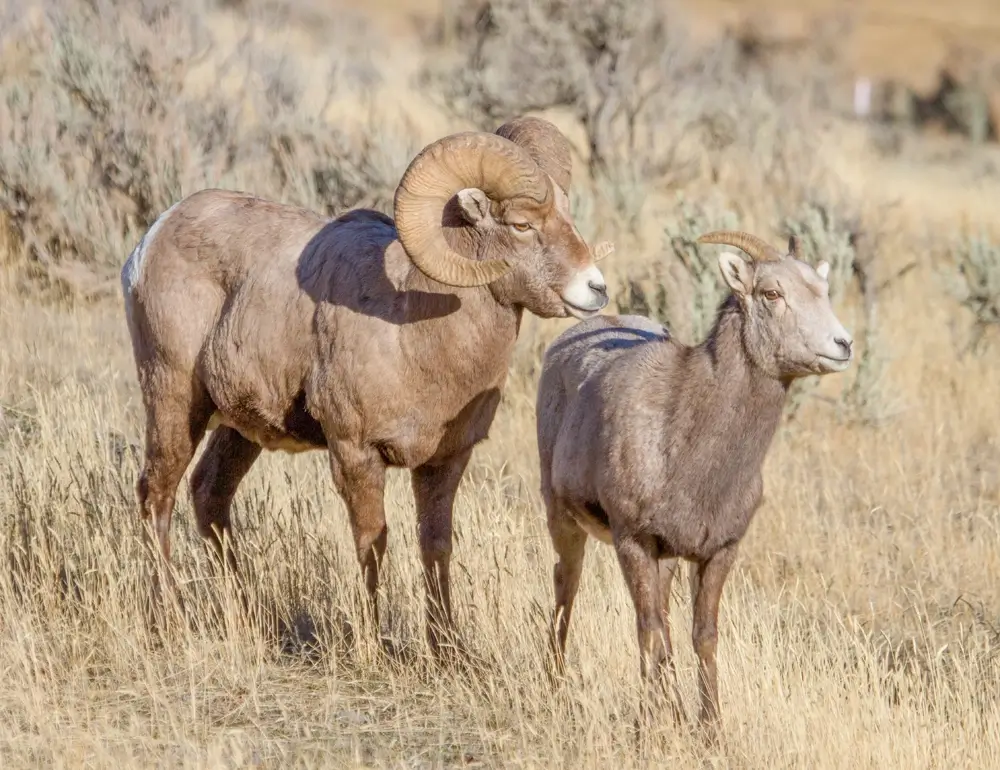
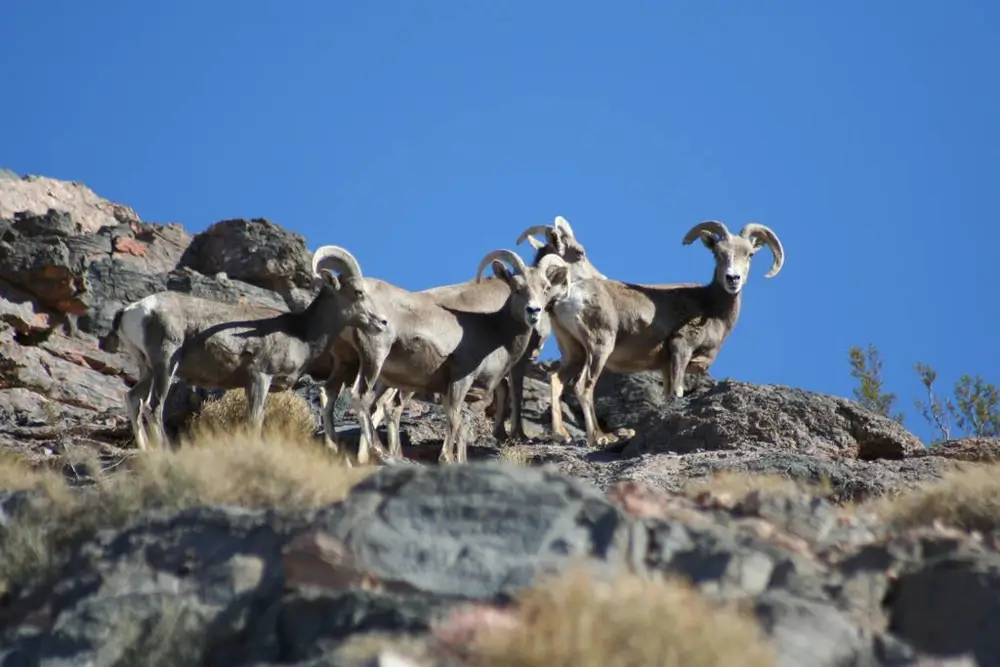
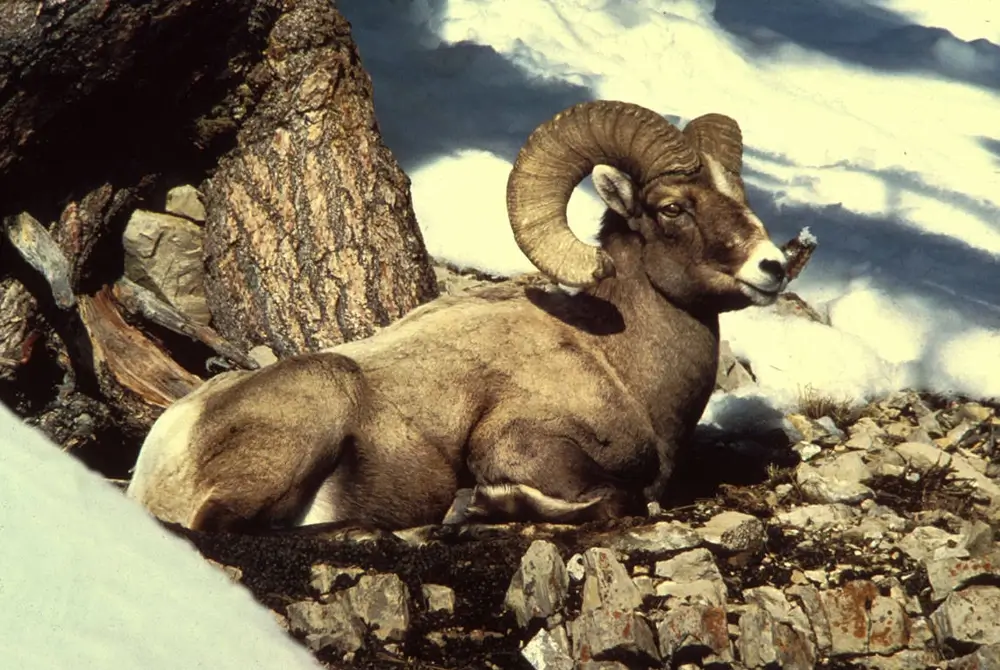
Male bighorn sheep are known as rams, and females are known as ewes. Rams are larger than ewes. Males weigh 262-280 pounds (119-127 kg) and are 5.2-5.9 feet (1.6-1.8 m) from head to tail. Females weigh 117-201 pounds (53-91 kg) and are around 4.9 feet (1.5 cm) from head to tail.
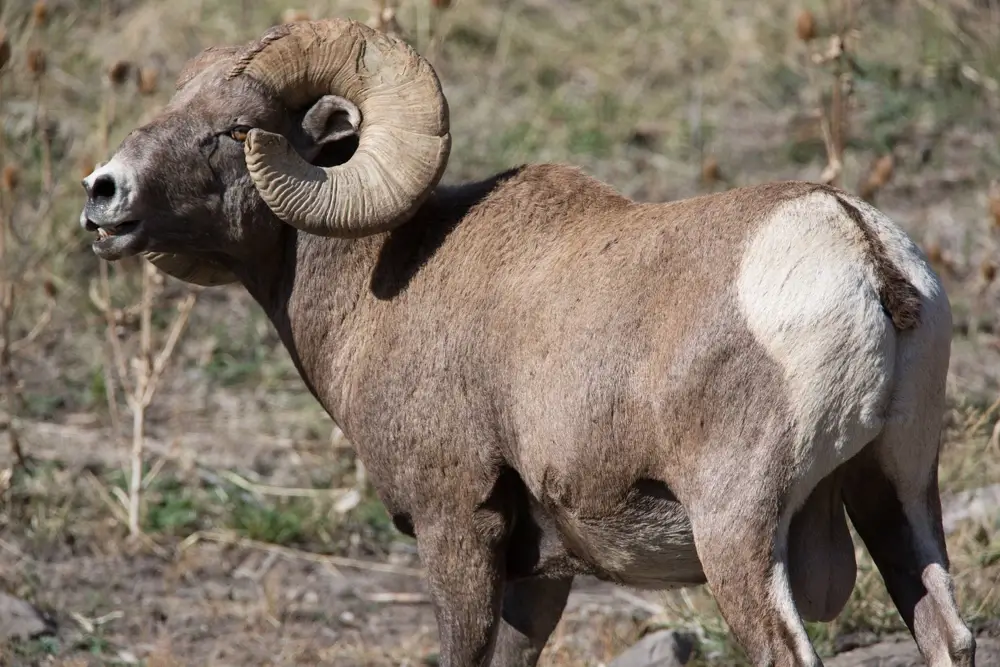
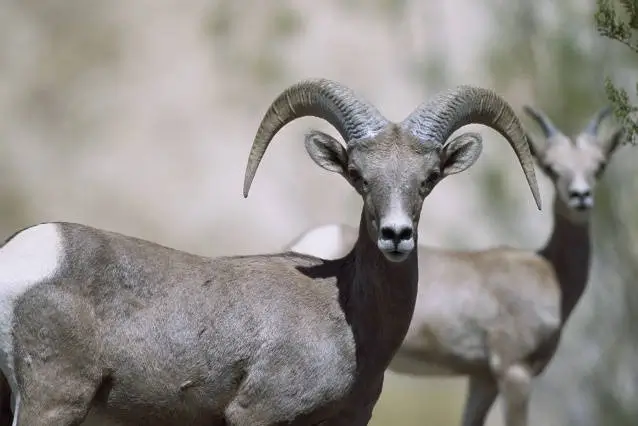
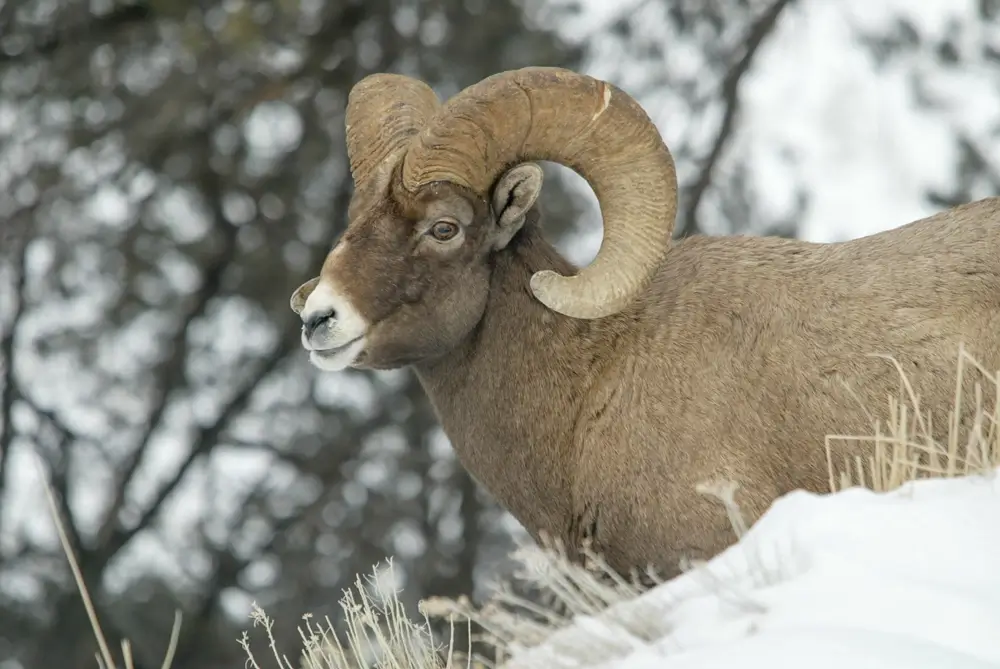
The bighorn sheep has tan or brown fur. It has a white belly, rump, and muzzle. It is best known for its large, thick, curving horns. The ewe’s horns are more slender and less curved.
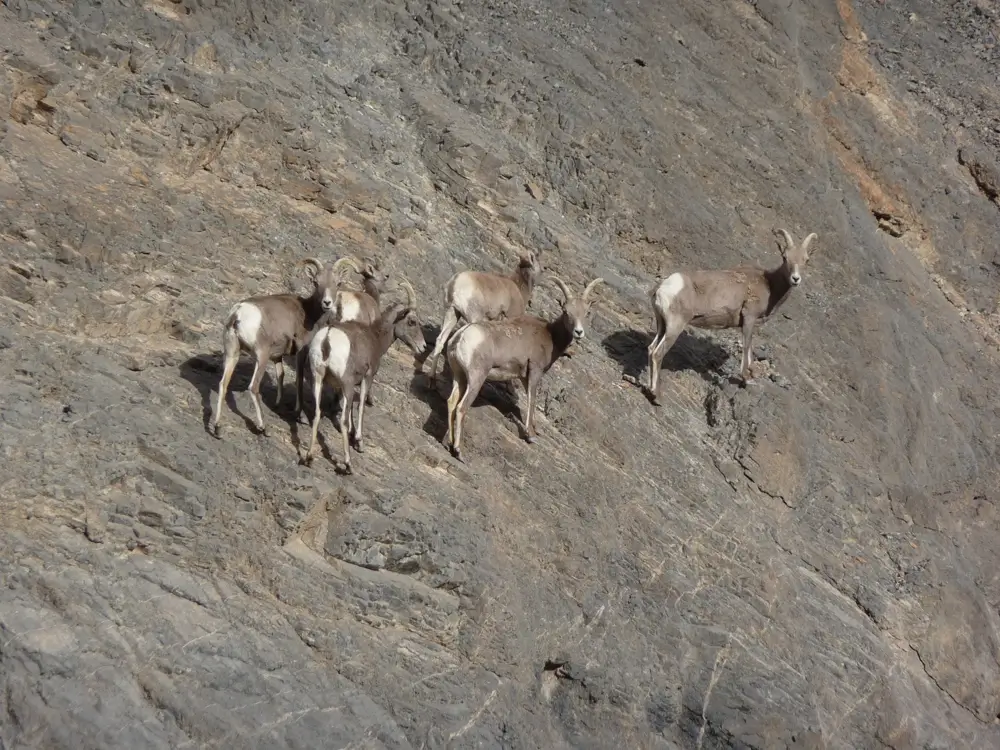
The bighorn sheep is a good climber and jumper. Its hooves are hard around the outside and soft on the inside, which gives it traction on slippery rocks.
Habitat
Bighorn sheep live in alpine meadows, mountain slopes, and foothills. It likes areas with rocky slopes that it can climb to evade predators.
Diet
The bighorn sheep browses on grasses, clover, and sedges in warm months. In colder months, it eats woody plants like willow and sage. Bighorn sheep in desert areas often eat brushy plants like holly and cactus.
When it is not grazing, it lies down and chews its cud. Cud is regurgitated and partially digested food.
Life Cycle
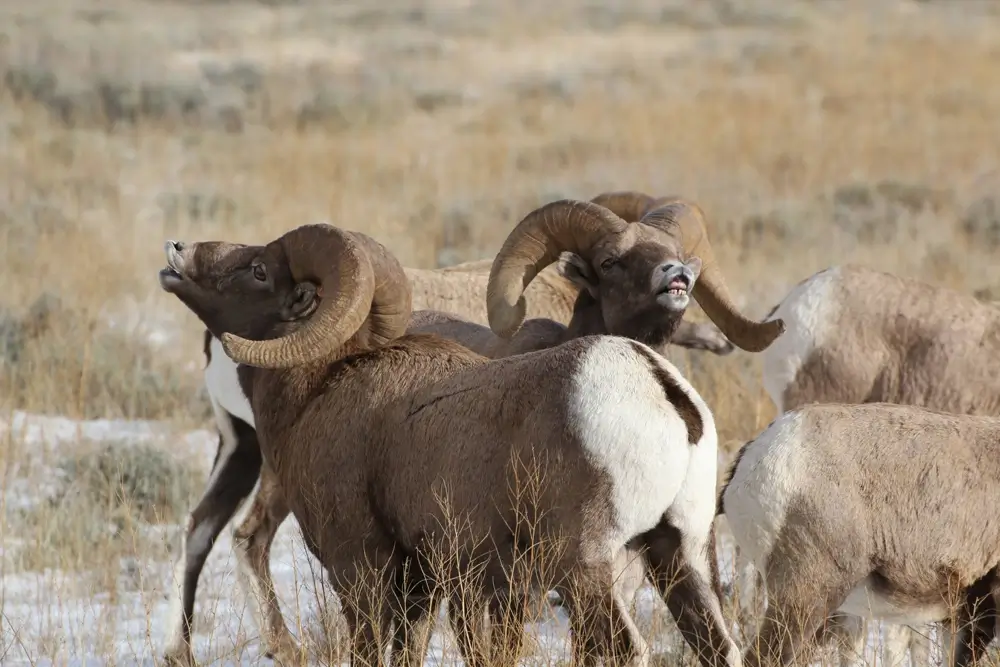
In the fall, male bighorn sheep have head-butting contests to establish dominance. They run at each other at speeds of up to 20 miles an hour (32 kph) and ram their heads together. A ram usually only fights with another ram that has horns that are about the same size as his horns. Head-butting contests can last as long as 20 hours. The dominant ram will mate with more females than the other rams.
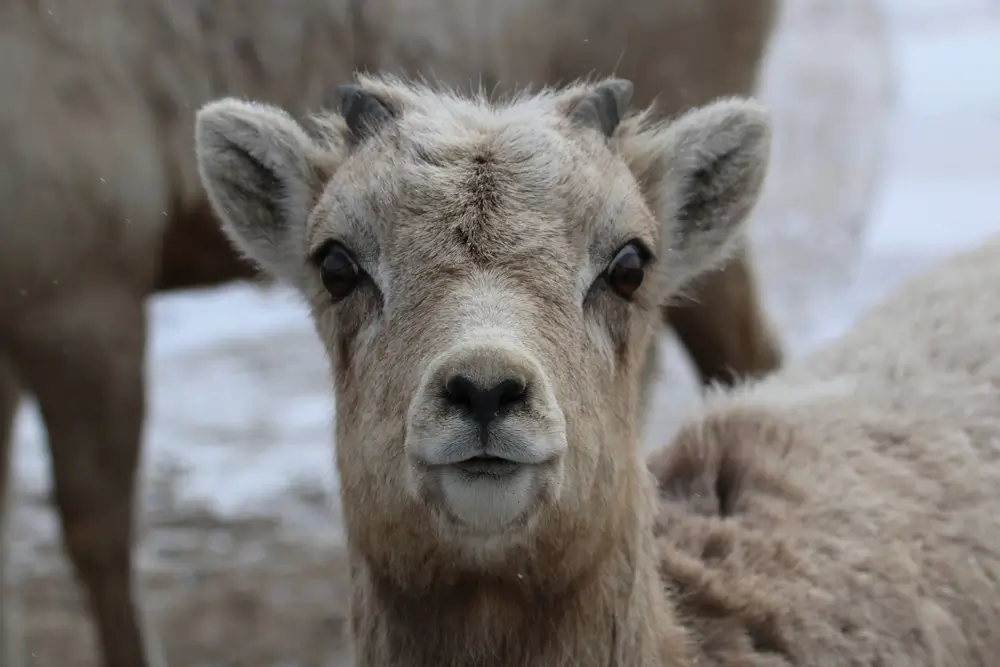
Females have their babies on a cliff that’s hard to access. They have one baby. Baby bighorn sheep are known as lambs. Lambs are woolly and white and have little horns. They can walk and climb on the first day. The lamb stays hidden where it was born for about a week, and then it starts to follow its mother.
The lamb is weaned when it is about five months old. A male lamb leaves his mother and joins a male group when he is between two and four years old. A female lamb usually remains with her mother’s group for her whole life.
The bighorn sheep has a lifespan of 15-18 years in the wild.
Behavior
Female bighorns live in groups of 5-15 sheep made up of ewes and their young. Males live in groups of 2-5 sheep.
In the winter, bands of ewes may join together and form large groups of up to 100 sheep. Males join the female groups during mating season.
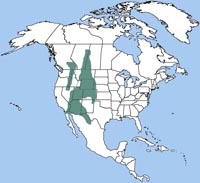
The bighorn sheep is found in the Rocky Mountains from southern Canada to Colorado and parts of Nevada, western Texas, eastern California, and northern Mexico.
The bighorn changes its home range seasonally. In warm months, it grazes on mountain slopes; in colder months, it moves down to valleys.