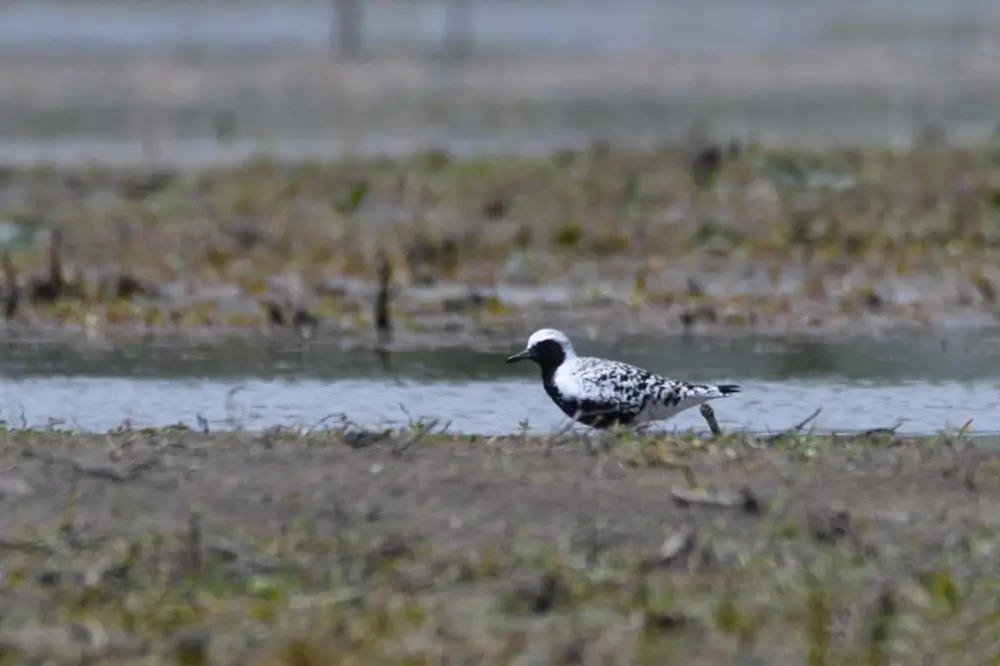
The black-bellied plover is a medium-sized shorebird. It is 11.0-11.4 inches (28-29 cm) in length with a wingspan of around 2 feet (0.61 m).
It has long legs, a short, pointed black bill, a round head, and a white wing stripe that is visible when it is in flight. It is the only American plover with a hind toe on its foot.
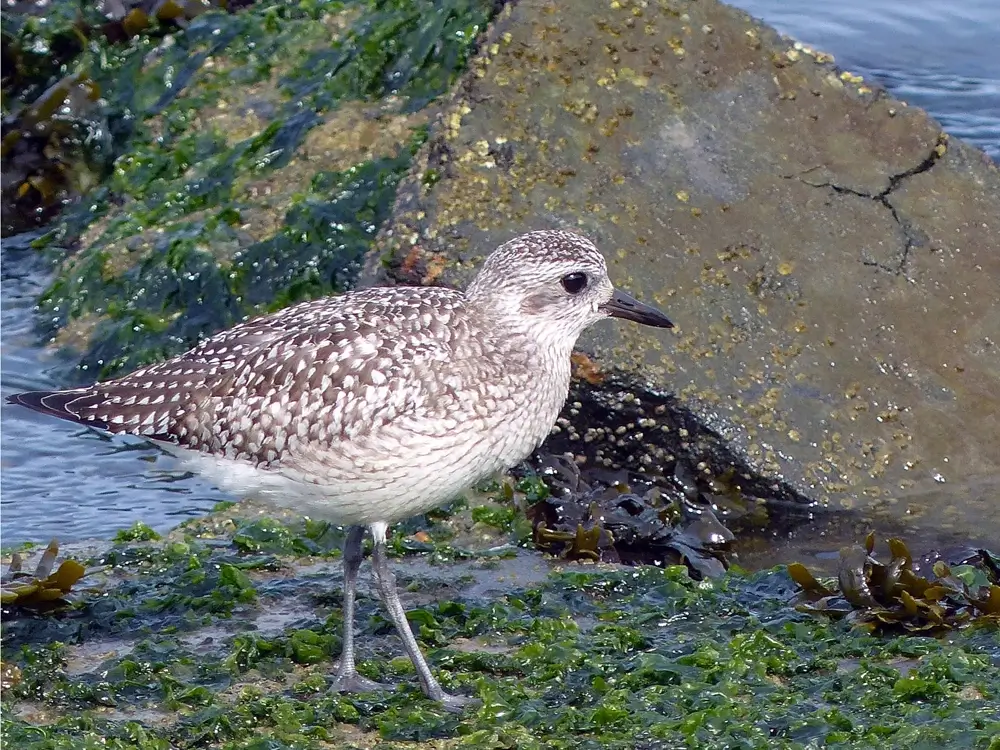
Its wings extend beyond its tail when they are folded. It has a brown, black, and gray back; a white rump and belly; and a grayish-brown breast.
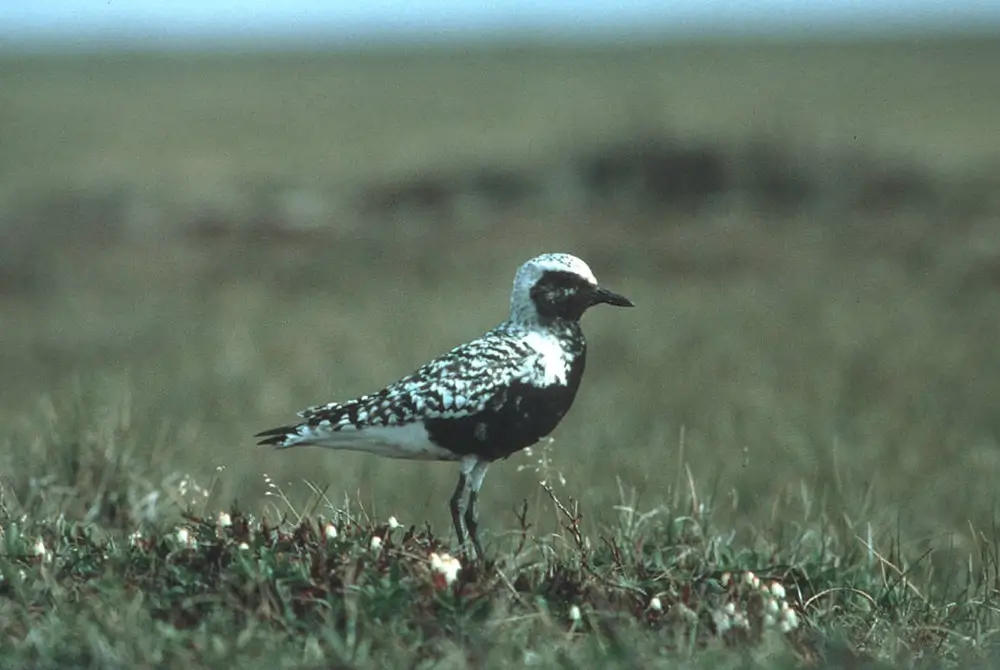
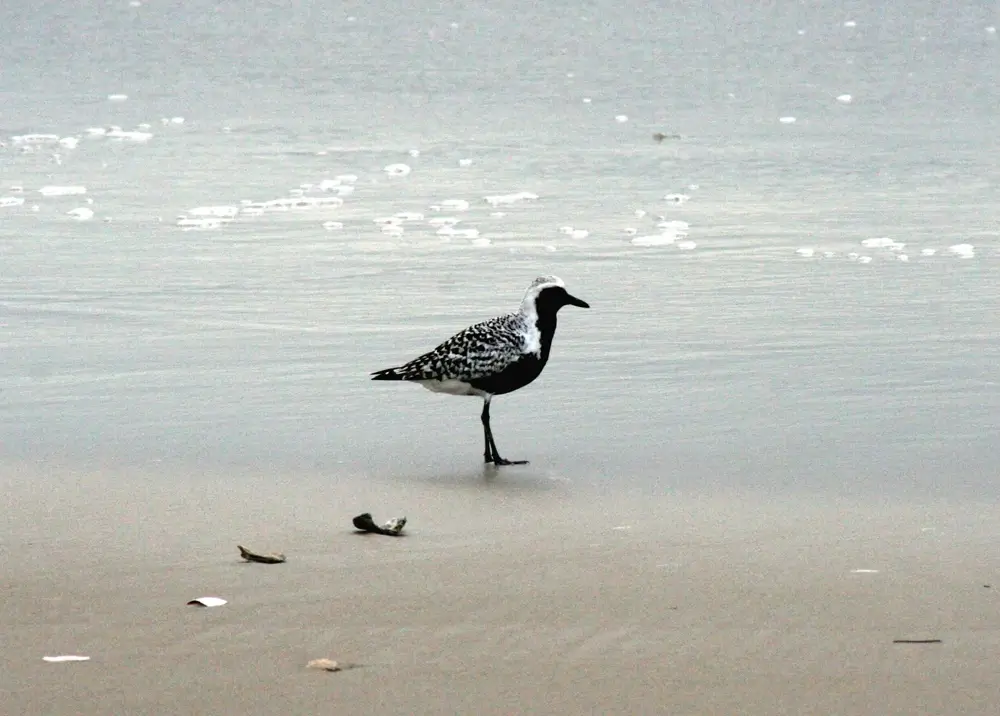
During the breeding season, its breast, face, throat, and belly are black, and it has a white stripe running from its forehead down the back and sides of its neck. Males and females look similar, but males are more brightly colored.
The black-bellied plover looks similar to the American golden plover, but the American golden plover doesn’t have a white rump or wing stripe.
Habitat
The black-bellied plover breeds on the Arctic tundra. It winters on coastal estuaries, beaches, mudflats, the shores of ponds and lakes, grassy meadows, and flooded fields.
The black-bellied plover eats insects on its breeding ground and clams, worms, and small crabs on its winter grounds. It chases its prey by running, stopping, and pecking
Life Cycle
The male builds a scrape on the ground, and the female lines it with pebbles, lichens, moss, and dried grass.
The female lays one to four eggs, and both the male and the female incubate them for 26-27 days. The chicks are precocial and walk and feed themselves shortly after birth.
Both parents care for the chicks. The chicks fledge when they are 35 to 45 days old. The female has one brood a year.
The oldest black-bellied plover lived to be 12 years and 8 months old.
Behavior
The black-bellied plover is very shy and startles easily and will fly away at the slightest disturbance or threat.
Did You Know?
Support for NatureWorks is provided by:
The Black-Bellied Plover in NH
The black-bellied plover can be found in New Hampshire during its migration in the late summer and fall.
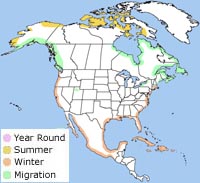
In North America, the black-bellied plover breeds along the Arctic coast from western Alaska to Baffin Island, Canada.
It winters along the Pacific coast from British Columbia south to Mexico and along the Atlantic Coast from Massachusetts south to Central America, Bermuda, the Caribbean, and southern South America.
It also winters along the Gulf Coast. It also breeds in Arctic zones around the world and winters on coasts around the world. Outside of North America, the black-bellied plover is known as the grey plover.