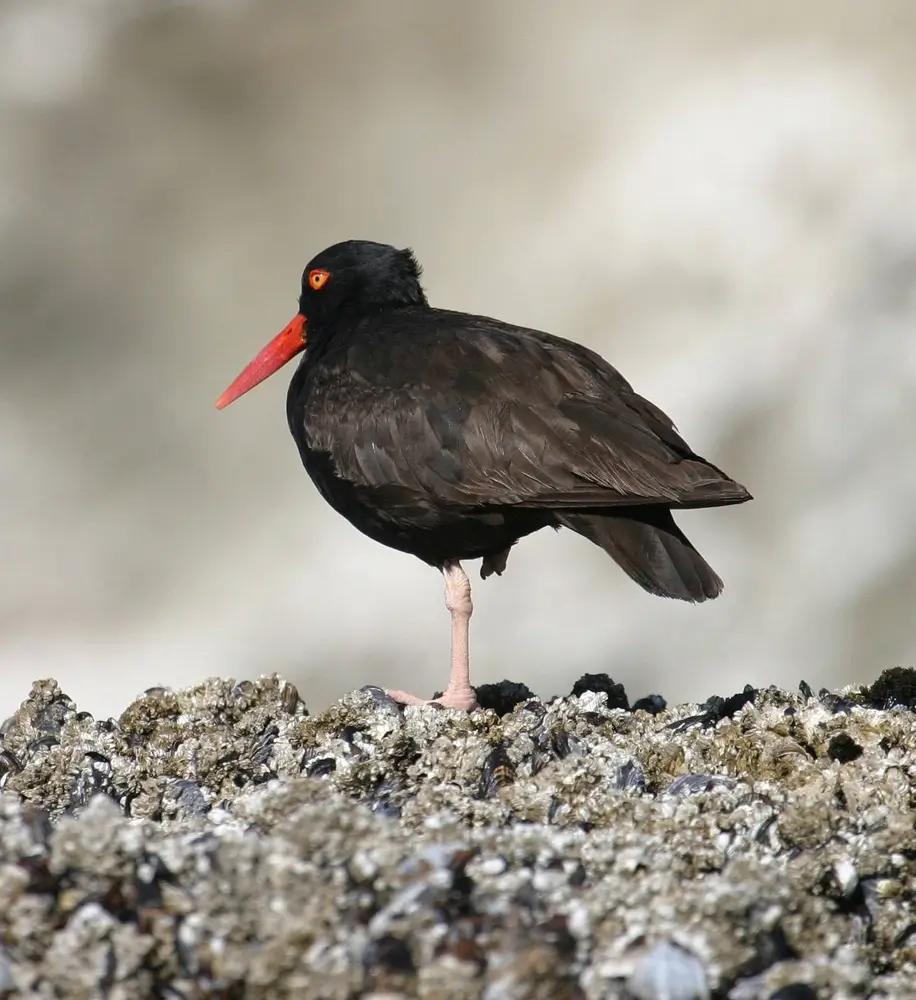
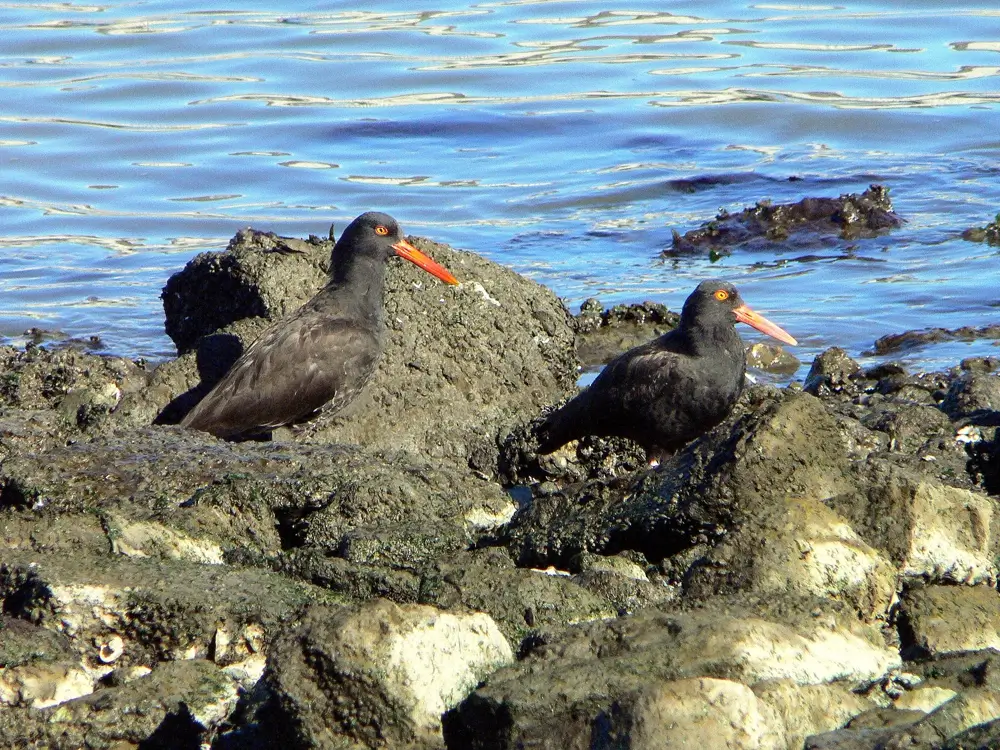
The black oystercatcher is about 16.5-18.5 inches (42-47 cm) in length with a wingspan of 28 -36 inches (71-91 cm).
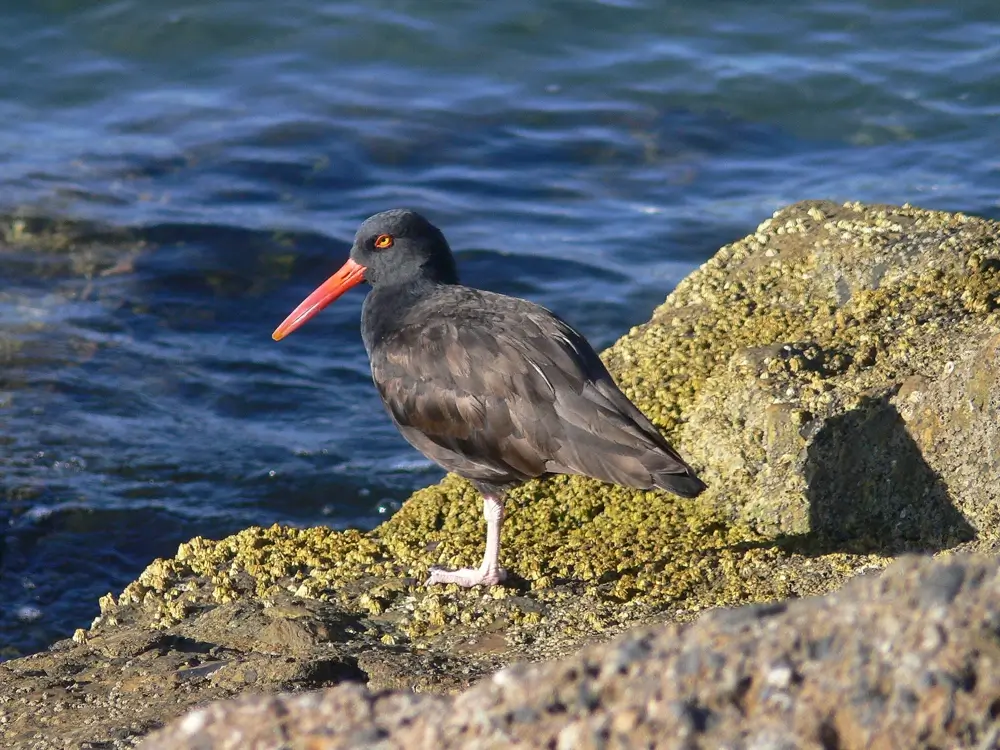
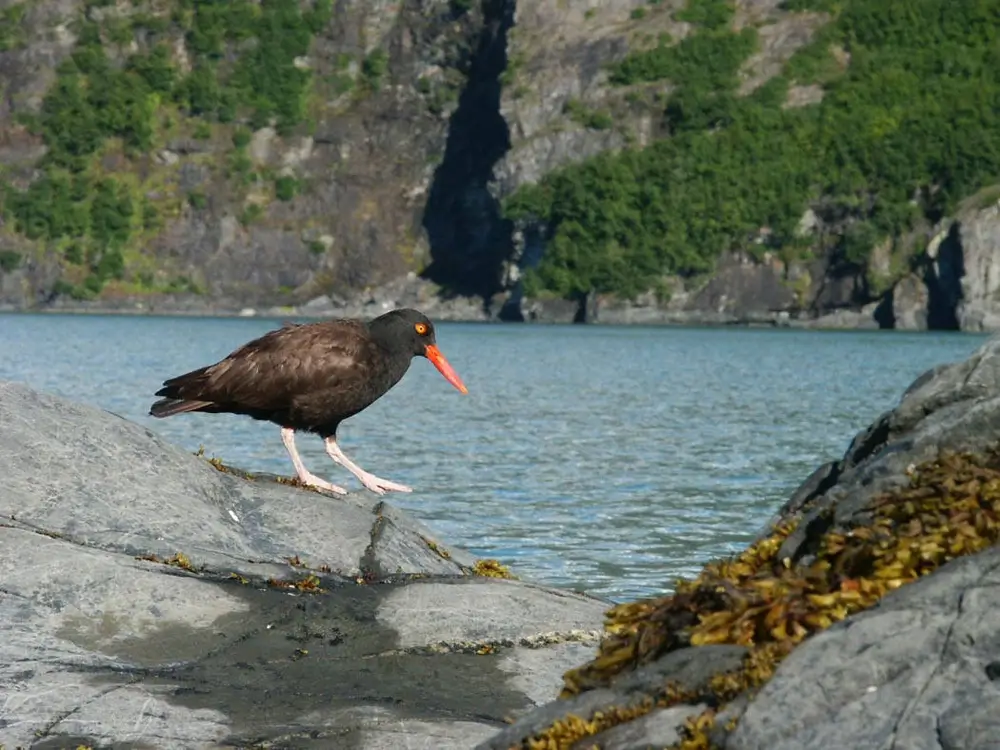
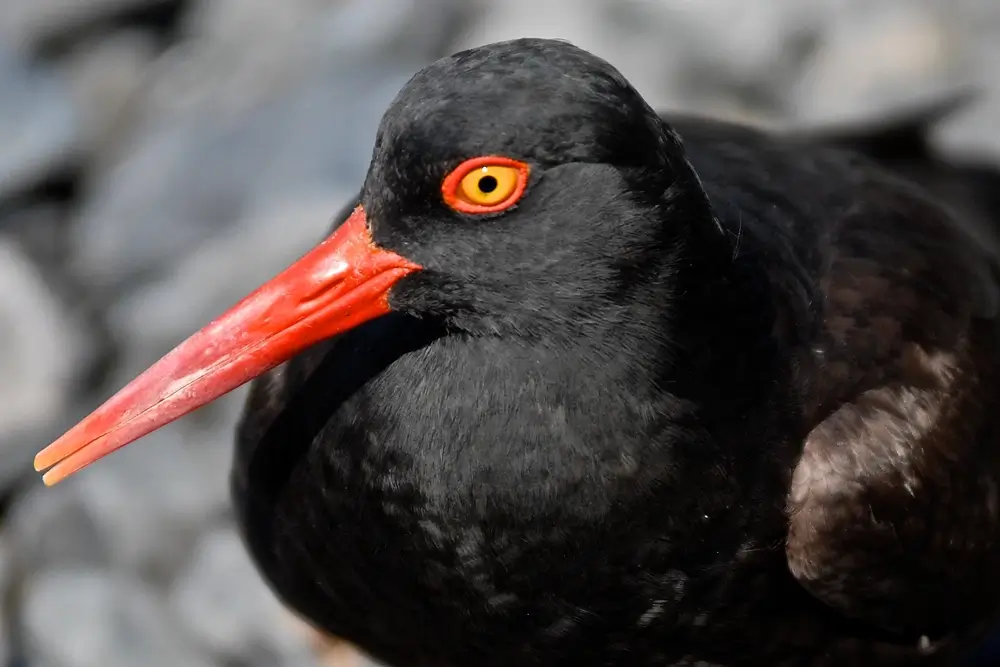
It has a stocky black body, yellow eyes surrounded by a red ring, a long, bright red-orange bill, and pink legs.
Males and females look alike.
Habitat
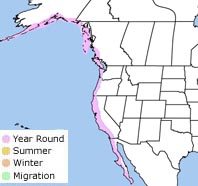
The black oystercatcher lives on rocky coasts.
Diet
The black oystercatcher eats a variety of invertebrate marine life, including mussels, whelks, and limpets. Despite its name, it rarely eats oysters.
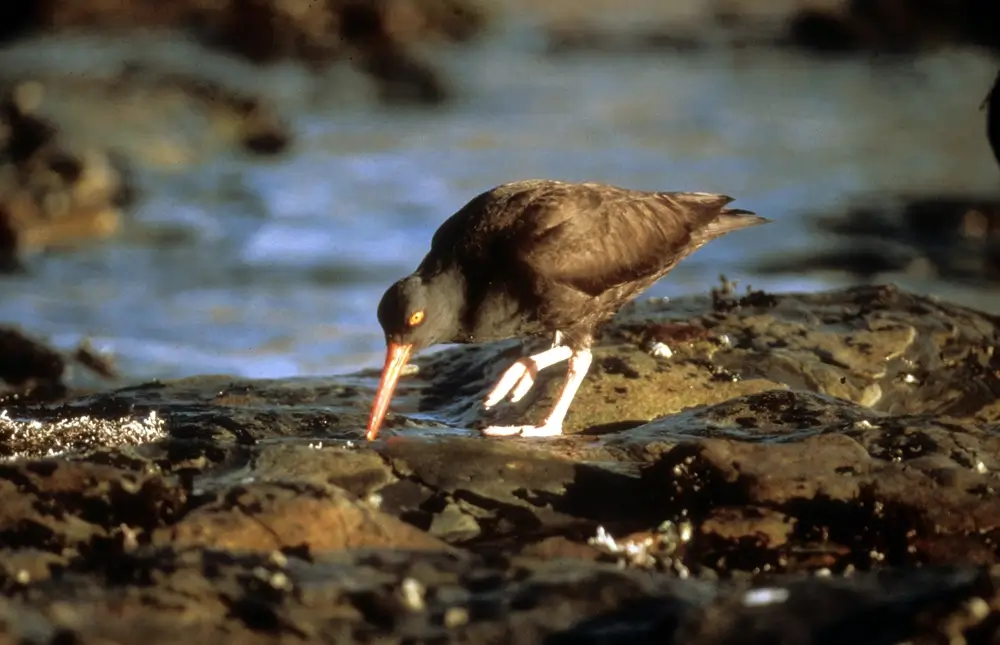
It especially likes to eat creatures that cling to the rocks below the high-tide line. It usually forages at low tide and rests at high tide. It uses its long, sharp bill to pry bivalves like limpets and mussels off the rocks and then uses its bill to open them.
It also looks for open mussels and disables them by stabbing the adductor muscle that holds the shell together. This keeps the shell open. The oystercatcher then pulls out the contents with the tip of its sharp bill and swallows its catch.
Life Cycle
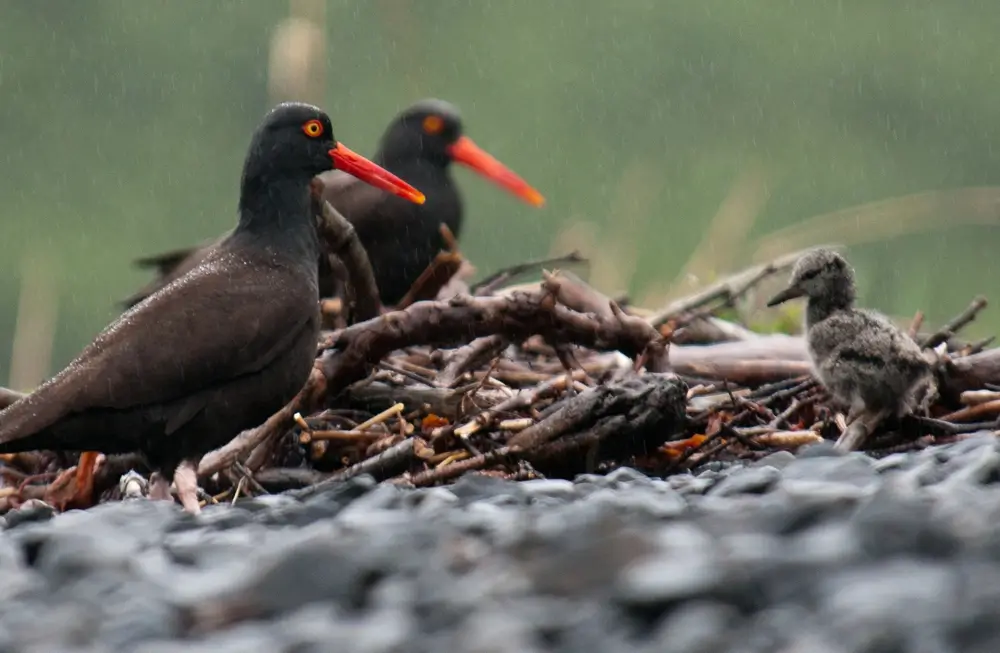
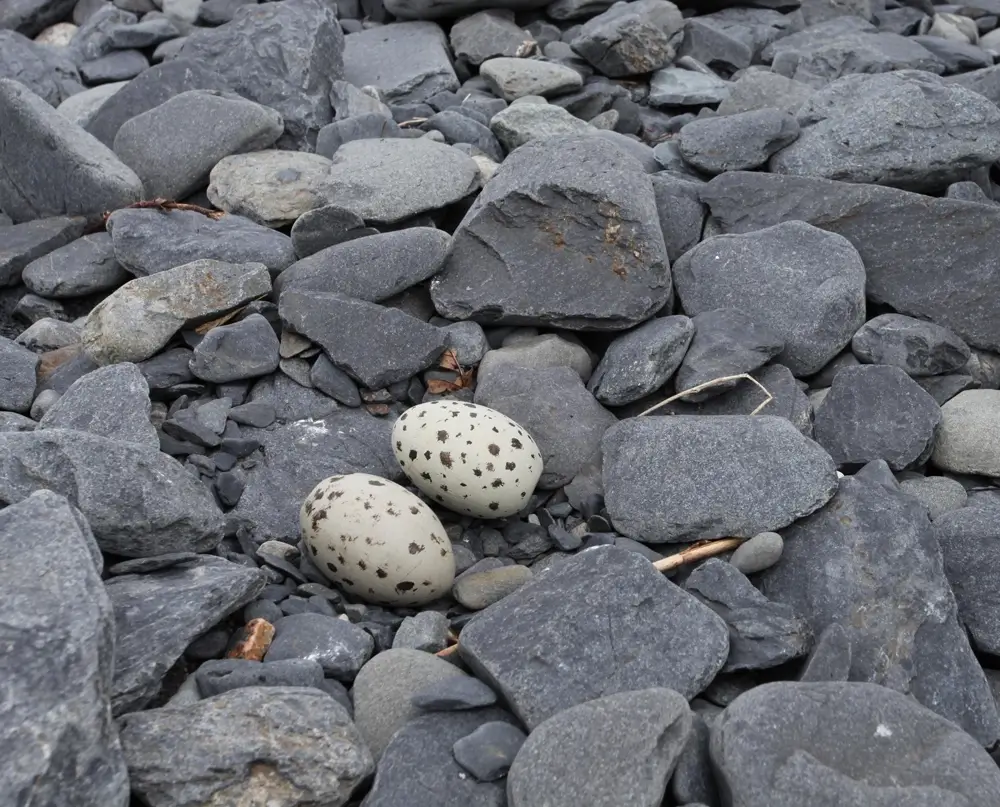
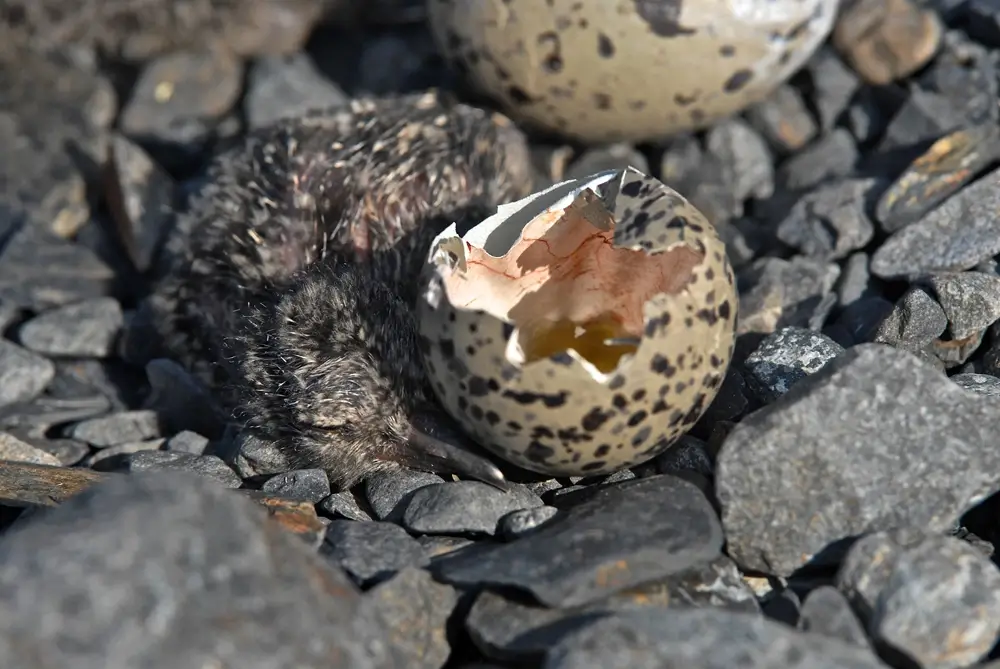
The female black oystercatcher lays two to three eggs among pebbles in a shallow, rocky depression, or in a hollow on the beach above the high tide line. The male and the female build the nest together.
They create a scrape, or depression, in the ground and then pick up and toss shells and bits of rocks and pebbles into the depression with a backward or sideways flip of their heads. They use the same nest year after year. Both the male and the female take turns incubating the eggs.
The eggs incubate for 24-29 days, and the chicks fledge when they are 35 days old. The chicks remain close to the nest at first. One parent stays with them while the other parent forages for food to bring back to the nest. Eventually, the chicks go with their parents to feeding areas.
The chicks fledge at about five weeks and forage on their own, but their parent still feed them for a while. The female has one brood a year.
Behavior
Black oystercatchers are non-migratory. They may move a little in the spring and fall, but usually remain close to their nesting area.