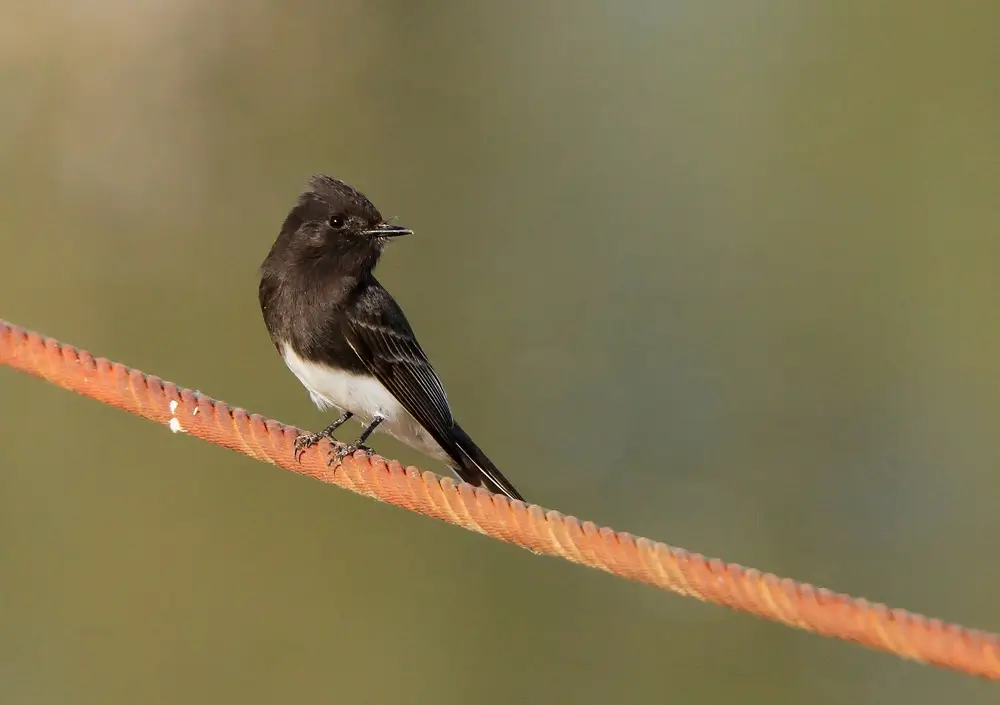
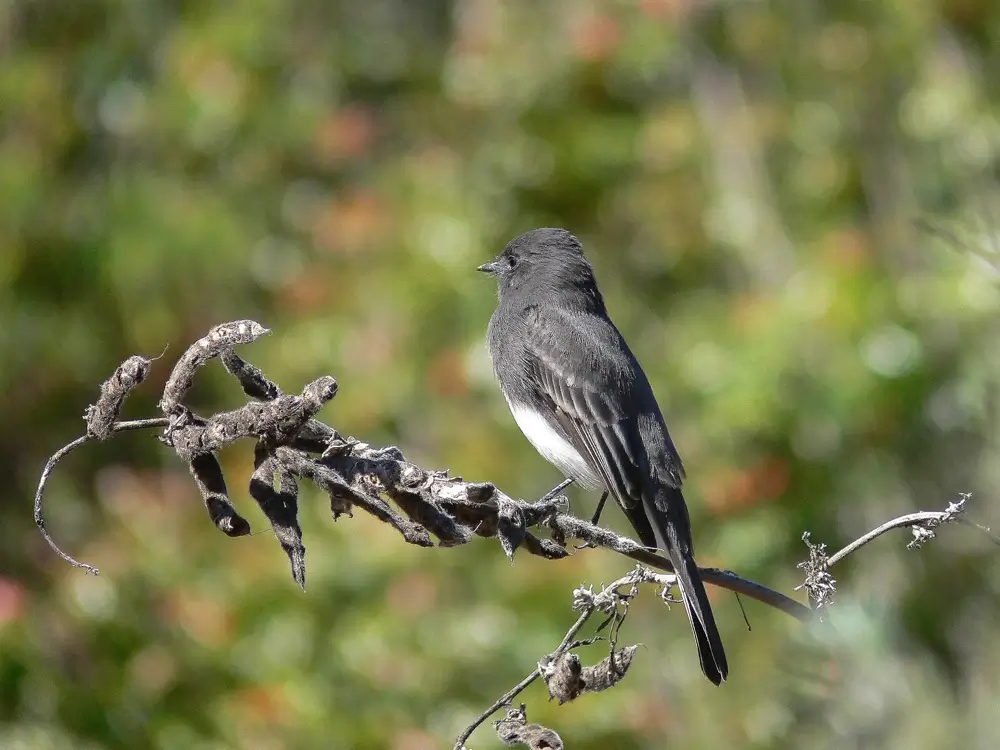
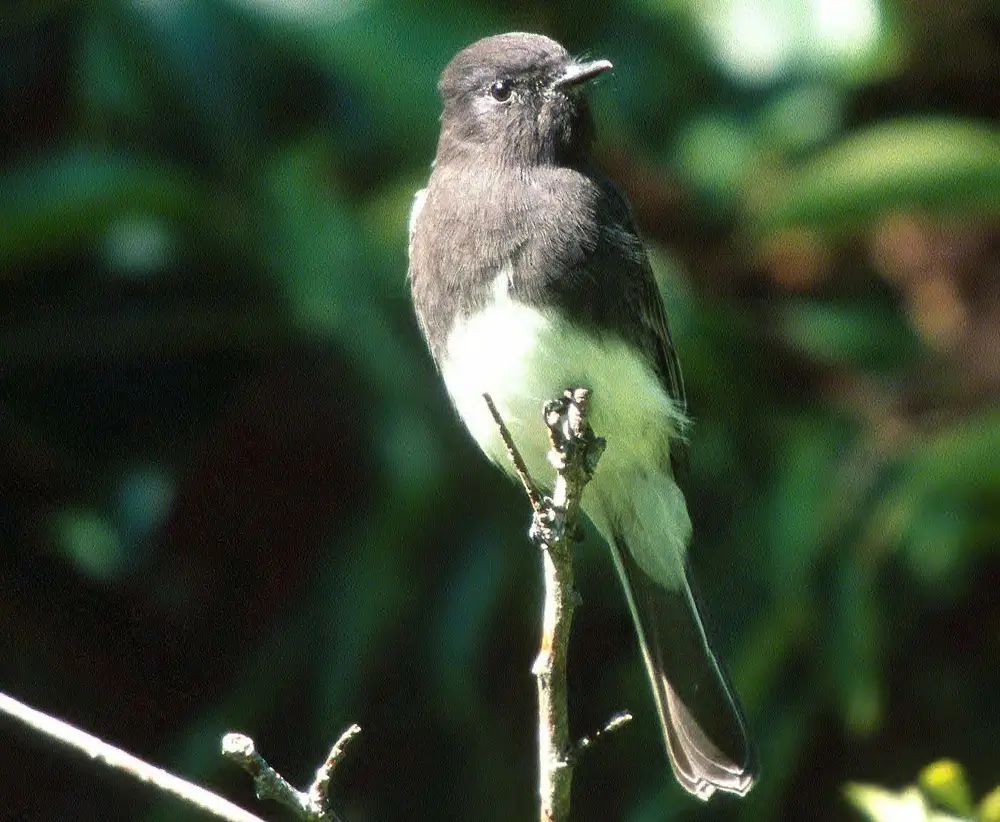
The black phoebe is a small, tyrant flycatcher that is 6-7 inches (15-18 cm)in length.
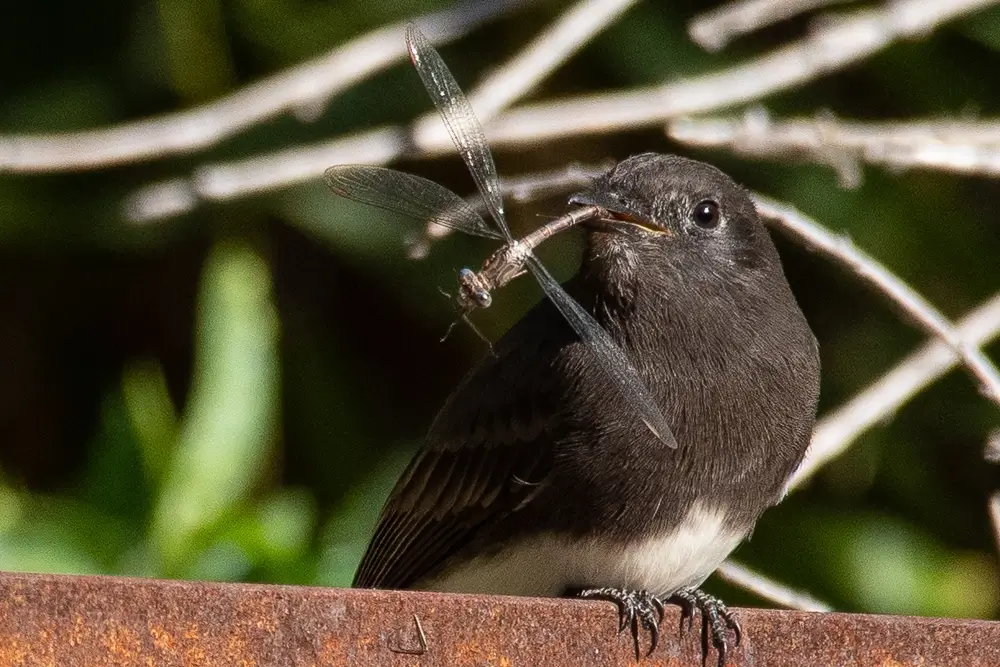
It has black upperparts, head, breast, wings, and tail. It has a white belly and rump. It has a short, pointed black bill and black feet and legs.
Males and females look alike.
Habitat
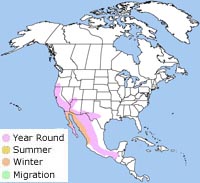
The black phoebe is found in open areas near lakes, streams, and ponds. It is also found near cliffs, in agricultural areas, and in city parks.
Diet
The black phoebe primarily eats insects. It perches on a shady branch waiting for insects to fly by. It then swoops after the insect and catches it in mid-air. It sometimes also hovers over the ground waiting for prey.
It may also eat berries, and it even dives into the water and catches minnows and other small fish from the surface of the water.
Life Cycle
The black phoebe builds its nest on cliffs, under bridges, and in the eaves of buildings. The male black phoebe locates a nest site and hovers over it for a few seconds to show it to the female. If the female likes the location, she builds an open cup nest of grass, mud, hair, and plant fibers.
The female lays 3-6 eggs and incubates them for 15-17 days. The chicks fledge in 14-21 days. The female may have 2-3 broods a year.
The oldest black phoebe on record lived to be at least 8 years old.
Behavior
Black phoebes are very territorial and often remain in the same place year-round.