The black tern is 9.1-14.2 inches (23-36 cm) in length with a wingspan of 22.4-23.6 in (57-60 cm).
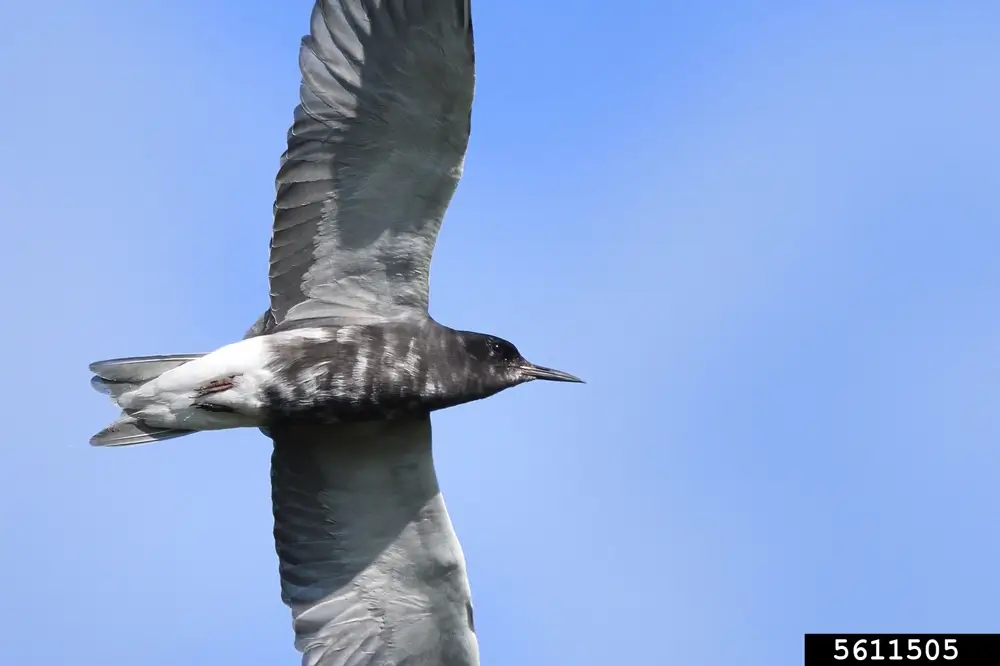
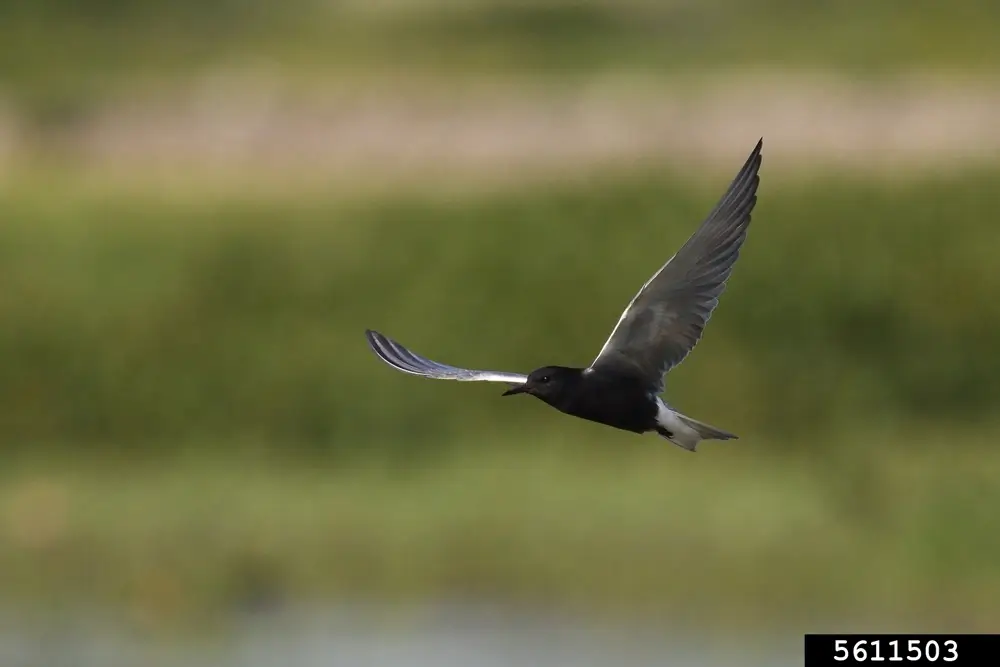
It has a very sharp and slender bill, which it uses to grab insects out of the water, and long wings that it uses to glide in the air.
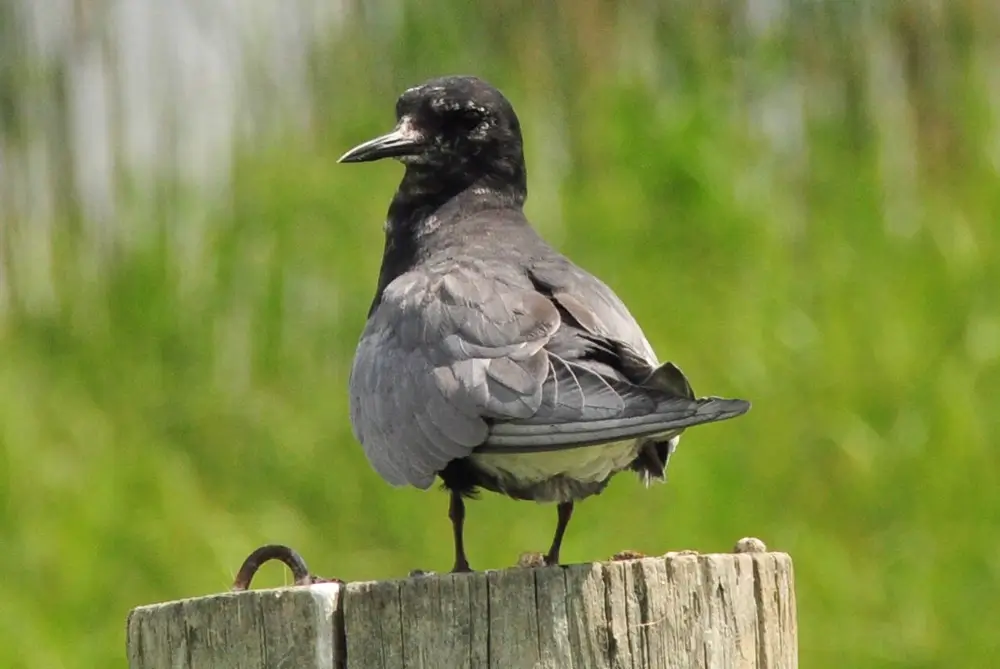
The black tern has different coloring depending on the season. During the summer breeding season, the black tern’s head, chest, and wings are dark gray. In the winter, its head and underside are white while the wings remain gray.
Habitat
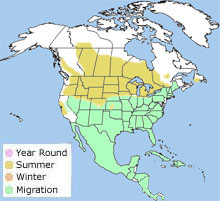
The black tern spends the summer inland in marshes with dense vegetation and pockets of shallow, open water. In the winter, the black tern migrates to the northern coast of South America.
Diet
During the breeding season, the black tern eats invertebrates such as dragonflies, damselflies, grubs, and small mollusks. It also eats small freshwater fish. During the winter, small marine fish and plankton make up the black tern’s diet.
Life Cycle
The male black tern performs an elaborate courtship ritual to attract females, which includes flying into the air with a fish in its mouth. It nests in small colonies in inland marshes. Nests are sometimes built on a muskrat house or on a mass of floating plants in shallow water.
Females lay three eggs between May and early August. She incubates the eggs for 22 days. Young terns leave the nest early, first by swimming and then flying. Young terns can fly after about three weeks.
The oldest black tern on record lived to be a little over 11 years old.
Behavior
When feeding, the black tern hovers over the water with its beak pointed down. When ready, it makes a sudden drop or swoop to grab the insect in its bill.
Did You Know?
Support for NatureWorks is provided by:
The Black Tern in NH
The black tern does not breed in New Hampshire, but it can be spotted in the state during migration.