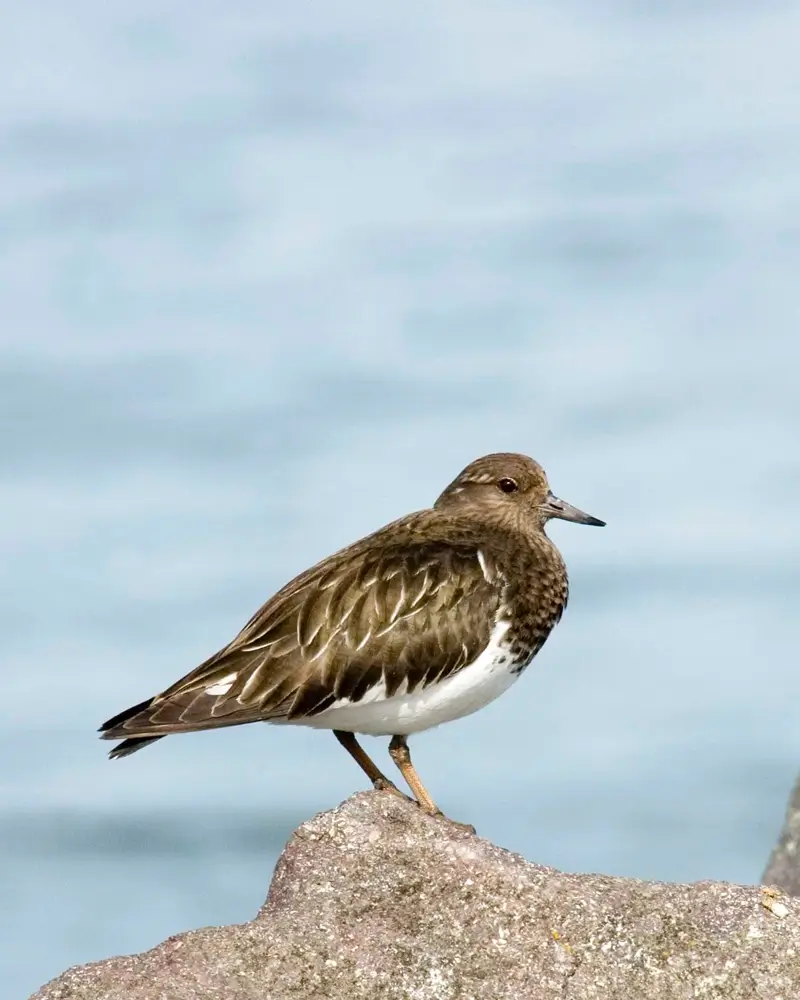
The black turnstone is a short-legged shorebird that is about 9-10 inches (22.86-25.4 cm) in length with a wingspan of around 20 inches (50.8 cm).
It has black to orange-brown legs; a short, dark bill that is slightly upturned at the end; and white underwings.
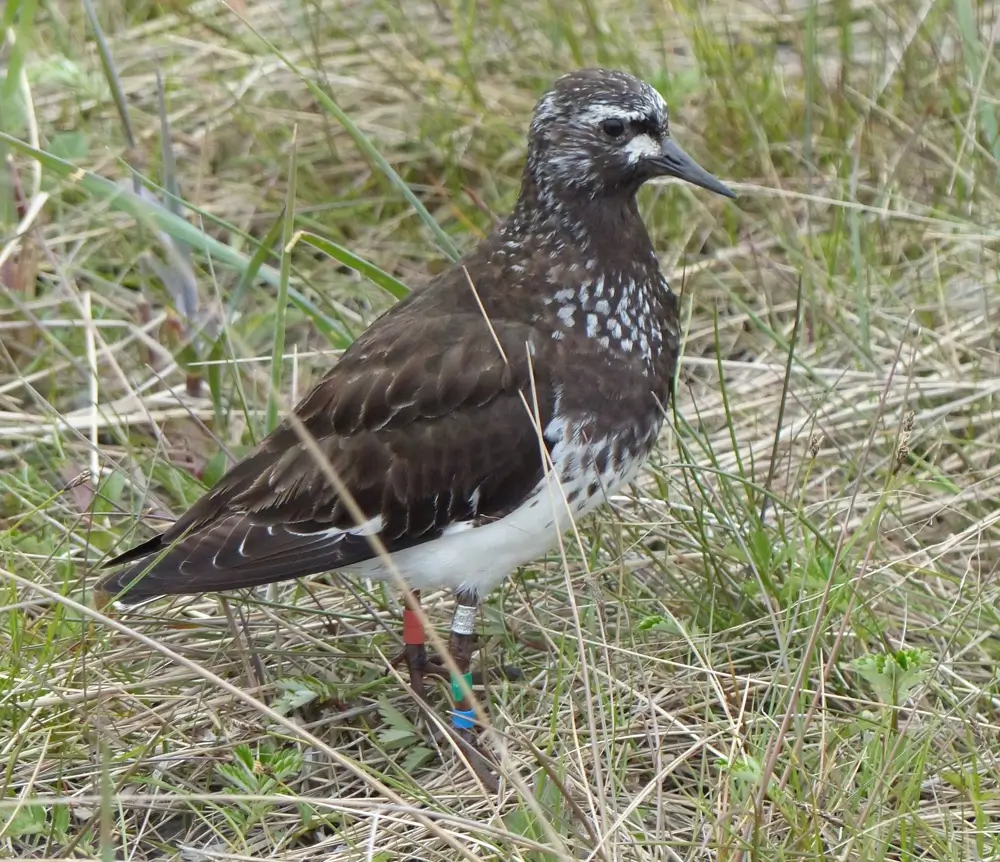
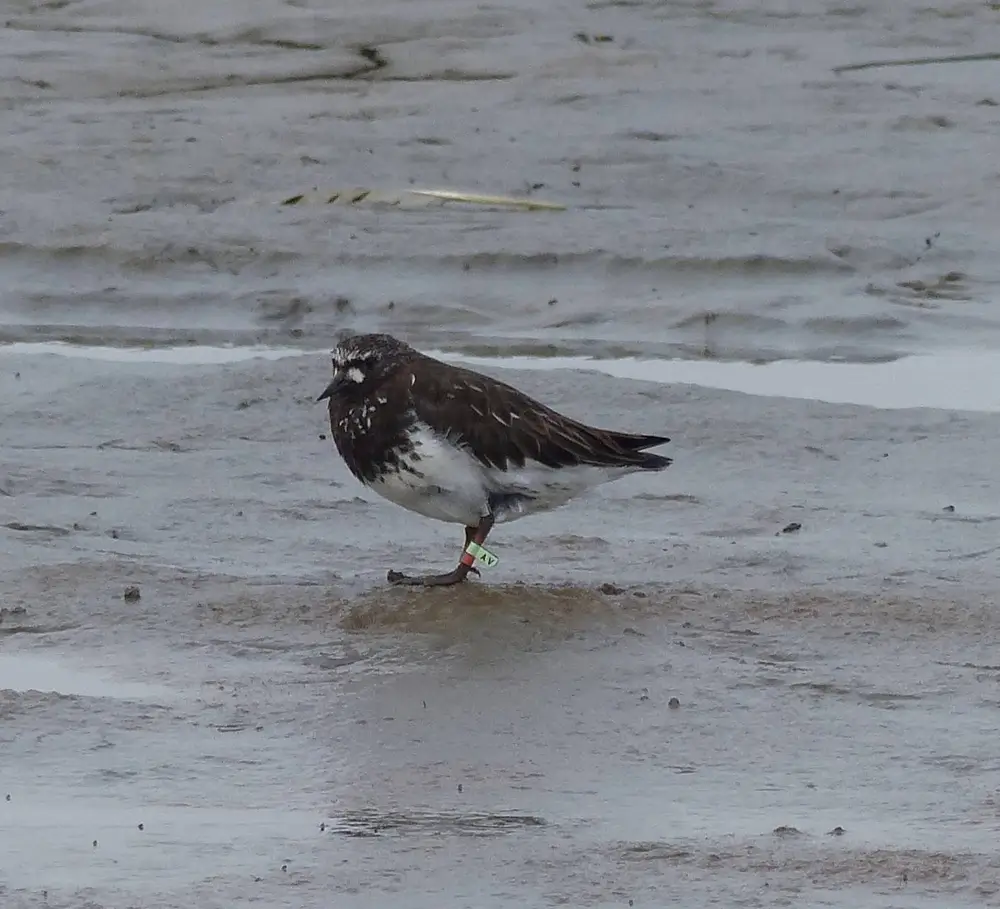
In breeding season, its head, back, and chest are black. It has a white belly, white eyebrows, and a white mustache at the base of its bill; black and white markings on its head; and a black patch on its chest.
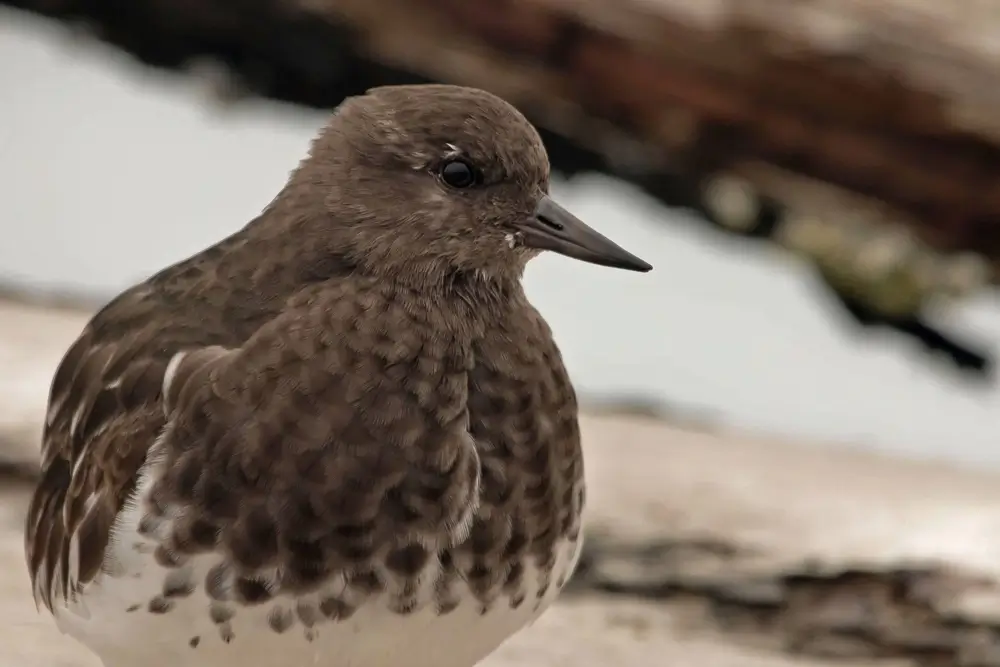
In winter, it is grayish-brown on its head, back, and chest. It still has a white belly, but it is missing the white eyebrows and the white patch on its face.
Males and females look alike, but the male’s coloring is a little brighter, and the female is a little larger.
Habitat
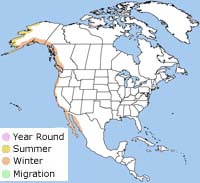
During the breeding season, the black turnstone is found on marshy coastal tundras. In winter, it is found on rocky shores.
Diet
The black turnstone flips over rocks and shells looking for food like barnacles and limpets. On the tundra during the breeding season, it eats insects, seeds, and berries.
Life Cycle
The female lays four eggs in a nest on the ground. The nest is lined with grass and is in the open or hidden by vegetation. Both parents incubate the eggs for 21-24 days. The chicks are precocial and leave the nest and feed themselves shortly after hatching.
Both parents care for the young. The female leaves before the chicks are fledged. The male stays and cares for the chicks until they are 28-30 days old. Male and female pairs may mate for more than one year and use the same nesting spot.
The black turnstone has a lifespan of 4-8 years in the wild.
Behavior
The black turnstone, like the ruddy turnstone, gets its name from its habit of turning over stones and shells when it looks for food.