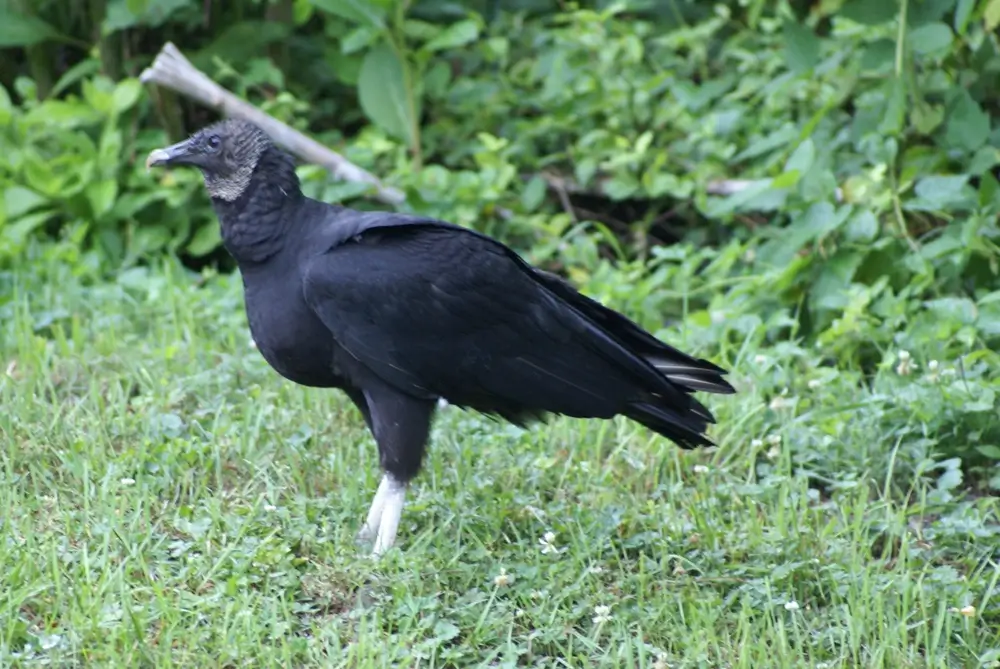
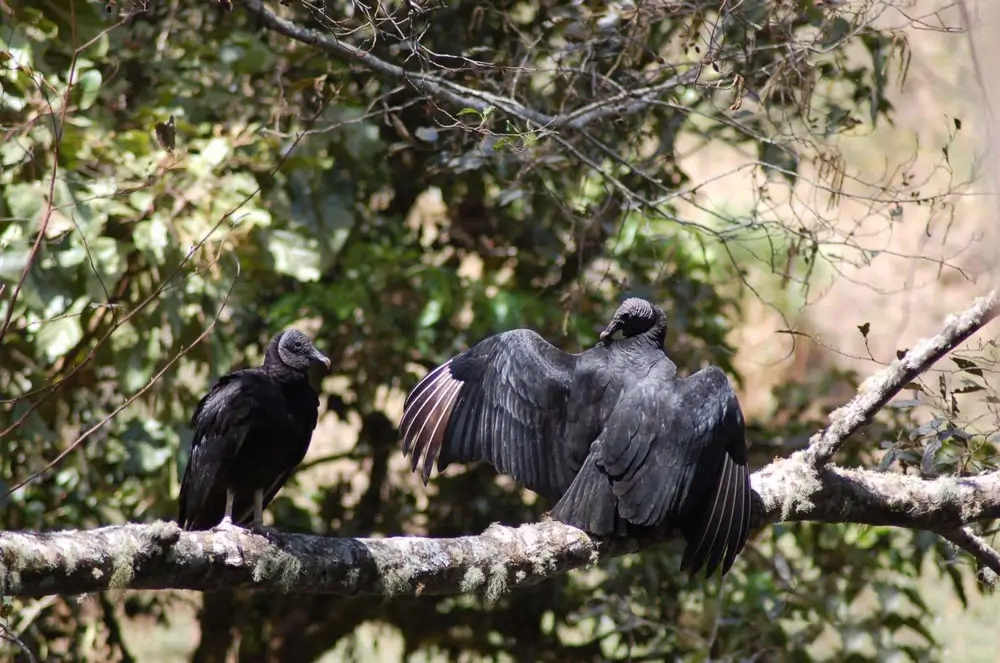
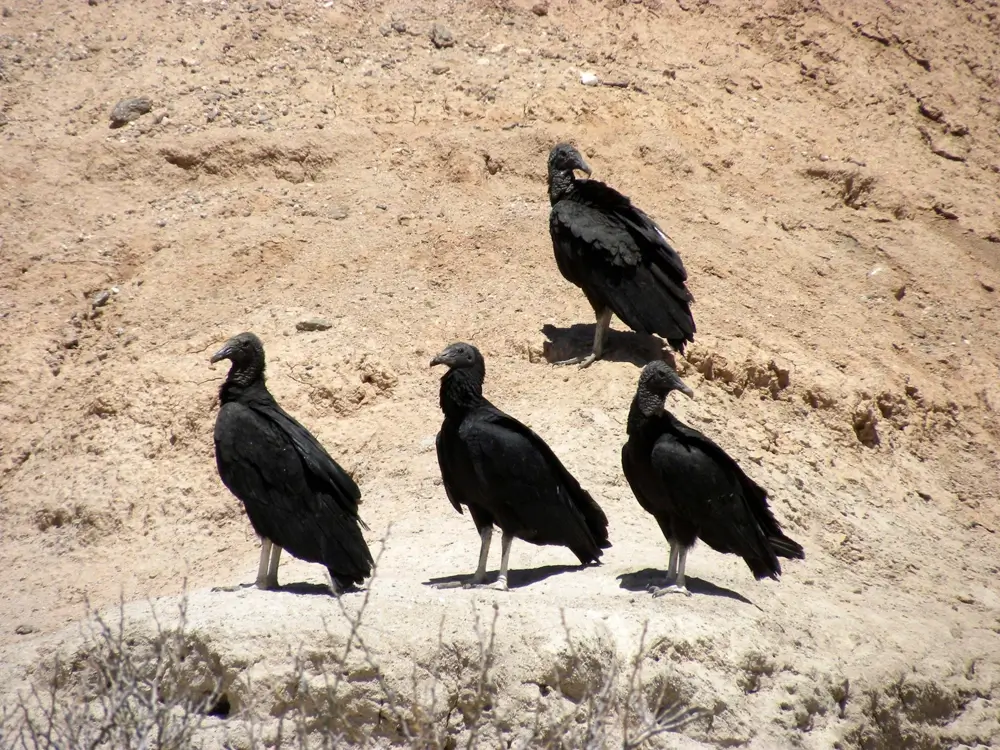
The black vulture is 23.6-26.8 inches (60-68 cm) in length with a wingspan of 4.5-4.9 feet (1.4-1.5 m).
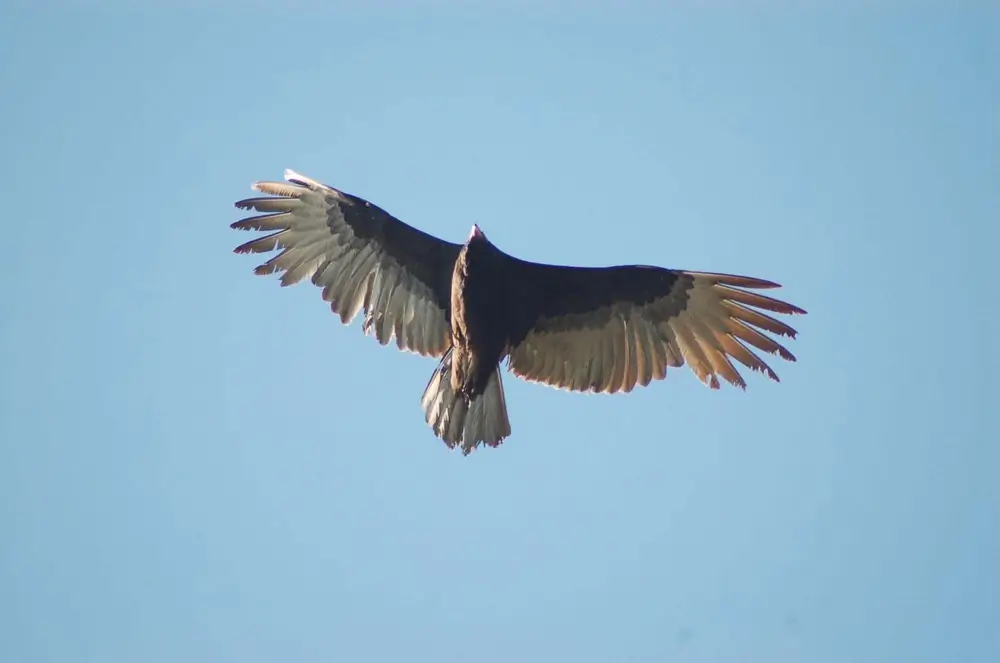
It has a black body, a short, square tail, and a featherless, wrinkled dark gray head and neck. It has weak feet and a relatively weak bill. It has broad, round wings that are edged in white on the undersides.
Males and females look alike.
Habitat
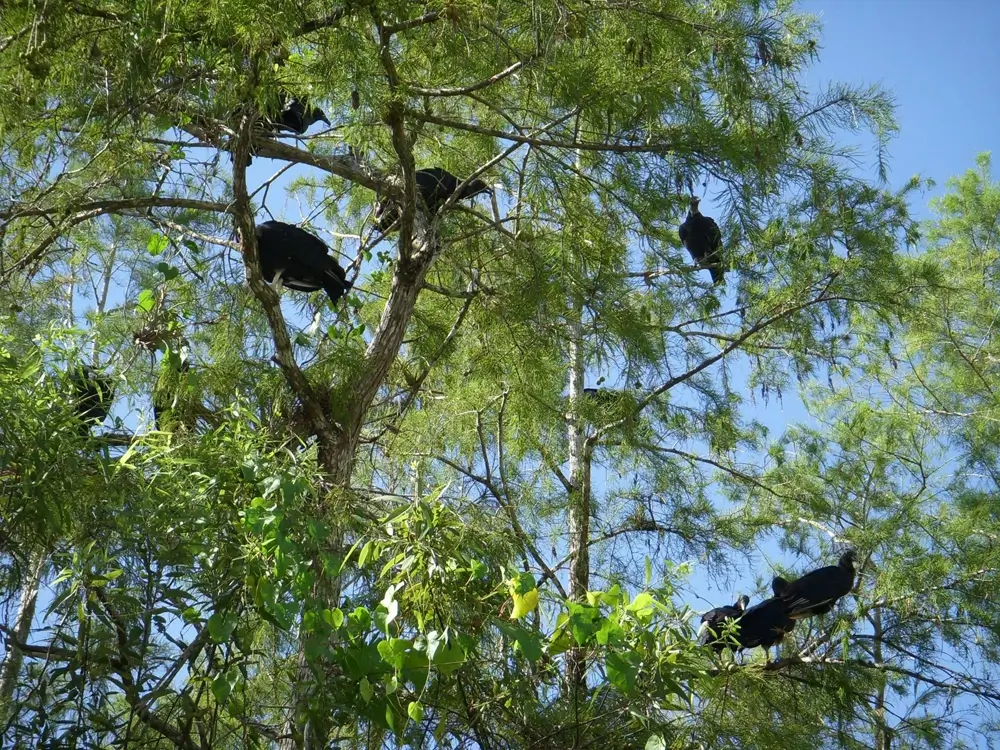
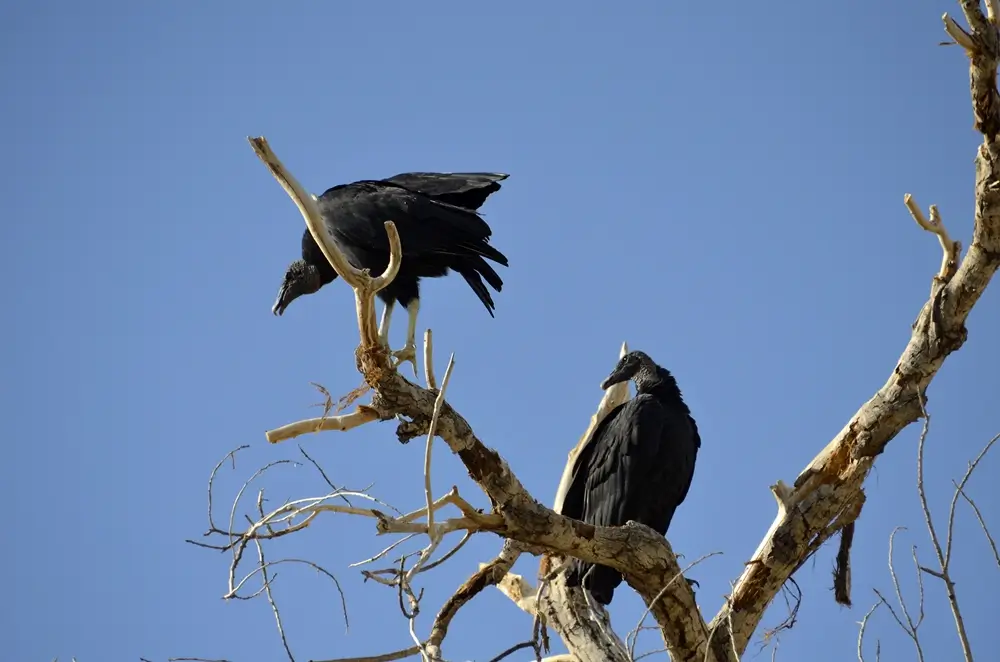
The black vulture is found in open areas and breeds in woodlands and thickets. It can often be seen roosting in trees or perched on a fence post.
It also glides overhead on thermals searching for food.
Diet
The black vulture is a scavenger. It eats carrion (dead animals). Occasionally, it eats weak, sick, or young birds and mammals. Unlike the turkey vulture, the black vulture uses sight, not smell, to locate food.
It hunts for food in groups. It flies high in the air until one of the birds in the group spots food. The group then descends to the ground and digs into their find.
The black vulture’s featherless head prevents dead and rotting meat from collecting in its feathers.
Life Cycle
The female black vulture lays two eggs under a bush, in a hollow log, under large rocks, or in a cave.
Both the male and the female incubate the eggs for 32-41 days. The chicks fledge when they are 63-70 days old.
The black vulture can live up to 20 years in the wild and 30 years in captivity.
Behavior
The black vulture is very protective of the carrion it finds and aggressively drives the larger turkey vulture away from a find.
It is normally a silent bird, but it hisses, grunts, and even barks to drive other scavengers away from its food.
Did You Know?
Support for NatureWorks is provided by:
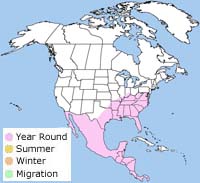
The Black Vulture in NH
In the late 20th century, the black vulture’s range began expanding northward, and it can now be found in southern New Hampshire and along the Connecticut River Valley.