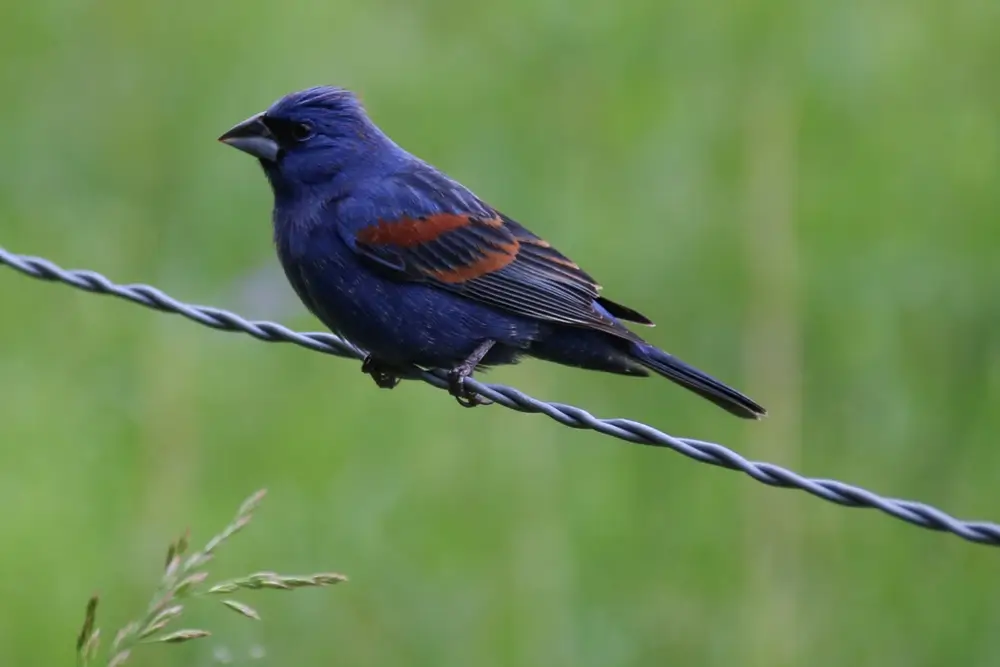
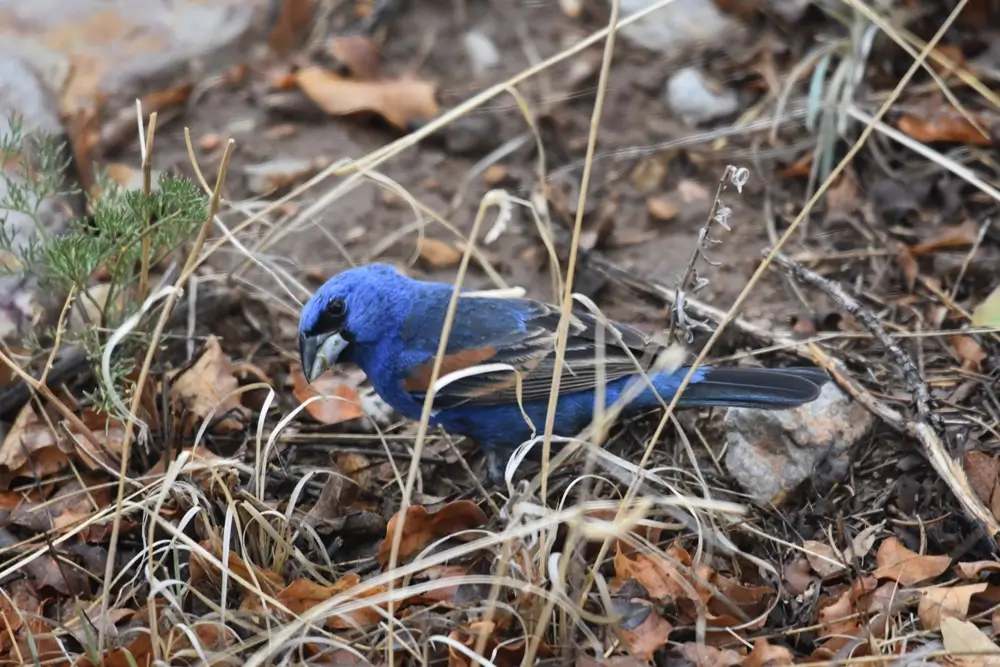
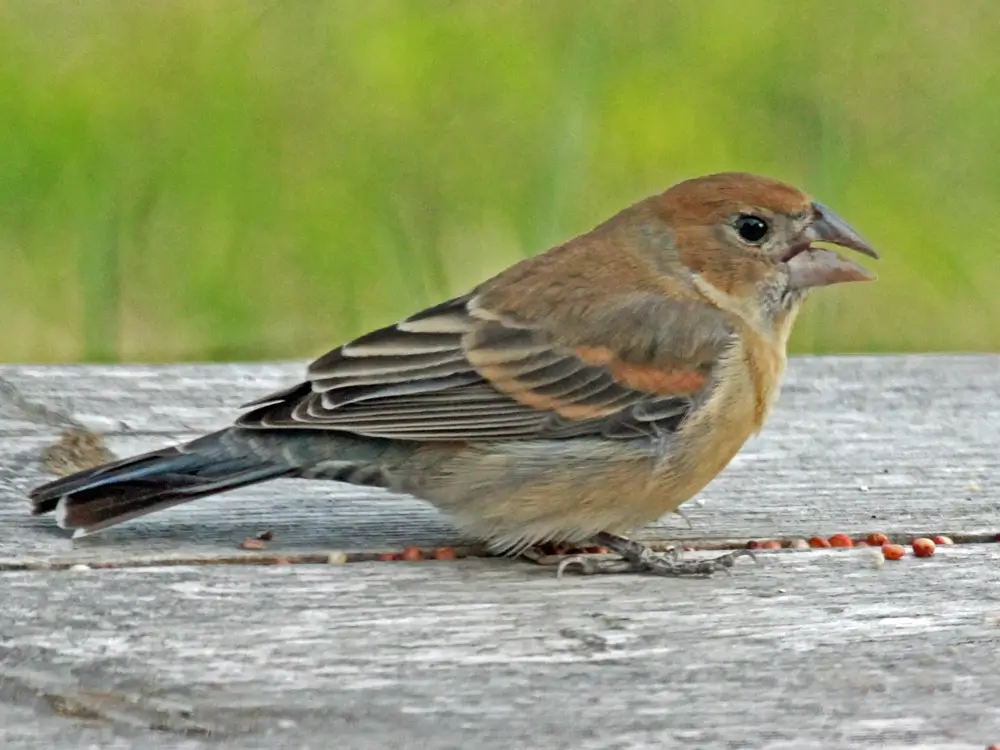
The blue grosbeak is 5.9-6.3 inches (15-16 cm) in length with a wingspan of around 11.0 inches (28 cm).
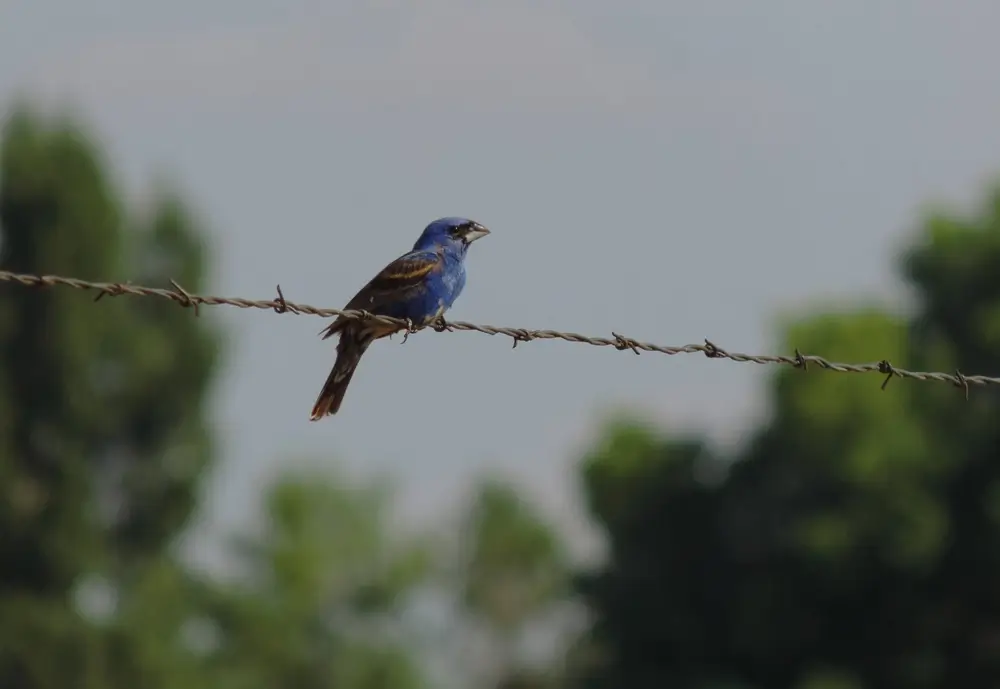
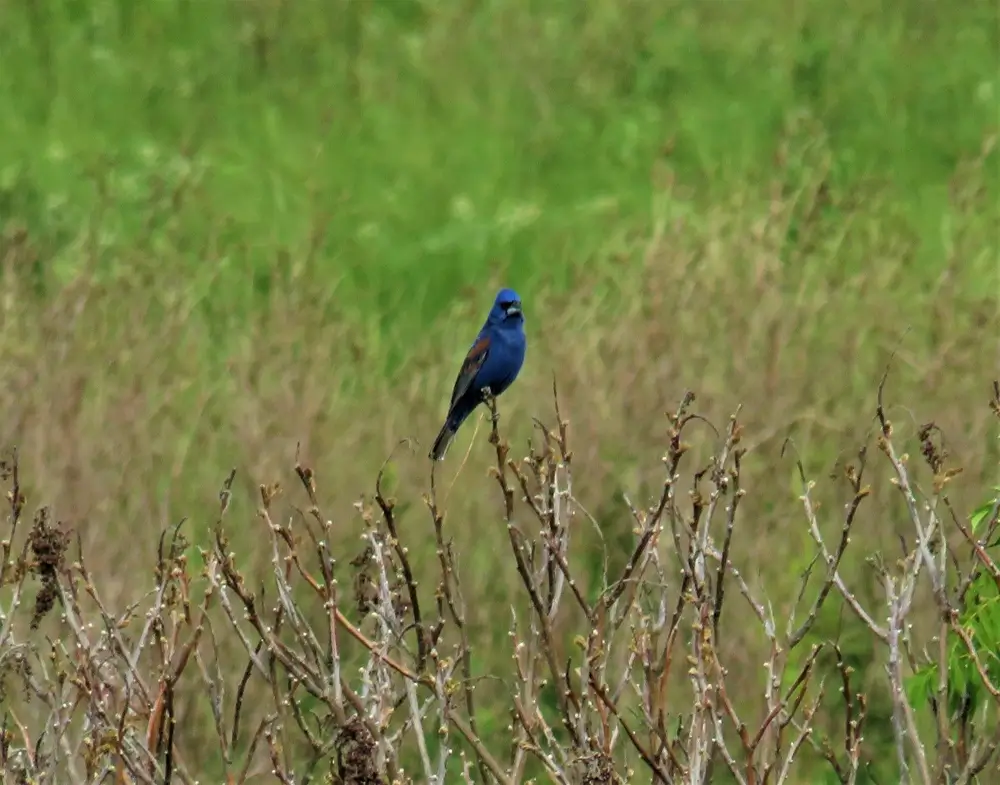
It has a stout, conical (cone-shaped) bill. The male blue grosbeak is bright blue with blackish wings and a blackish tail. He has black under his eyes and around the base of his bill.
The female is brown on her uppersides and a lighter brown on her undersides. She also has blackish wings and a blackish tail.
Both males and females have reddish-brown wing bars. The blue grosbeak frequently flicks and spreads its tail.
Habitat
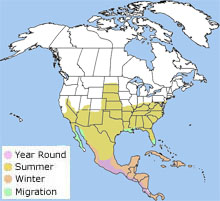
The blue grosbeak likes open areas with brushy thickets (thick group of trees or bushes) and scattered medium-sized trees. It is found in streamside thickets, roadside thickets, hedgerows, brushy pastures, old fields, and woodland edges.
Diet
The blue grosbeak eats insects and some seeds during the breeding season. Some of their favorite insects are grasshoppers, cicadas, and mantis.
During migration, they are often found feeding in rice, corn, and other grain fields.
Life Cycle
The male blue grosbeak reaches the breeding territory first. He perches on a branch and sings to attract a mate. Female blue grosbeaks usually have two broods a year with the same male.
The female lays 3-5 light blue eggs in a cup-shaped nest made of sticks, bark, plant fibers, paper, and even string. It may also use snake skin in its nest. It is thought that the snake skin might scare away predators. The nest is made close to the ground in a shrub or a tree.
The female incubates the eggs. Incubation takes about 11-12 days. The female does most of the feeding, but the male may take over after the chicks fledge and the female begins a new nest for her second brood. The chicks fledge when they are about 9-10 days old.
The blue grosbeak has a lifespan of around 5 years.
Behavior
After the breeding period is over, small flocks of blue grosbeaks often gather in fields to feed. They frequently mix with other birds like sparrows.
Did You Know?
Support for NatureWorks is provided by:
The Blue Grosbeak in NH
The blue grosbeak does not breed in New Hampshire, but occasionally vagrants appear in the state.