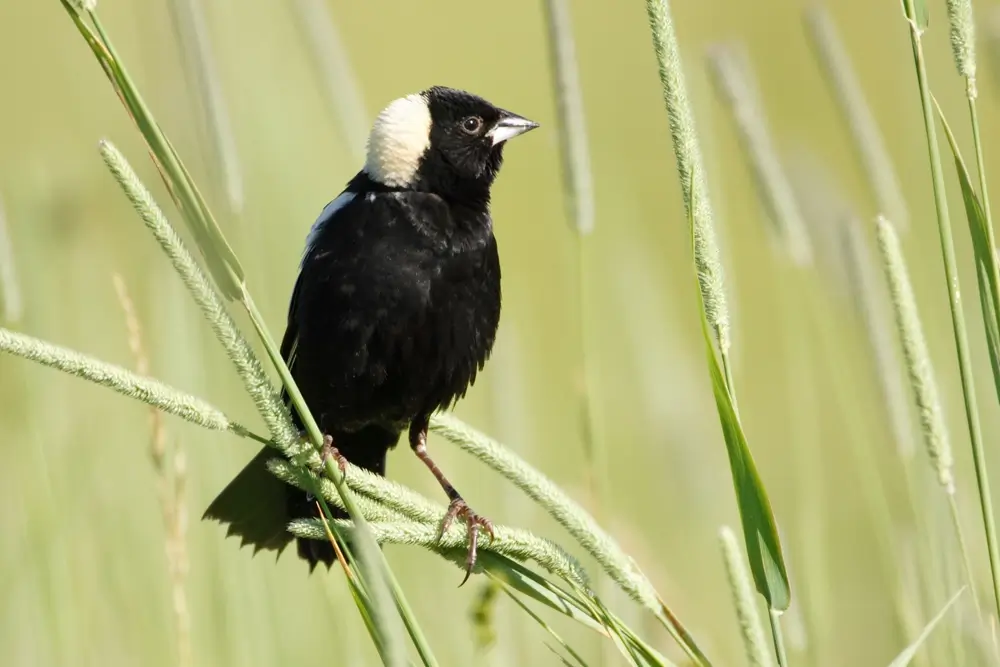
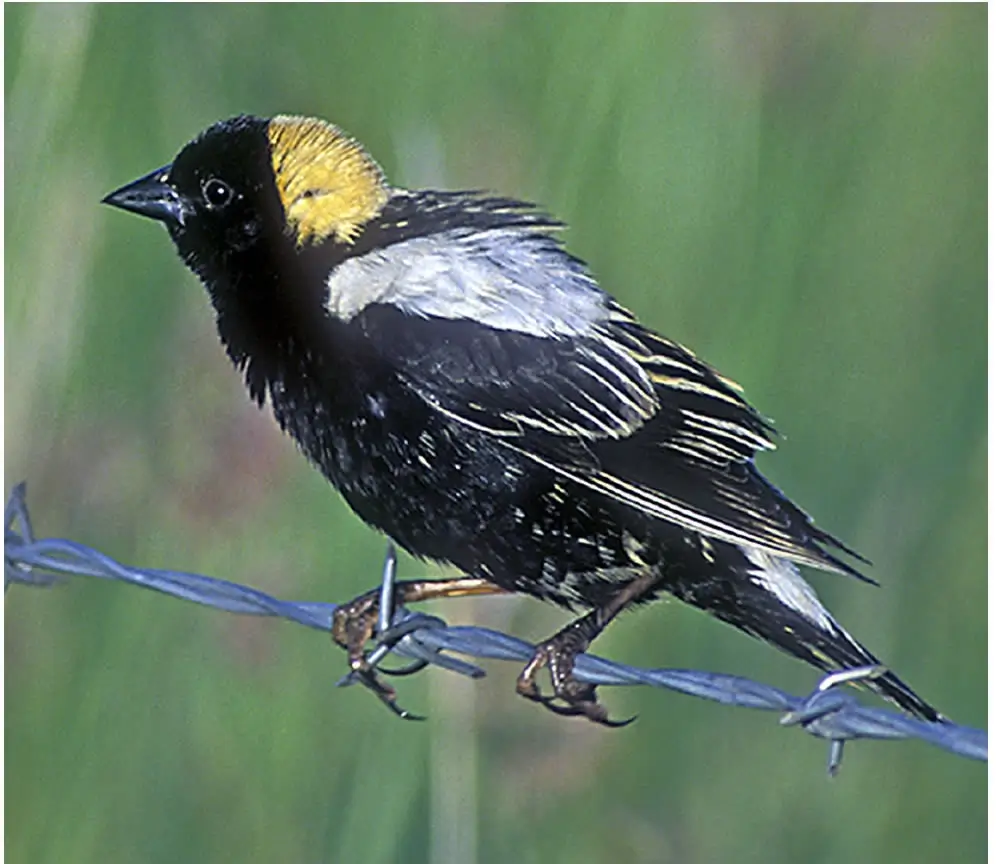
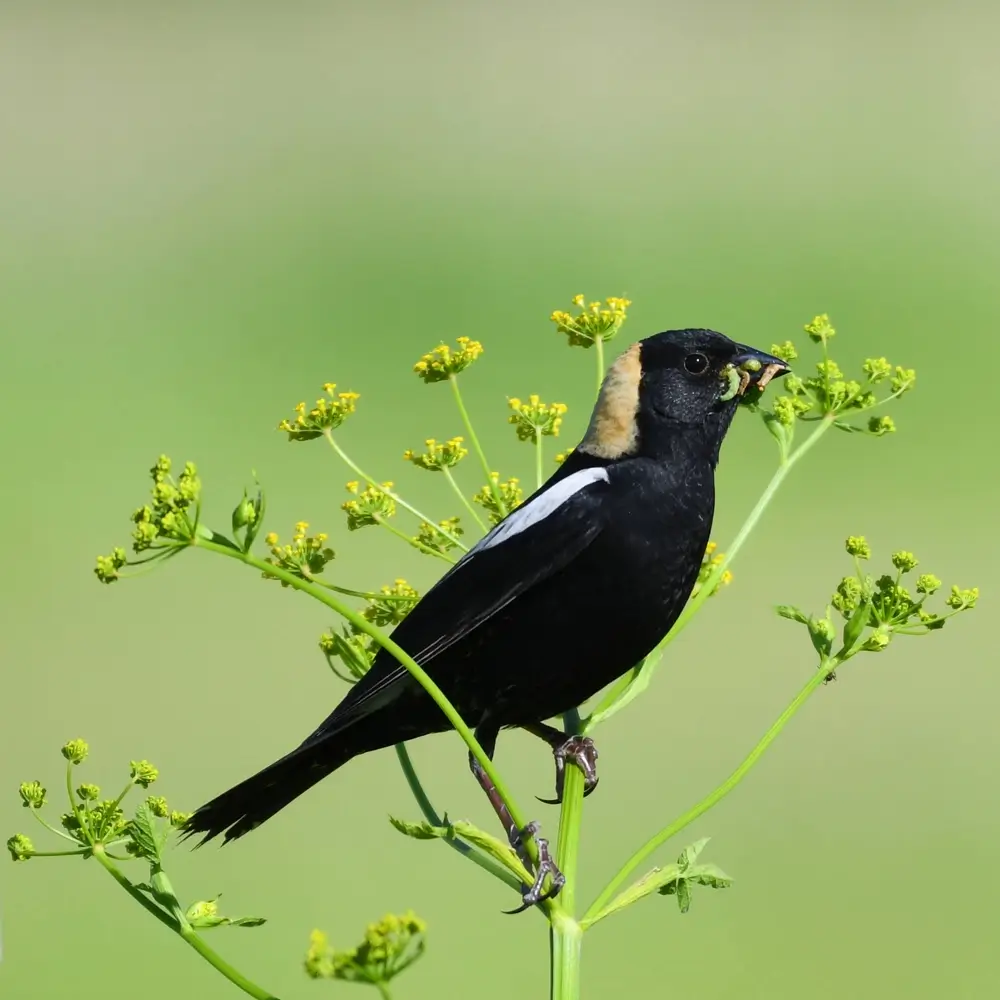
The bobolink is a small songbird. It is between 6-8 inches (15–21 cm) in length and has a wingspan of around 10.5 inches (27 cm).
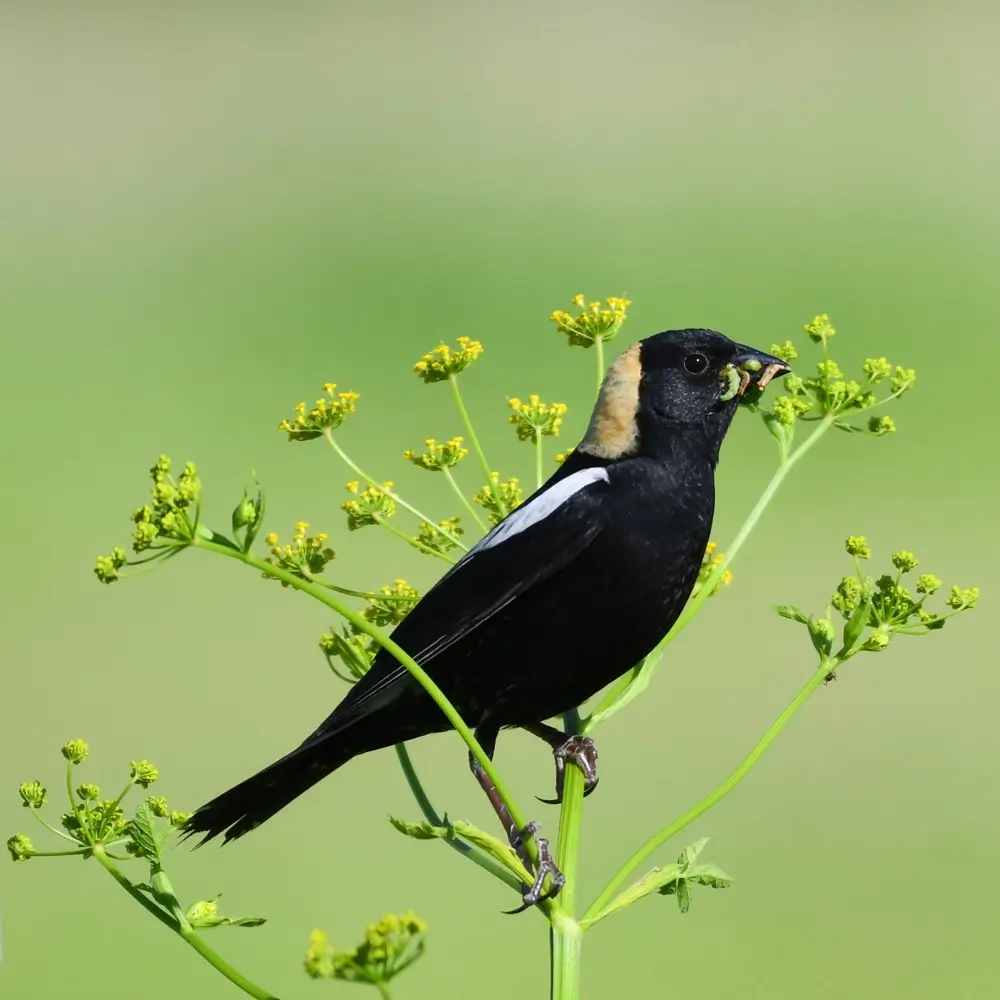
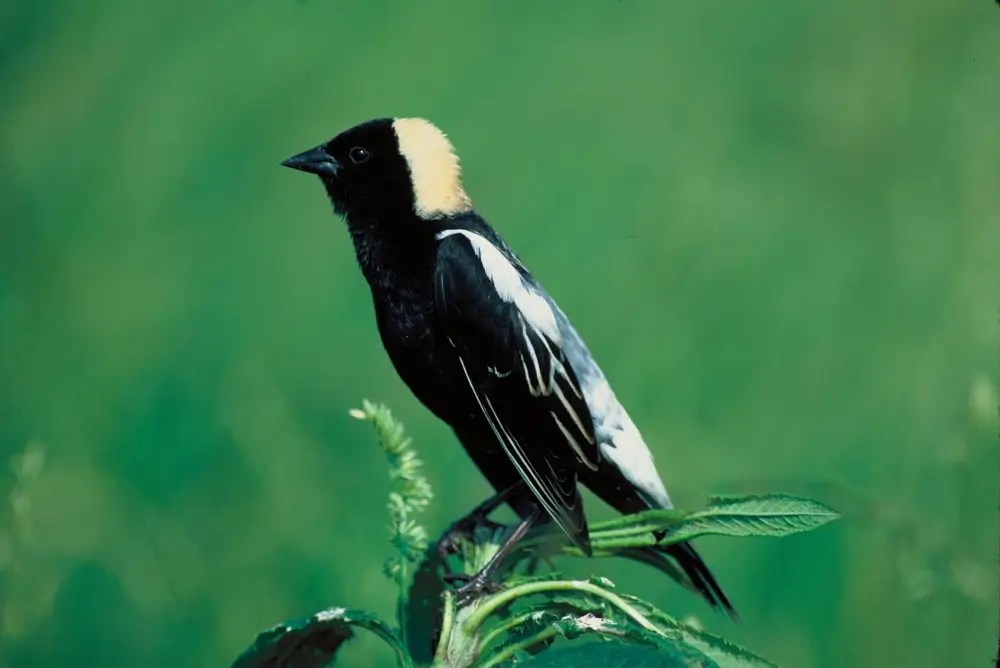
During the mating season, the male bobolink is black with a white back and a light yellow patch on the back of its head.
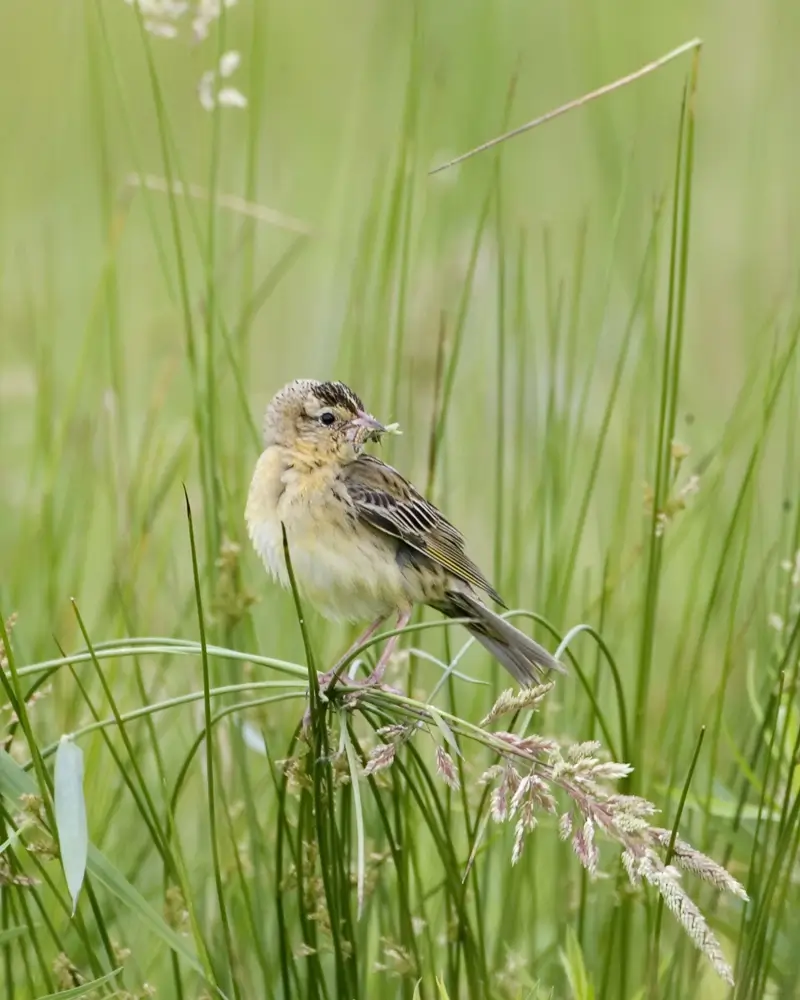
The female bobolink is yellowish brown with black stripes on her head and back.
After the mating season is over, the male molts and grows new feathers and looks like the female.
Habitat
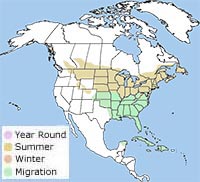
During the breeding season, the bobolink breeds in open grassland and hay fields. During migration and in the winter it can be found in freshwater marshes, grasslands, and rice fields.
Diet
The bobolink feeds on the ground, eating seeds, grains, insects, and spiders. Although it usually feeds during the day, during migration, the bobolink has been observed feeding in rice fields after dark on bright nights.
Scientists believe it eats at night during this time to build up fat stores for its long migration.
Life Cycle
The bobolink uses grass and sedges to build a nest on the ground. Sometimes, it makes a canopy out of dead grass over the top of its nest for additional camouflage.
The female lays 1-7 bluish-gray eggs. She incubates them for 11-13 days. The chicks leave the nest after two weeks.
The bobolink has a lifespan of 4-6 years in the wild.
Behavior
The bobolink is an incredible traveler. It makes a round-trip journey of about 12,500 miles (20,117 km) each year between North America and South America.
Did You Know?
The bobolink is sometimes known as the rice bird.
Support for NatureWorks Redesign is provided by:
The Bobolink in NH
The bobolink is found throughout New Hampshire.
The bobolink population has been decreasing dramatically in New Hampshire due to the loss of farmland and grassland habitats.