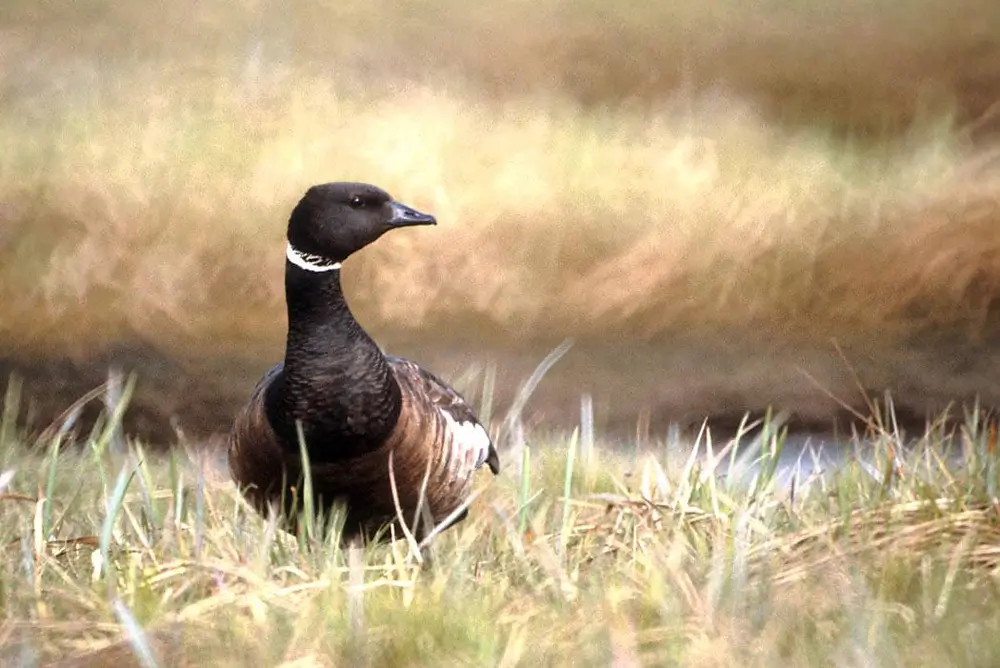
The brant is a small goose. It is 23.3-24.5 inches (59.2-62.2 cm) in length with a wingspan of 41.3-42.5 inches (105-108 cm)
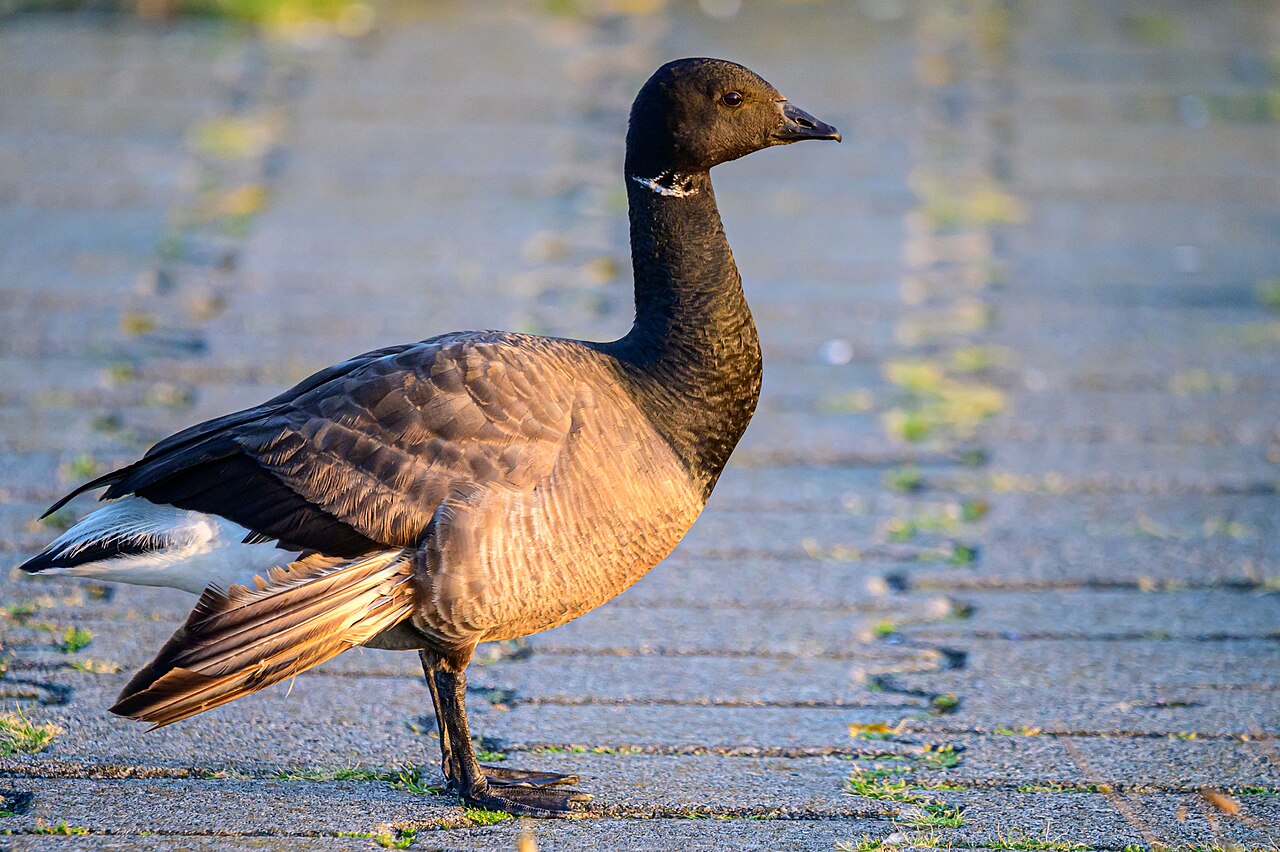
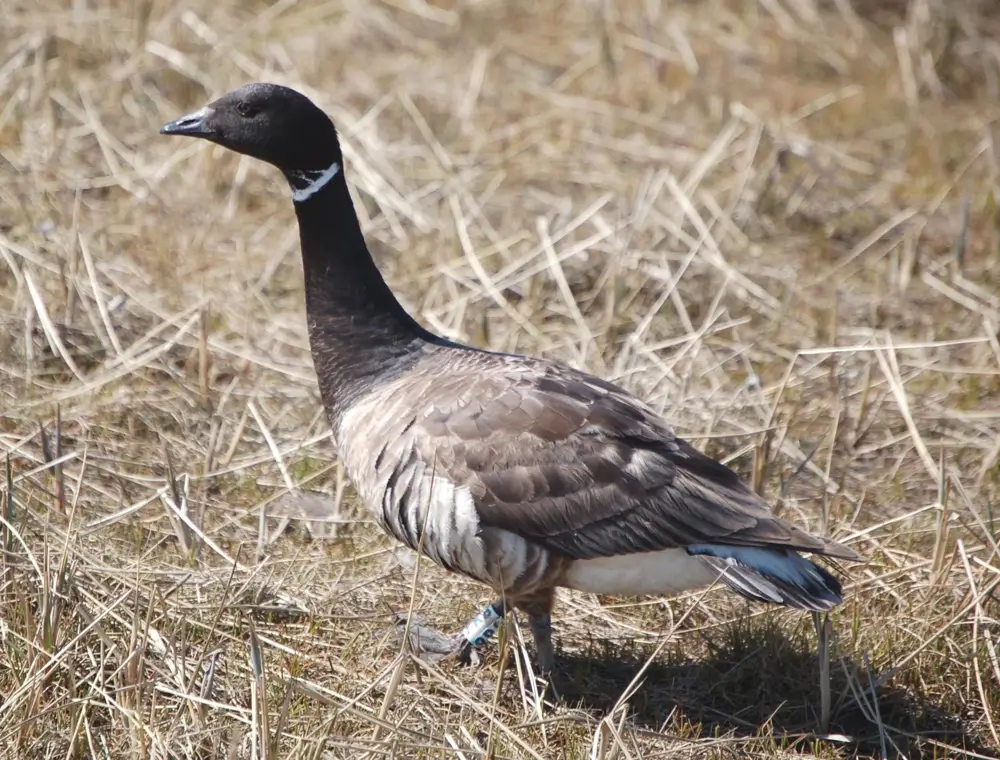
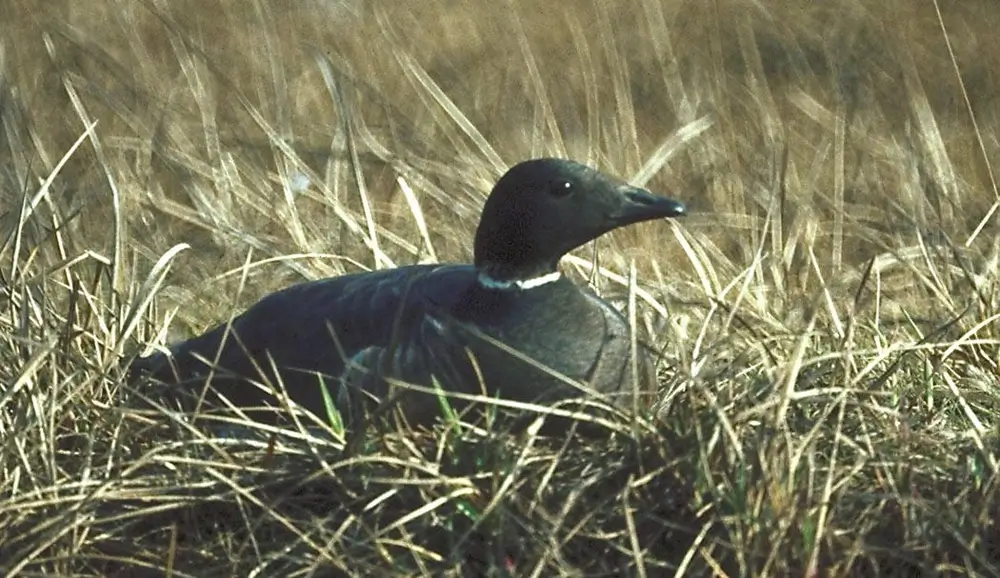
It has a dark brown or black head, neck, and chest, and a white band on its neck. It has a white rump, dark wing feathers, and a black bill, legs, and feet. Its belly is light brown, and its back is blackish-brown.
The brant is also known as the brent goose.
Habitat
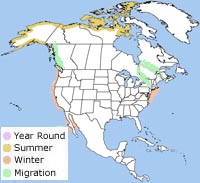
During the breeding season, the brant is found in the tundra and on coastal islands in the Arctic. In the winter, it is found in salt marshes and estuaries
.
Diet
The brant eats green plants including eelgrass and sea lettuce. The brant doesn’t usually dive for its food, but instead waits for low tide and then pulls the grass up. Sometimes it will pull extra plants up at low tide. When it is high tide, the plants float and the brant eats them.
A large part of the brant’s diet is eelgrass. In the 1930s, a disease devastated eelgrass and the brant population dropped. The brants that survived switched to eating sea lettuce. Eelgrass recovered and today the brant population has risen.
Life Cycle
Brants arrive at their breeding grounds, already paired, in early June. Brants nest in colonies in lowland areas of the tundra and prefer small islets in ponds and small lakes.
Female brants lay 3-5 eggs in a nest of moss, lichen, seaweed, and down in a depression in the ground. When the female leaves the nest to forage, she covers the eggs with down to keep them warm.
The eggs take a little under a month to hatch. The chicks leave the nest and are led to forage for food within a few days of hatching. The chicks fledge in 40-50 days, but they stay with their parents through the winter. Brant pairs usually remain together and return to the same breeding ground year after year.
The brant has a lifespan of 12-20 years in the wild. The oldest brant on record was a female who lived to be over 27 years, 6 months old.
Behavior
Brants are long-distance migrators. Some fly 3,000 miles (4,828 km)from their nesting grounds on the coast of the Arctic Ocean to the coast of Mexico.
Other groups migrate from the Arctic down the Hudson Bay to the Atlantic Coast.
Brants don’t migrate in V’s like Canada geese or straight lines like snow geese. They fly in unorganized groups. They are very vocal when they migrate and make a loud “cronk” sound.
Did You Know?
Support for NatureWorks Redesign is provided by:
The Brant in NH
Brants don’t breed in New Hampshire, but they can be seen in the state in the winter.