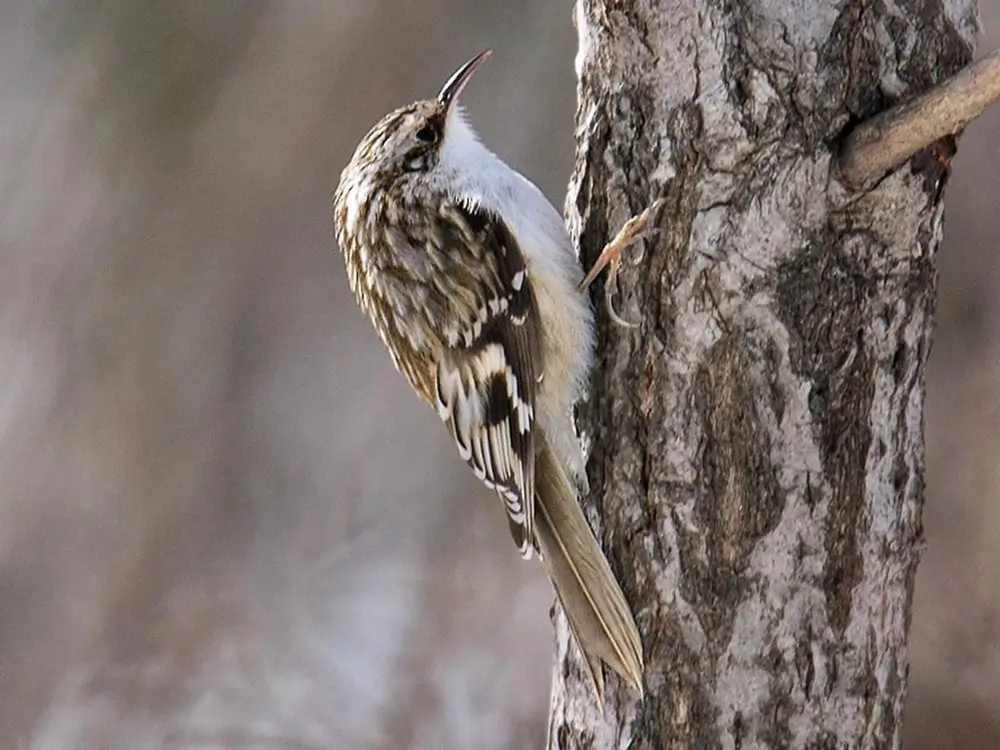
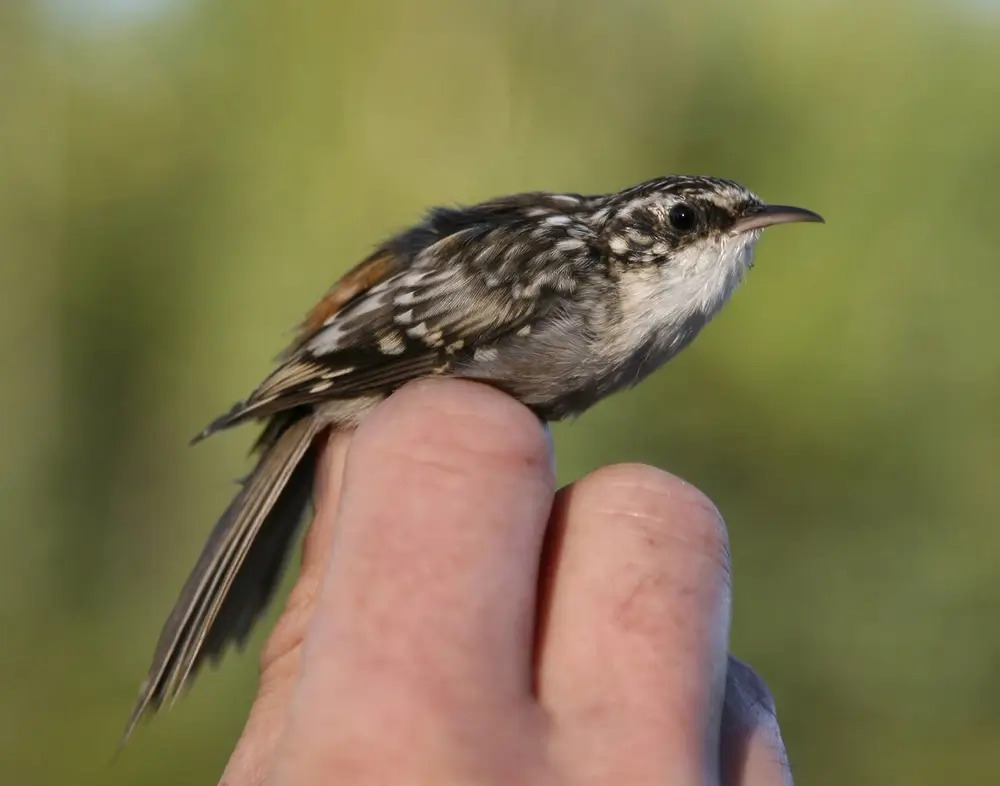
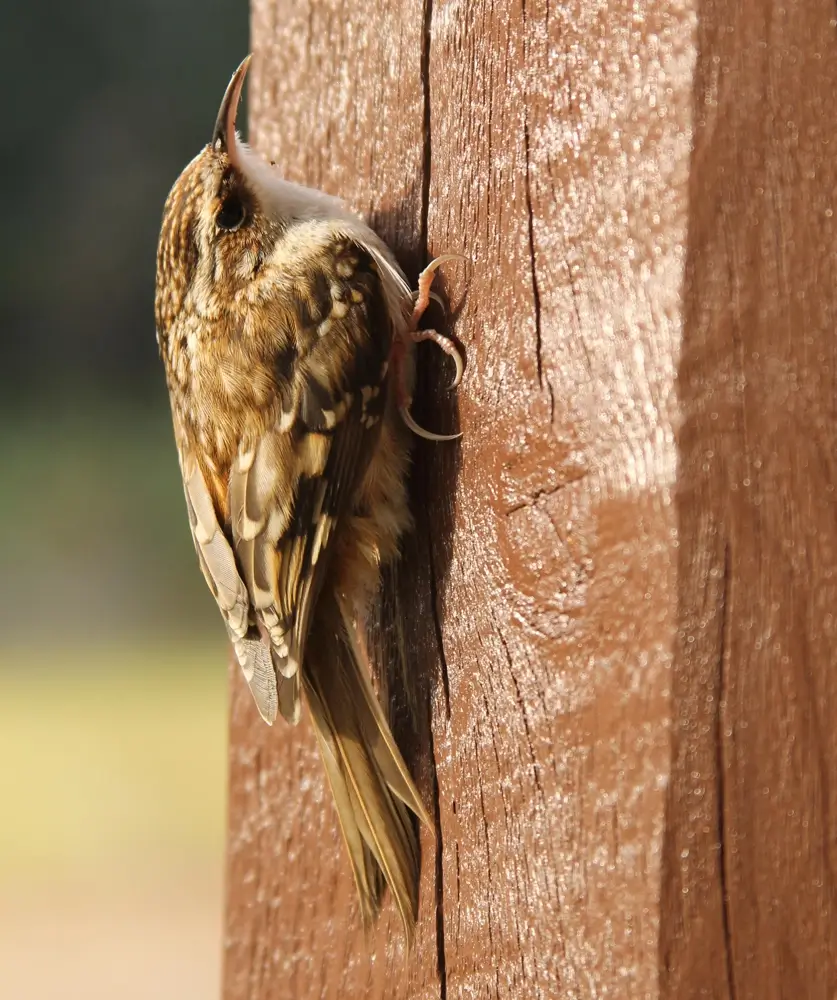
The brown creeper is 4.7 to 5.5 inches (12 to 14 cm) in length with a wingspan of 6.7 to 7.9 inches (17 to 20 cm).
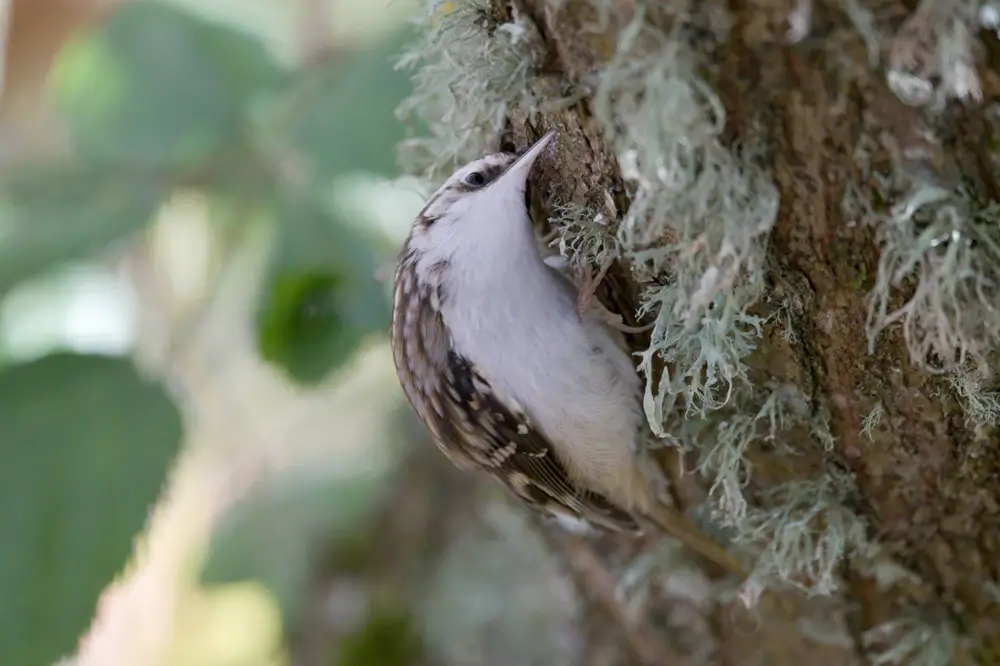
It has a long, thin, curved bill and a long, stiff tail that it uses to help keep itself steady as it moves around in trees.
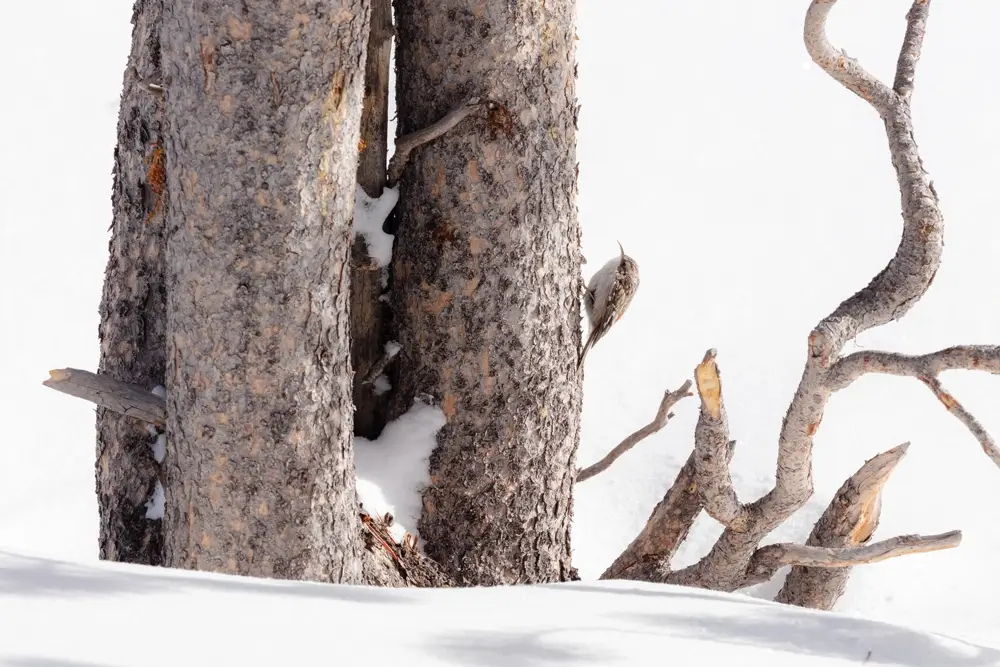
It is brown with white spots and streaks on its upperside and white on its underside. Its undersides look a lot like tree bark. Males and females look alike, but the male has a slightly longer bill.
Habitat
The brown creeper is found in coniferous and mixed coniferous-deciduous forests. It needs habitats with tall old or dead trees.
Diet
The brown creeper gets its name from the way it creeps along tree trunks and branches in search of insects, spiders, and other invertebrates, which make up almost all of its diet. It occasionally eats seeds in the winter.
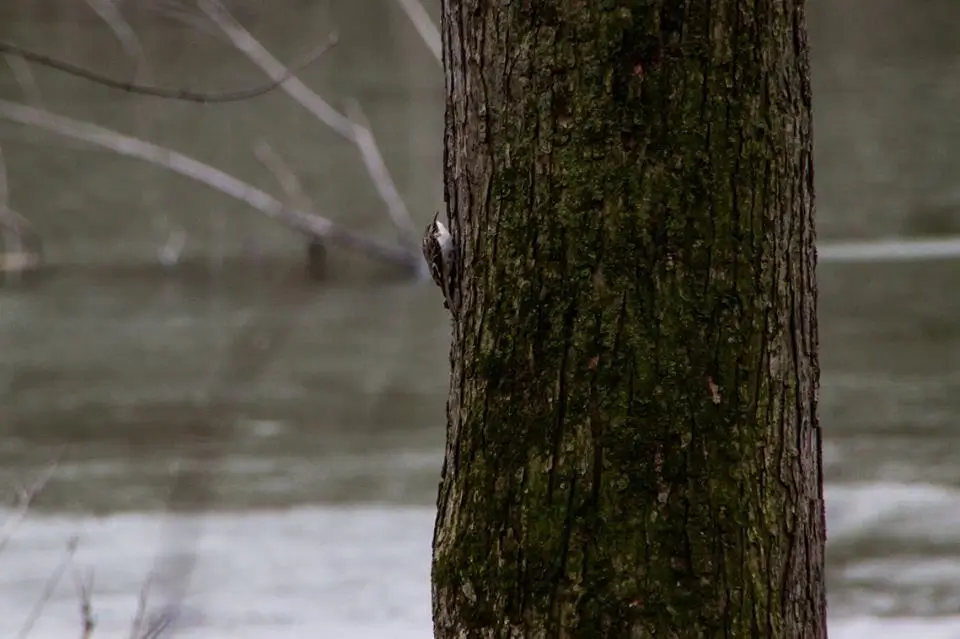
It starts at the bottom of the tree trunk and creeps up the tree in a spiral and probes for insects with its long, pointed bill. Its coloring makes it hard to spot as it creeps along the tree trunks.
Life Cycle
The male brown creeper sings to attract a mate. Once he has attracted a female, they both fly around, flutter their wings, and chase each other. The male also feeds the female during courtship and while she is nesting.
The male and the female select a nesting site, but the female builds the nest. The brown creeper’s nest is almost always built under a loose flap of bark on a dead or dying tree. Cocoons and spider egg cases are used to make a base for a cup-shaped nest made of bark, leaves, plant fibers, and feathers.
The female lays 4-8 white eggs with pink to brown spots. The female incubates the eggs, and the male brings her food. The eggs hatch in 14-17 days, and the chicks fledge in 13-16 days. Both the male and the female feed the chicks.
The brown creeper has a lifespan of 3-4 years in the wild.
Behavior
After a brown creeper has finished climbing up one tree probing for insects, it will fly down to the base of another tree and start a new spiral climb to the top.
Did You Know?
The brown creeper is also known as the American tree creeper.
It is the only native species of treecreeper in North America.
Support for NatureWorks is provided by:
The Brown Creeper in NH
The brown creeper is a year-round resident in New Hampshire.