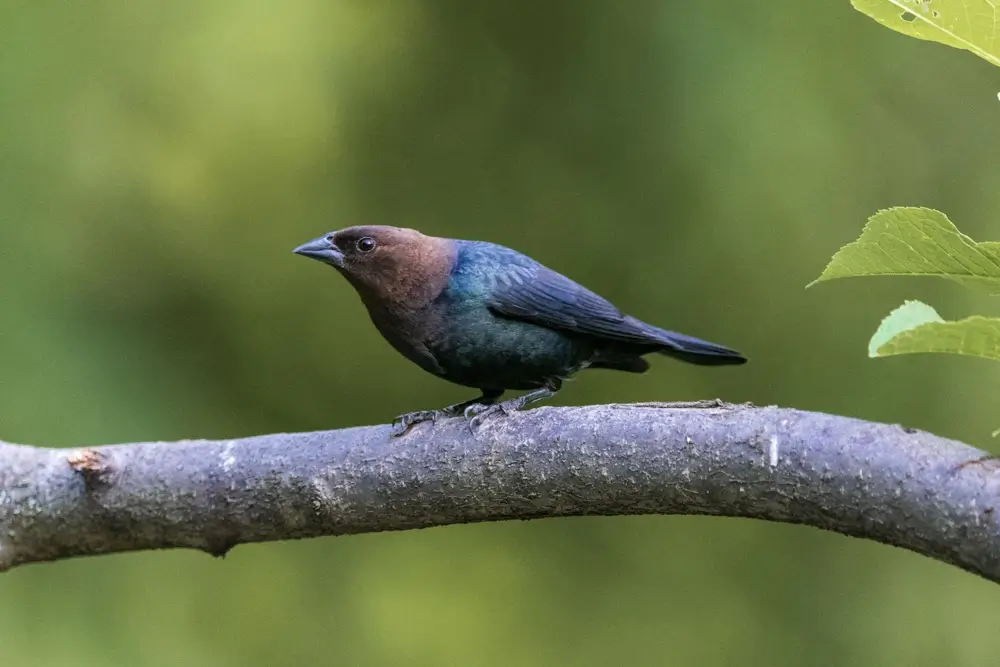
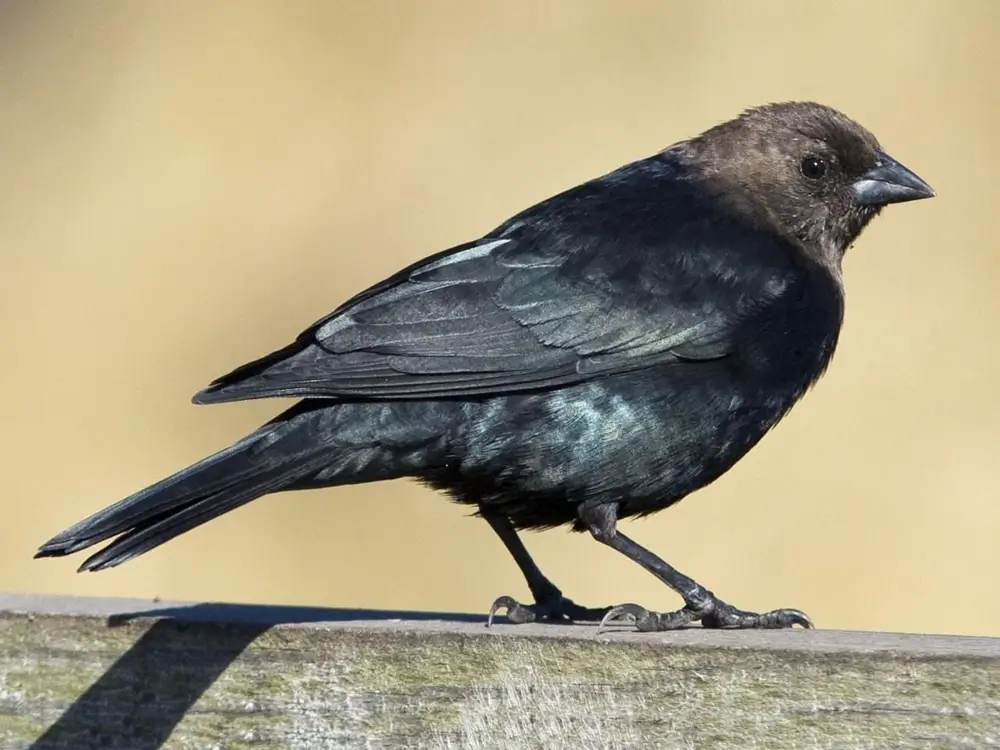
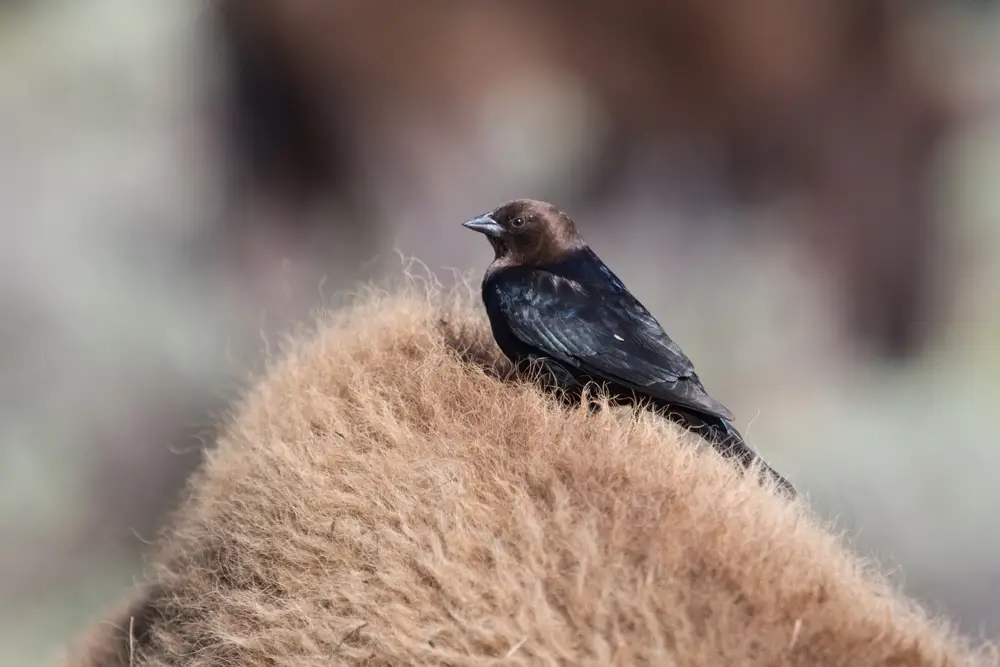
The brown-headed cowbird is a small member of the blackbird family. It is 6.3-8.7 inches (16-22 cm) in length and has a wingspan of 12-15 inches (32-38 cm). Males are slightly larger than females.
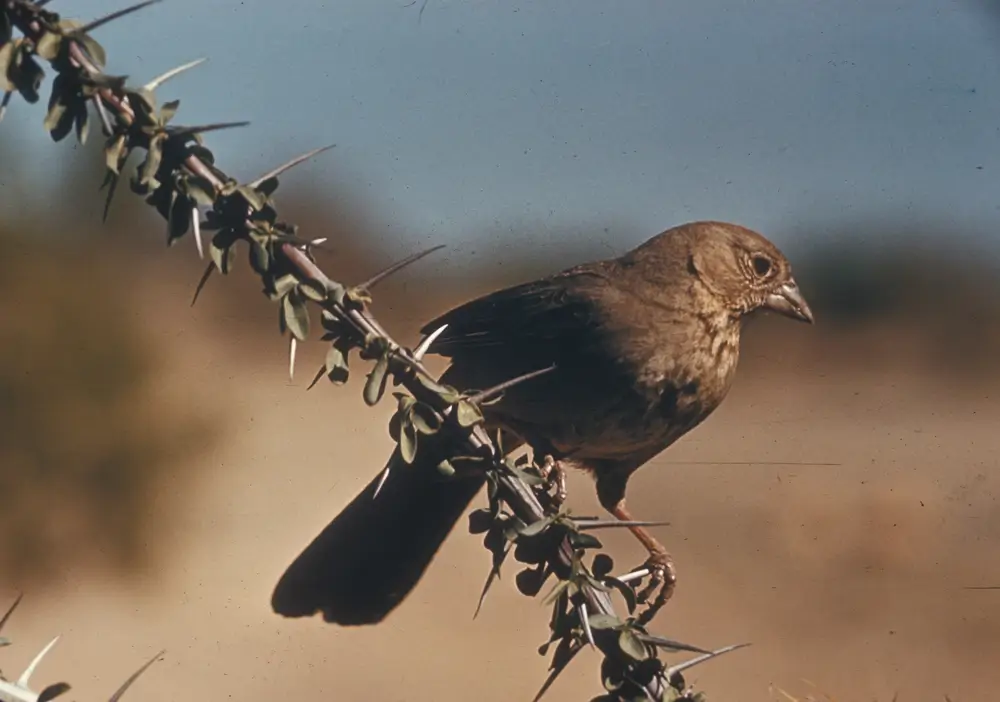
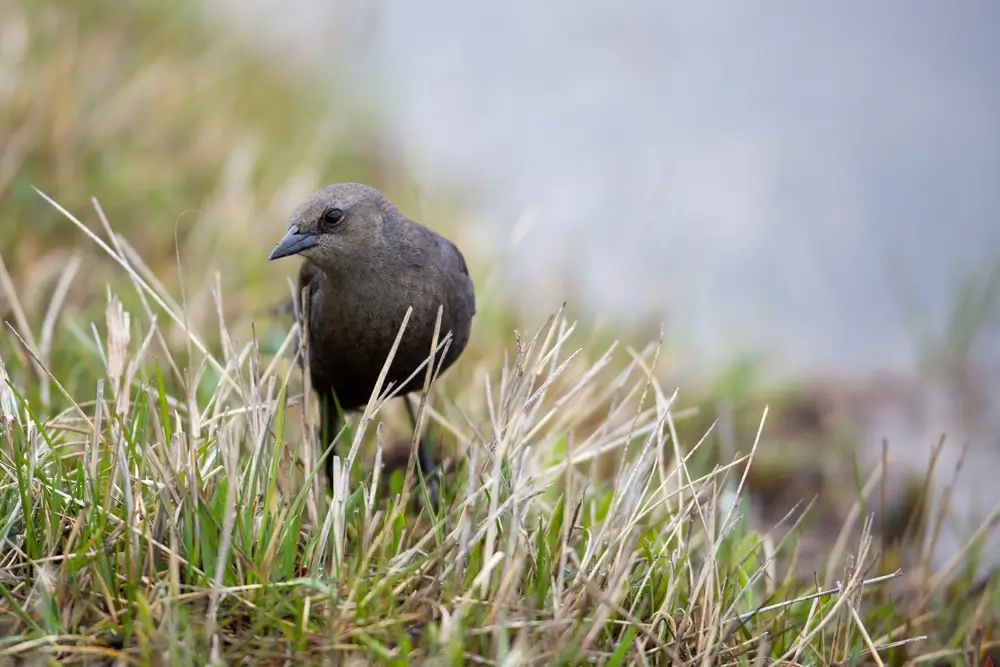
The male brown-headed cowbird has a shiny black body and a brown head. The female is entirely brown.
Habitat
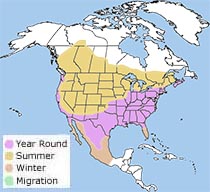
The brown-headed cowbird was once found in grassland habitats, but its range expanded as more people settled in North America. It is now found in a variety of habitats, including grasslands with low trees, woodland edges, brushy thickets, prairies, fields, pastures, orchards, and residential neighborhoods.
In the winter, the brown-headed cowbird roosts in large numbers with other species of blackbirds.
Diet
The brown-headed cowbird feeds on seeds from grasses and weeds. It also eats grasshoppers, beetles, and other insects.
To get enough calcium to produce eggs, the female eats snail shells and eggshells from the nests it invades.
Life Cycle
The brown-headed cowbird is a brood parasite; it lays eggs in other birds’ nests instead of building a nest of its own. Studies have shown that brown-headed cowbirds tend to choose a nest with smaller eggs than their own.
Cowbirds have been observed laying eggs in nests of 220 different host species. The yellow warbler, red-winged blackbird, and red-eyed vireo are common hosts.
Since the female doesn’t build a nest of her own, she spends all of her energy laying eggs. Sometimes, three dozen eggs are laid in a season. Cowbird eggs hatch faster than the eggs of other birds in the nest.
This gives the cowbird chicks a head start in getting food from the host parents. The cowbird chicks develop faster than other species and sometimes will throw the other eggs out of the nest or smother the other chicks.
Some species, like the yellow warbler, can recognize cowbird eggs but are too small to throw them out of the nest. Instead, it will build a new nest on top of the old one to stop the cowbird from returning.
Behavior
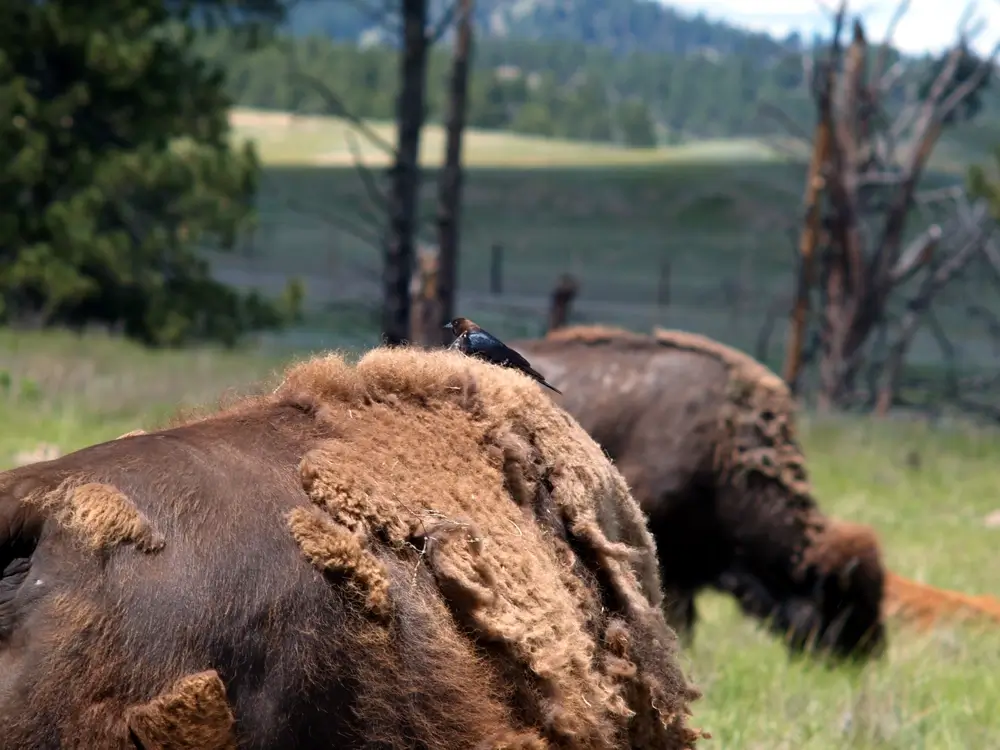
Brown-headed cowbirds usually forage on the ground for insects and seeds. They are often found with flocks of other birds like blackbirds and starlings.
The cowbird gets its name because it is often found feeding around herds of cows, eating the insects they disturb.
Did You Know?
Support for NatureWorks Redesign is provided by:
The Brown-Headed Cowbird in NH
The brown-headed cowbird breeds across New Hampshire.
It is a year-round resident in the southern part of the state.