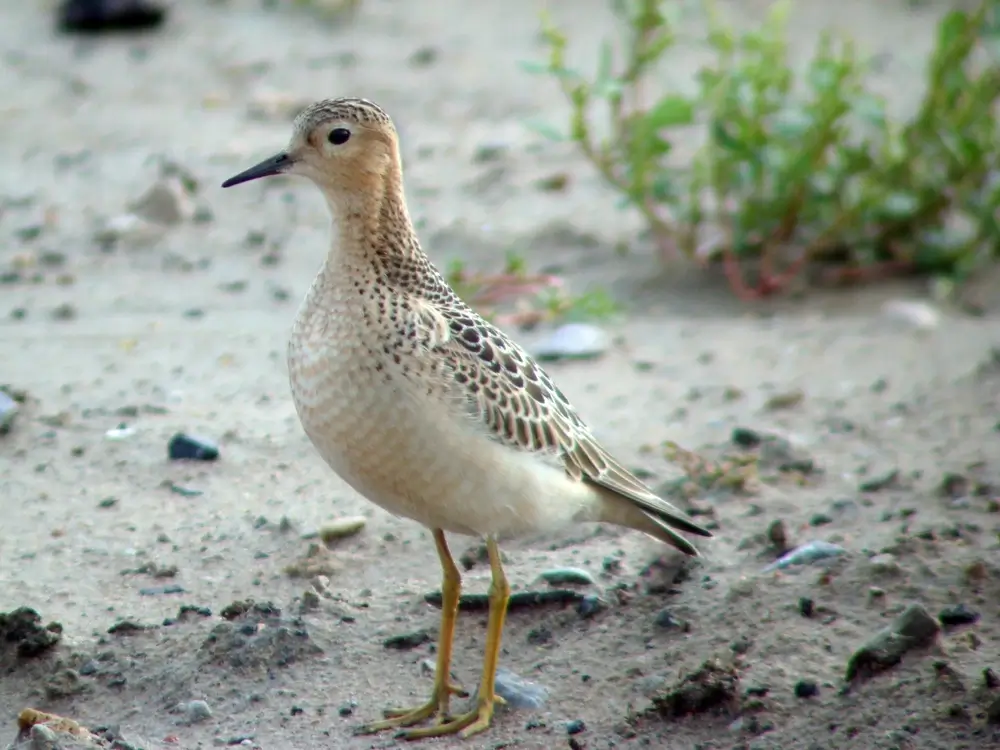
The buff-breasted sandpiper is a medium-sized shorebird. It is 7.1-7.9 inches (18-20 cm) in length with a wingspan of 17-18.5 inches (43-47 cm).
It is light brown all over with small black spots on the head, back, and wings. The undersides of the wings are white. It has a short, pointed black bill and long yellow legs.
Habitat
The buff-breasted sandpiper breeds in dry, grassy tundra. During migration, the sandpiper is found in dry, short grassland, pasture, and plowed fields.
It spends the winter in flat, grassy prairie land in South America. Pampas grass is a common species of grass in the region.
Diet
The buff-breasted sandpiper eats flies, midges, crane flies, beetles, spiders, and seeds from aquatic plants. To hunt, the sandpiper stands perfectly still and scans the ground until it can snatch an insect with its sharp bill.
Life Cycle
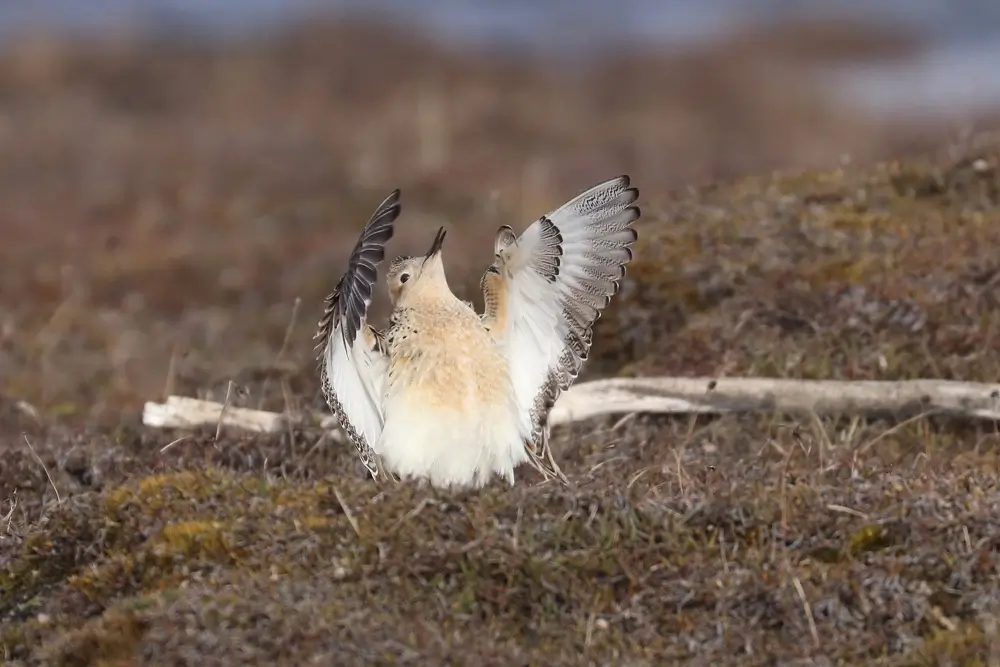
During the breeding season, males gather in a lek, a lek is an area where male birds gather to perform breeding displays to attract females.
The male buff-breasted sandpipers flash their underwings to impress the females. Other species of shorebirds do not gather in leks.
After mating, male and female sandpipers do not form pairs. The female builds a nest and incubates the eggs by herself. She makes a depression in thick moss and lines it with lichens, leaves, and grass to form a nest. She lays four spotted eggs, which are incubated for about 24 days. The chicks are precocial. They can run, feed themselves, and hide from predators right after hatching.
The buff-breasted sandpiper has a lifespan of 4-5 years in the wild.
Behavior
Buff-breasted sandpipers spend most of their time on the ground. If they are disturbed or threatened, they will quickly dash away and find cover.
Did You Know?
The population of buff-breasted sandpipers declined from millions to near extinction by the 1920s. Numbers have seemed to increase but may be in decline again.
Support for NatureWorks is provided by:
The Buff-Breasted Sandpiper in NH
The buff-breasted sandpiper may be seen in New Hampshire during migration, but it is rare.
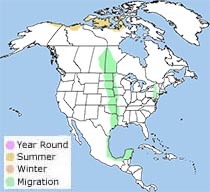
The buff-breasted sandpiper makes an incredible migration. It spends the winter in Brazil, Argentina, Paraguay, and Uruguay. It migrates as far north as the Arctic region of Canada and Alaska to spend the breeding season.
It might be seen in the middle of the U.S. and Canada during migration.
It may also be seen in the northeastern U.S. during migration.