The bufflehead is the smallest diving duck in North America. It is 12.6-15.8 inches (32-40 cm) in length with a wingspan of 22 inches (56 cm) and usually weighs less than a pound.
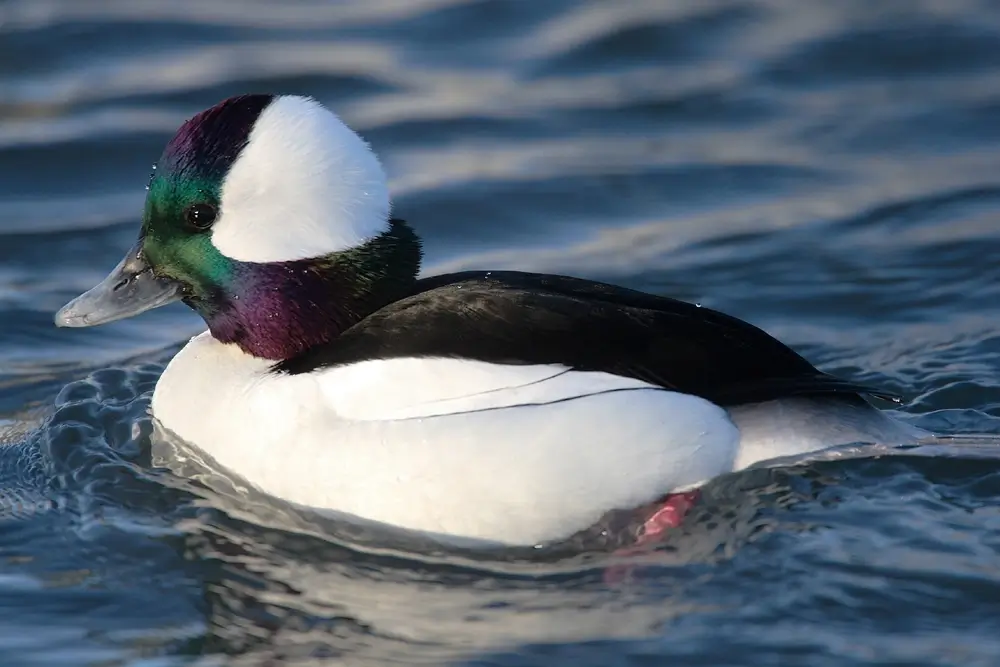
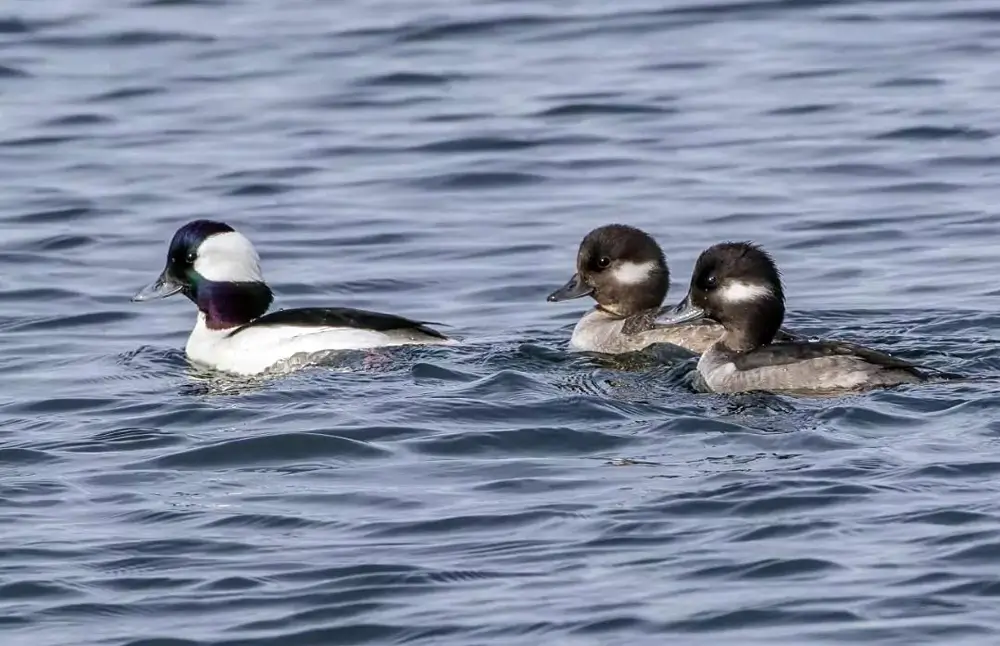
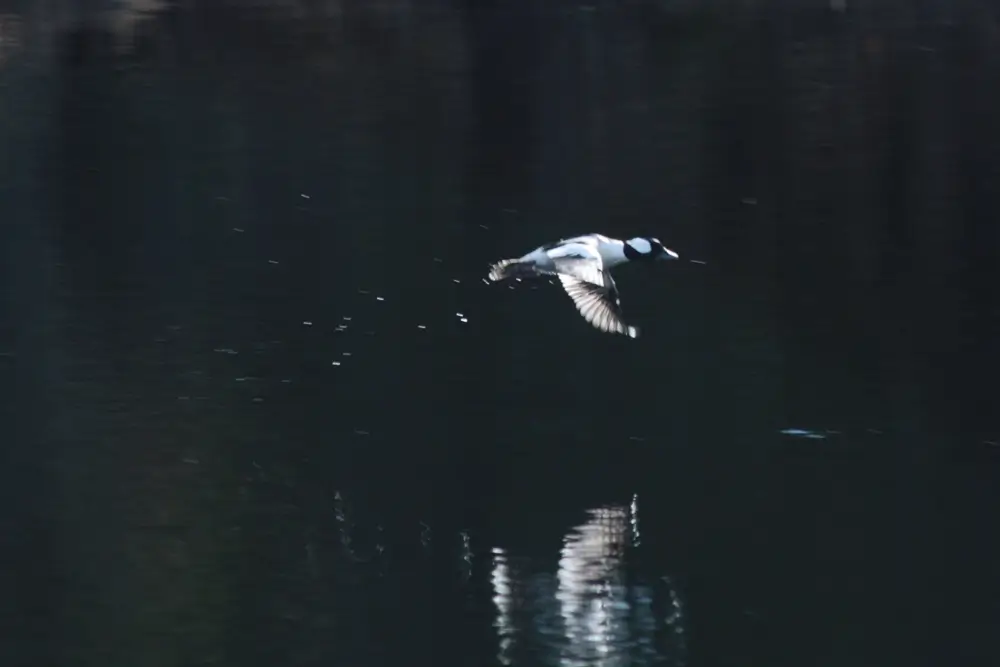
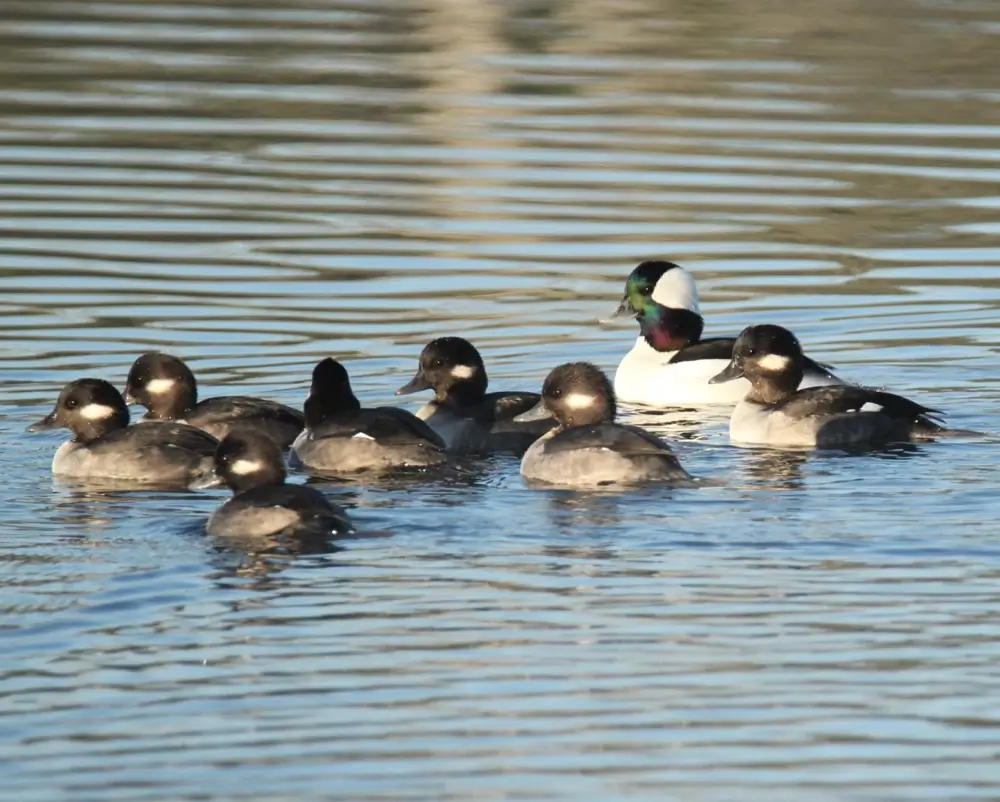
The male has a white chest, belly, and sides. He has a black back and a black head with a greenish and purplish shine. He has a large white patch that covers the back half of his head.
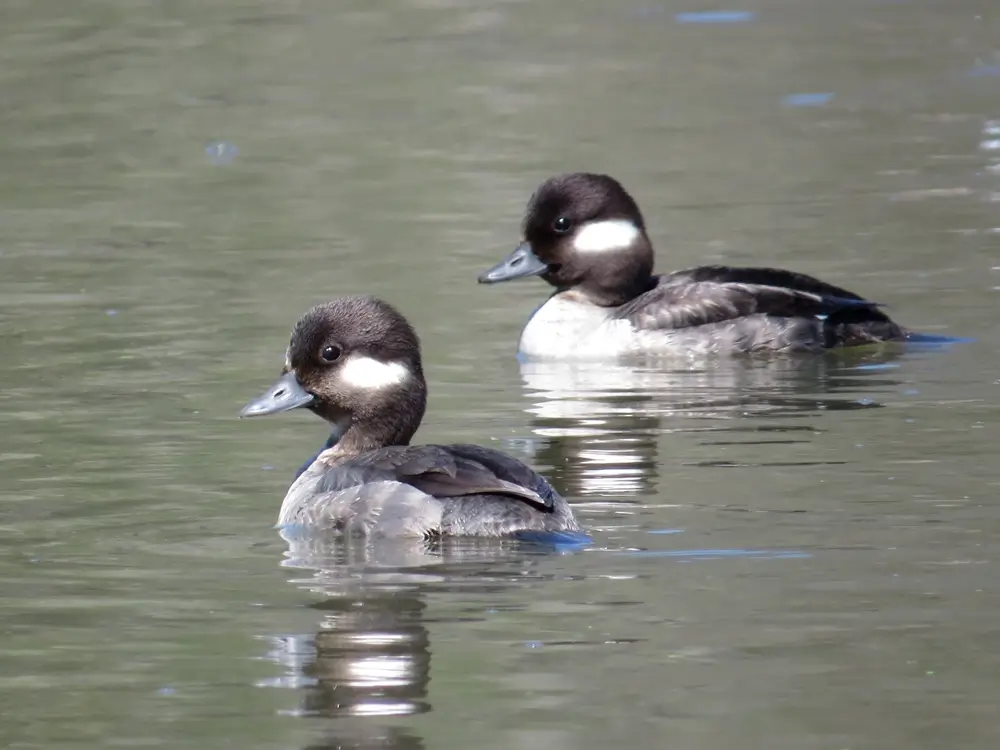
The female has a light brownish-black back, a gray belly and sides, and a small white patch on her cheek.
Both the male and female have a short neck and a small, narrow gray bill.
Habitat
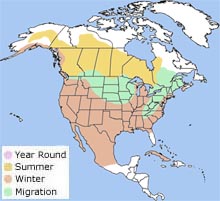
During the breeding season, the bufflehead is found in freshwater ponds and small lakes with poplar or aspen stands or coniferous forests with poplar or aspen trees inhabited by northern flickers.
In the winter, it is found in shallow saltwater bays and estuaries, in lakes, and in rivers.
Diet
The bufflehead is a diving duck. It dives for food like insects, crustaceans, mollusks, and seeds. Its prey is swallowed while the bufflehead is underwater.
It feeds in small flocks of around ten birds. One bufflehead usually keeps watch while the others are diving for food.
Life Cycle
The female bufflehead usually returns to the area where she was born in the early spring to breed. The male tries to attract a female by bobbing and shaking his head and by flying over the female. The male may chase other males away from a lake or pond that he has claimed as his territory. Males only mate with one female, and the same pair may mate for many years.
The female lays 6-11 ivory-colored eggs at a rate of one egg per day. She usually lays her eggs in a tree cavity close to two feet above the ground. The bufflehead often uses the abandoned tree cavity nests of northern flickers.
The female incubates the eggs, and the chicks hatch in 25-30 days. The male leaves the female once she begins to incubate the eggs. When the chicks are a few days old, the female hops down from the nest and calls to the chicks to encourage them to hop down from the nest. Once they hop down, she leads them to water.
The bufflehead has a lifespan of 2-3 years in the wild. The oldest bufflehead on record was at least 18 years and 8 months old.
Behavior
The bufflehead is awkward on land because its feet are set back on its body, but it is a good swimmer and a fast flier. The bufflehead runs on the water to work up enough speed to launch itself into flight. When in flight, it flies close to the water.
Did You Know?
The bufflehead was first called the buffalo head because of the male’s large domed head.
Support for NatureWorks Redesign is provided by:
The Bufflehead in NH
During its migration, the bufflehead can be found on lakes, ponds, and rivers across New Hampshire.
In the winter, it can be the coastal waters of the state, including Great Bay.