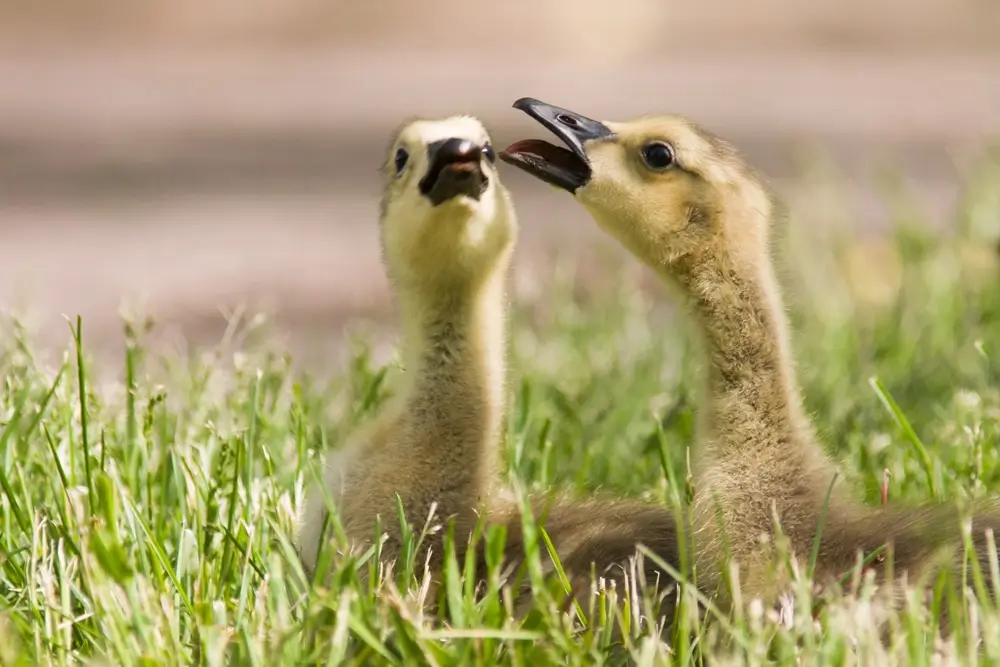
The Canada goose is 2.5-3.6 feet (0.76-1.1 m) in length with a wingspan of 4.2-5.6 feet (1.27-1.70 m). They weigh 6.6-19.8 pounds (3-9 kg).
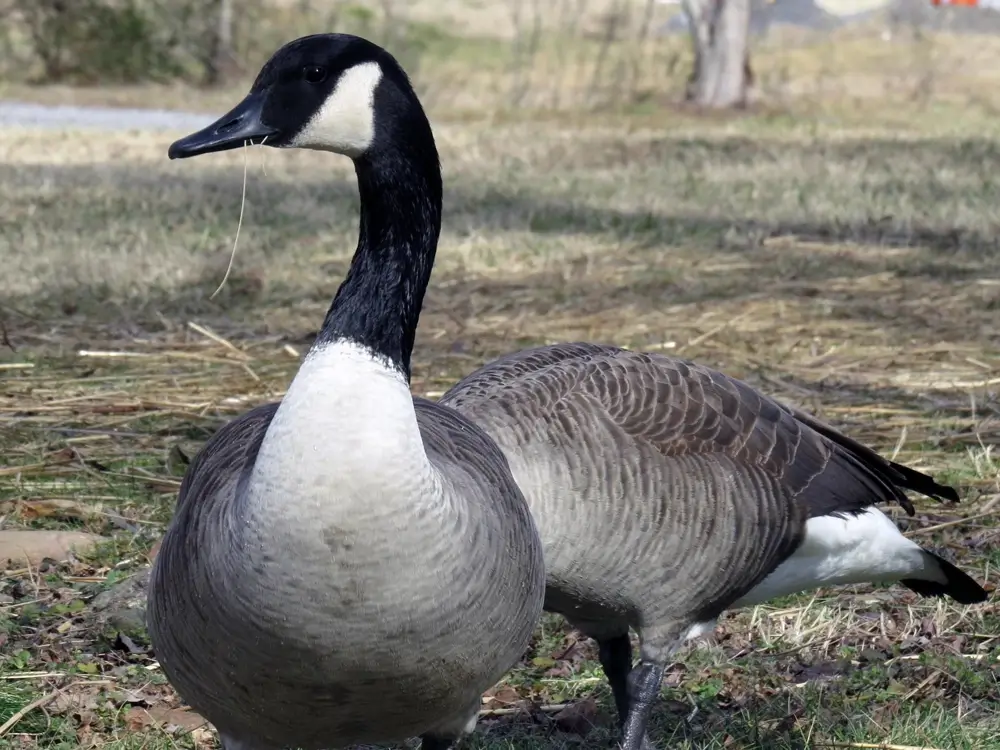
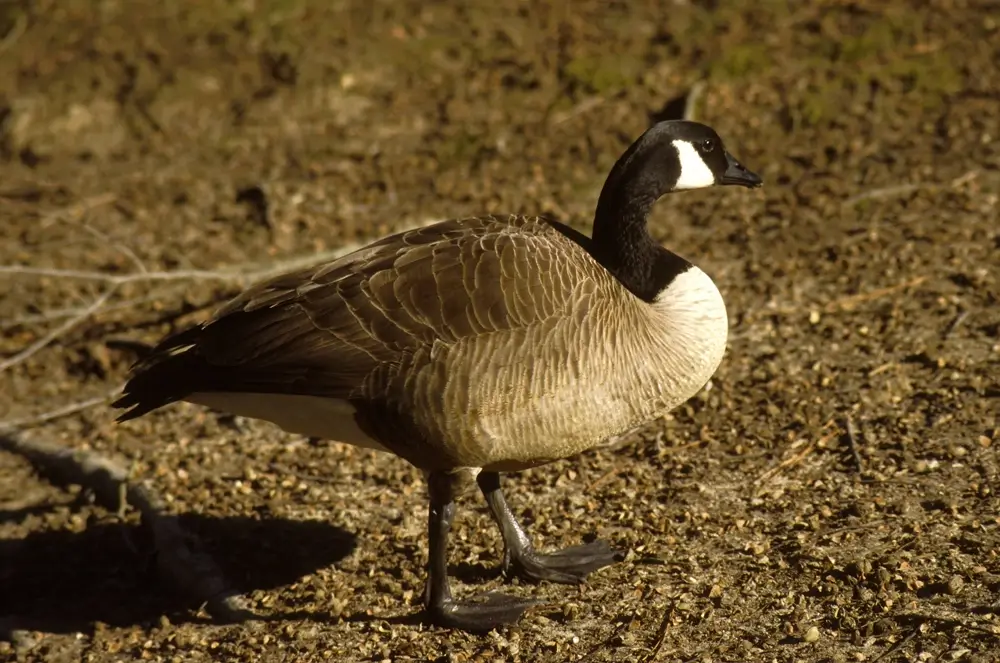
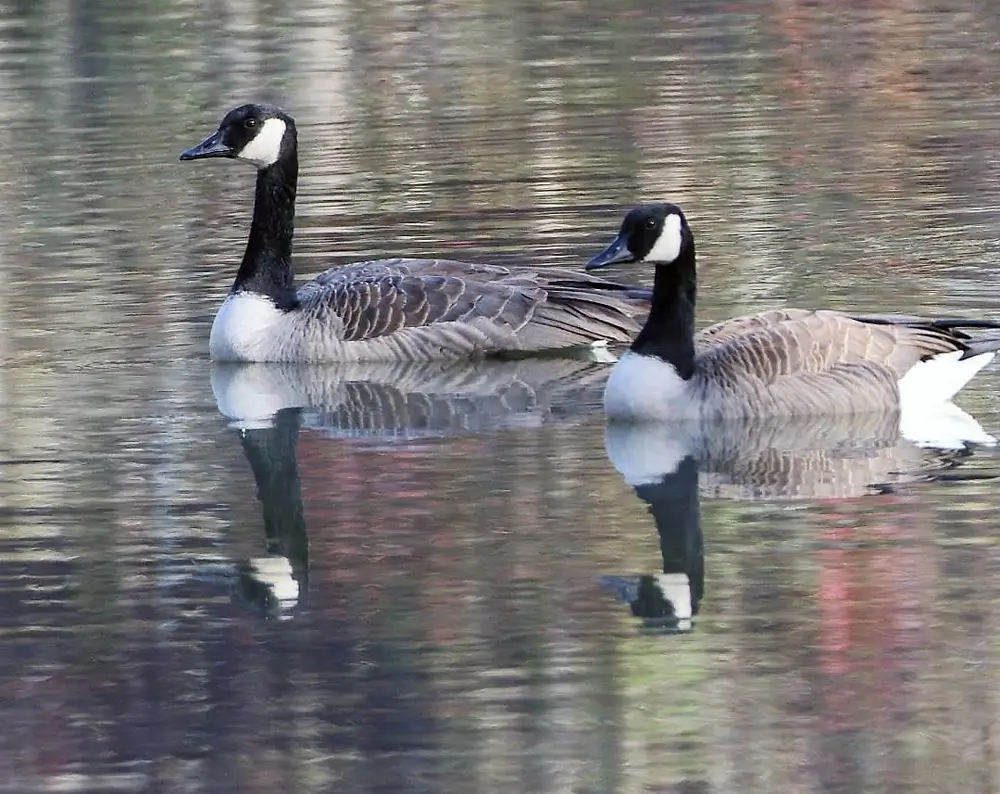
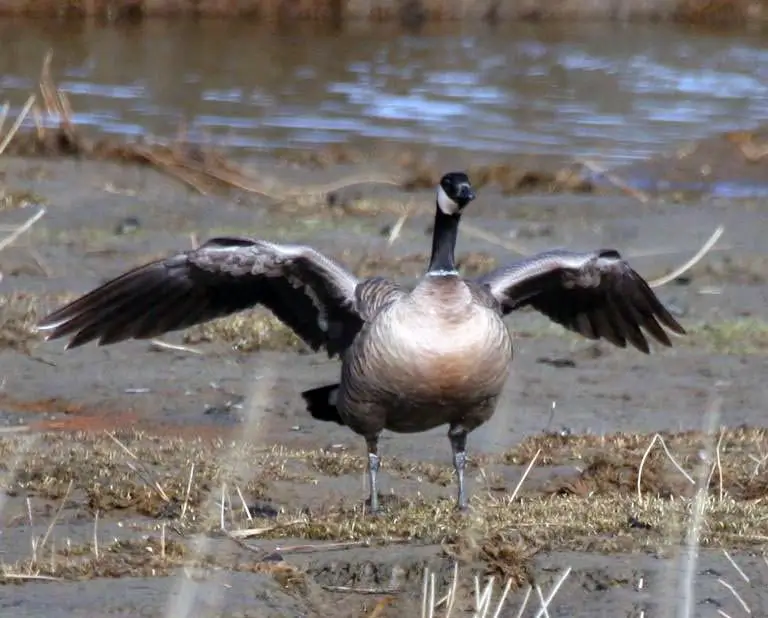
The Canada goose has a long black neck and head with a white band on its cheeks that runs under its chin like a strap. It has black feet and a light tan body with lighter brown or white under its tail.
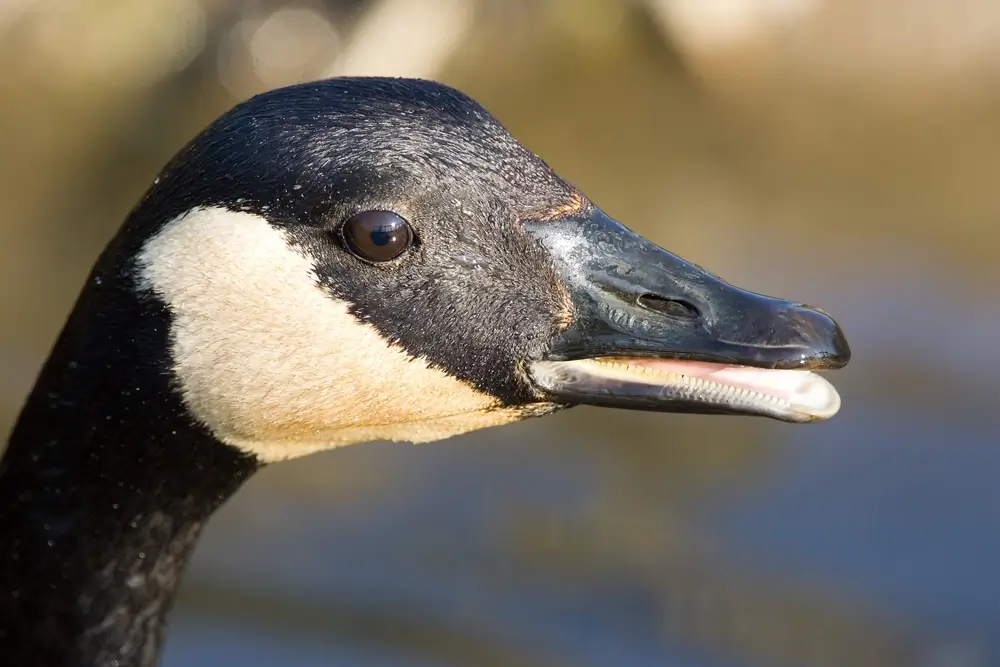
Its black bill has lamellae, or teeth, around the outside edges that are used as a cutting tool. Males and females look alike, although females are usually a little smaller than males.
Habitat
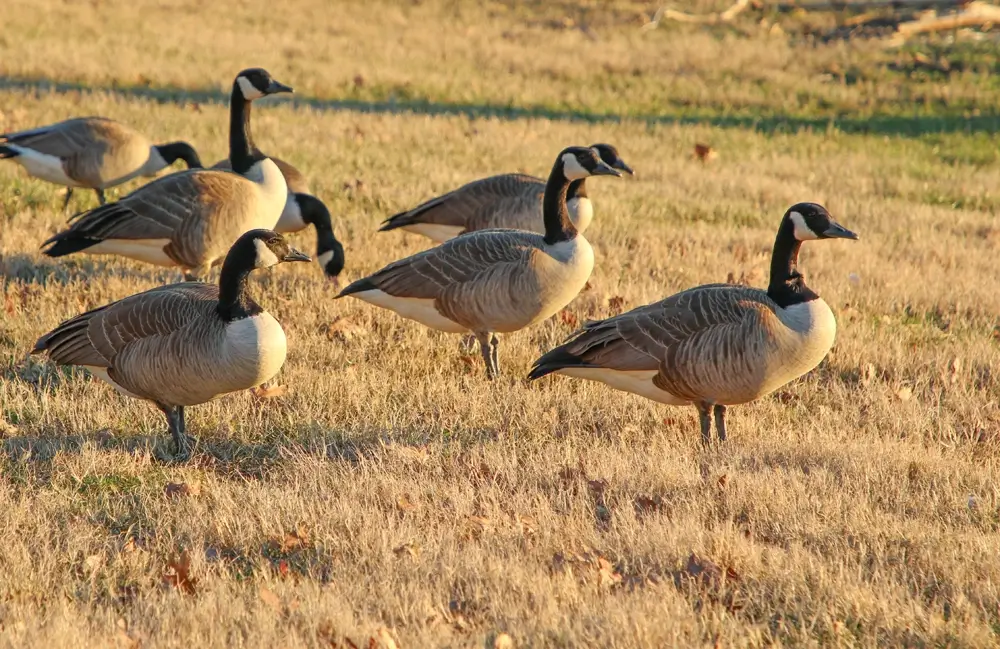
The Canada goose is found in a wide variety of habitats, including lakes, bays, rivers, and marshes. It often feeds in open fields and grasslands.
Diet
On land, the Canada goose eats a wide variety of grasses, including salt grass and Bermuda grass. It uses its bill to yank the grass out of the ground. It also eats corn, rice, and wheat.
In the water, the Canada goose sticks its head and upper body under the water, stretches its neck out, and uses its bill to scoop up food from the mud and silt.
Life Cycle
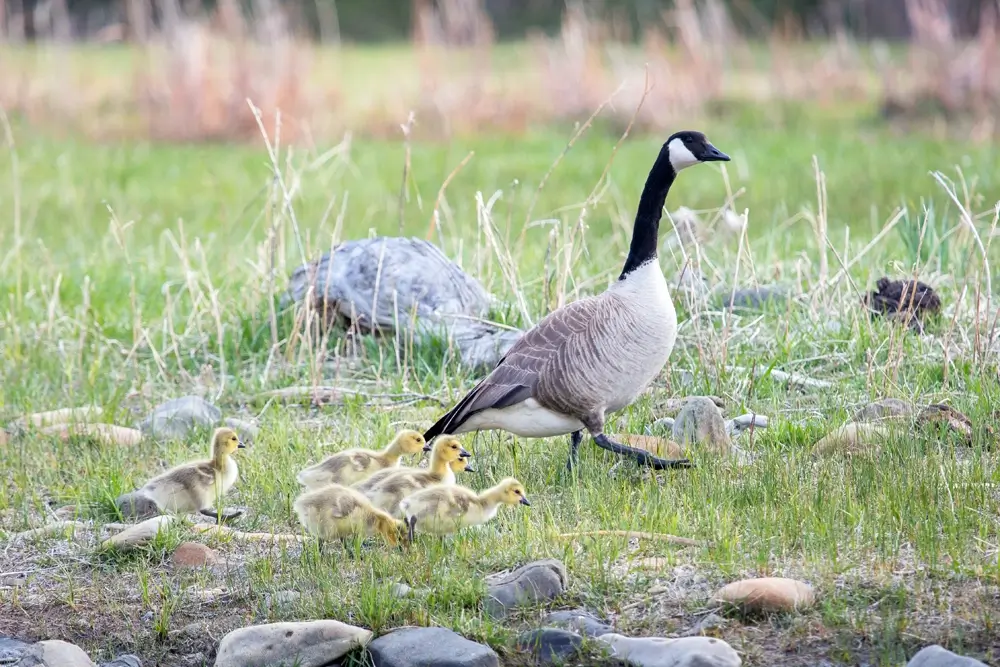
The female Canada goose lays her eggs between March and June. She lays 4-10 whitish eggs in a nest made of grass, reeds, and moss and lined with down. The nests are usually made on the ground near water. The female hatches the eggs and turns them over often to evenly heat them. The male guards the female and the nest and calls out a warning if danger approaches.
It takes about a month for the eggs to hatch. The chicks break out of the shell with an egg tooth on the top of their bills. It may take them one to two days to completely break out of the shell. The chicks fly when they are between 40 and 70 days old. Most Canada geese mate for life.
The Canada goose has a lifespan of 10-25 years in the wild. The oldest Canada goose on record lived to be 33 years old.
Behavior
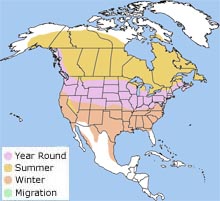
Canada geese migrate in large V-shaped formations. They honk loudly while they are flying. They migrate at a slow pace.
Male Canada geese can be very aggressive. They often attack predators with their wings and bills.
Did You Know?
Support for NatureWorks is provided by:
The Canada Goose in NH
The Canada goose is found throughout New Hampshire.