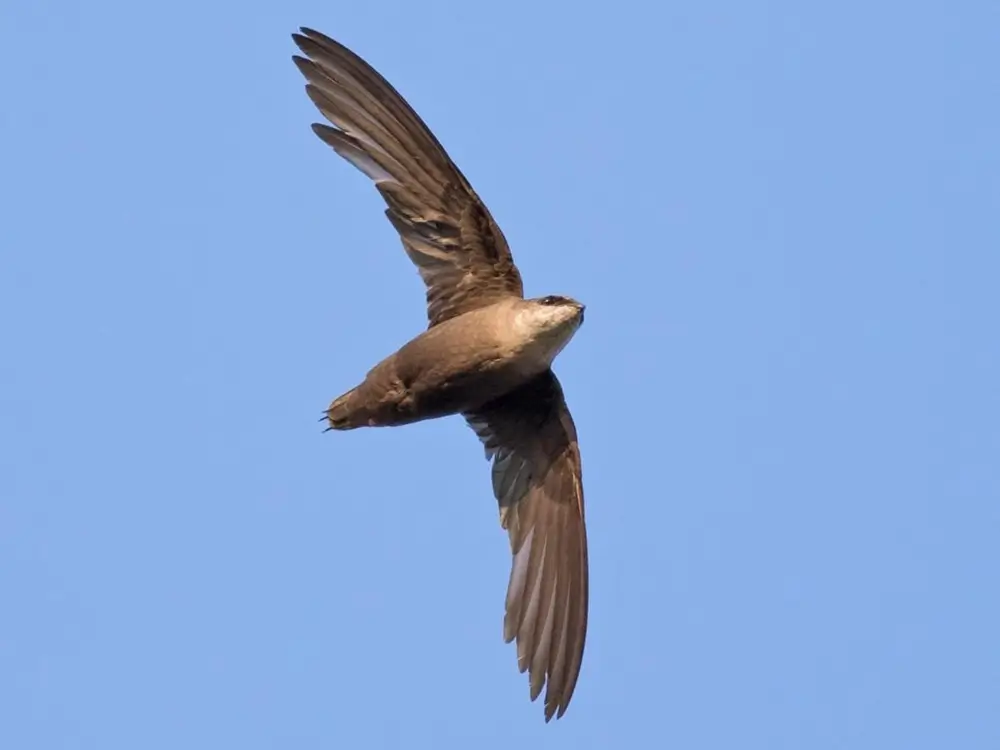
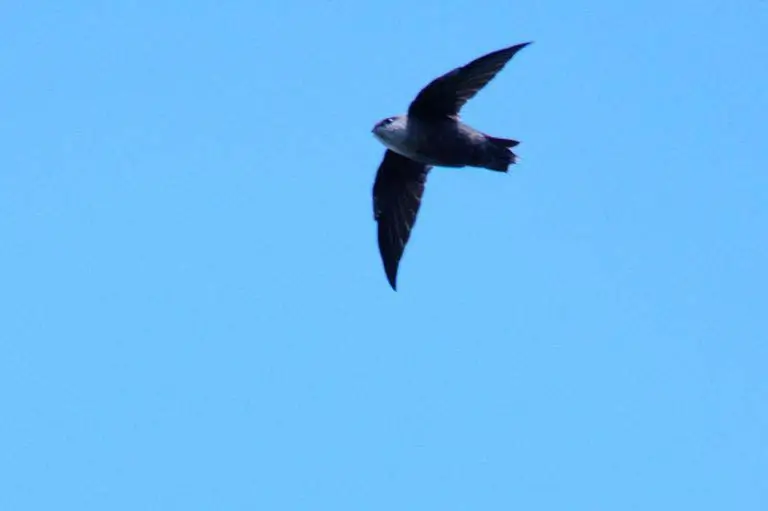
If you hear chattering coming from your chimney, you may have a chimney swift. Only 4.7-5.9 inches (12-15 cm) in length with a wingpan of 10.6-11.8 inches (27-30 cm), the chimney swift is a small, dark gray bird with a white throat.
It is unable to perch but instead uses its long claws to cling to the walls of vertical surfaces, like chimneys.
The chimney swift can be seen soaring through the air, where it spends most of its time.
Habitat
Before Europeans settled in North America and built houses with chimneys, the chimney swift most likely nested in caves and hollow trees. The chimney swift builds its nest on vertical surfaces, and chimneys are a perfect site.
The chimney swift is found in forests, open country, and towns.
Diet
The chimney swift feeds on flying insects that it gathers while flying over forests, open land, or more developed settings.
Life Cycle
The chimney swift builds its nest on the inside of a chimney or other vertical surface. The nest is in the shape of a bowl cut in half and made of small twigs woven together. The swift uses saliva to glue the nest to the wall.
The female lays 3-7 glossy white eggs, which both parents incubate for about three weeks. Young chicks first leave the nest after two weeks and take their first flight 30 days after hatching.
The chimney swift has a lifespan of 4-5 years in the wild.
Behavior
Swifts are among the fastest fliers in the bird world. They spend all of their daylight hours flying and come home to rest only after the sun goes down.
Did You Know?
Support for NatureWorks is provided by:
The Chimney Swift in NH
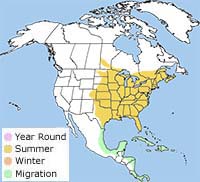
The chimney swift breeds throughout New Hampshire. It migrates south in the fall.