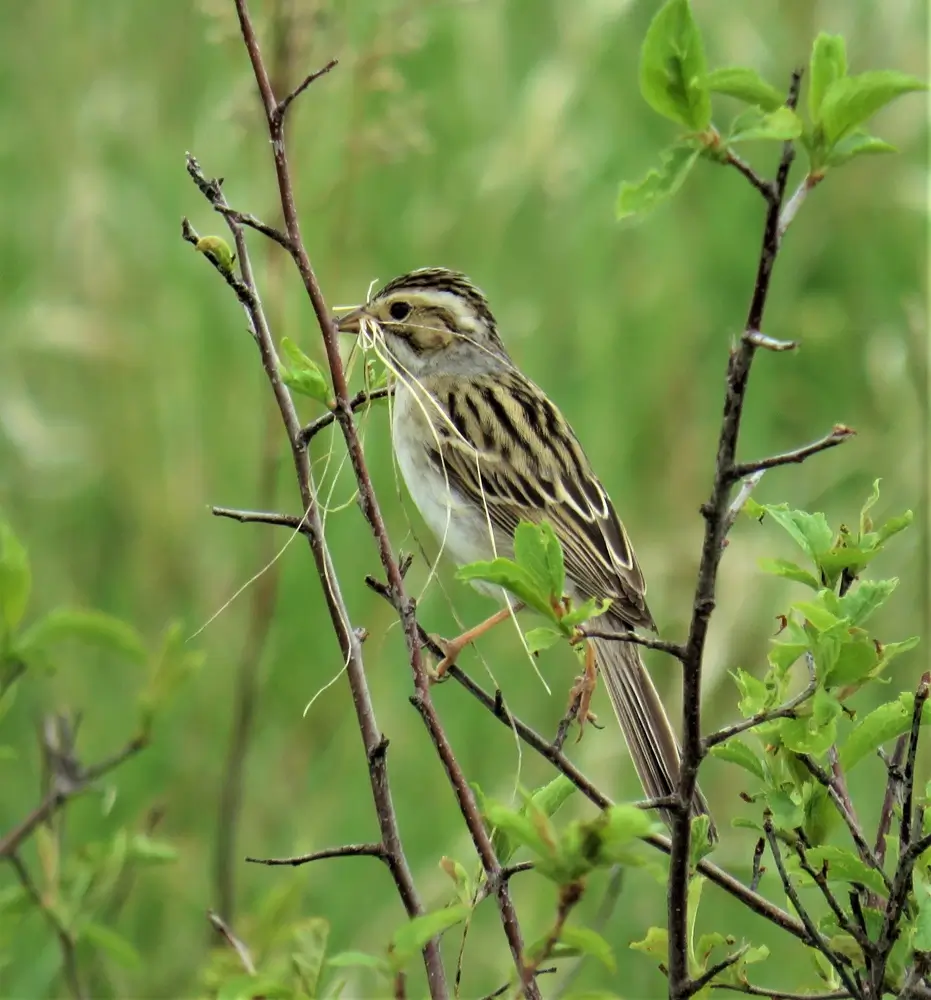
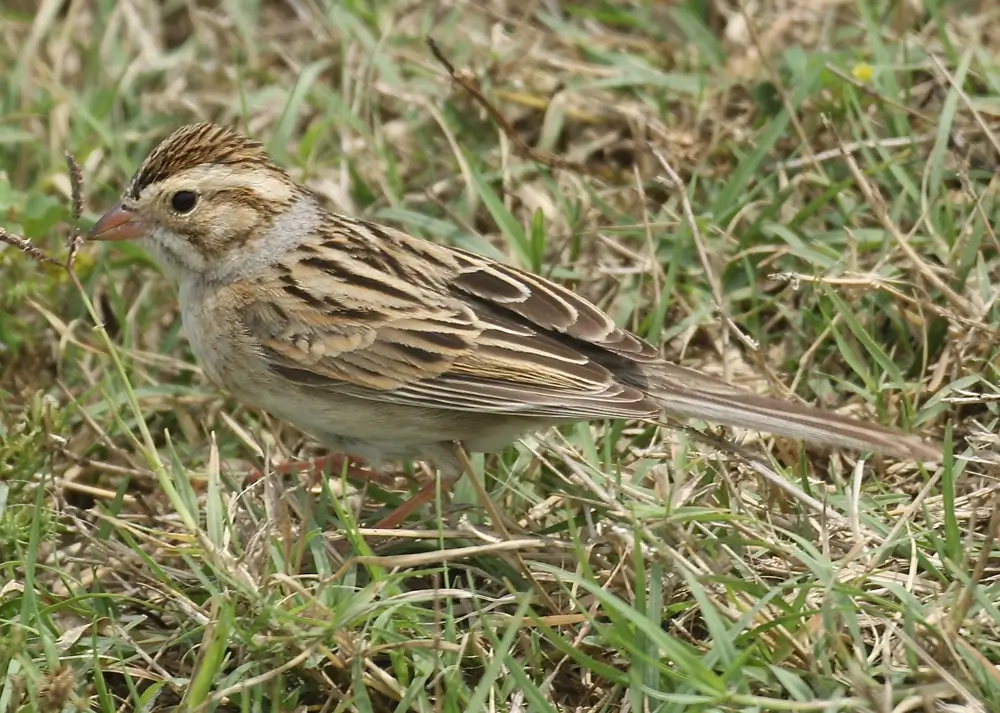
The clay-colored sparrow is around 4.5 inches (11.4 cm) in length with a wingspan of 7.5 inches (19 cm).
It has a pale, conical bill with a black tip. It has a brown crown with darker brown streaks and a tan back and brown-streaked wings with two white wing bars. It has a gray band that runs across the nape of its neck, and it has a light grayish-brown chest and belly. It has a brown rump and a thin, slightly forked tail.
During the breeding season, it has a white throat patch, white eyestripes, and brown cheeks bordered by black.
Males and females look alike. Its call is a raspy “bzzz-bzzz-bzzz”.
Habitat
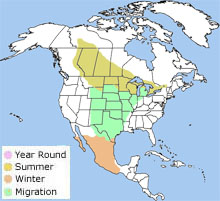
The clay-colored sparrow is found in brushy grasslands and prairies.
Diet
The clay-colored sparrow eats seeds and some insects.
Life Cycle
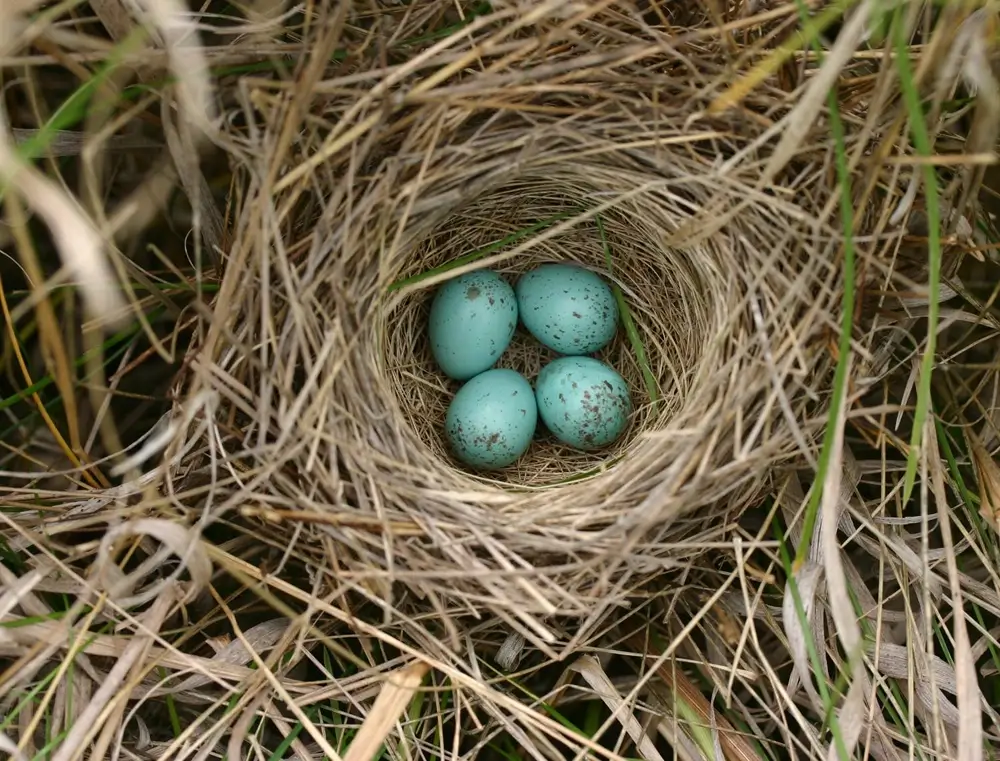
The male clay-colored sparrow reaches the breeding territory first. He sings to attract a mate and defend his territory. The female builds an open-cup nest of twigs, weeds, and grass.
The nest is made close to the ground in a shrub. The female lays 3-5 blue eggs and does most of the incubating. The male helps out a little and feeds the female during incubation. Incubation takes about 10-12 days.
Both the male and the female feed the chicks. The chicks fledge when they are about 8-9 days old, but their parents will continue to feed and care for them for another week.
The clay-colored sparrow has a lifespan of 3 to 5 years in the wild. The oldest-known clay-colored Sparrow lived to be 6 years, 11 months old
Behavior
When prairies were turned into farmland, the clay-colored sparrow lost some habitat, but forest clearing has opened up new areas to this small songbird.
Did You Know?
Support for NatureWorks is provided by:
The Clay-Colored Sparrow in NH
The clay-colored sparrow does not breed in New Hampshire, but occasionally a vagrant finds its way into the state.