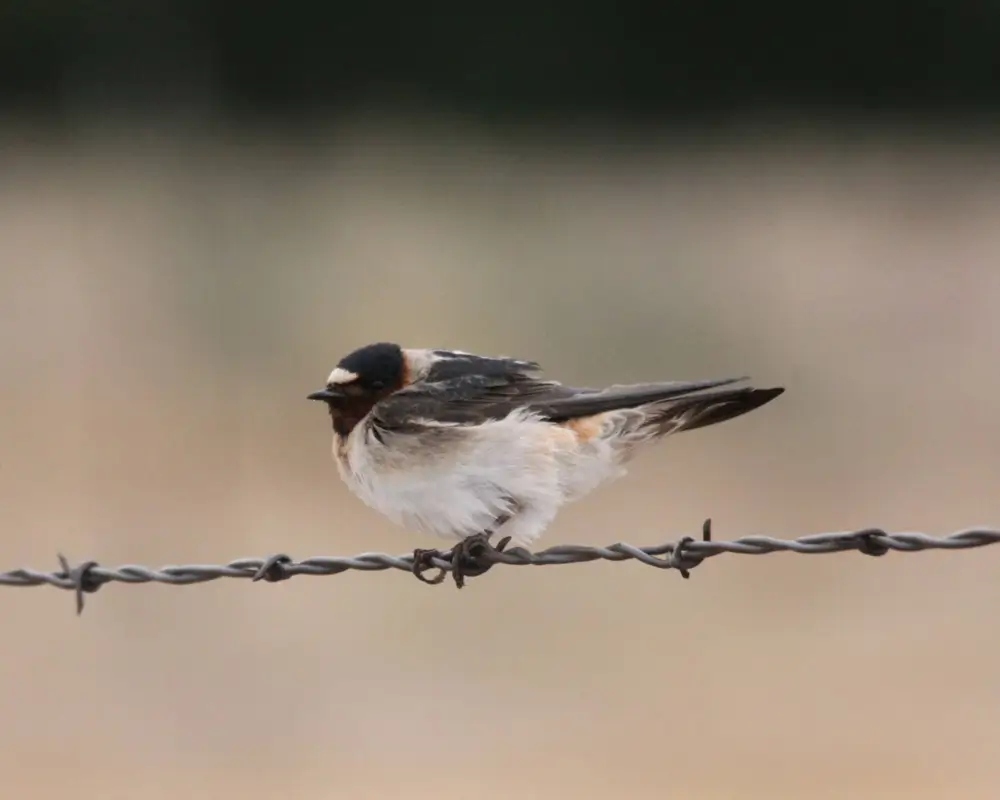
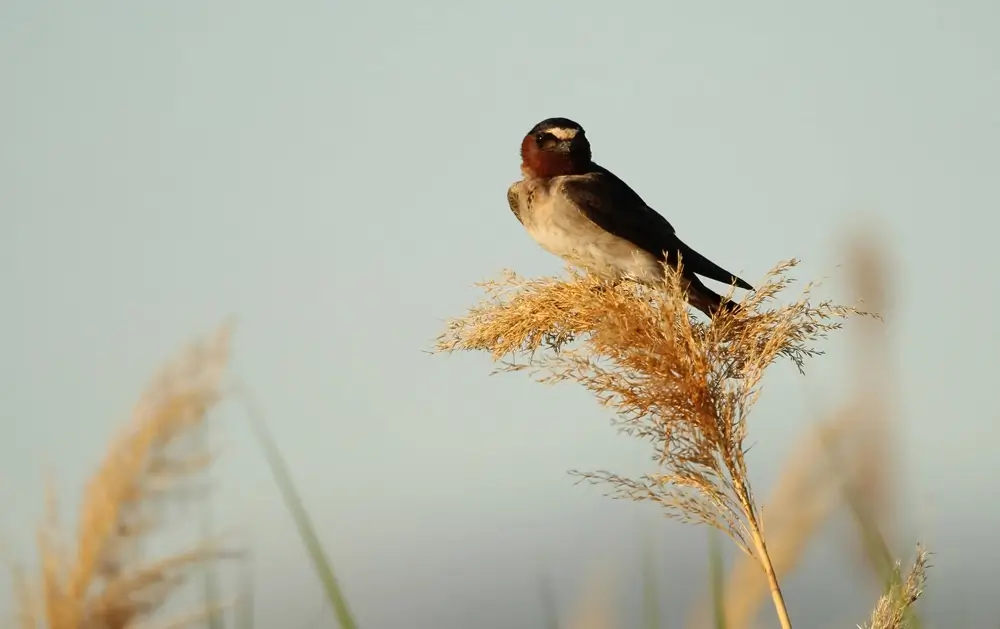
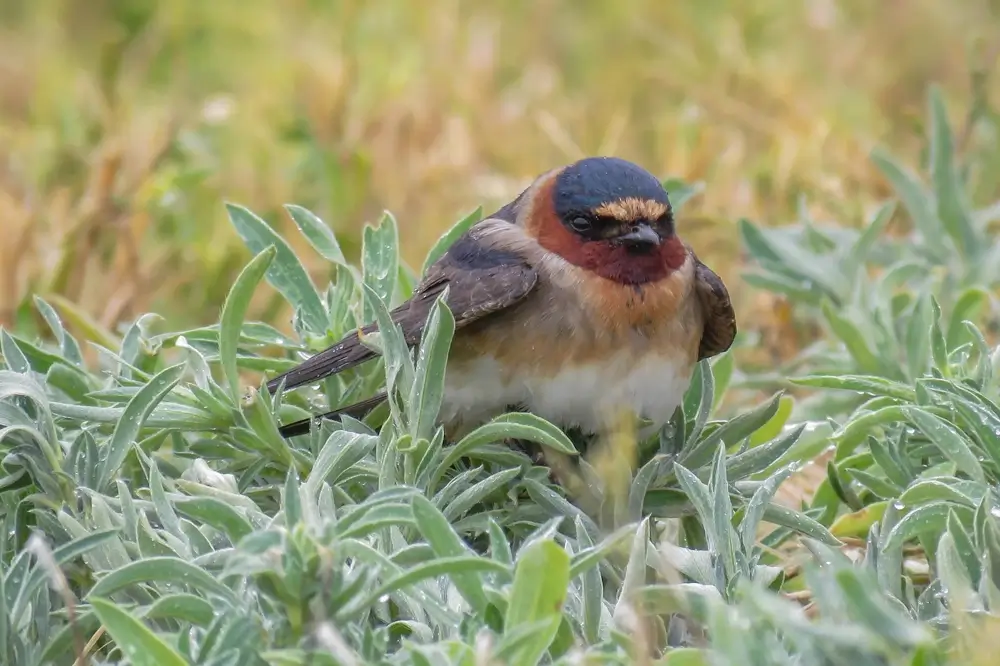
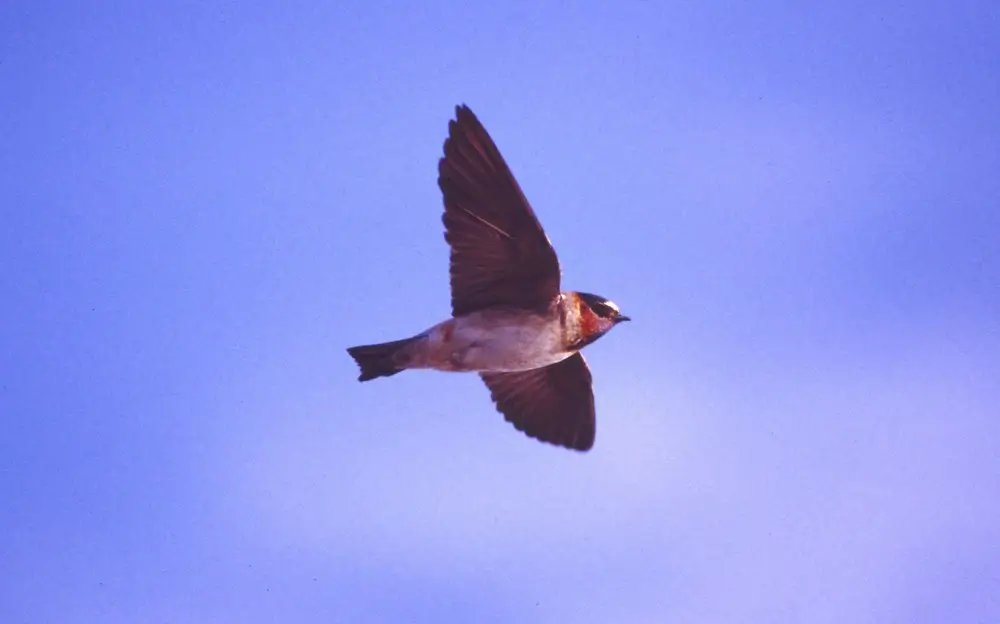
The cliff swallow is a small, stocky songbird. It is about 5 inches (12.7 cm) in length and has a wingspan of 11.0-11.8 inches (28-30 cm).
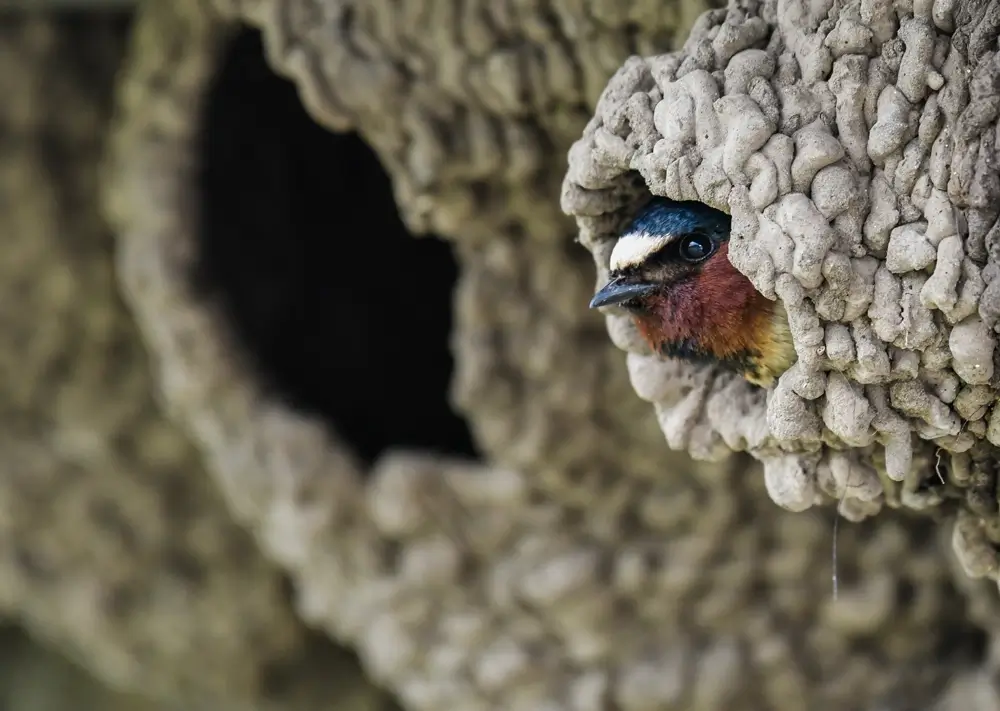
It has long, pointed wings and a small black bill. Its wings and back are dark, while its chest is white. The cliff swallow has a red neck and a white patch on the top of its head.
Habitat
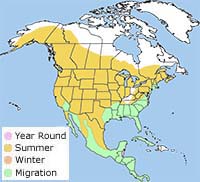
Throughout the breeding season, the cliff swallow lives in diverse habitats with open areas for foraging and cliffs or buildings on which to build nests.
It avoids heavy forests, deserts, and high mountains.
Diet
The cliff swallow eats flying insects. One study found the stomach contents of a cliff swallow to be ants, bees, wasps, beetles, flies, dragonflies, moths, and butterflies.
It hunts in areas with low-growing plants, like meadows, fields, and wetlands. The cliff swallow hunts from dawn to dusk.
Life Cycle
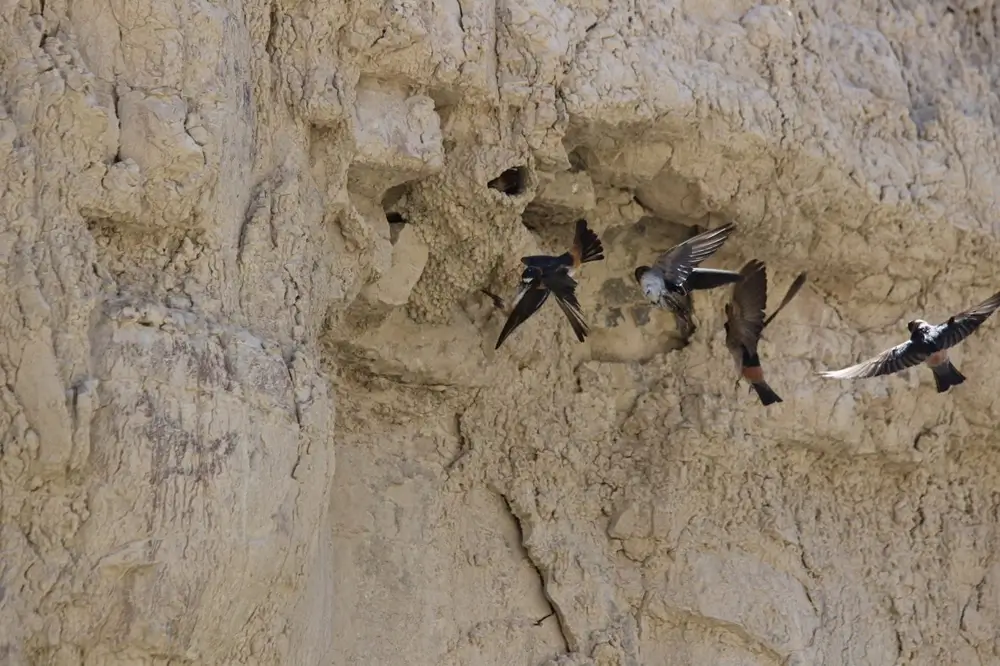
The cliff swallow builds a bowl-shaped nest with mud. It has a small tunnel on one side, and the inside is lined with grass. The nest is built on a vertical wall or cliff, usually under an overhang. Cliff swallows nest in colonies that range in size. In the West, colonies have grown to 3,700 nests in a single spot.
The female lays 1-6 creamy white, spotted eggs in the nest. Upon hatching, chicks are helpless and have no feathers. After leaving the nest, young cliff swallows gather in a large group. Even though they gather in large groups, cliff swallow parents can find their young by the sound of their voice.
The cliff swallow has a lifespan of 5 to 6 years in the wild. The oldest known cliff swallow lived to be 11 years old.
Behavior
Cliff swallows eat flying insects like bees, grasshoppers, beetles, moths, and butterflies while they are in flight. They fly above fields, pastures, lakes, rivers, and other open areas searching for food. They especially look for swarming insects.
If a cliff swallow is having a hard time finding food, it will follow another cliff swallow to a good feeding spot.
Did You Know?
Support for NatureWorks is provided by:
The Cliff Swallow in NH
Ciff swallows breed in New Hampshire. They are a threatened species in the state. Their numbers have declined by over 90% since 1970, and the number of colonies has dropped by 75% since the 1980s.
Threats to cliff swallows in the state include the impact of climate change, the effects of insecticides, and changes in food supply.