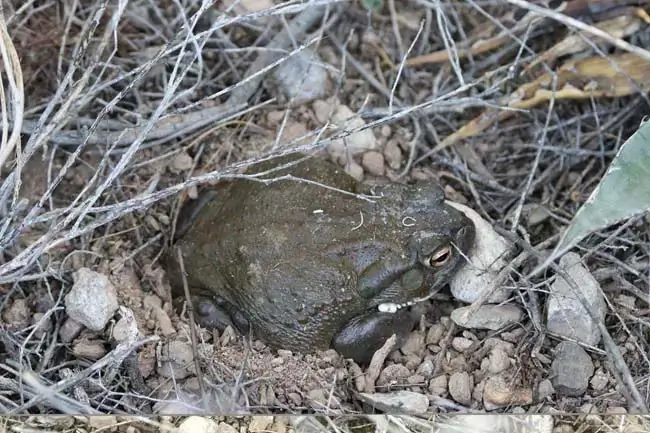
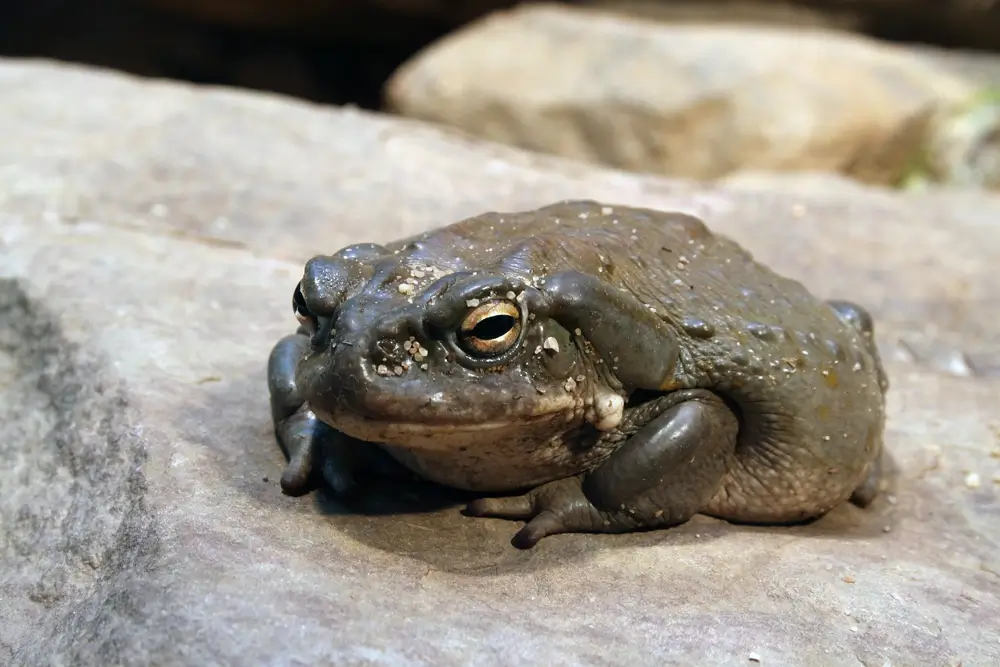
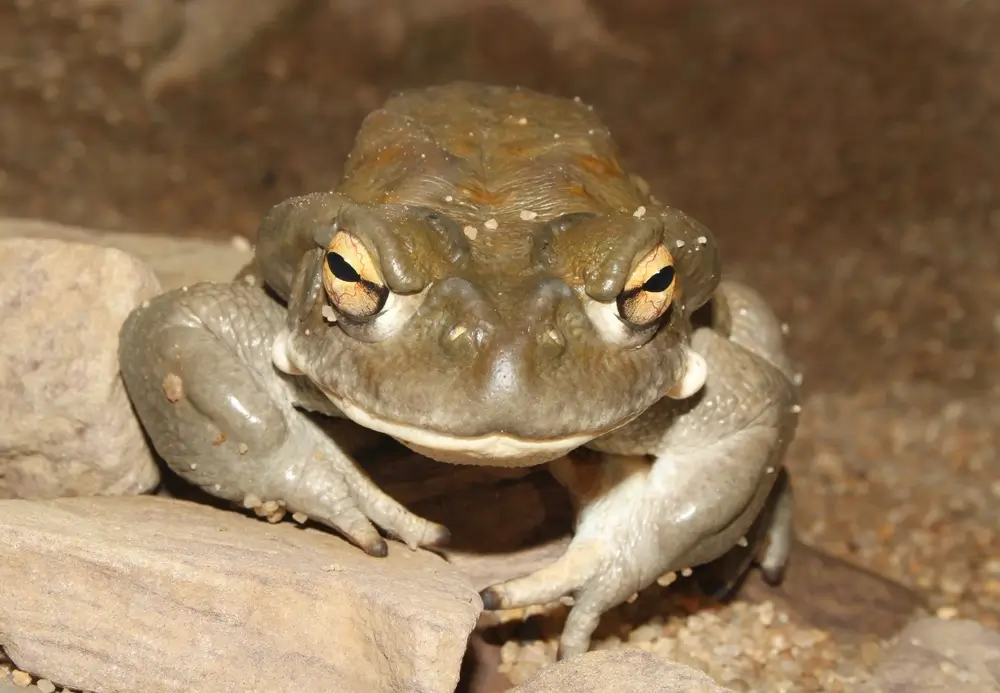
The Colorado River toad is sometimes called the Sonoran Desert toad. It is 3-7 inches (7.62-17.78 cm) in length and is the largest native toad in the United States. It is olive green to dark brown in color. It has smooth, shiny skin covered in warts. Its belly is cream-colored, and it has one to two warts on the corners of its mouth and large raised warts on its rear legs. Its call is a low-pitched hoot.
Habitat
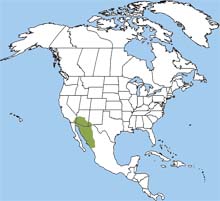
The Colorado River toad lives in desert and semi-arid areas. It is also found in arid grasslands and woodlands. It is semi-aquatic and usually lives near large streams. It is sometimes found near springs, temporary rain pools, canals, and irrigation ditches. The Colorado River toad spends most of the summer months in a burrow that it digs or in a rodent hole.
Diet
The Colorado River toad eats a variety of animals including spiders, insects, toads, snails, beetles, grasshoppers, mice, and small lizards.
Life Cycle
Just before spring rains hit the desert, Colorado River toads gather at breeding pools and streams. Mating occurs from May to July. The female lays strands of black eggs. There can be as many as 8,000 eggs in a strand. The tadpoles hatch within 2-12 days. After the breeding season is over, the Colorado River toad returns to its burrow, where it spends the winter.
Behavior
The Colorado River toad is nocturnal and stays underground during the heat of the day. When a Colorado River toad is threatened, it secretes a milky-white hallucinogenic toxin from the parotoid glands under its jaw. If the toxin gets in the mouth of predators, it can cause nausea and even death.
Did You Know?
The Colorado River toad is the largest toad species native to the United States.