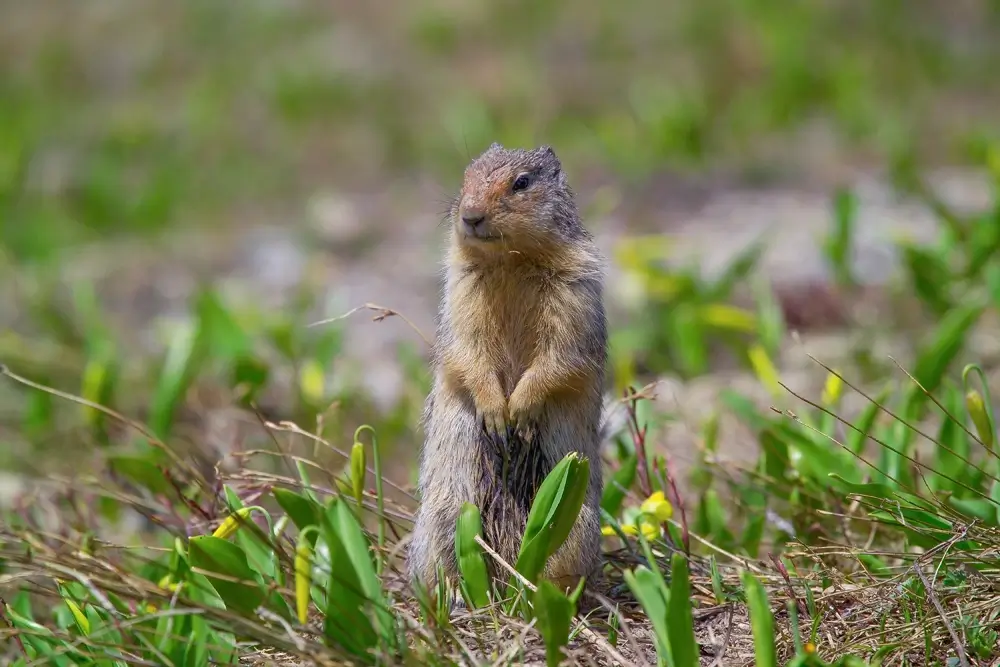
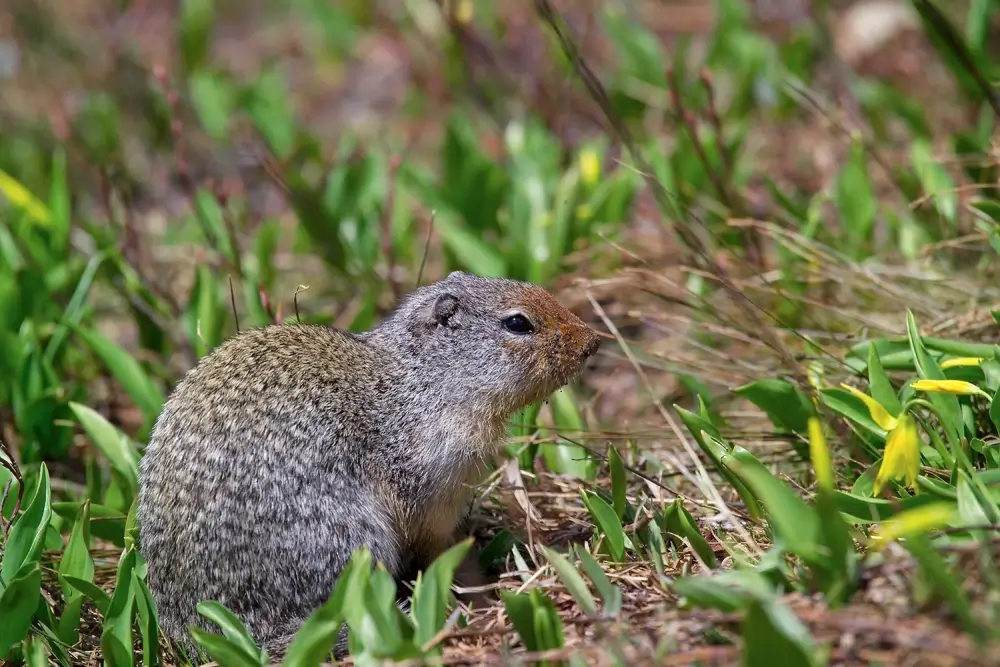
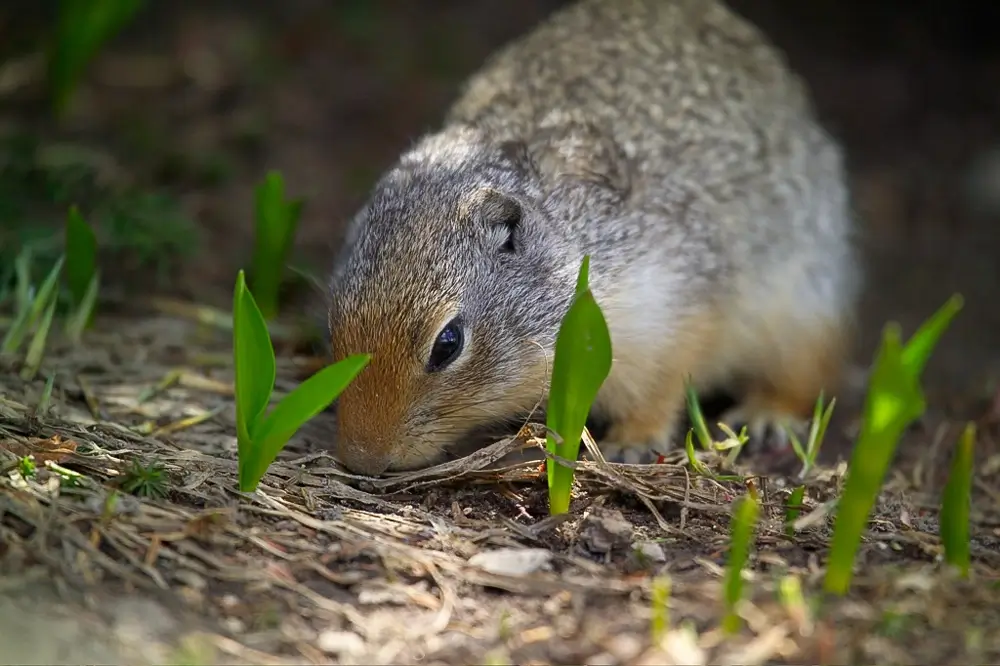
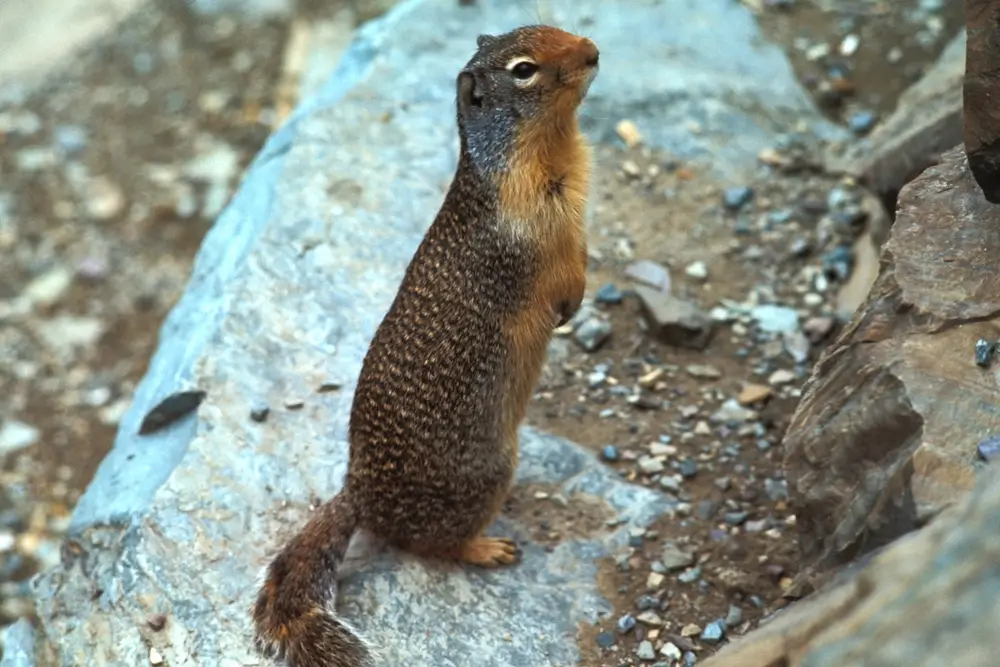
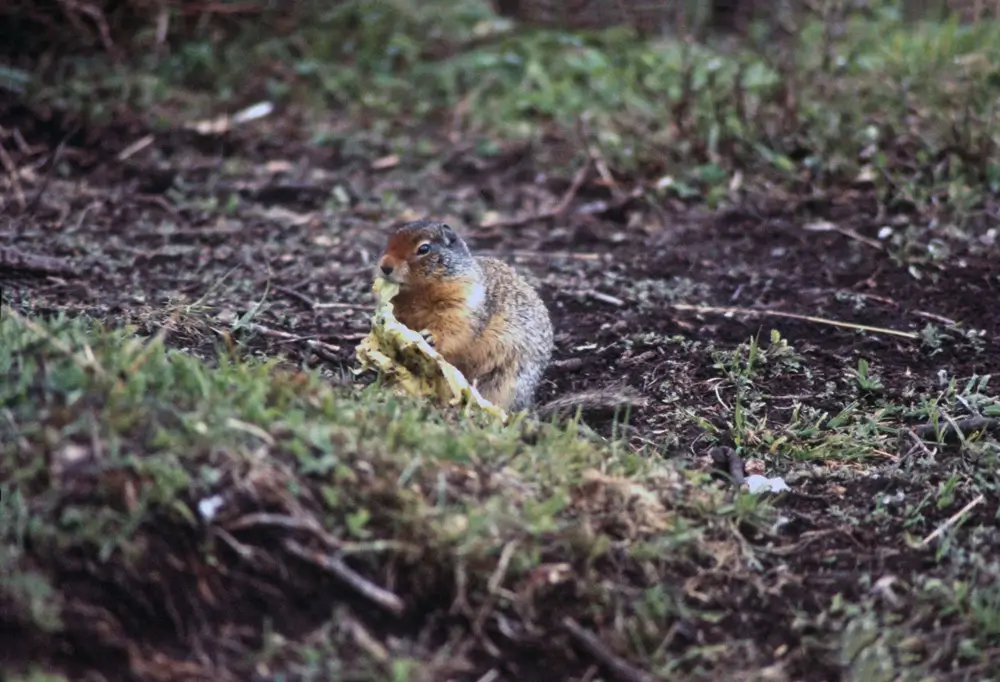
The Columbian ground squirrel has white-speckled brown, black, and gray fur on its head and back. It has reddish-tan fur on its face and nose, chest, undersides, and legs. It has a reddish-black tail and white around its eyes.
Habitat
The Columbian ground squirrel is found in open alpine meadows, dry grasslands, and brushy areas.
Diet
The majority of the Columbian ground squirrel’s diet is made up of grasses and plant parts like stems, leaves, bulbs, fruits, and seeds. Occasionally, it eats birds, insects, and other small animals.
Life Cycle
Mating season is in the early spring after the squirrels awake from hibernation. Males come out of hibernation first. The females wake up a week later.
The female has 3-5 babies in May or June. Females that live in lower elevations usually give birth to more babies than females that live in higher elevations.
The babies have hair after about three days. In about two weeks, they can walk and climb. They are weaned after about a month but stay near their mother through their first winter. Baby Columbian ground squirrels are called kits or kittens.
The Columbian ground squirrel has a lifespan of around five years in the wild.
Behavior
Columbian ground squirrels live in colonies. Females usually stay with the colony they were born into; males leave their birth colony.
The Columbian ground squirrel hibernates 7-8 months out of the year. It may begin hibernating as early as July. It has a special hibernation chamber in its burrow that is sealed off from the rest of the burrow with a plug of dirt. It puts on fat in the summer and stores seeds and bulbs in its hibernation chamber to eat when it wakes up in the spring.
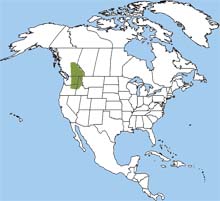
The Columbian ground squirrel is found in Canada in eastern British Columbia and Western Alberta. In the United States, it is found in eastern Oregon and Washington, northern Idaho, and western Montana.