The common eider is a sea duck. It is the largest duck in the Northern Hemisphere. It is around 25-27 inches (63.5-68.6 cm) in length with a wingspan of 37.4-38.6 inches (95-98 cm).
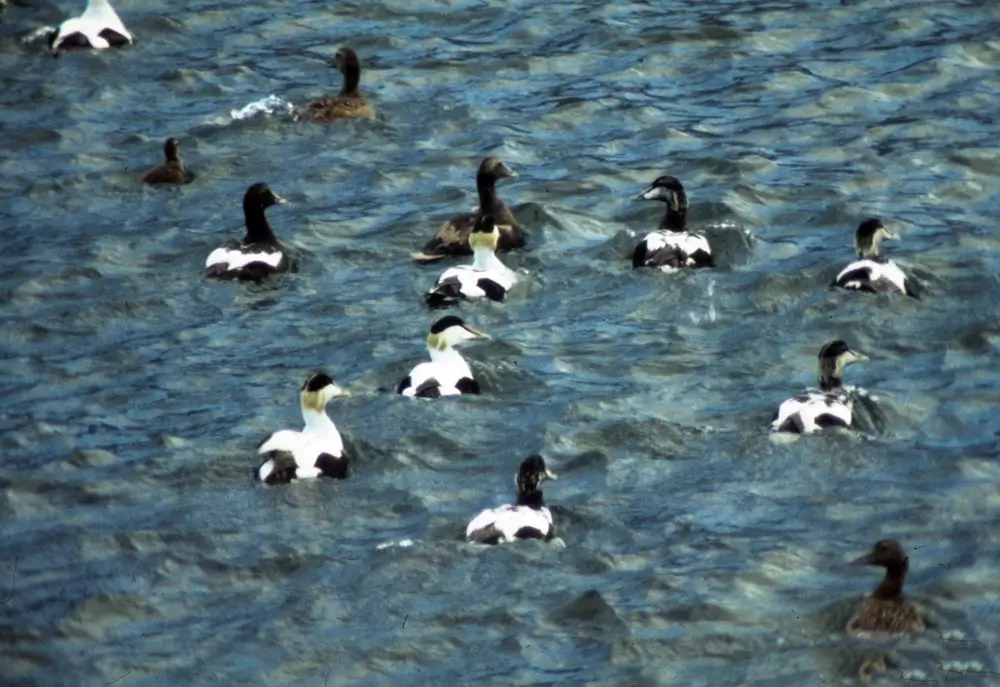
The male has a white back, neck, and chest. He has a black cap on his head with a green tinge on the back and sides of his head. His legs, feet, and bill are a greenish yellow.
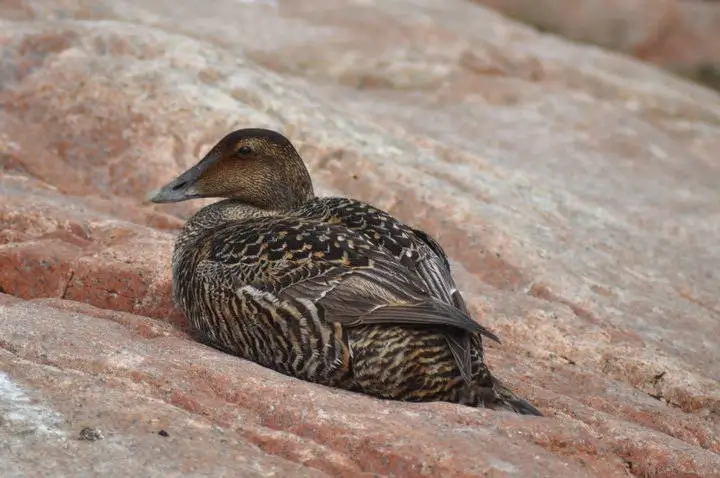
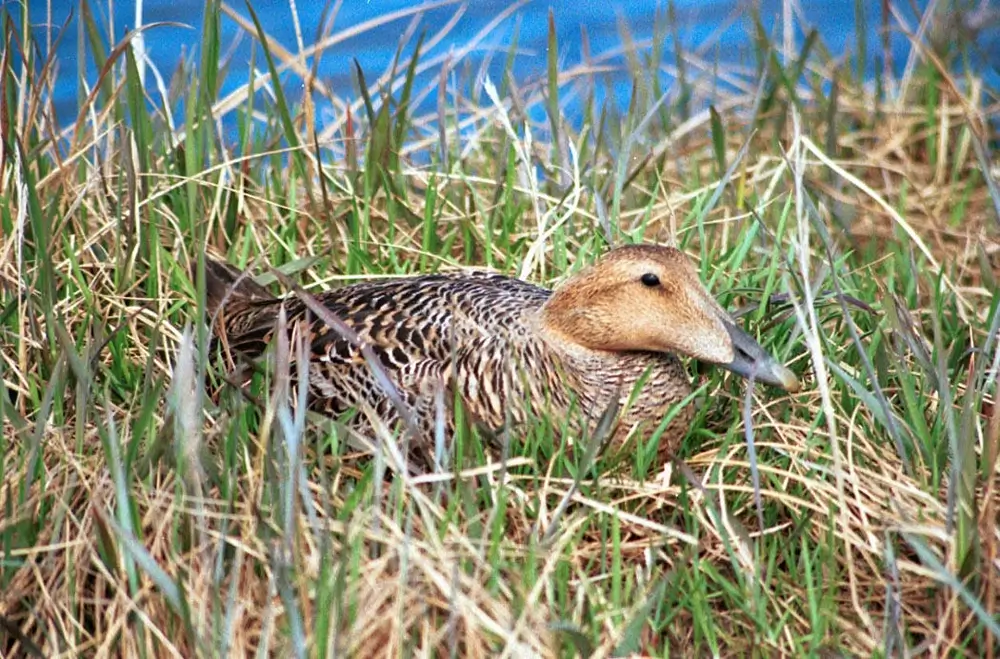
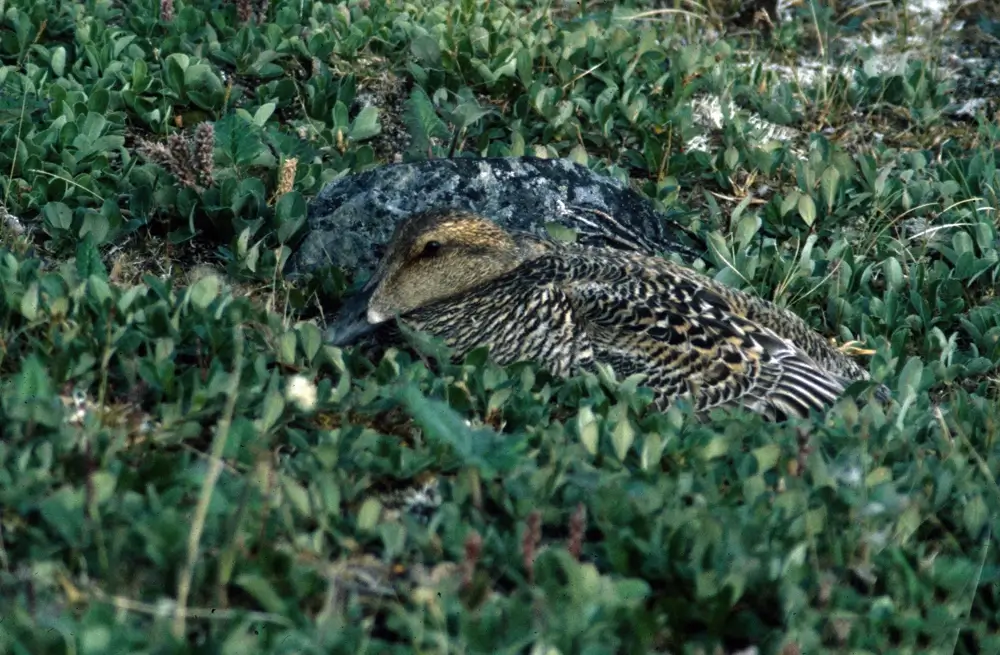
The female is a mottled cinnamon-brown with black bars. Her legs, feet, and bill are greenish-gray. Both the male and the female have a long bill and a long, sloping forehead.
The common eider is found along rocky coasts and coastal tundra.
The common eider is a diving duck, and it eats mussels, clams, scallops, sea urchins, starfish, and crabs. Common eiders swallow their prey whole, and then they crush it with their gizzard.
Common eiders feed in groups for up to 30 minutes at a time. After feeding, they rest, preen, and then feed again throughout the day.
The male common eider courts the female by tossing his head, stretching out his neck, flapping his wings, and making a series of loud moaning calls. Pairs can form on the winter grounds or on the breeding grounds. The pair selects a nesting site in the grass.
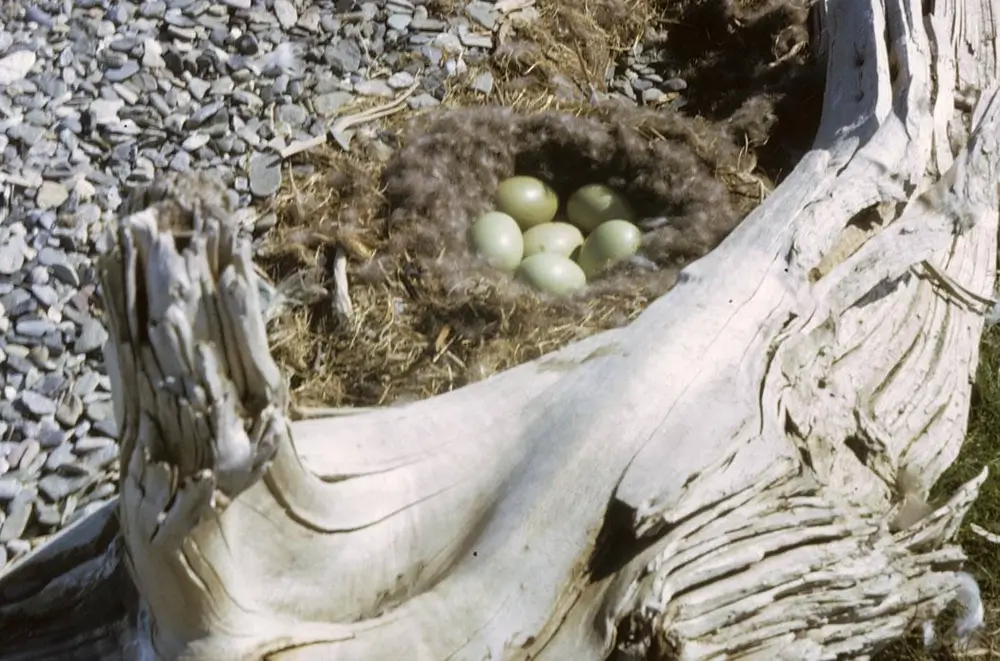
The female plucks down from her chest to line the nest. The female’s coloring is excellent deceptive coloration and helps to camouflage her in the grass. She lays 2-8 eggs and incubates them for about 25 days. The male usually leaves once the female begins to incubate the eggs.
The ducklings fledge when they are about two months old. Young eider ducklings may gather in groups or crèches where they are cared for by non-breeding female eiders. Gathering in large groups helps protect the young eiders from predators.
The common eider can live as long as 20 years in the wild.
The common eider is a very social bird and often gathers in large flocks, especially during the non-breeding season. A common eider flock can contain hundreds of birds.
The down of the common eider is very soft and thick and is good insulation from cold ocean waters.
Eider down is sometimes used to stuff pillows, sleeping bags, parkas, and quilts.
It was once used much more extensively, but it has been replaced by synthetic fibers and goose down.

Support for NatureWorks Redesign is provided by:
The common eider is the only sea duck that breeds in New Hampshire.
It is found year-round along the rocky coastlines of New Hampshire and at the Isles of Shoals.
It is believed they only nest on the Isles of Shoals.
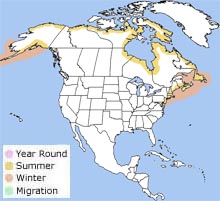
During the breeding season, the common eider is found across Alaska and Canada south to Massachusetts.
In the winter, it is found along the Pacific Coast from Alaska south to Washington and along the Atlantic Coast from Canada south to New York.
The common eider is also found in Europe and Asia.
NHPBS inspires one million Granite Staters each month with engaging and trusted local and national programs on-air, online, in classrooms and in communities.