The common goldeneye is 15.8-20.1 inches (40-51 cm) in length with a wingspan of 30.3-32.7 inches (77-83 cm).
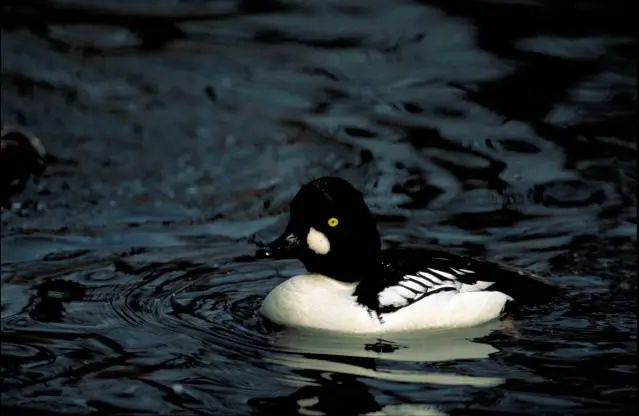
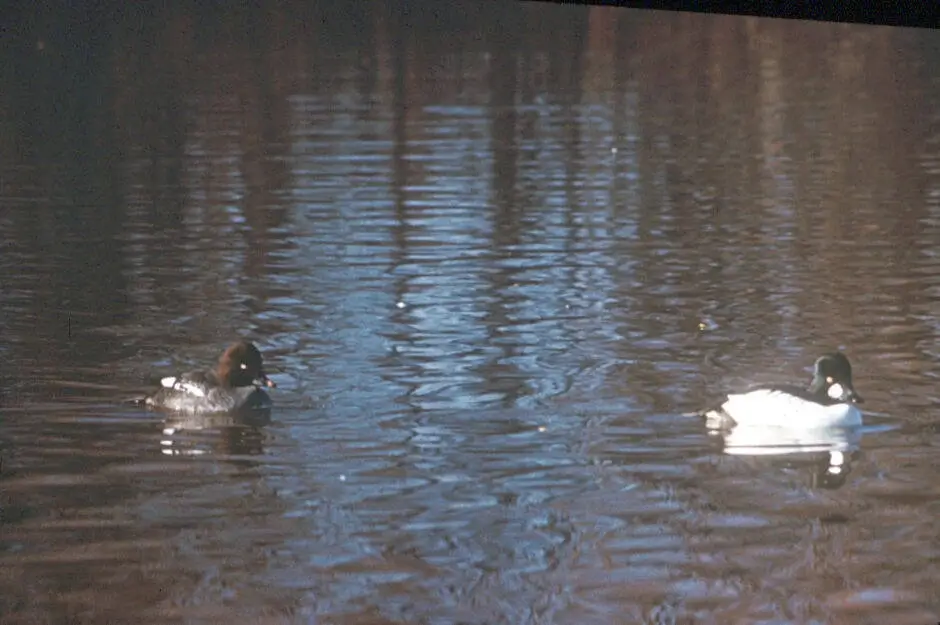
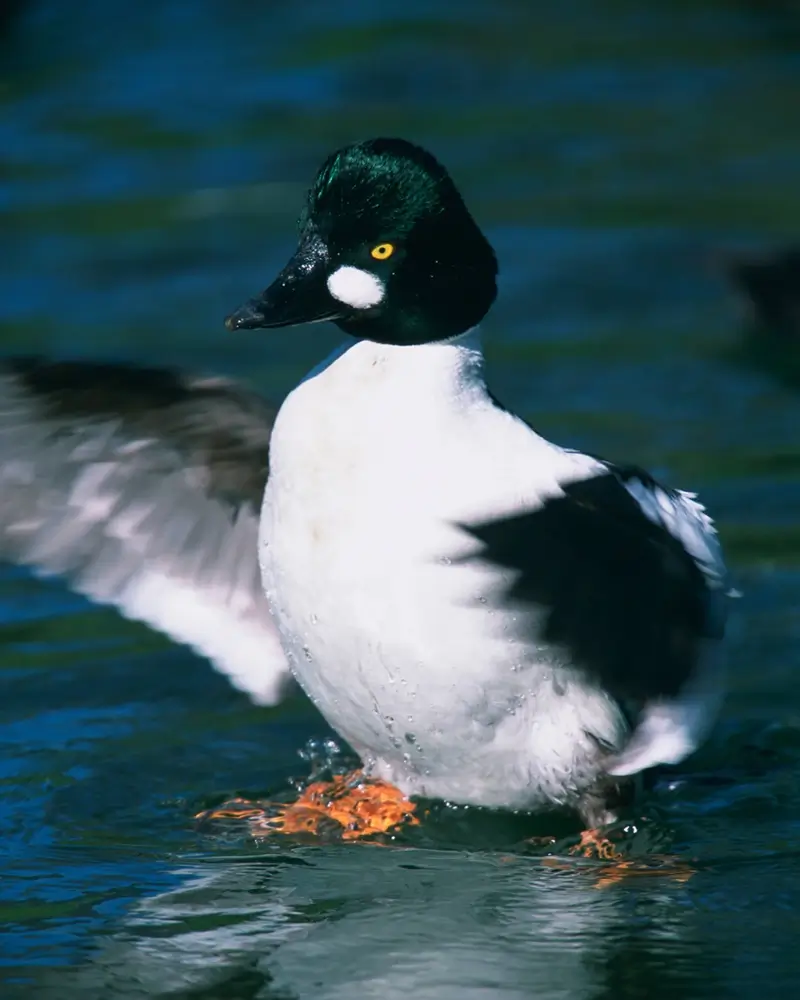
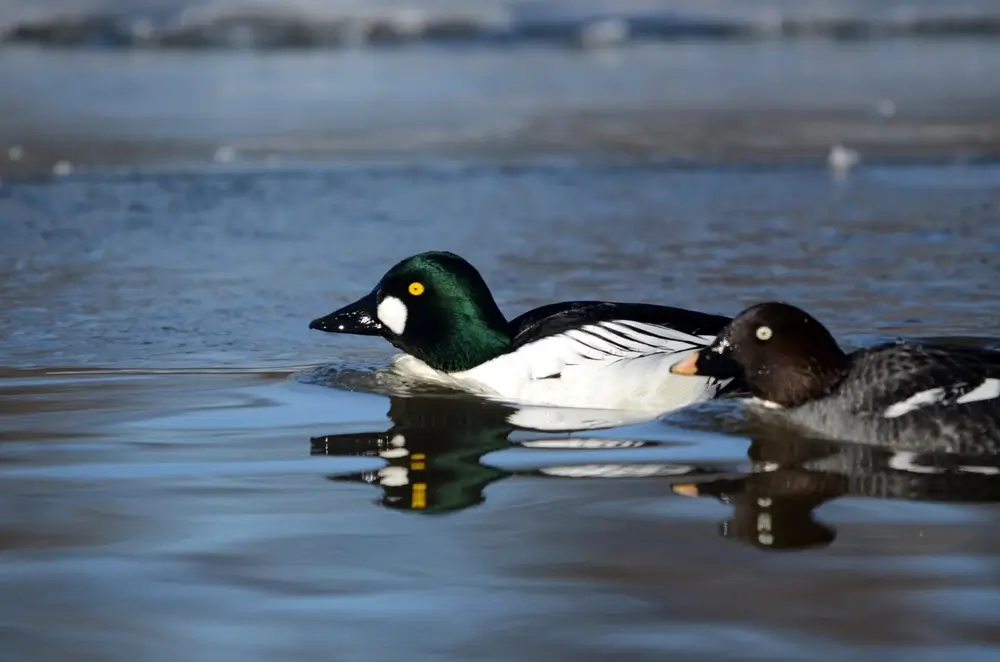
The male common goldeneye has a white body with a black back. His head looks black, but it is really a glossy green. In breeding season, he has an oval white patch on his face.
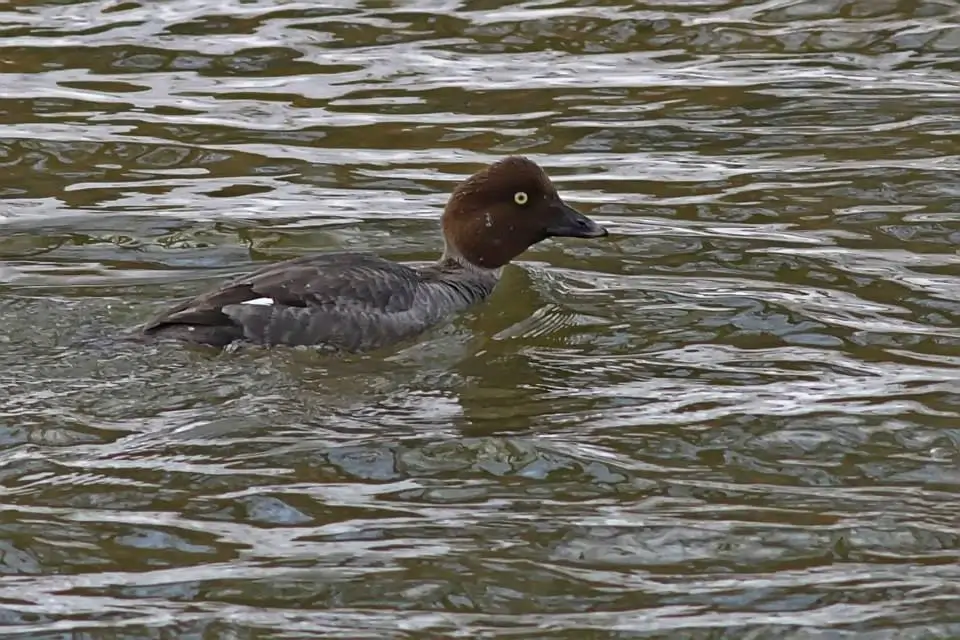
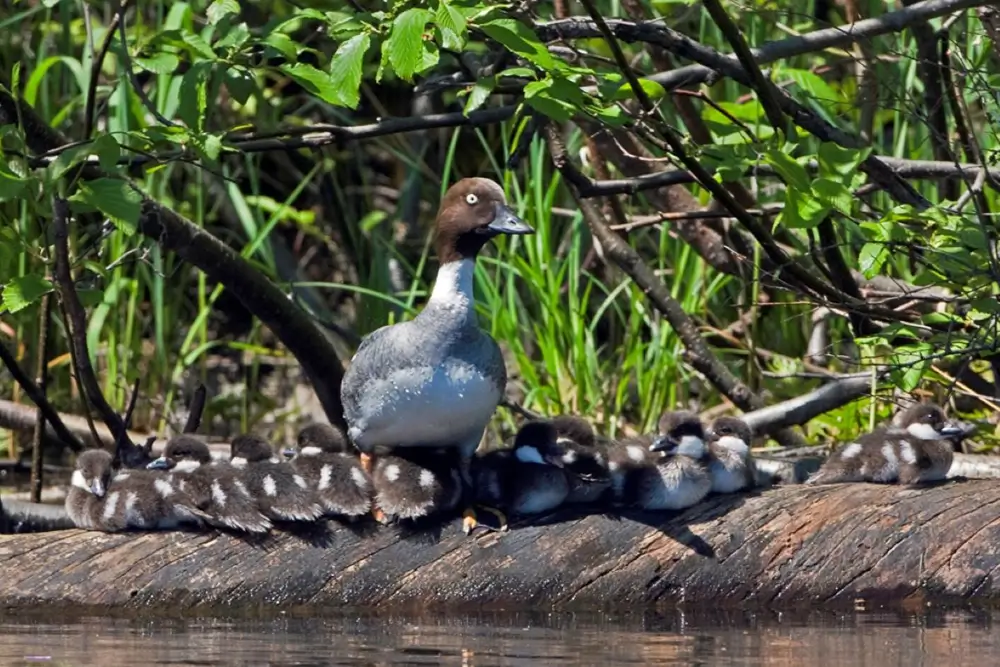
The female has a brown head and a white neck ring. She has gray wings, head, and tail, and a grayish-white breast and belly. Both the male and female have short necks, round heads, golden eyes, a small black bill, and a white patch on their wings that is visible when they are in flight.
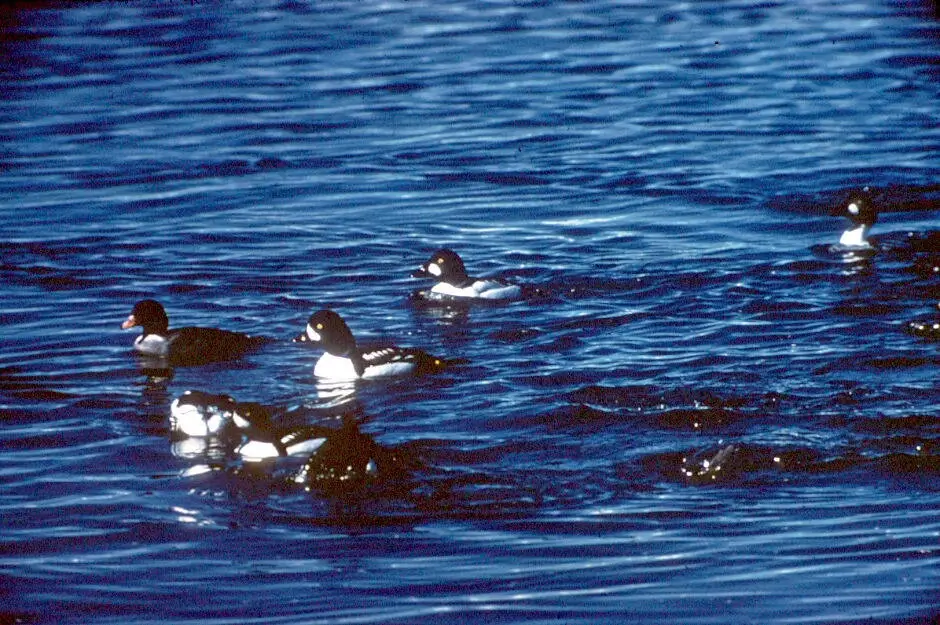
The common goldeneye looks similar to Barrow’s goldeneye, but the male Barrow’s goldeneye has a crescent-shaped white mark on its face.
Habitat
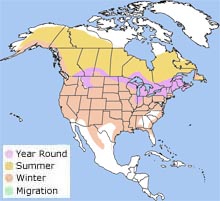
The common goldeneye is found in forested areas along lakes and rivers during the breeding season. They prefer areas with mature forests where they can find plenty of cavities in trees for nesting.
In the winter, the common goldeneye is found in bays and harbors and large inland lakes, and rivers. They prefer areas with slow-moving, shallow water and stone, gravel, or sandy bottoms.
Diet
The common goldeneye is a diving duck and eats mollusks, aquatic plants, crustaceans, small fish, and insects.
Life Cycle
During courtship, the male stretches his head out over the water and then snaps it back over his back with his bill pointing up and calls out with a shrill cry. The female lays 8-12 pale green eggs in a tree cavity lined with down. Occasionally, she lays her eggs in the nest of another bird.
The ducklings leave the nest when they are a few days old and can feed themselves. Young common goldeneyes sometimes form groups or crèches of ducklings from different broods.
The common goldeneye has a lifespan of 11-12 years in the wild.
Behavior
The male common goldeneye can become aggressive and chase or peck at rivals over territory or resources.
Did You Know?
The common goldeneye is sometimes called the whistler because their wings make a whistling sound when they are in flight.
Support for NatureWorks is provided by:
The Common Goldeneye in NH
Common goldeneye nest around Lake Umbagog, with smaller numbers nesting in the Connecticut Lakes.
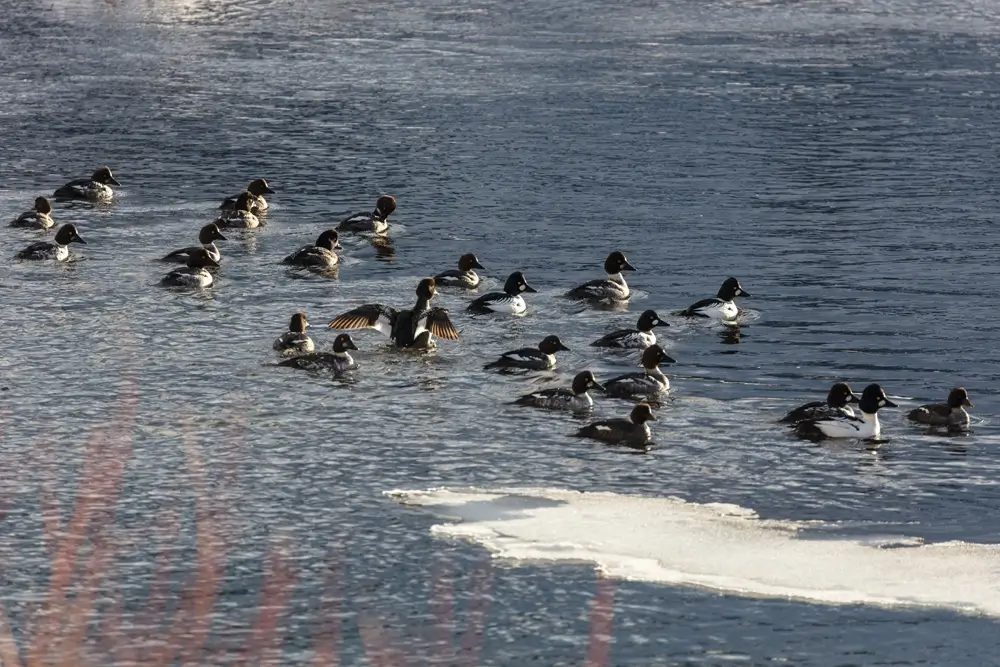
During migration and in the winter, large flocks can be found in almost any open body of water in the state, including rivers, lakes, and the ocean.