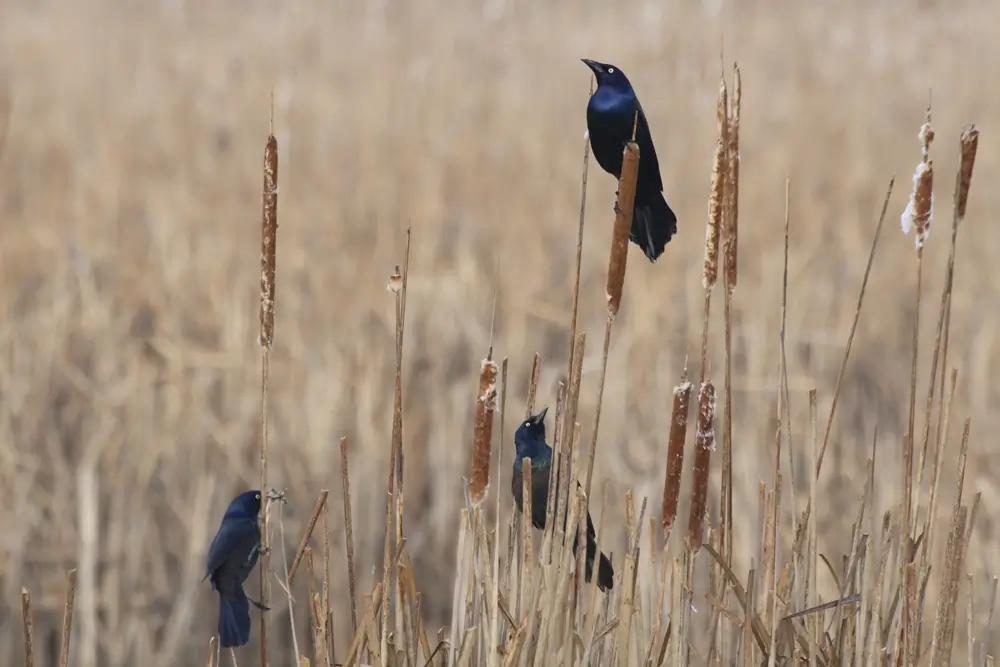
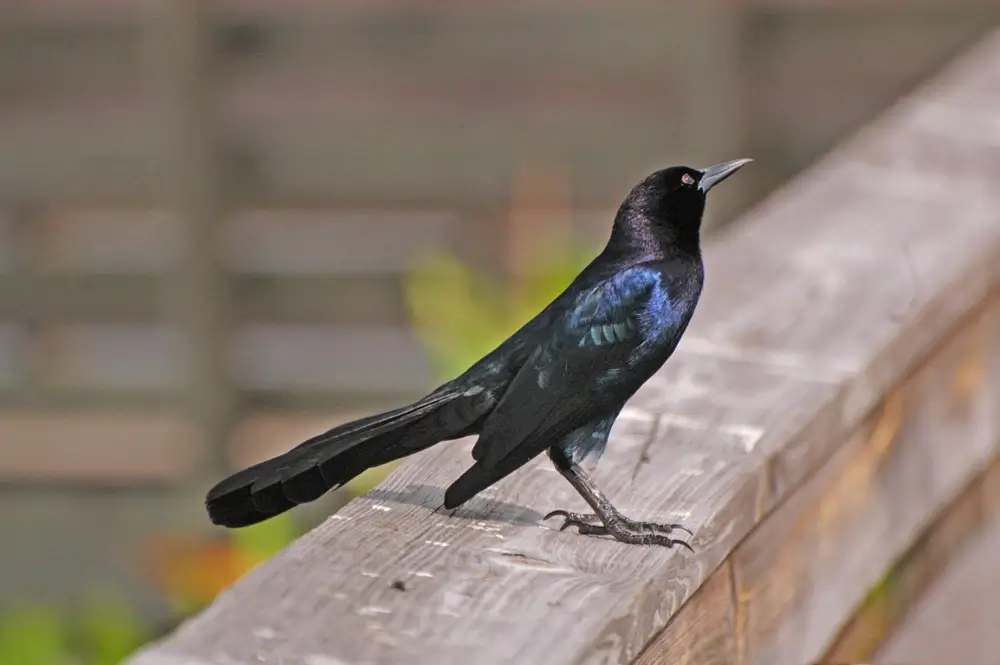
The common grackle is a social, noisy relative of the blackbird. It is 11.0-13.4 inches (28-34 cm) in length with a wingspan of 14.2-18.1 inches (36-46 cm).
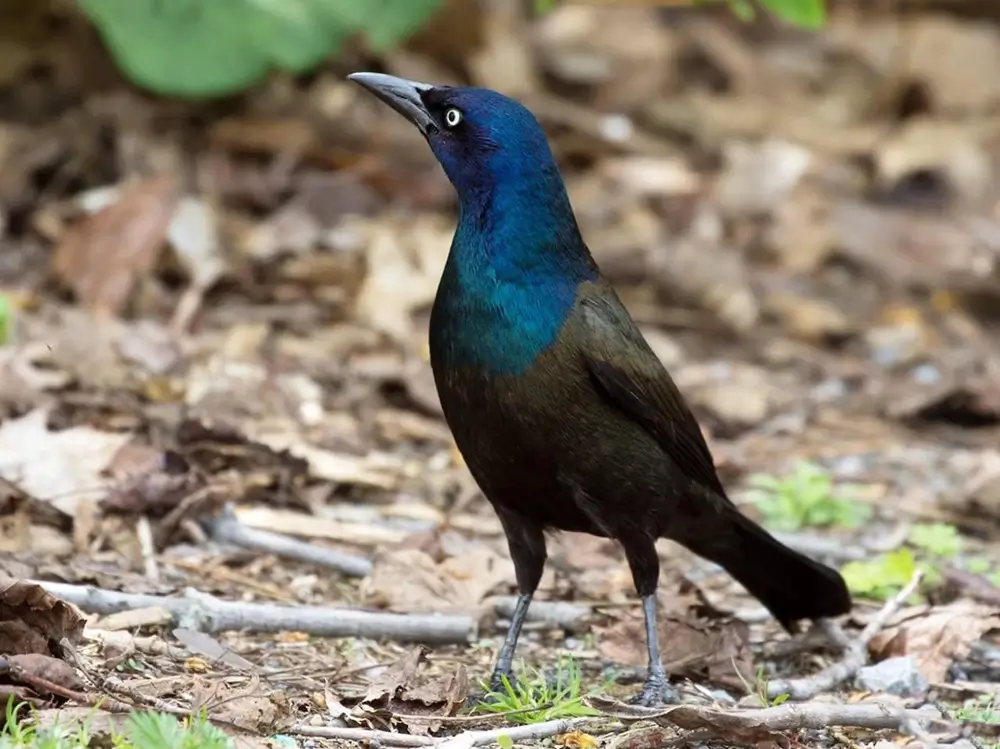
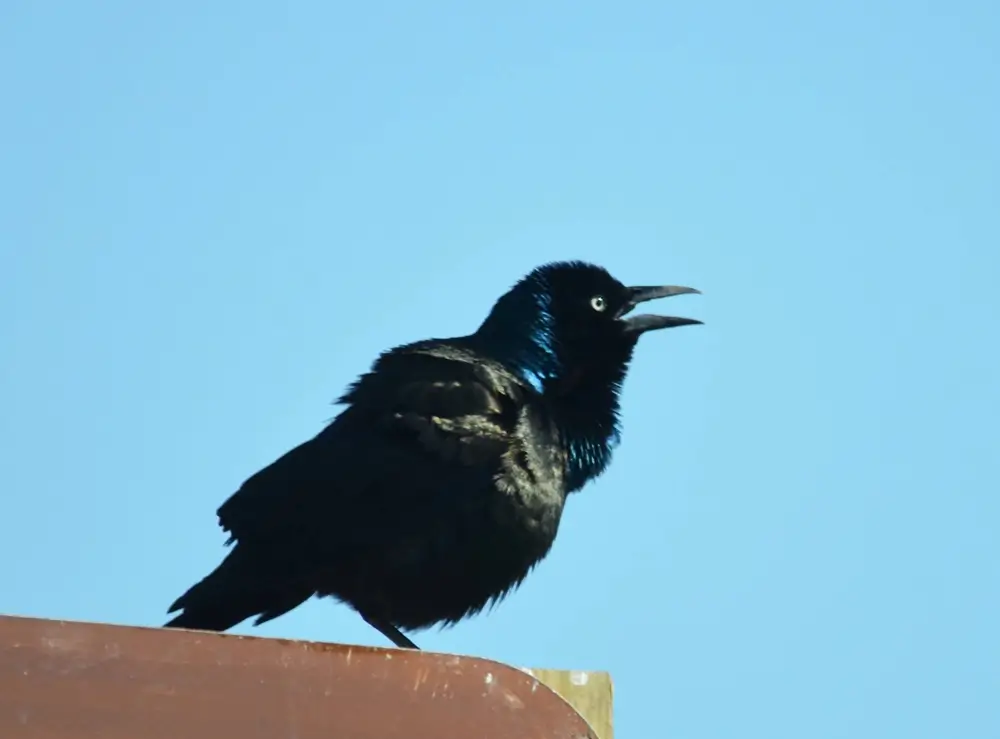
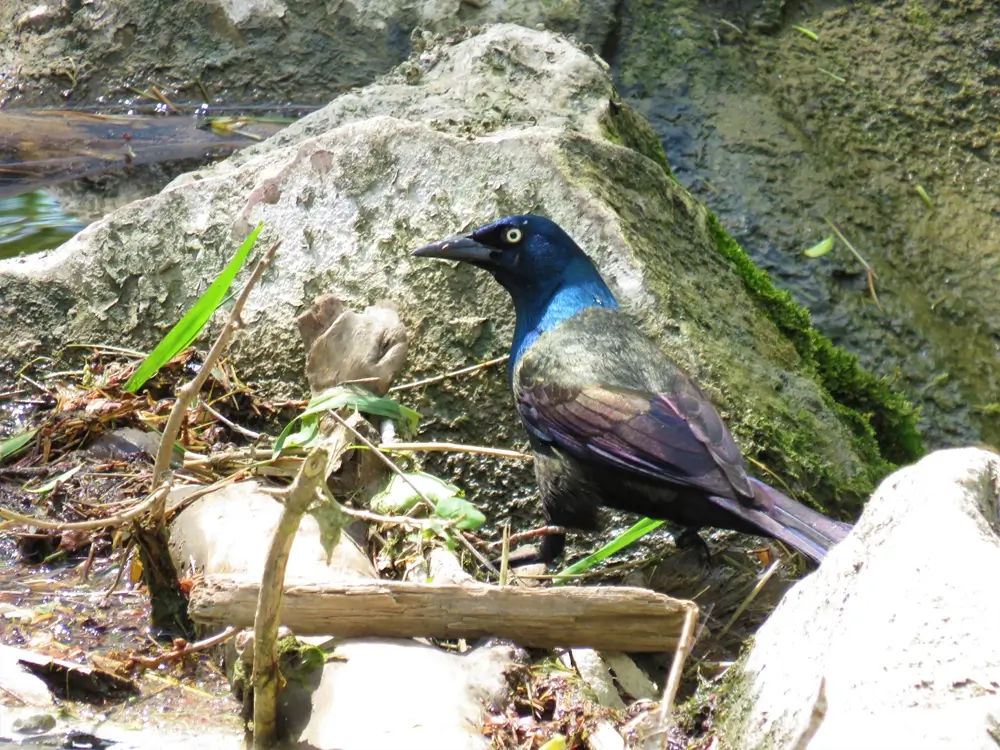
The grackle looks a lot like the blackbird, but is slightly longer and has glossy, iridescent feathers. It has a purple head and a bronze body.
Look for grackles gathered in large, noisy flocks with cowbirds and blackbirds.
Habitat
The common grackle is found in a variety of habitats. It is found in agricultural fields, city parks, backyards, open woodlands, forest edges, meadows, and marshes.
It can be seen sitting on telephone lines and walking across lawns. The only place you probably won’t find a common grackle is in a dense forest.
Diet
The common grackle is a resourceful forager and has a varied diet. It eats many types of seeds, including crops such as corn from farm fields.
The common grackle will also wade into the water to catch a small fish, pick leeches off turtles, steal worms from other birds, and, on occasion, eat other adult birds.
The common grackle has a hard section on its beak that it uses to saw open acorns.
Life Cycle
Female common grackles build a bulky cup-shaped nest made of twigs, leaves, and grasses with small bits of paper, string, cloth, and corn husks. She reinforces the nest with mud and lines it with fine grass and horse hair.
She lays 1-7 inch-long blue-gray eggs, which she incubates for 11-15 days. After hatching, the chicks stay in the nest for about two weeks.
The common grackle has a lifespan of 5 to 15 years in the wild. The oldest known grackle on record lived to be 22 years old.
Behavior
The common grackle sometimes performs a behavior called anting. It bows down to the ground and lets ants crawl all over its body. The ants secrete formic acid onto the body of the Grackle, which scientists think may help the common grackle get rid of parasites.
About 300 species of ants in the subfamily Formicinae produce formic acid. It is both a venom and a pheromone used to keep predators away.
Did You Know?
Support for NatureWorks is provided by:
The Common Grackle in NH
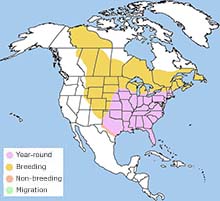
The common grackle breeds across New Hampshire, and it is a year-long resident in the state.