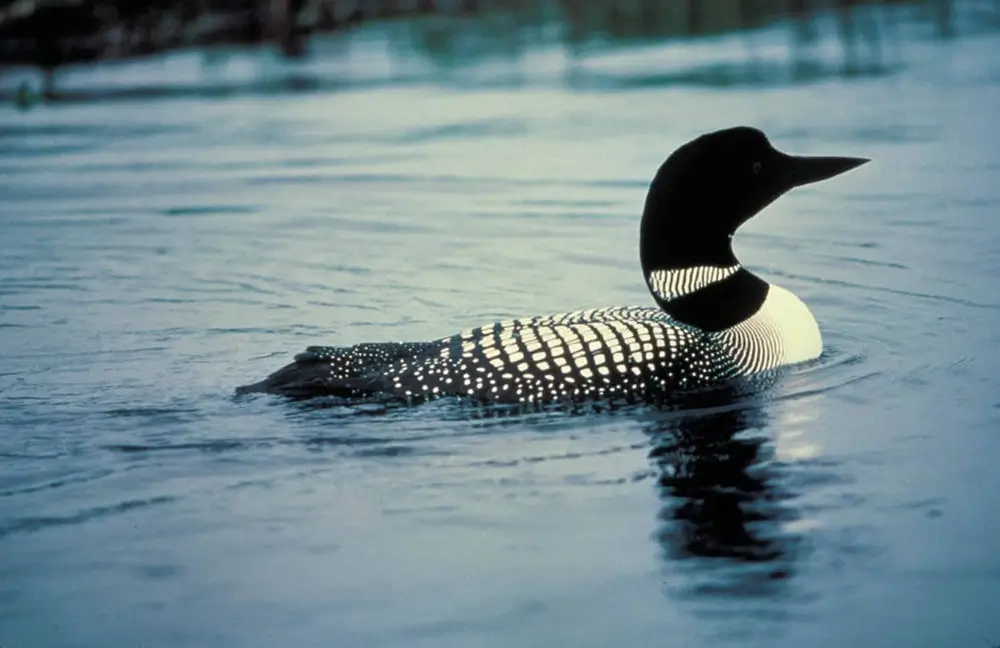
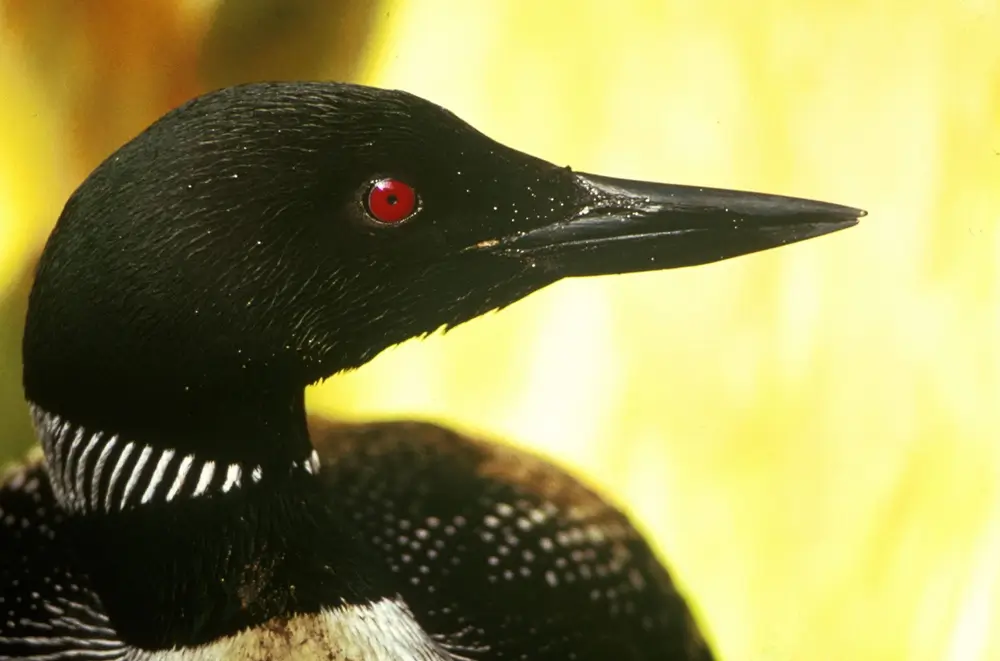
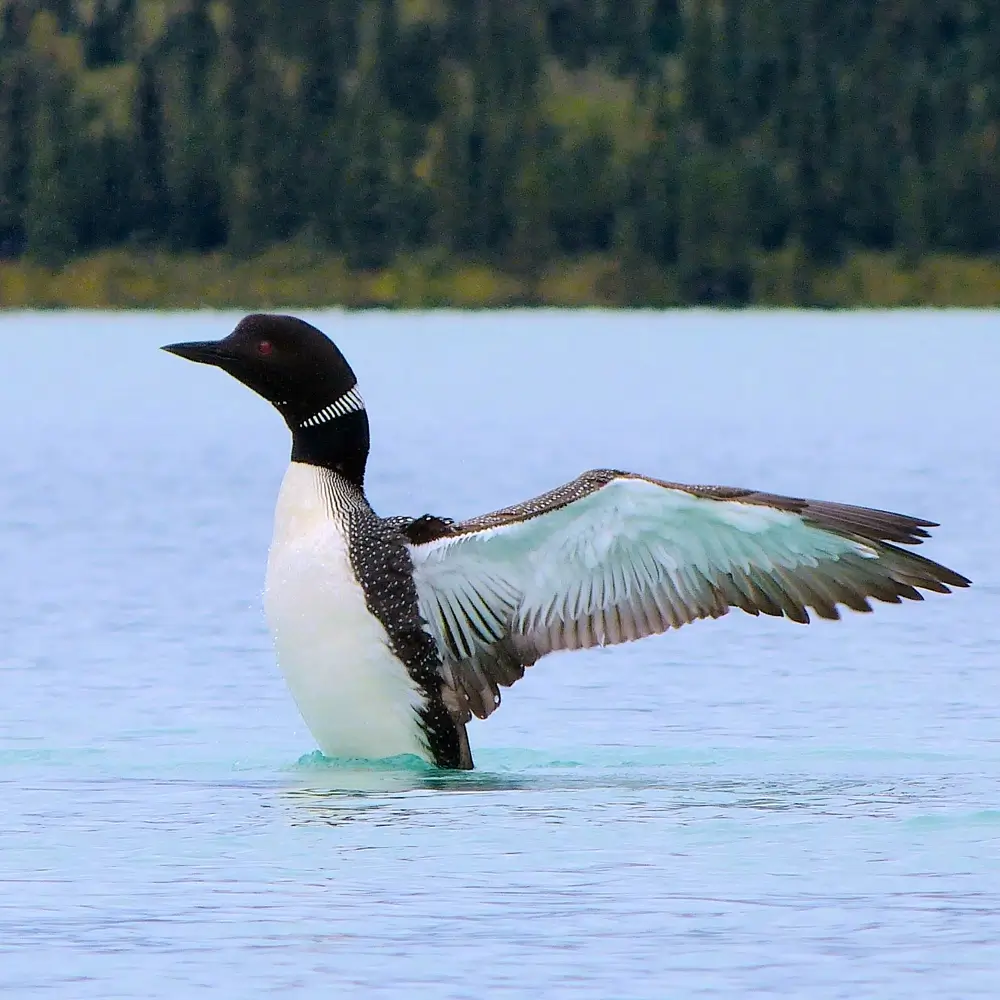
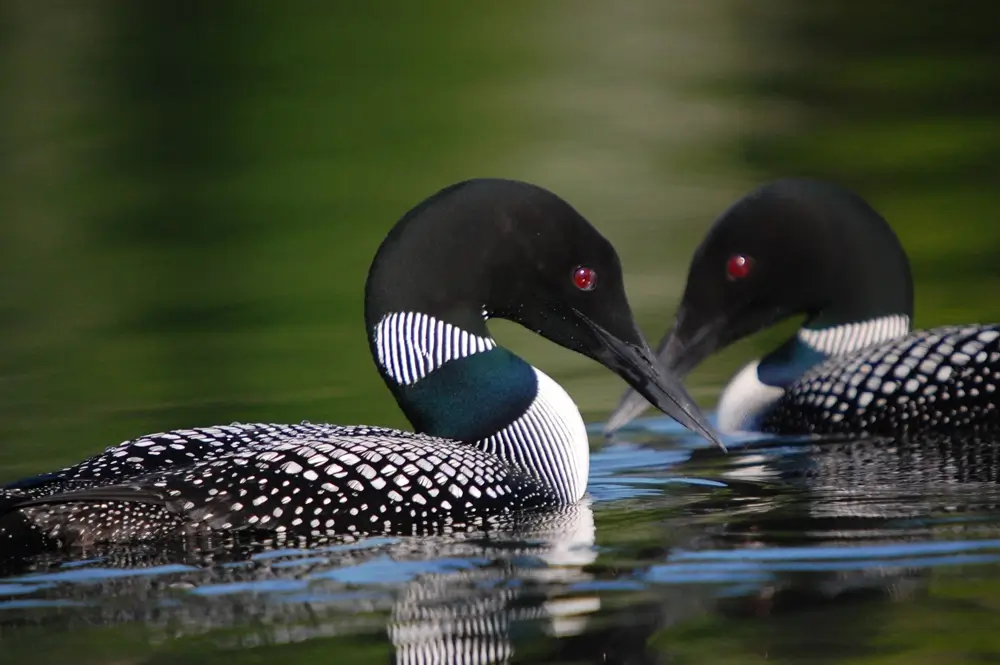
The common loon is often identified by its eerie call coming from lakes in the summer. The common loon is 26-36 inches (66 – 91.44 cm) in length with a wingspan of 40-50 inches (101.6-127 cm). It has a long, flat body, bright red eyes, and a dagger-like black bill that it uses to catch fish. They have strong black legs set back on their body and large webbed feet.
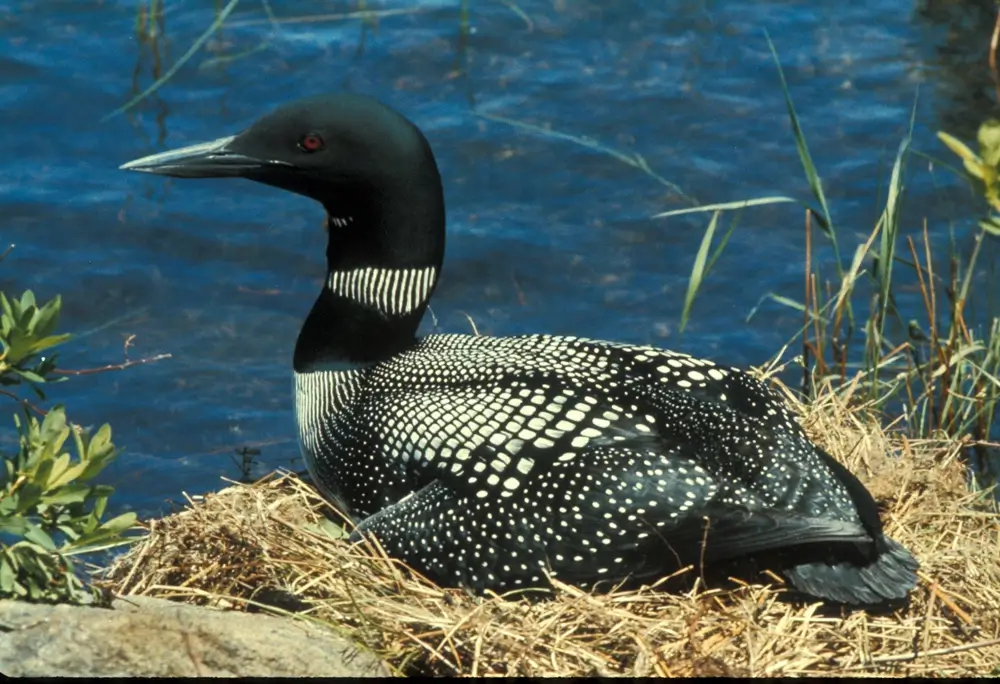
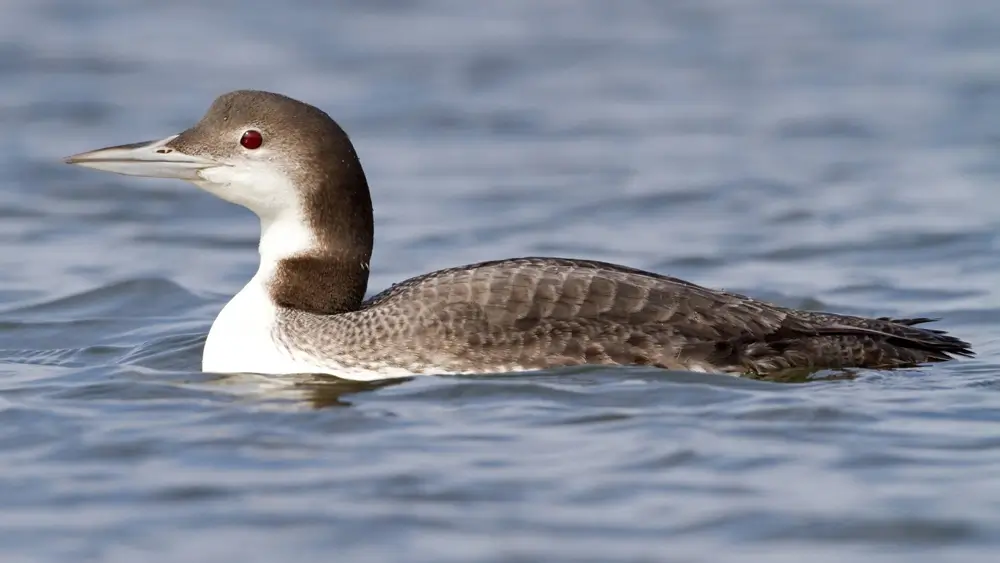
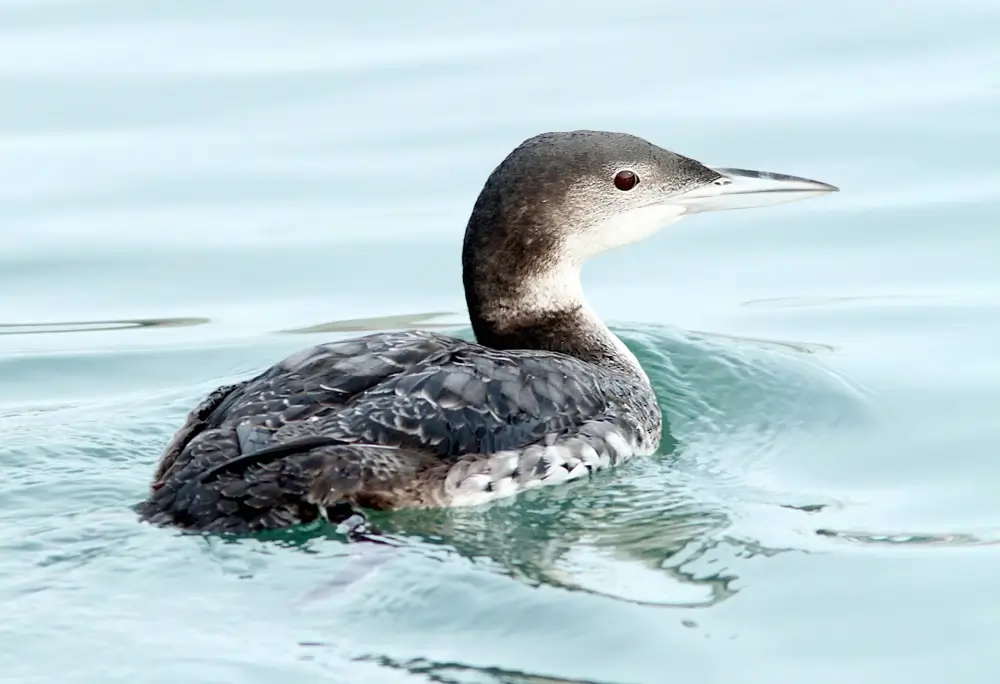
Their color patterns vary depending on the season. In the breeding season, they have a shiny back head, a white band streaked with black around their neck, a white breast streaked with black stripes, and dark wings dotted with white spots. In the non-breeding season, they are gray with a white breast.
Habitat
The common loon is always found near water. It breeds on lakes and rivers and migrates in the winter to coastal areas where it is found in estuaries, bays, and no more than a mile or two off the coast. It is very awkward on land and needs enough water surface to get a good running start to launch itself into the air.
Diet
The common loon eats fish and other aquatic animals like crayfish, shrimp, and leeches. In addition to fish, some young loons eat insects. The common loon locates fish and then dives and grabs them with its razor-sharp bill. When drinking, the common Loon dips its bill into the water and then tilts its head back to swallow.
Life Cycle
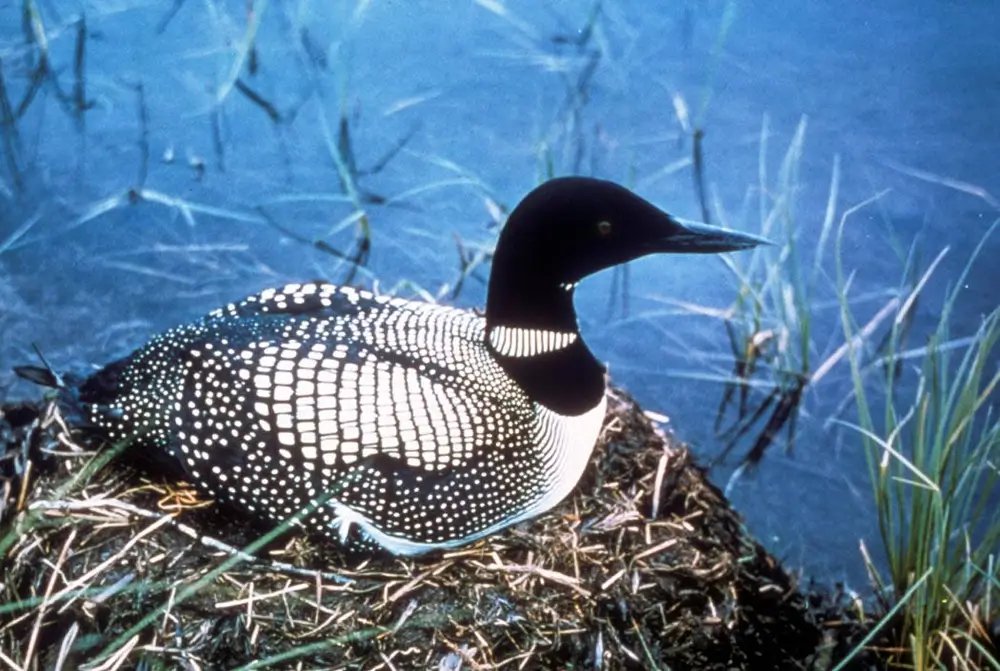
The common loon returns to a lake or river to breed in the spring. The female and male build a nest out of dirt, grass, and moss in a sheltered location near deep water. The female usually lays two brown eggs. Both the female and male take turns incubating the eggs for close to a month.
After hatching, the chicks stay with their parents for 2-3 months. They leave the nest shortly after hatching and enter the water where they can sometimes be seen riding on the backs of their parents. Once they leave the nest, they spend all of their time on the water. Male and female pair may remain together season after season and return to the same nesting spot.
Behavior
Like airplanes, loons need a runway to take off. It needs from 30 yards to a quarter-mile (27.4 – 402.33 m) to gain enough speed for lift-off from the water. Sometimes during migration, a loon become stranded if they land on a water source too small for take-off.
Did You Know?
Support for NatureWorks is provided by:
The Common Loon in NH
In the breeding season, the common loon is found on freshwater lakes, including Lake Winnipesaukee, Squam Lake, Lake Sunapee, and Newfound Lake, and large rivers in New Hampshire, where it is a threatened species. The common loon migrates to the ocean in the fall. The common loon can be found in ocean waters off the coast of New Hampshire.
The common loon breeds on lakes and large rivers in Canada and parts of the northern U.S. During migration it can be found throughout the U.S. The common loon spends winters in the waters off of both the east and west coasts of Canada and the U.S. The common loon is also found in Greenland and Europe.