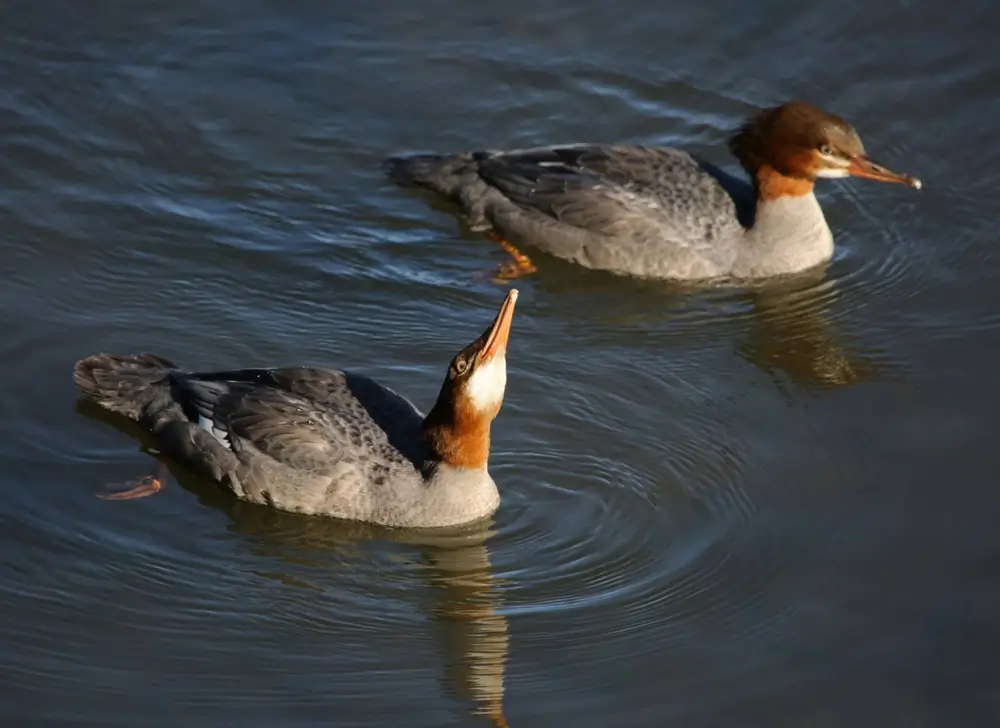
The common merganser is a diving duck that is 21.3-27.9 inches (54-71 cm) in length with a wingspan of 33.9 inches (86 cm).
It has a long, thin, serrated bill and brown eyes. The male’s bill is reddish-orange, and the female’s bill is orange.
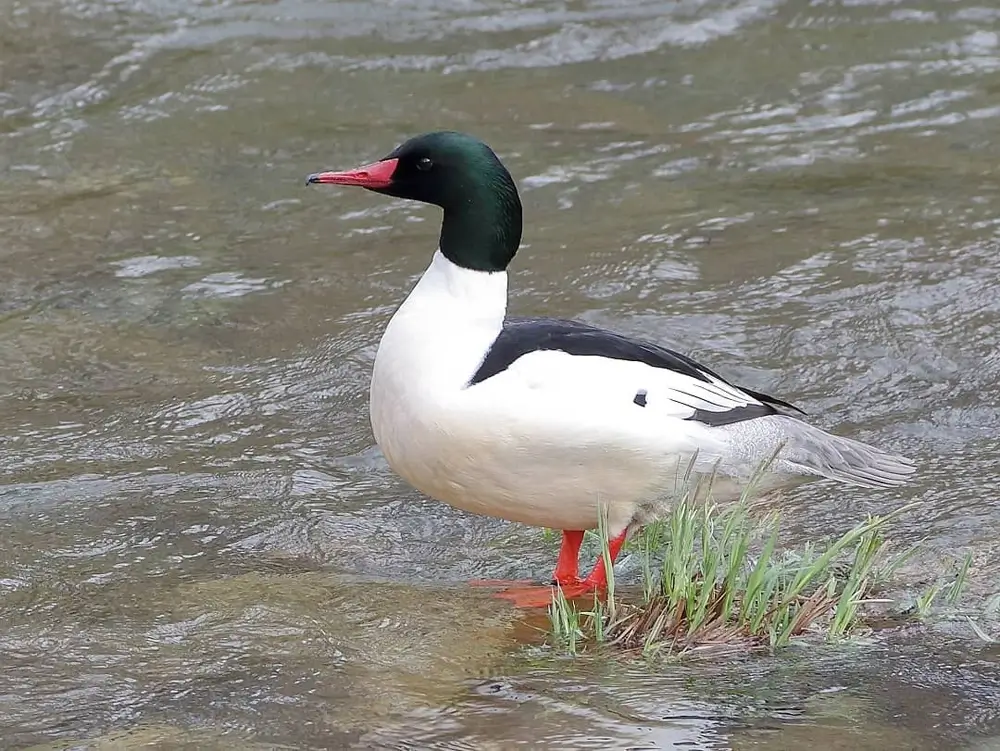
Both the male and the female have a crest of feathers on their heads. The crest is more visible on the female. The male has a white breast, neck, and sides. He has an iridescent greenish-black head and neck and a black back and tail.
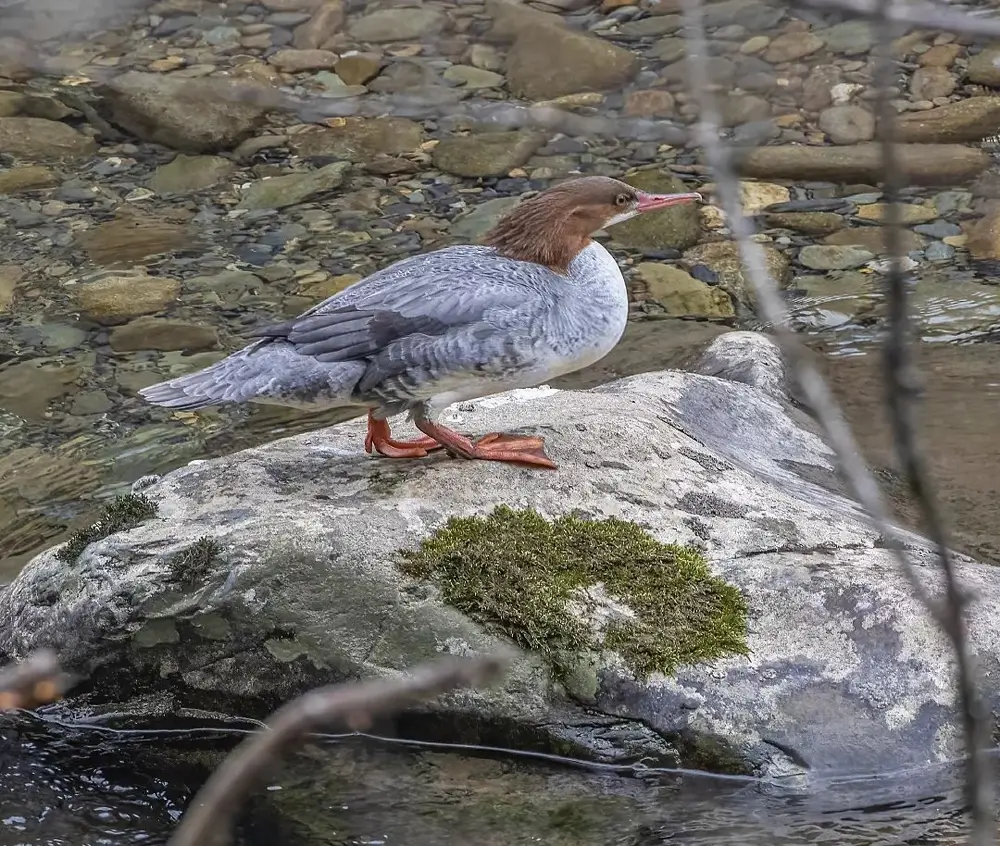
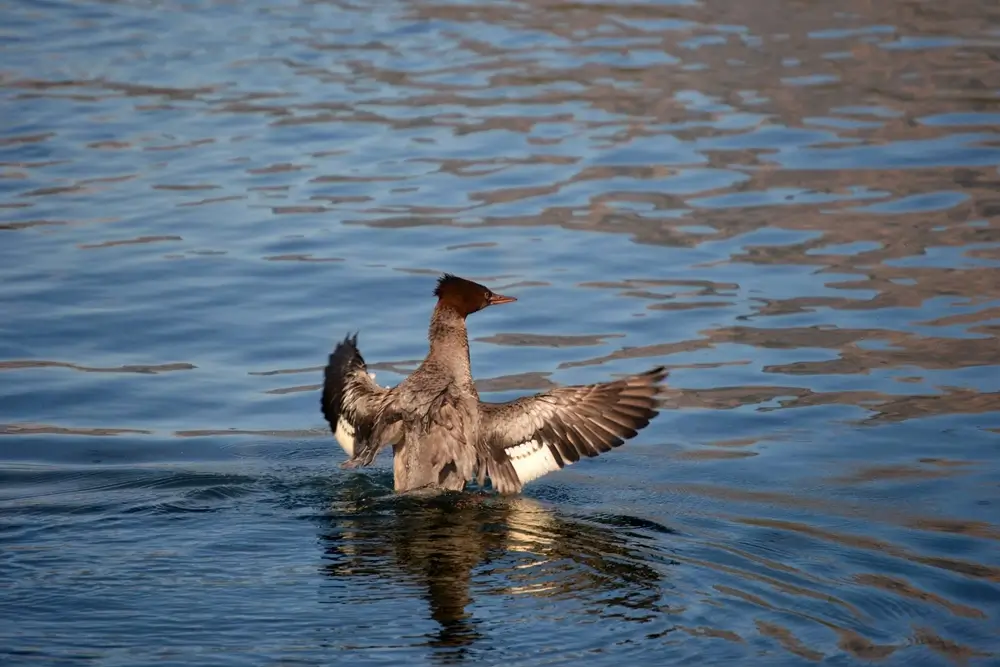
The female has a gray body, a reddish-brown head and neck, and a white chin. Both the male and the female have a white patch on their wings that is visible when they are in flight.
Habitat
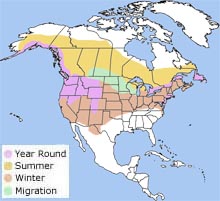
During the breeding season, the common merganser is found on wooded rivers and lakes. It winters on lakes, rivers, bays, and estuaries.
Diet
The common merganser dives for prey like fish, mollusks, and crustaceans. It commonly preys on fish like trout, small salmon, perch, minnows, and eels.
The serrated edges of the common merganser’s bill are like the teeth of a saw. They help the merganser get a good hold on the fish it catches, so the fish can’t wiggle away.
The common merganser is sometimes called the sawbill.
Life Cycle
Male and female common mergansers form pairs in the late winter or early spring. The female lays 6-12 eggs in a tree cavity lined with down. Common mergansers frequently use woodpecker holes for their nests. The female sometimes makes her nest in a rock crevice, a hole in the ground, in a hollow log, or under tree roots. Nests are usually near the water.
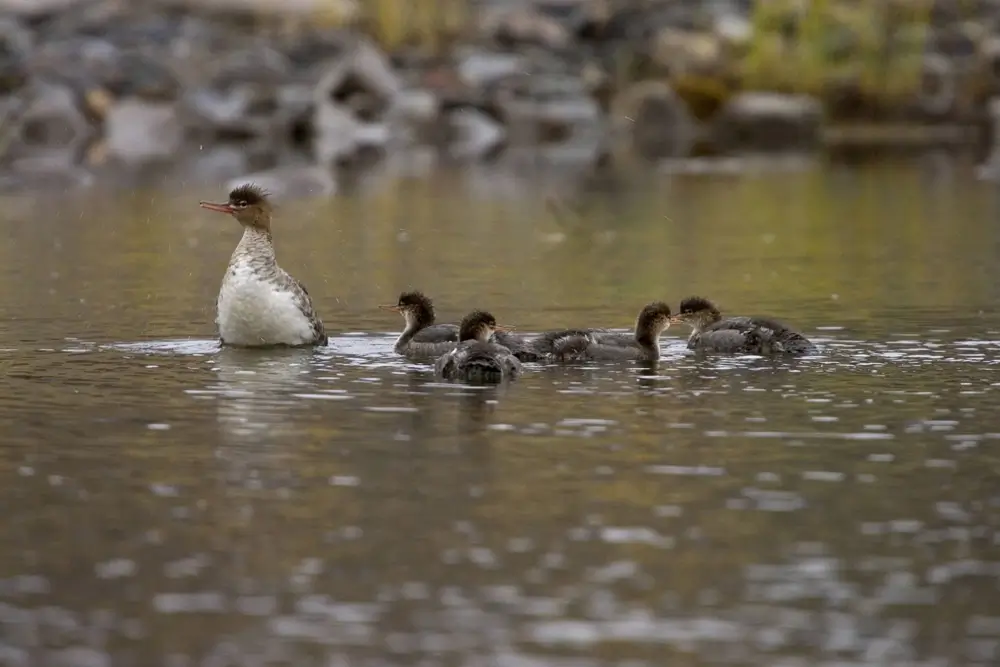
The female incubates the eggs, which hatch in 28 to 35 days. The male stays near the nest until incubation begins. The ducklings leave the nest a day or two after hatching and dabble in the water for insects. By the time they are a few weeks old, they begin diving for larger prey.
The common meganser has a lifespan of around 8 years in the wild. The oldest known common merganser on record lived to be 13 years and 5 months old.
Behavior
The common merganser is a good swimmer and diver, but it is awkward on land. It runs across the water to build up enough speed to take off and fly.
Did You Know?
The common merganser is sometimes called the goosander, the sawbill, or the fish duck.
Support for NatureWorks Redesign is provided by:
The Common Merganser in NH
The common merganser breeds and winters in New Hampshire.