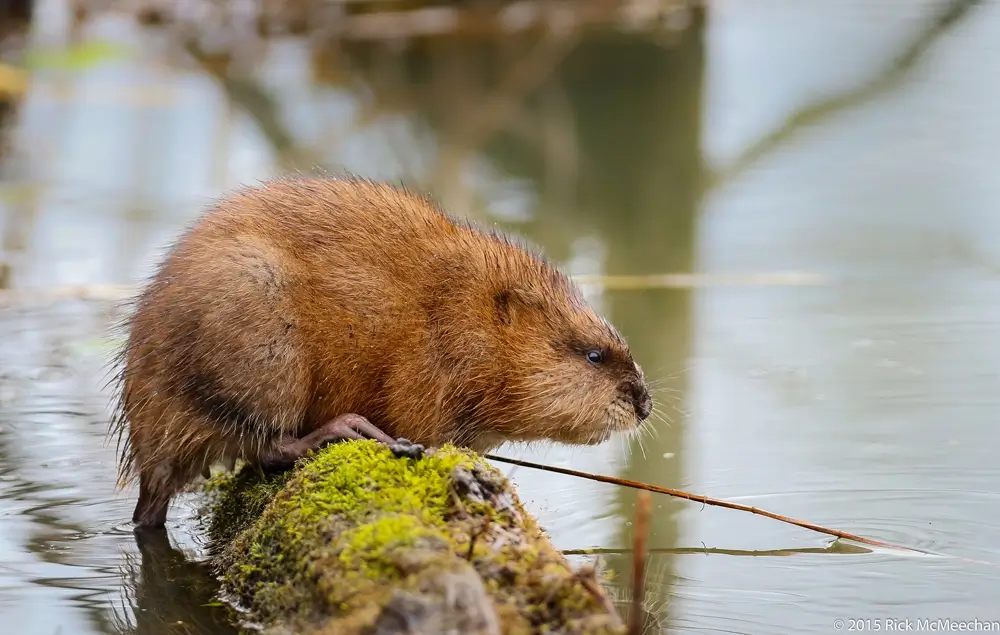
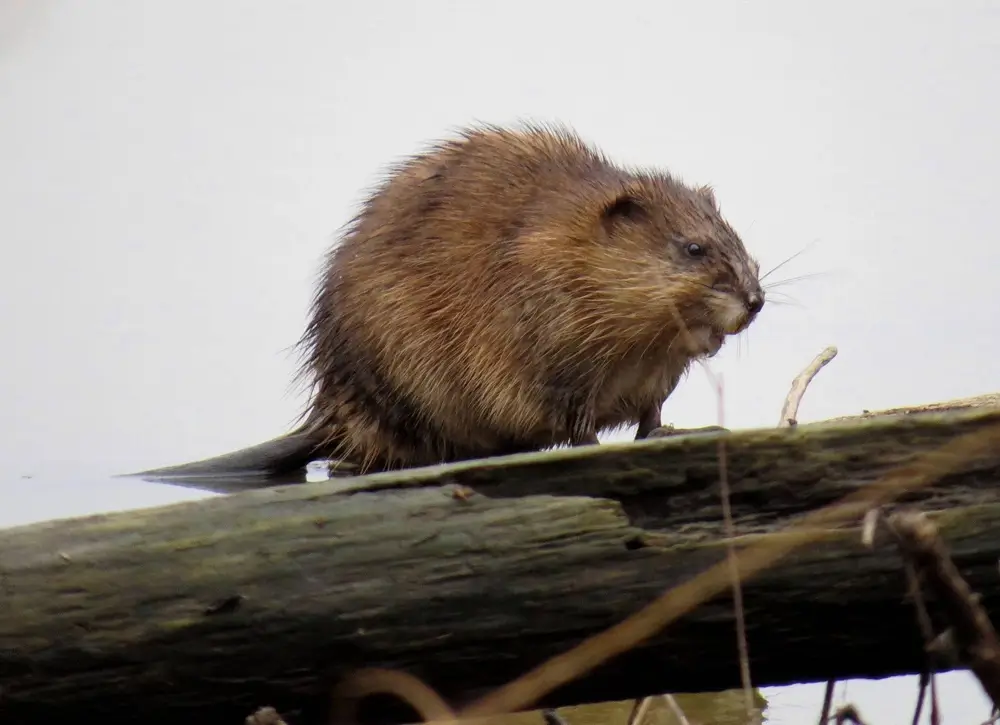
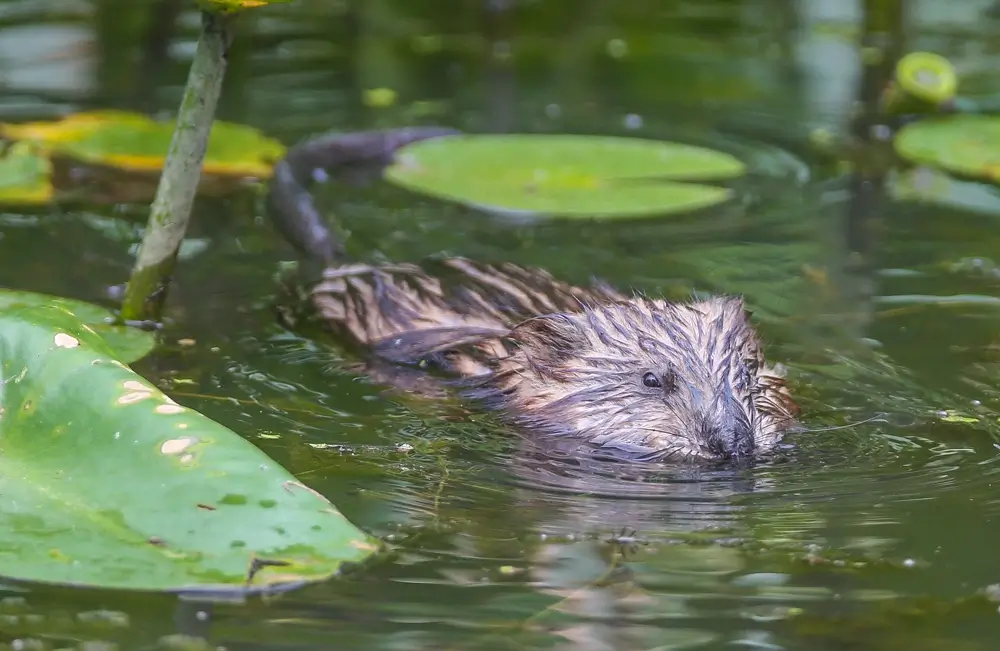
The muskrat is a large rodent that is about 1-2 feet (0.3-0.6 m) in length. It has a stocky body, a rounded head, and a long, scaly black tail that is 7-12 inches (18-30 cm) long. Its tail is laterally flattened, which means it is flattened vertically. Its tail works like the rudder on a boat and helps the muskrat maneuver in the water.
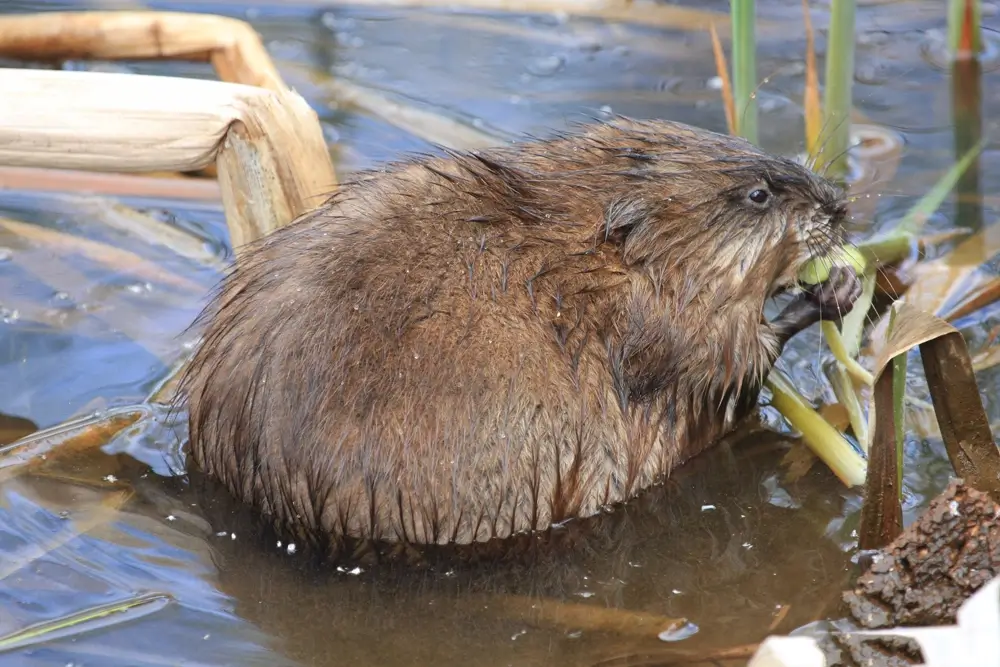
It has thick, soft, glossy reddish-brown to dark brown fur on its uppersides and paler fur on its undersides. It has a thick coat of fur under its guard fur that is waterproof. It may also have a white patch of fur under its chin and a darker patch of fur on its nose.
The muskrat has small eyes and tiny ears. It has short legs and small front feet. Its rear feet are larger and slightly webbed.
Habitat
The muskrat is found in swamps, marshes, rivers, ponds, lakes, drainage ditches, and canals. It prefers an environment with 4-6 feet (1.2-1.8 m) of still or slow-moving water and plants like cattails, pondweeds, bulrushes, and sedges.
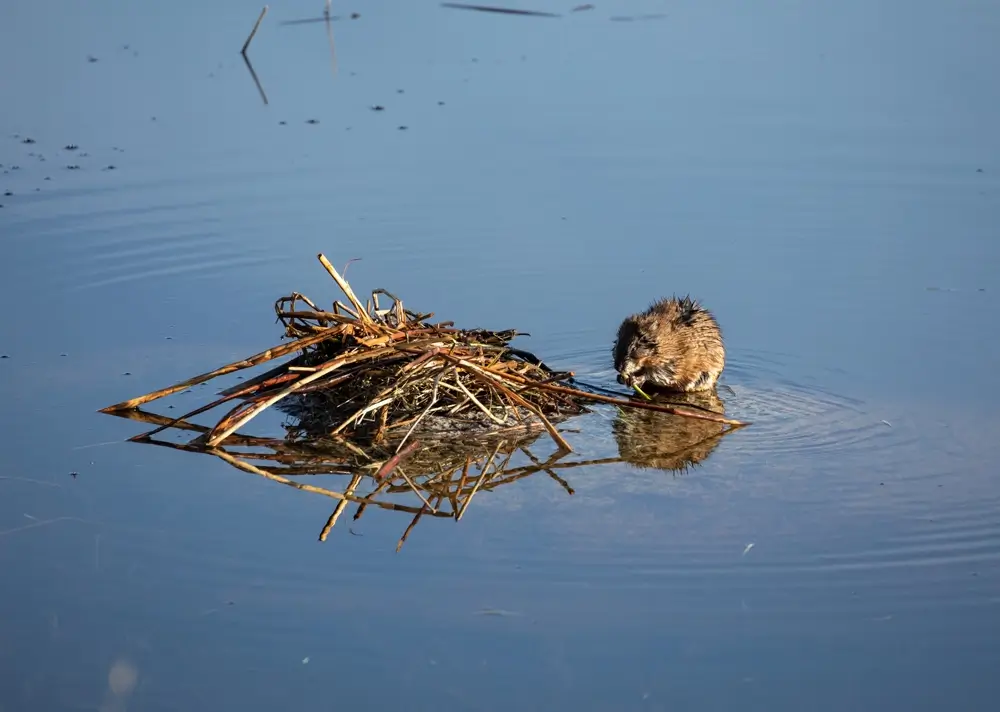
It needs open travel channels in the water so it can move around easily. In marsh environments, the muskrat builds a dome-shaped lodge of plants.
The lodge can be five feet (1.5 m) across and four feet (1.2 m) high and has an inner chamber with more than one underwater entry hole. In some cases, the muskrat often builds separate lodges for feeding and nesting.
In other habitats like rivers, creeks, drainage ditches, and canals, the muskrat creates a bank burrow for shelter. The burrow consists of a tunnel and a nesting chamber. There is usually an underwater entrance to the burrow.
Diet
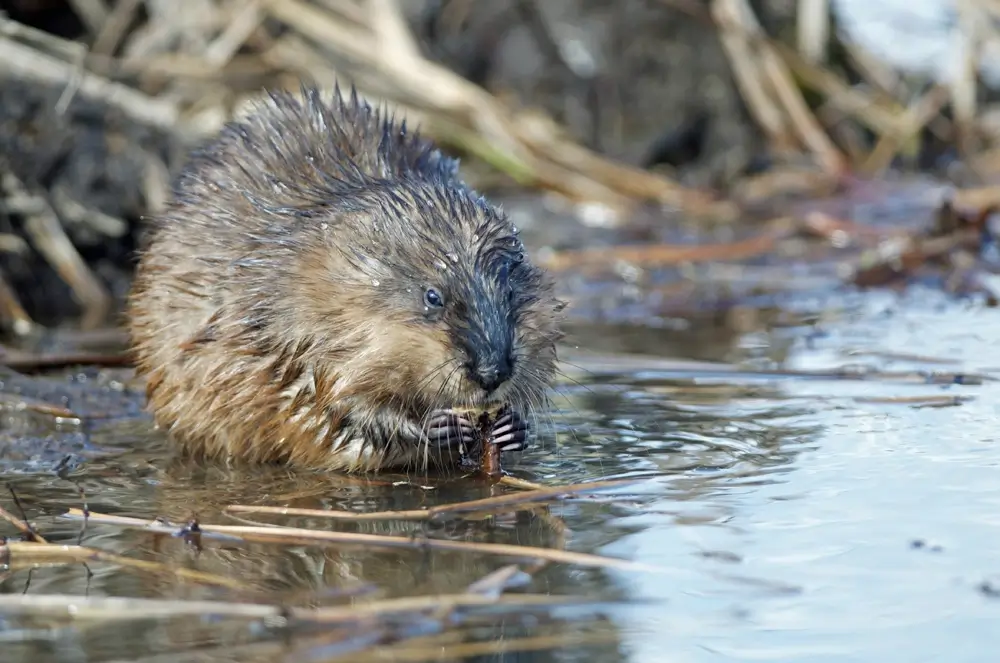
The muskrat can close its mouth around its protruding teeth and chew underwater. The muskrat eats aquatic vegetation like cattails, sedges, rushes, water lilies, and pond weeds. In some areas, it also eats clams, mussels, snails, crayfish, small fish, and frogs.
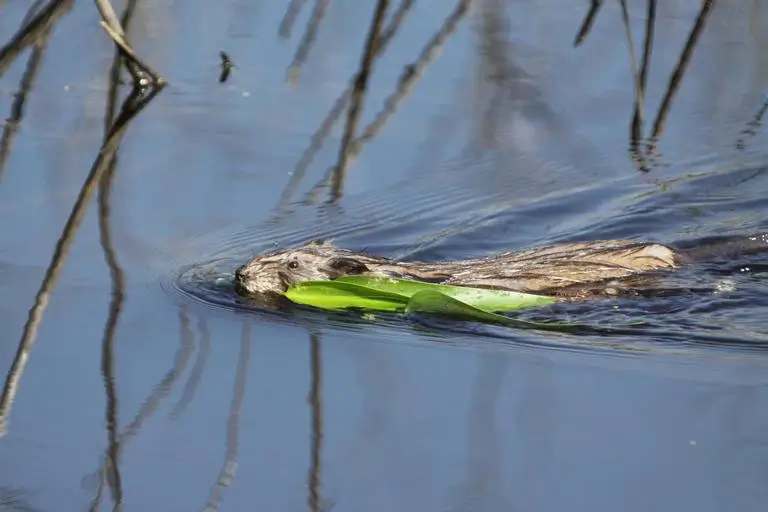
The muskrat doesn’t eat its food where it finds it; it usually drags its food out to a feeding platform in the water or a feeding station near one of its travel paths. These feeding platforms are made of mud and vegetation and allow the muskrat to eat its food without worrying about predators.
The muskrat is crepuscular. Crepuscular animals are most active at dawn, dusk, and at night.
Life Cycle
In the southern part of its range, the muskrat may breed year-round. In the northern parts of its range, the mating season runs from March through August. The female muskrat can have up to five litters a year. Male muskrats compete for females. The female gives birth to 2-9 young. Young muskrats are called kits.
The kits are covered with fur at birth, and their eyes are closed. They can swim when they are about 10 days old and begin to eat vegetation when they are about 20 days old. They are fully weaned when they are about a month old.
Kits leave their mother after weaning and establish their own territory. They mate when they are about a year old. The average life span of a muskrat in the wild is three or four years. Muskrats can live up to 10 years in captivity.
Behavior
The muskrat is a very good swimmer and can stay underwater for as long as 15 minutes. It uses its tail and webbed feet to propel itself through the water and can swim both forward and backward.
Did You Know?
The common muskrat gets its name from the two musk glands on its rear under its tail.
Support for NatureWorks is provided by:
The Common Muskrat in NH
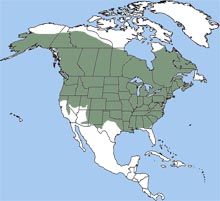
The common muskrat is found throughout New Hampshire in wetland habitats like swamps, marshes, rivers, ponds, and lakes.