The dark-eyed junco is 5.5-6.3 inches (14-16 cm) in length with a wingspan of 7.1-9.8 inches (18-25 cm).
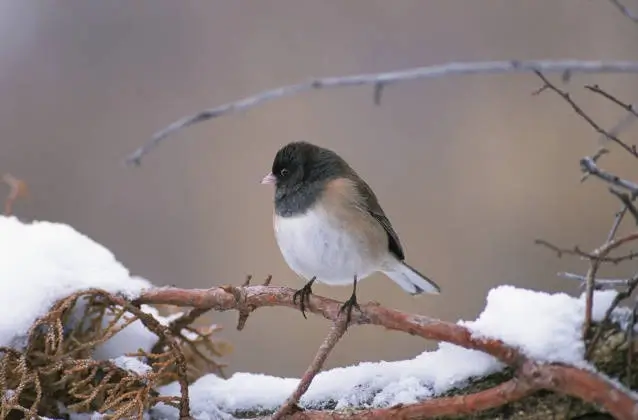
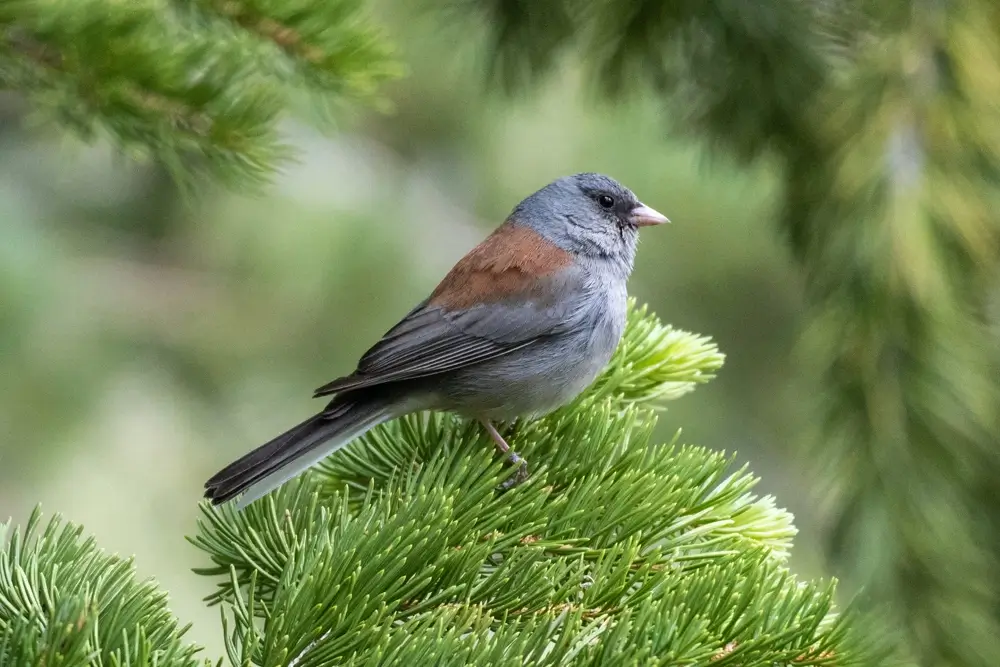
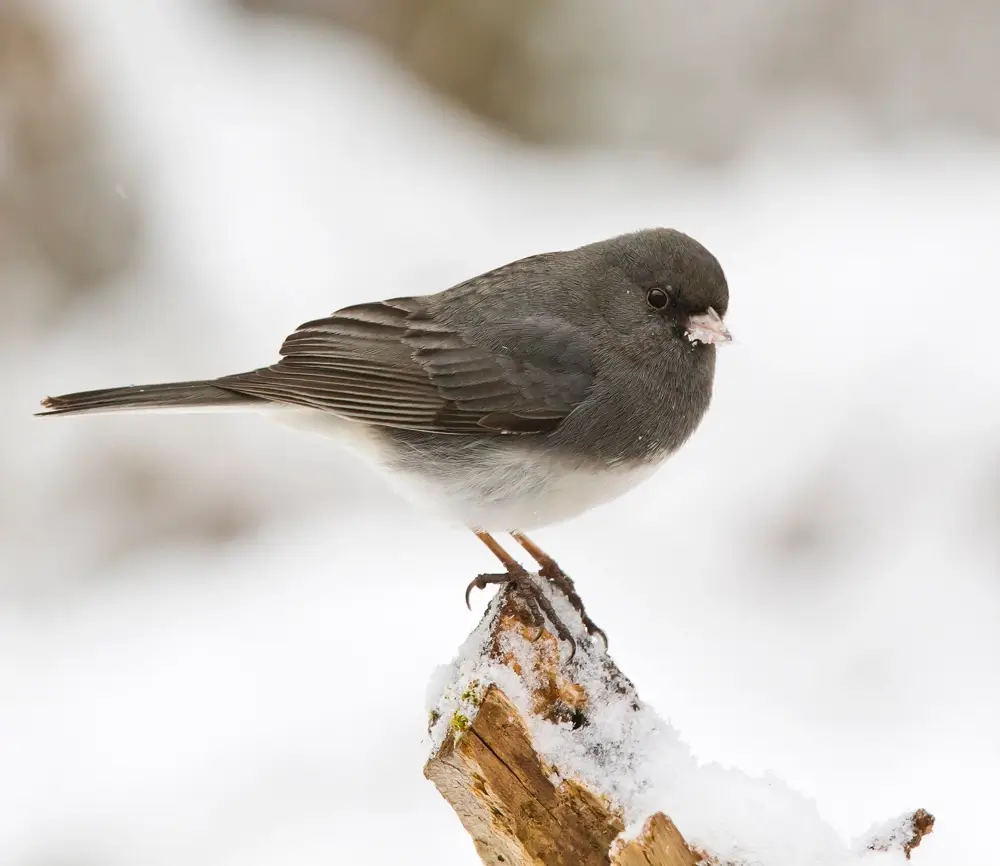
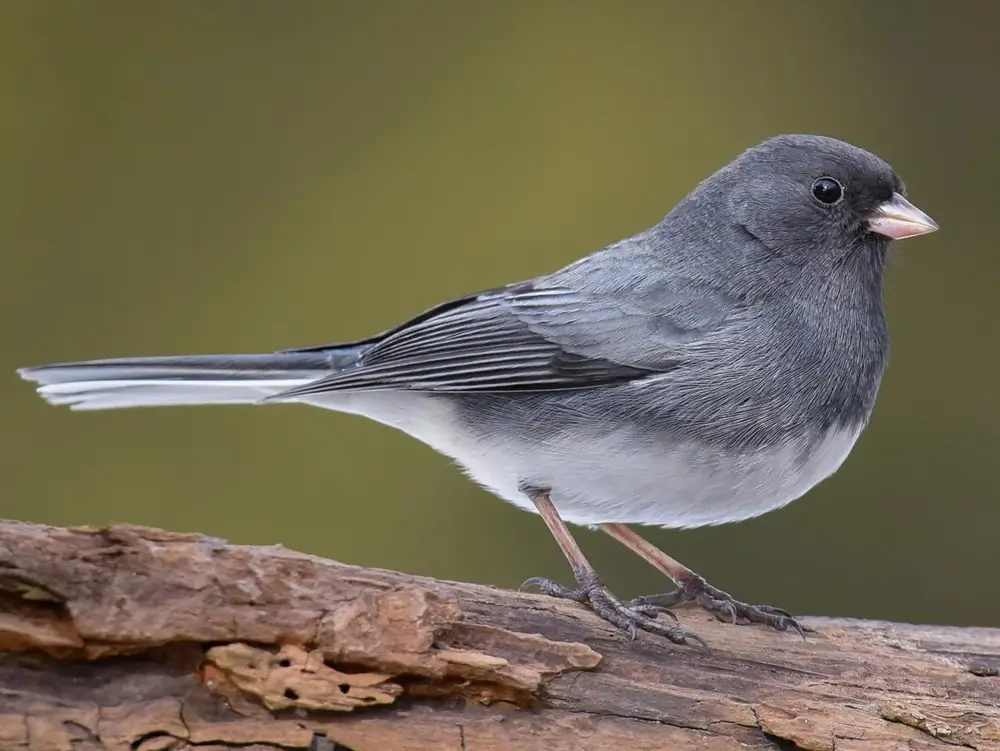
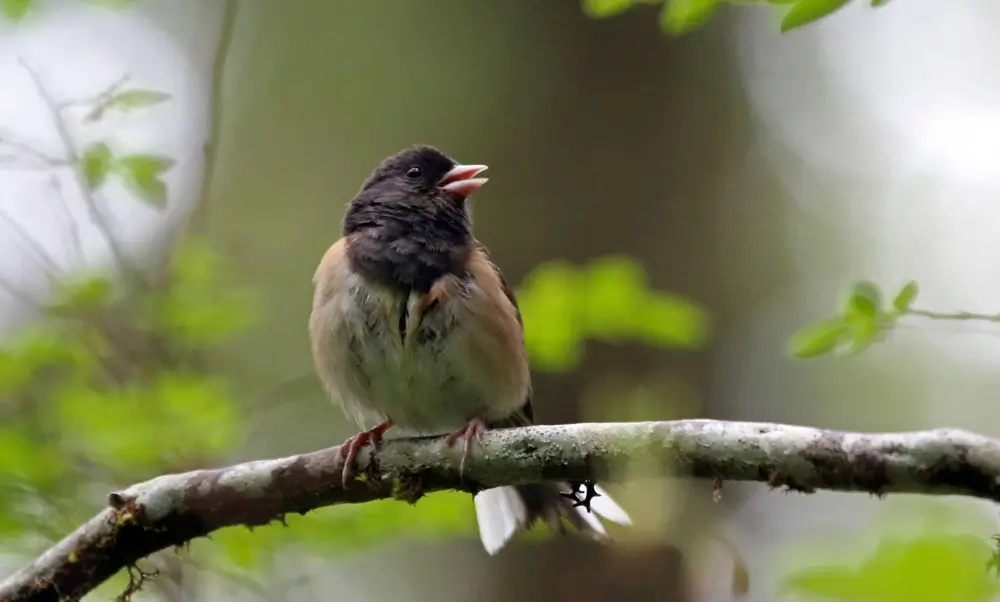
It has a small, round head, a sturdy conical bill, and dark eyes. The dark-eyed junco’s color pattern may vary a bit by region, but it is generally dark gray on its uppersides and breast with a white belly and outer tail.
Females are slightly browner than males and slightly smaller.
Habitat
The dark-eyed junco is found in the openings and edges of coniferous and mixed wood forests with dense ground cover. It tends to avoid forest interiors.
In the winter, it is found in fields, along roadsides, in parks, and in gardens.
Diet
The dark-eyed junco hops on the ground in search of seeds and insects. During the breeding season, they prefer insects. In winter and during migration, they can be found at bird feeders.
Life Cycle
The male dark-eyed junco reaches the breeding grounds first. He sings from the top of a tall tree to claim and defend his territory. The male dark-eyed junco courts a female by spreading his tail and strutting around her while chirping and singing.
The female builds an open-cup nest of twigs, weeds, and grass. The male helps by bringing nesting materials. The nest is usually on the ground, hidden by a fallen log, grass, weeds, or tree roots. The nest is made of bark, twigs, rootlets, and moss and is lined with grass and hair. Occasionally, the nest is built close to the ground in a tree or shrub.
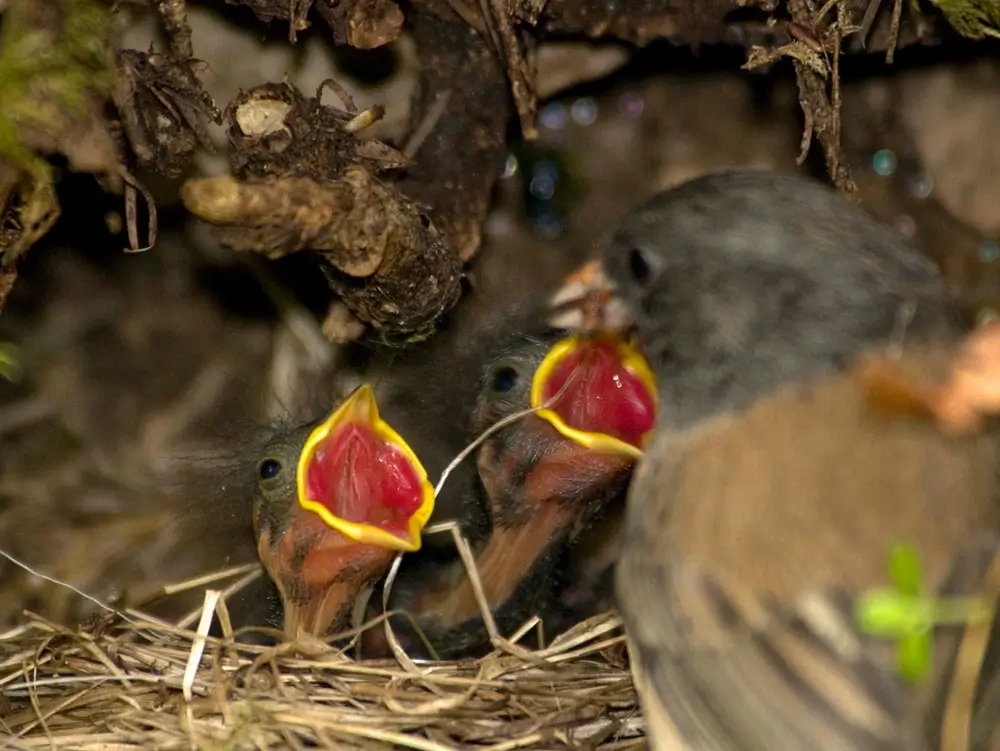
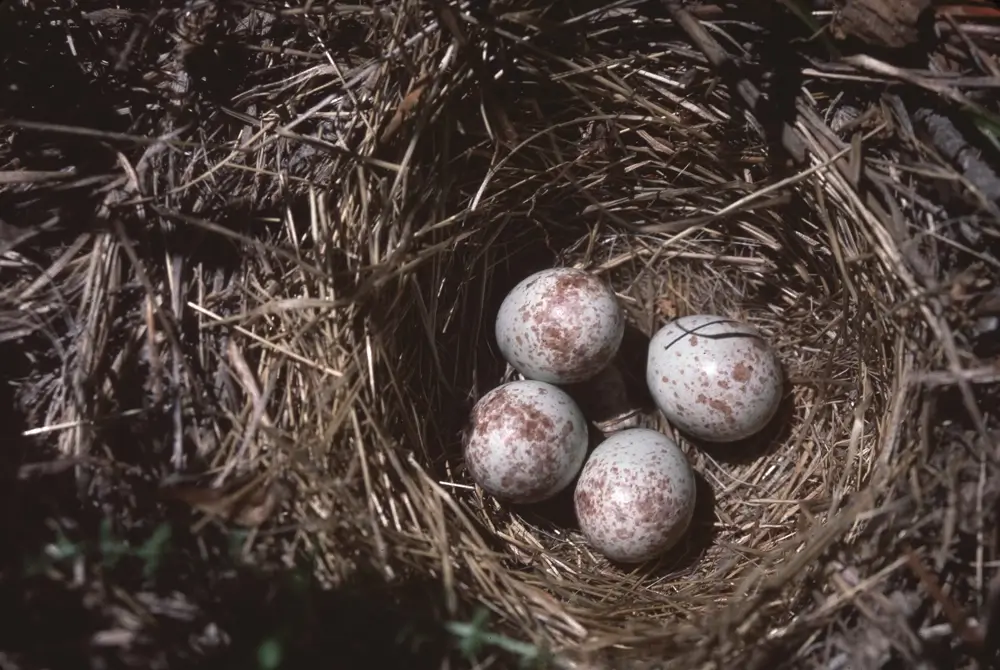
The female dark-eyed junco lays 3-5 pale greenish-blue eggs splotched with brown. Incubation takes about 12-13 days and is usually done by the female. The male protects the female while she is incubating the eggs. Both parents feed and care for the chicks. The chicks fledge at about 9-13 days old, but their parents continue to feed and care for them for another three weeks.
The dark-eyed junco has a lifespan of 3-11 years in the wild.
Behavior
The dark-eyed junco usually winters in the same place every year. They travel in small flocks of 10-25 birds.
Not all dark-eyed juncos migrate; some stay in the same location year-round.
Did You Know?
Support for NatureWorks is provided by:
The Dark-Eyed Junco in NH
The dark-eyed junco breeds in New Hampshire. It is sometimes called the snowbird because it is often seen in the winter.
They are found across the state, including in coniferous forests at high elevations in the White Mountains, where they can be the most abundant bird in the forest.
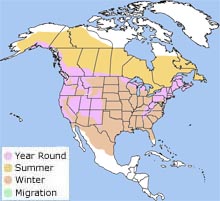
The dark-eyed junco breeds from Alaska east to Labrador and Newfoundland and south to California, Arizona, and Texas in the western United States and south through southern New England in the eastern United States.
It also breeds along the Great Lakes and in the Appalachian Mountains south to Georgia.
The dark-eyed junco winters south to Mexico and Florida.