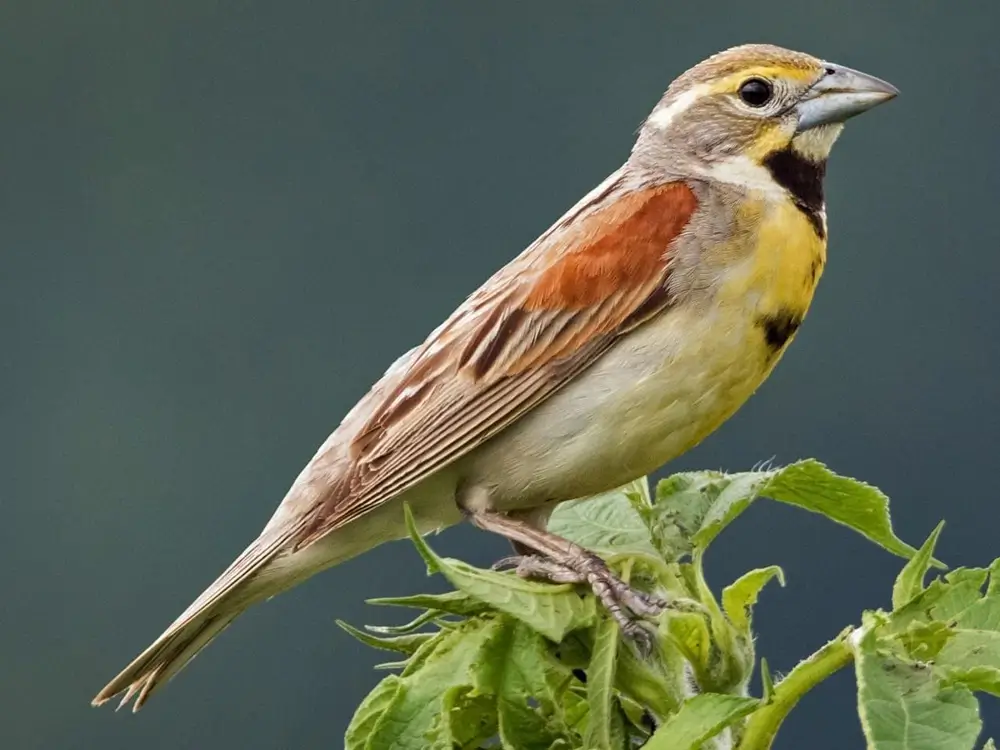
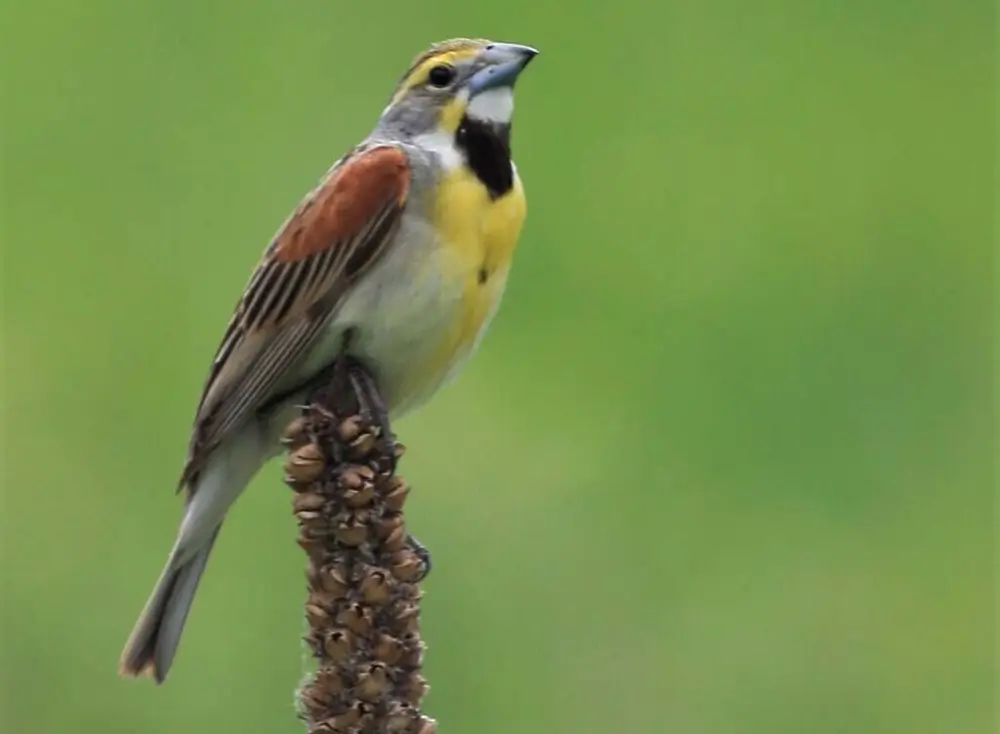
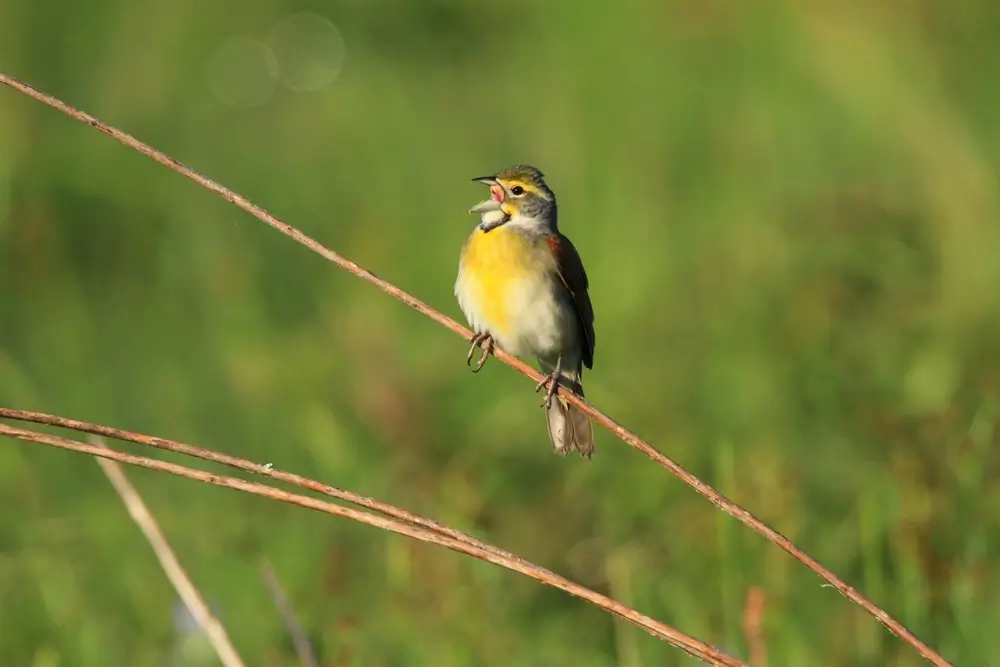
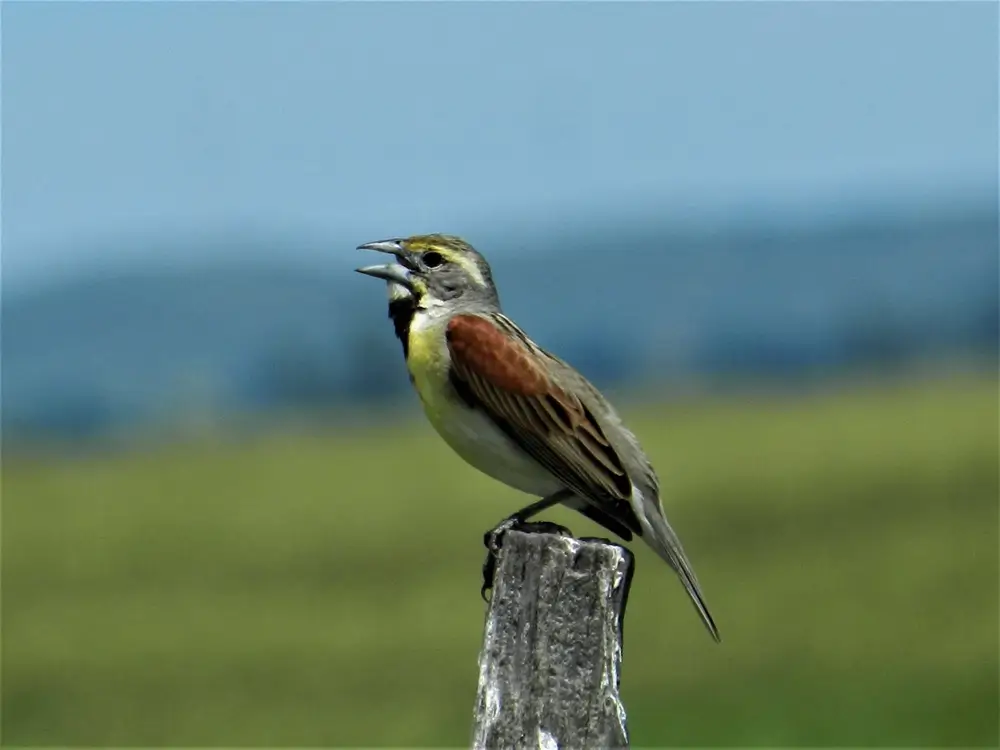
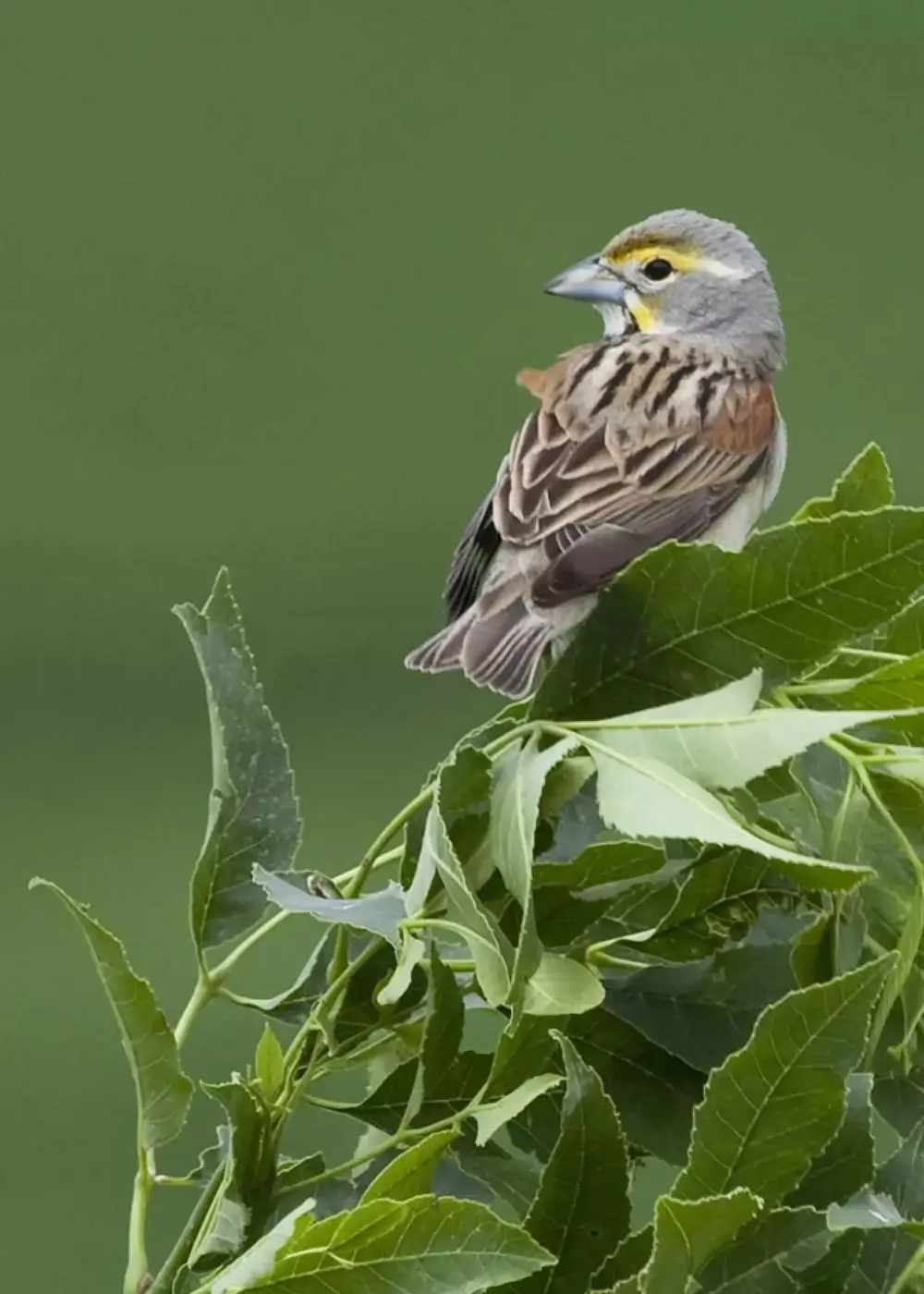
The dickcissel is 5.5-6.3 inches (14-16 cm) in length with a wingspan of 9.8-10.2 inches (24.8-26 cm).
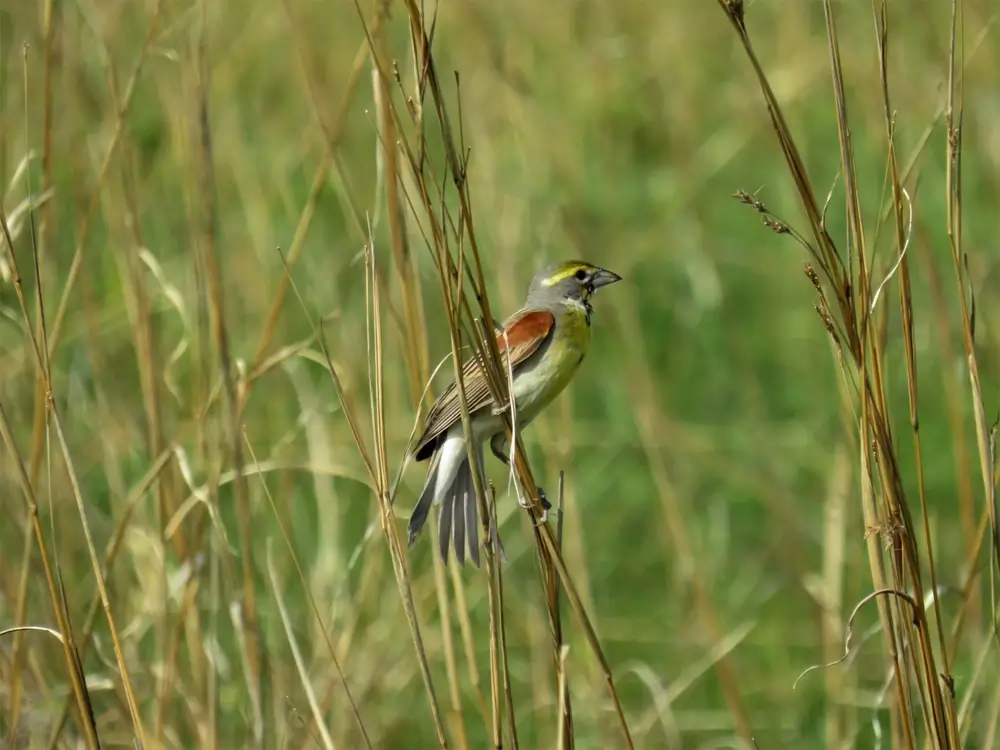
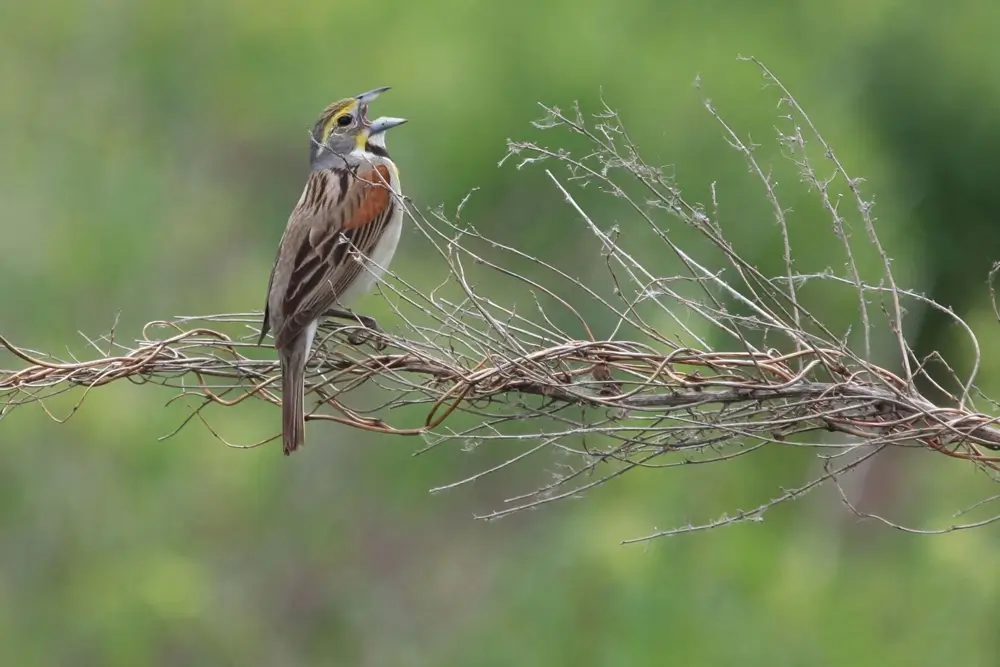
It has a short tail and a heavy, cone-shaped bill. The male has a gray head, back, and belly, and brown shoulders. He has a bright yellow breast with a black bib and yellow “eyebrows.”
The female is brown on her undersides and does not have a black bib or yellow breast or “eyebrows.”
Habitat
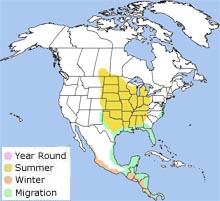
The dickcissel is found in grain fields and weedy areas.
Dickcissel populations may shift when food sources change.
Diet
The dickcissel forages on the ground for seeds and insects. In the winter, dickcissels feed in flocks and are considered pests by farmers.
Life Cycle
The female dickcissel lays 3-5 eggs in a nest in the grass or in a bush close to the ground. The eggs hatch in 13-15 days, and the chicks fledge when they are 9-10 days old.
The dickcissel has a lifespan of 4-5 years.
Behavior
The dickcissel was once a common bird in the farmlands of the eastern United States. There are still small, isolated populations found on the east coast.
Did You Know?
Support for NatureWorks Redesign is provided by:
The Dickcissel in NH
While the dickcissel does not breed or winter in New Hampshire, it occasionally shows up in the state as a vagrant.