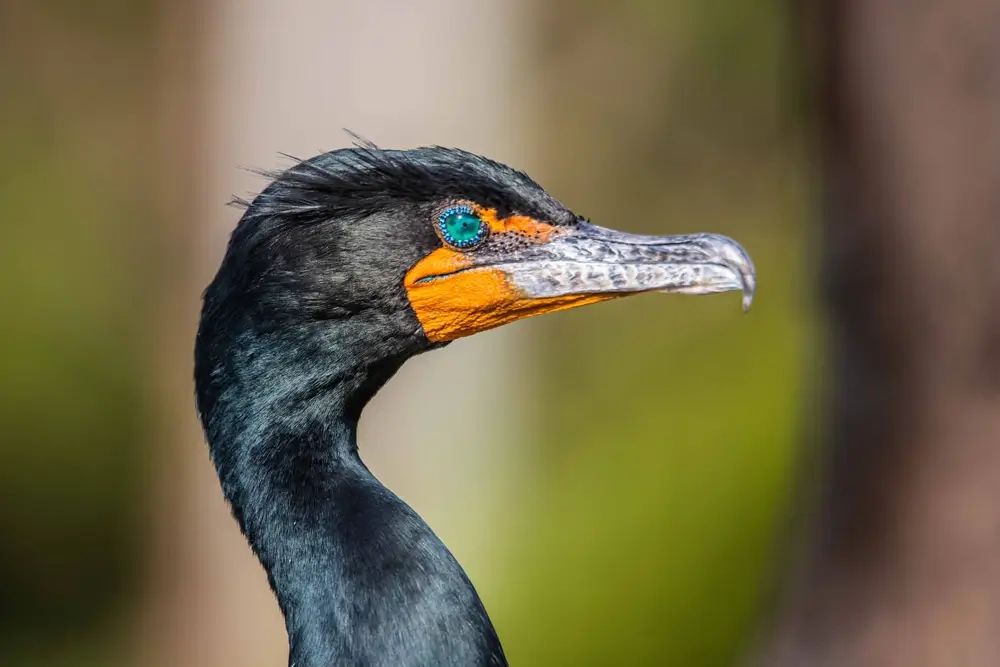
The double-crested cormorant is a little more than two feet (0.61 m) in length with a wingspan of about four feet (1.2 m).
It has dark brown to black feathers, a long hooked bill with an orange throat pouch, a long tail, and webbed black feet. Adults have tufts of feathers over their eyes.
Males and females look alike.
Habitat
The double-crested cormorant lives in brackish and freshwater habitats on lakes, rivers, swamps, bays, and coasts.
Diet
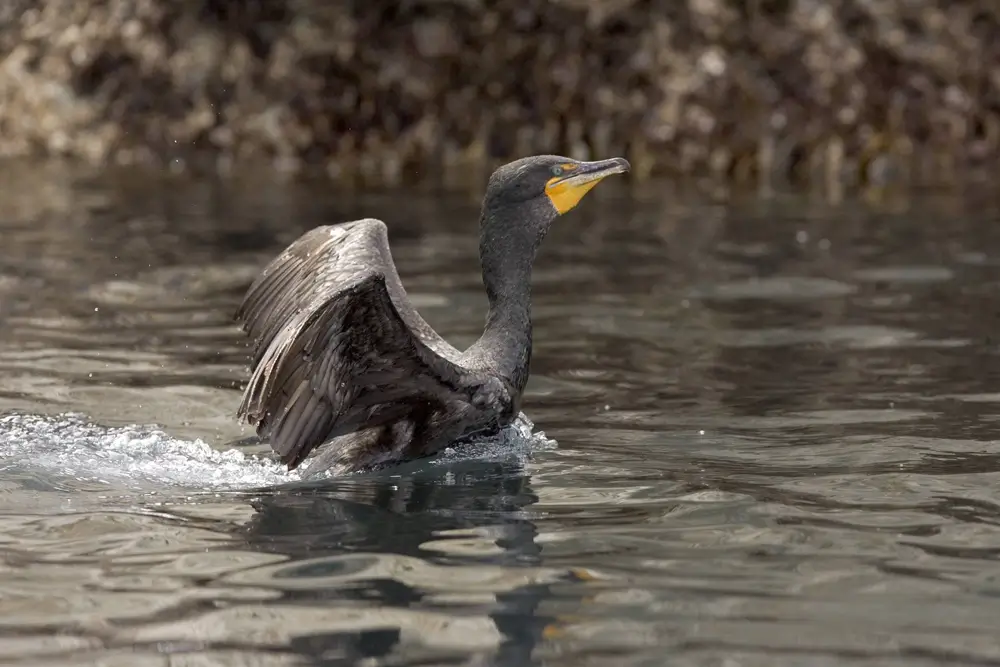
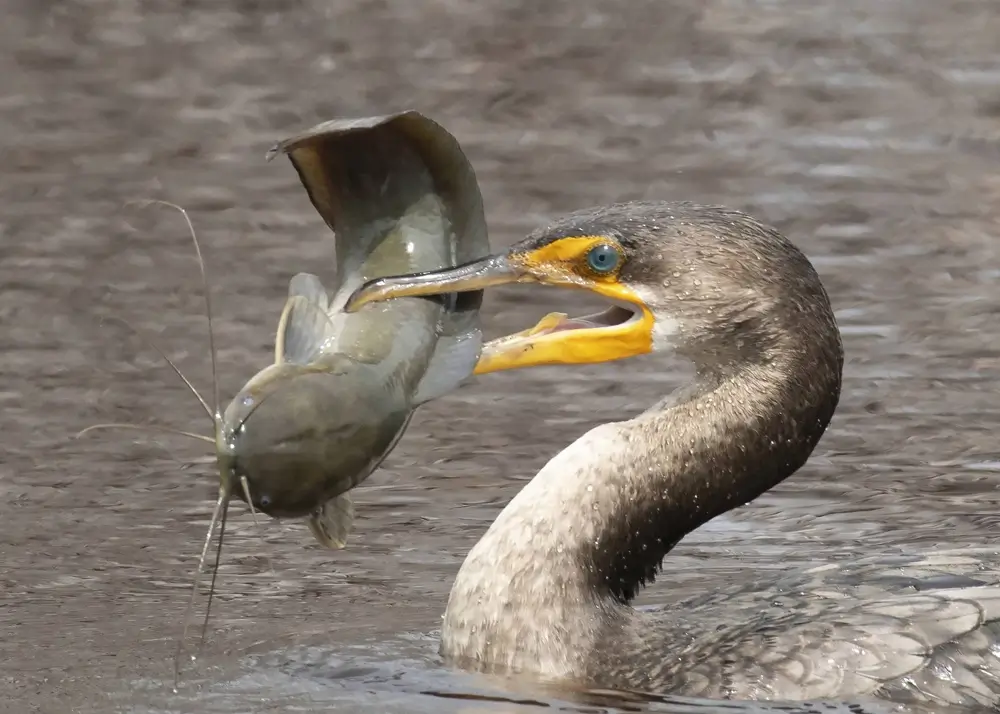
The double-crested cormorant dives from the surface of the water for fish and marine invertebrates.
After catching a fish, the cormorant surfaces, flips the fish in the air, and swallows it head-first.
Life Cycle
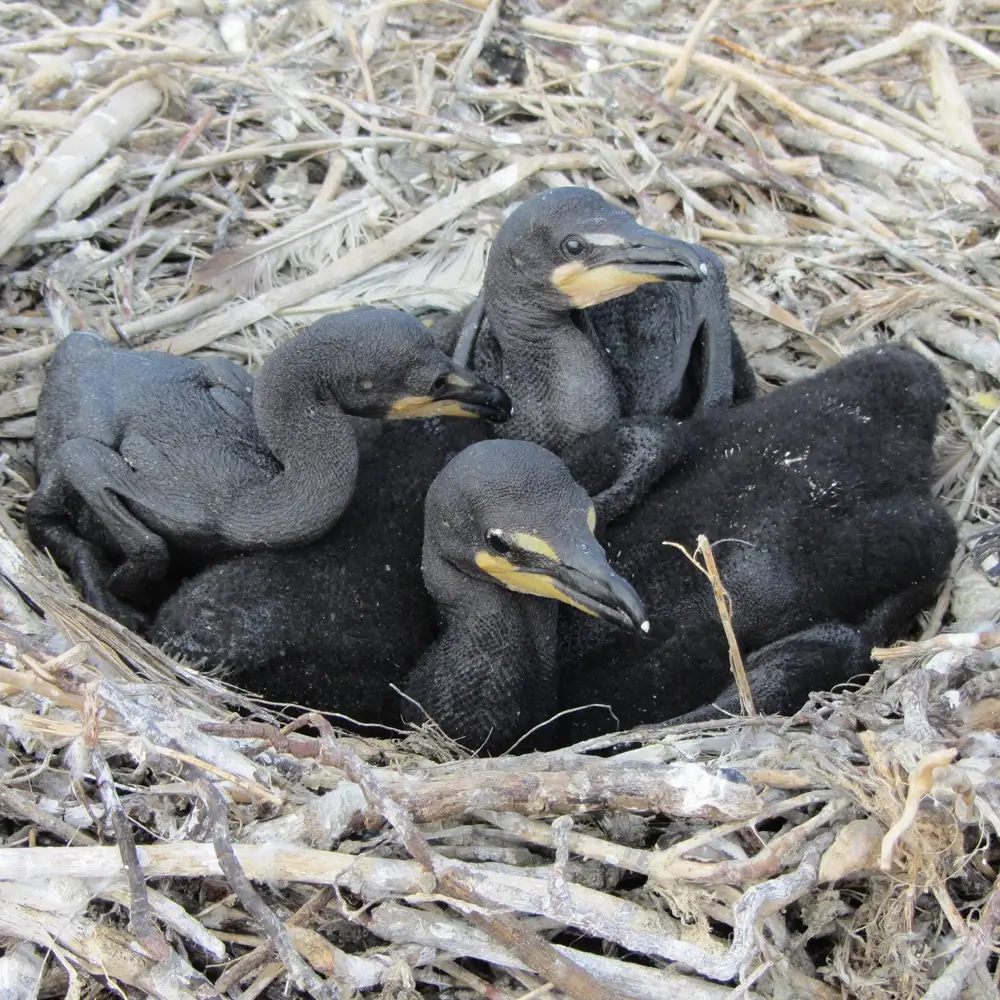
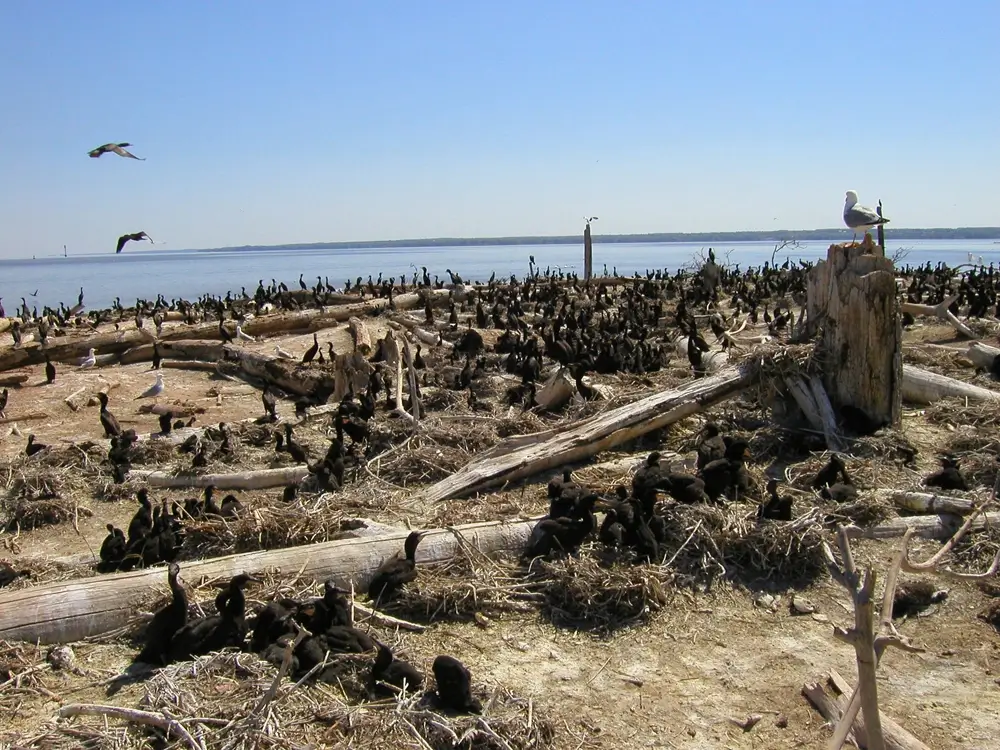
The double-crested cormorant nests in colonies. Both the male and female build a nest of sticks, twigs, and seaweed. Nests are built in trees and shrubs, and on the ground of rocky cliffs and islands.
The female lays 3-5 eggs. Both parents incubate the eggs for about a month. Both parents also feed and take care of the chicks. The chicks fledge in 35-40 days.
The double-crested cormorant has a lifespan of 6-8 years in the wild.
Behavior
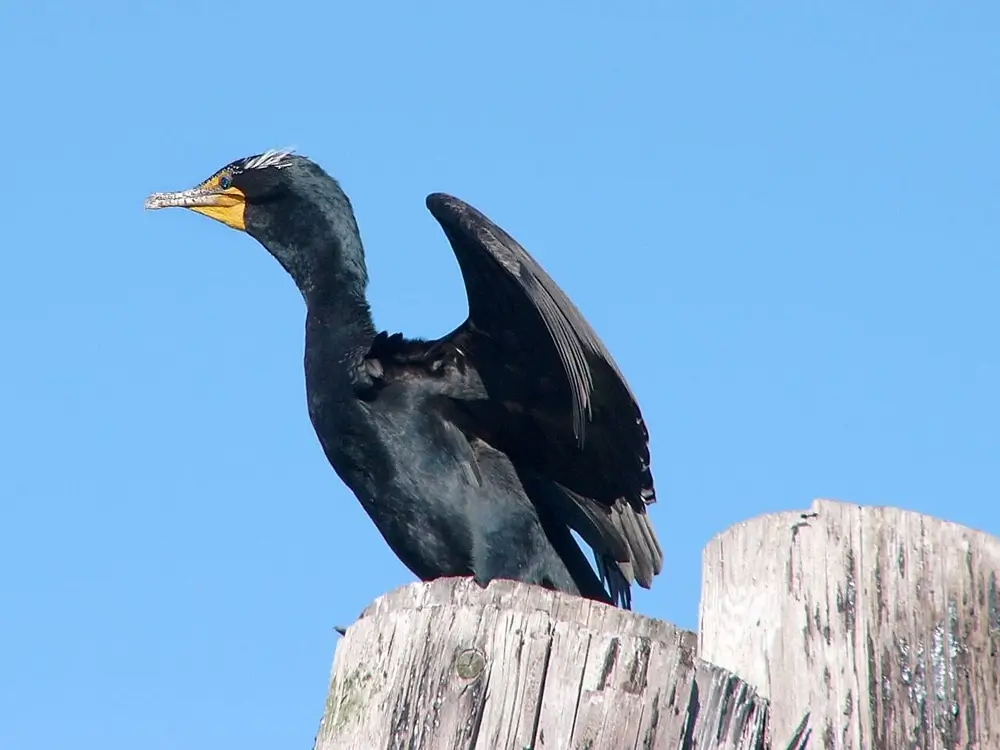
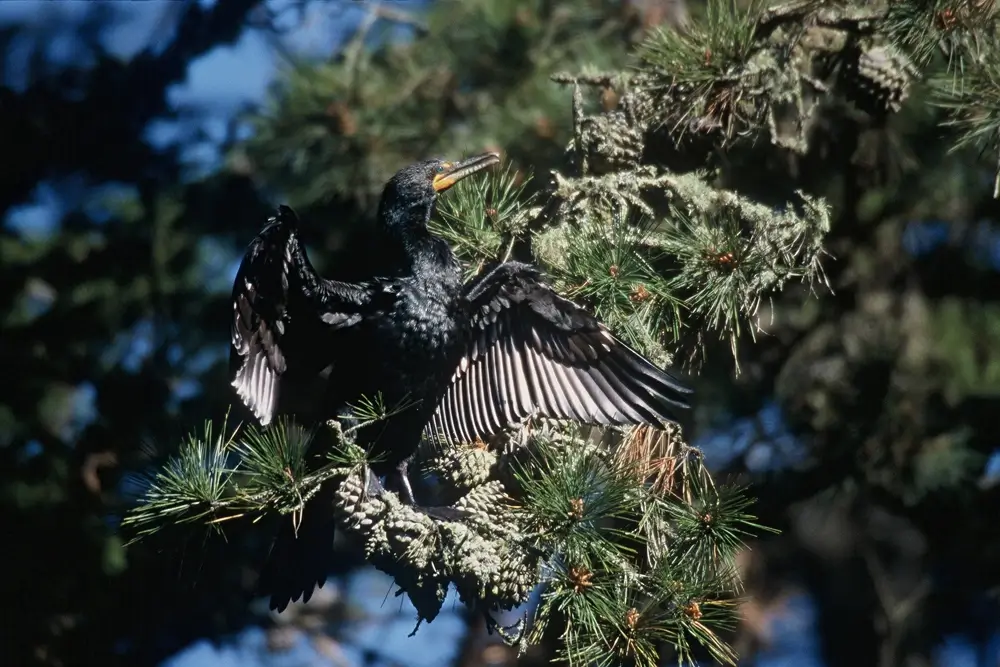
The double-crested cormorant doesn’t have well-developed oil glands, and its feathers don’t have very good waterproofing. It often dries its feathers by perching on a pole, rock, or tree limb and stretching its wings out.
Did You Know?
Support for NatureWorks is provided by:
The Double-crested Cormorant in NH
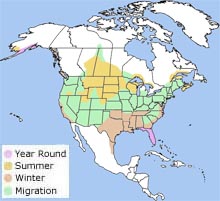
The only nesting colony of double-crested cormorants in New Hampshire is at the Isles of Shoals, although immature birds and non-breeding birds can be seen across the state.
You can sometimes spot them drying out their wings on exposed rocks in the waters off the New Hampshire coast.