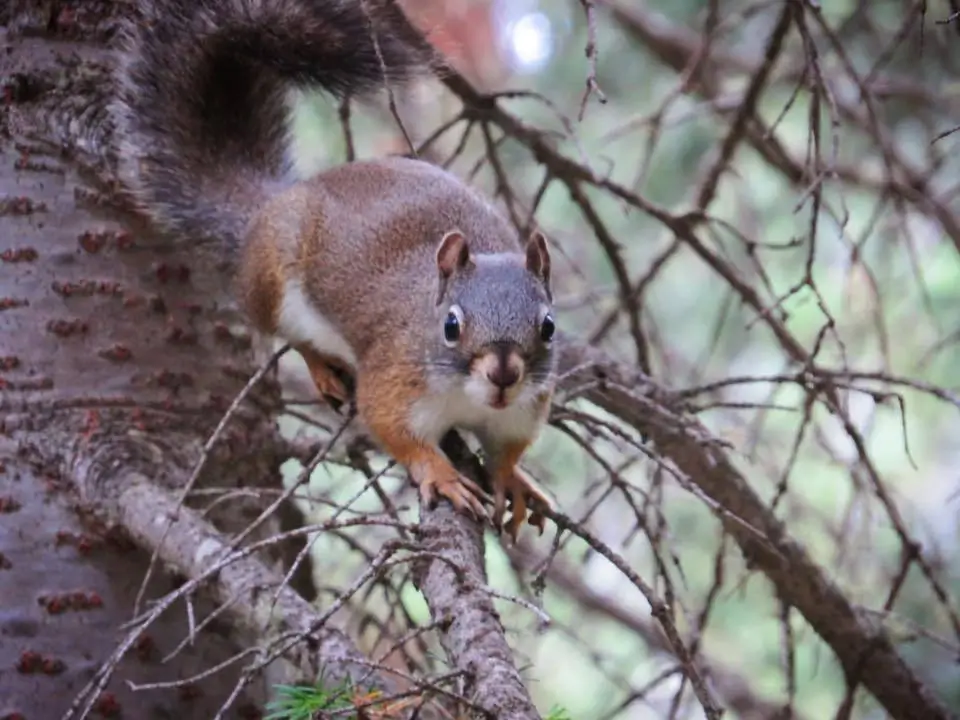
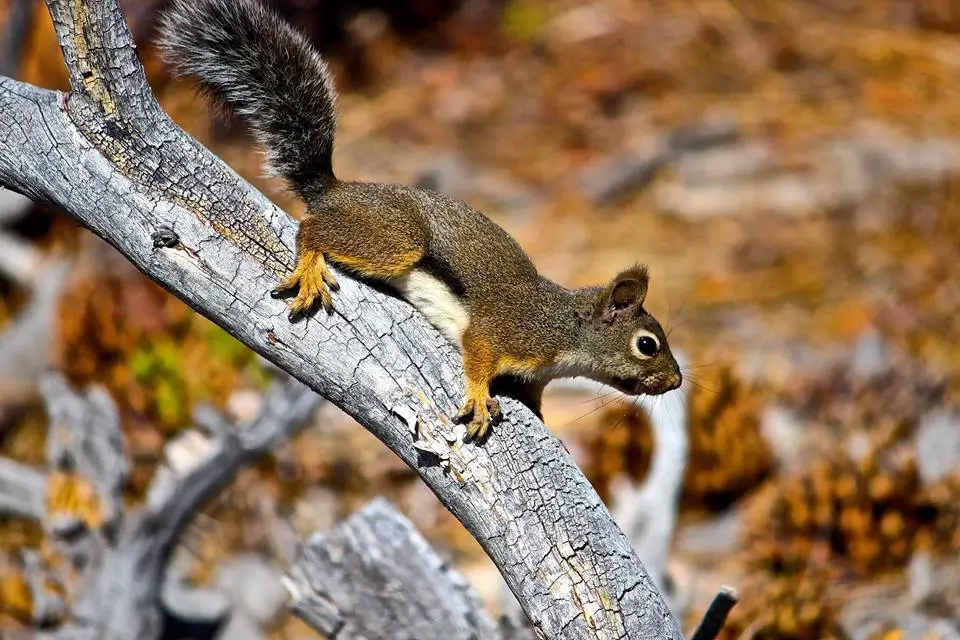
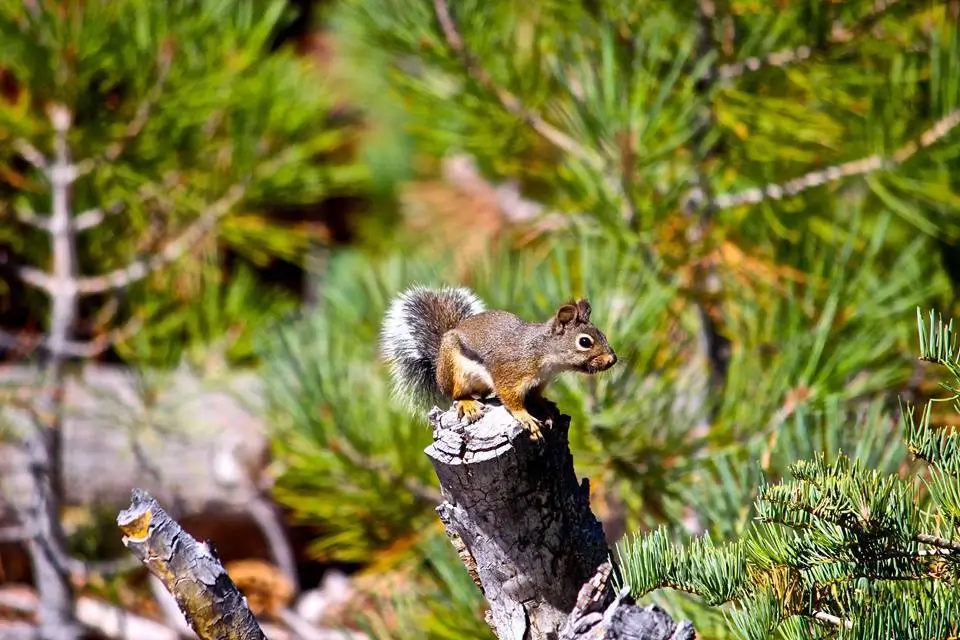
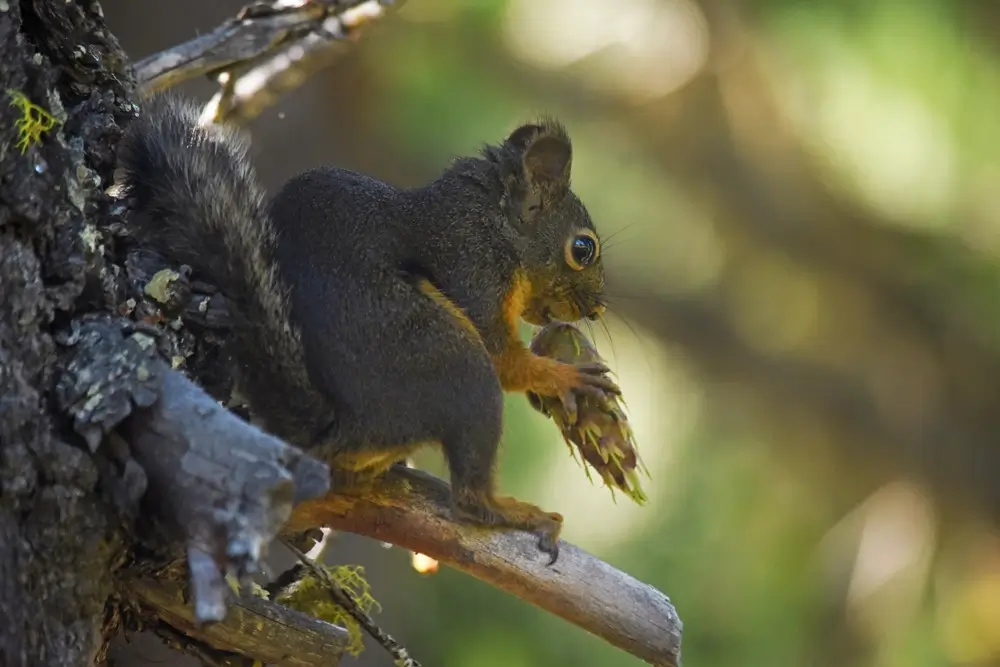
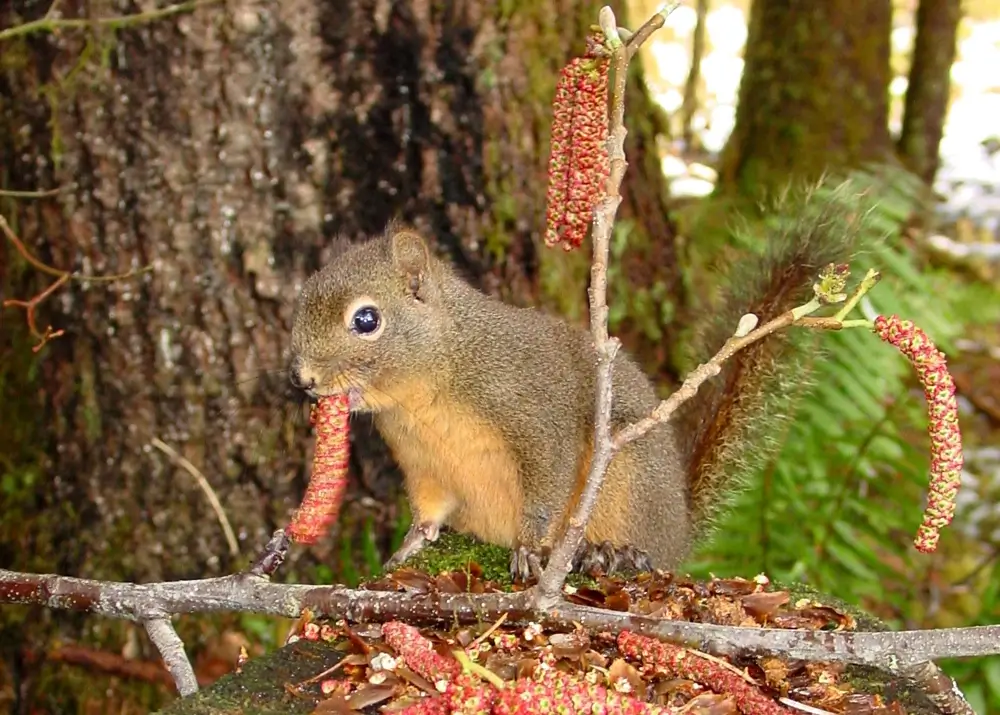
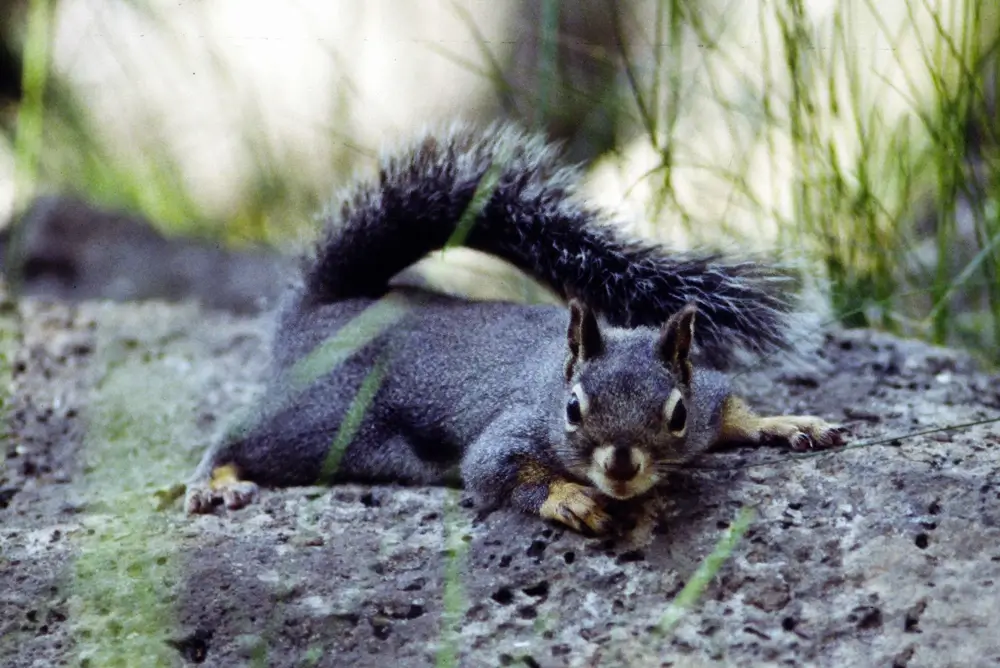
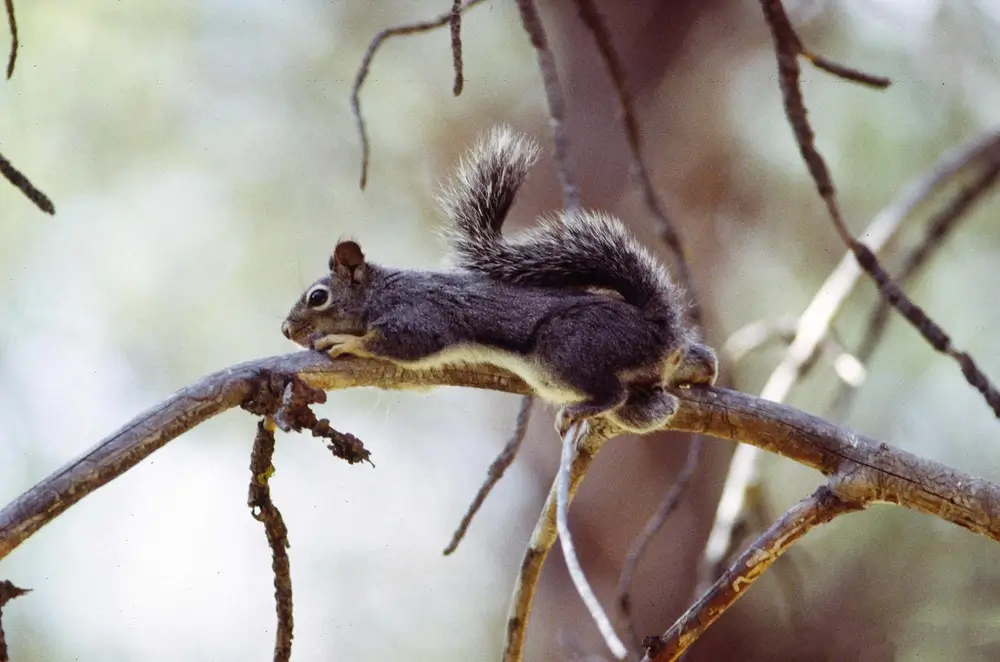
The Douglas squirrel is reddish-brown on top and white or orangish-white on its undersides. In the winter, its fur may be a little grayer, and it has small ear tufts. It has excellent eyesight and hearing.
It is 10-14 inches (25-35 cm) in length, including its bushy tail, which is 5-7 inches (13-18 cm) long. It weighs 5.3-10.6 ounces (150-300 g).
Habitat
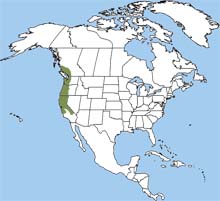
The Douglas squirrel lives in coniferous forests.
Diet
The Douglas squirrel eats pine seeds. In the fall, it cuts green pine cones from tree limbs and buries them in special piles called middens. The Douglas squirrel also eats acorns, berries, mushrooms, and fruits.
Life Cycle
Mating season for the Douglas squirrel is between late February and April. A little over a month after mating, the female gives birth to four to six babies. Baby Douglas squirrels are called kits or kittens.
The kits are born with their eyes closed and are hairless. Their hair grows in a little over two weeks, and their eyes open in about a month. They are weaned after eight weeks. The kits may stay with their mother for most of their first year.
The Douglas squirrel has a lifespan of 5-6 years in the wild.
Behavior
The Douglas squirrel is very active during the day. It runs in the trees and on the ground. When the weather is bad, it stays in its nest. The Douglas squirrel builds a summer nest of moss, lichen, and pieces of bark and twigs. In the winter, it makes its nest in a hole in a tree. The Douglas squirrel is very territorial and very vocal.
Did You Know?
The Douglas squirrel is also known as the pine squirrel and the chickaree.