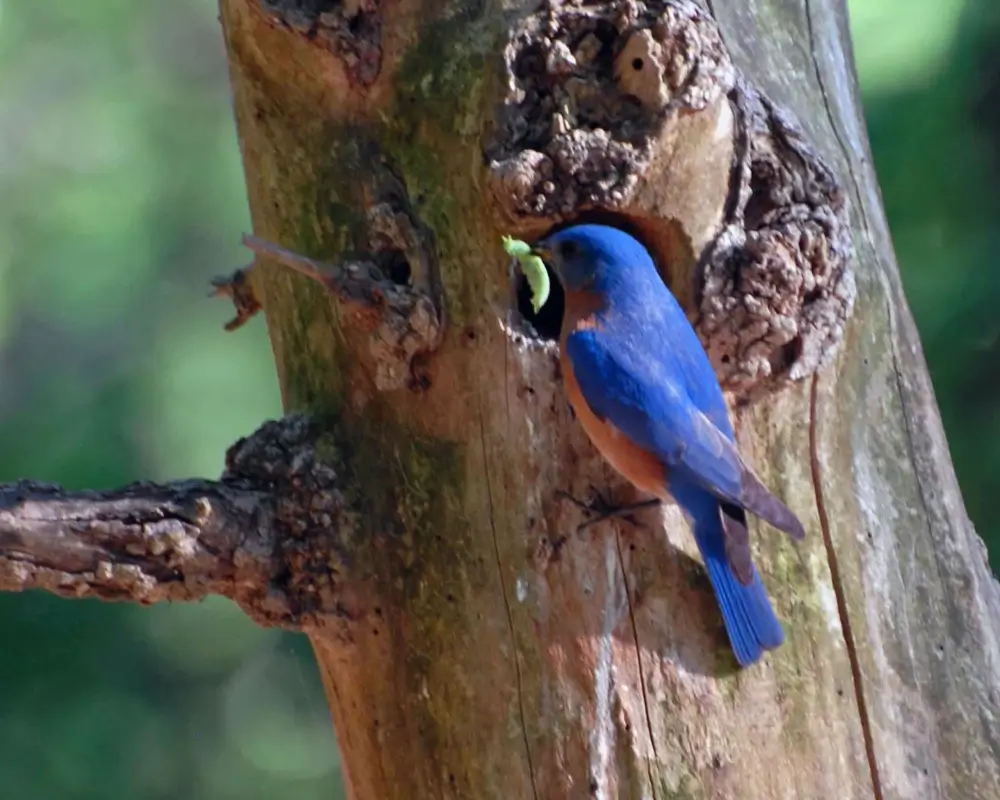
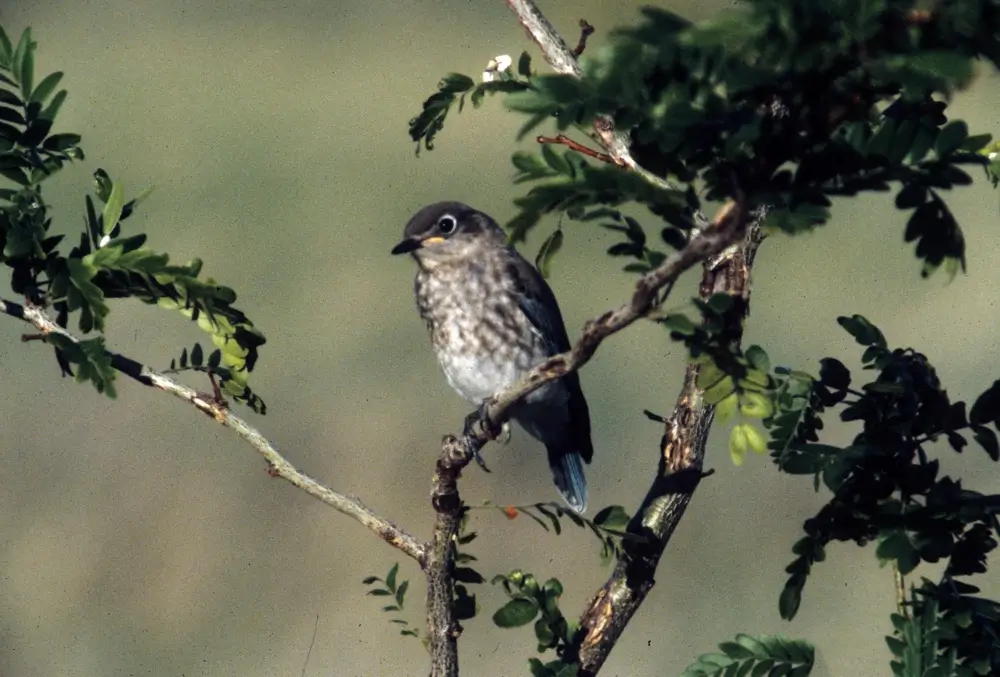
The eastern bluebird is a bit smaller than an American robin. It is 6.3-8.3 inches (16-21 cm) in length with a wingspan of 9.8-12.6 inches (25-32 cm).
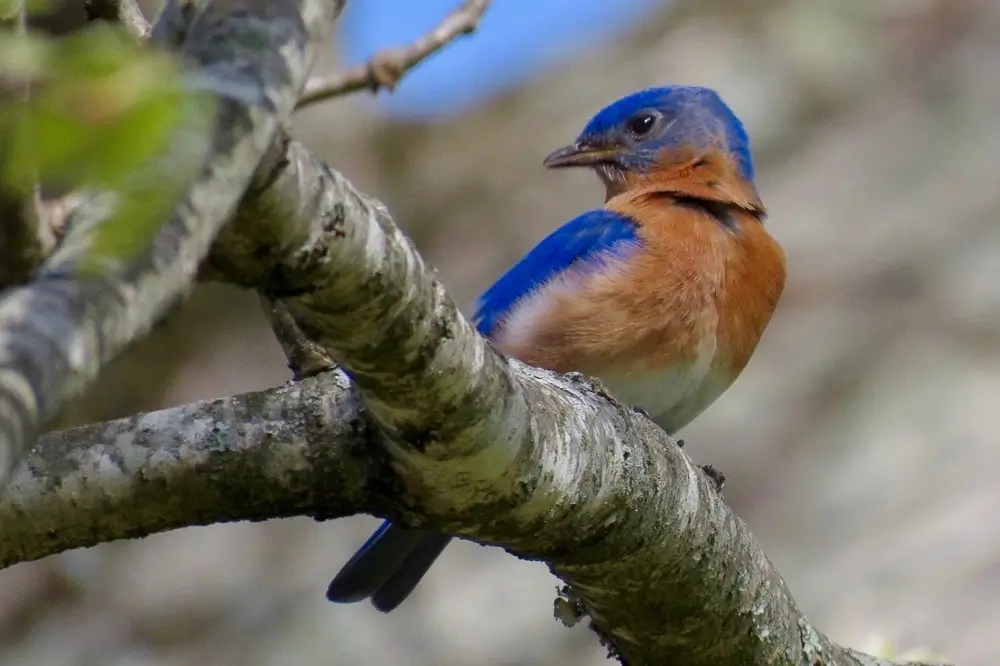
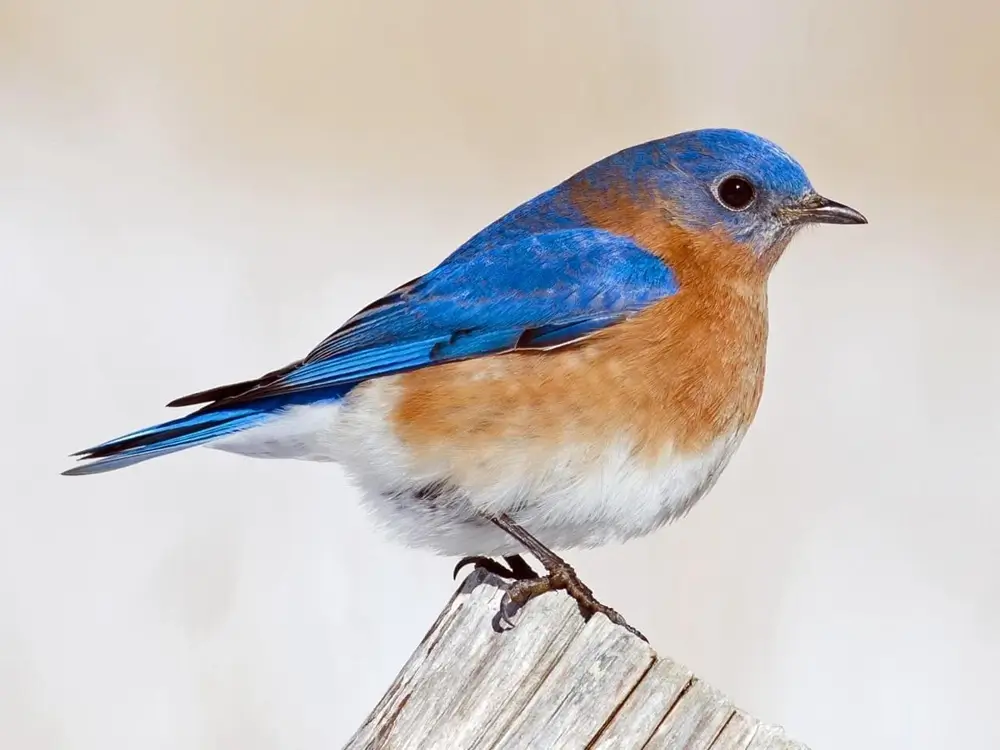
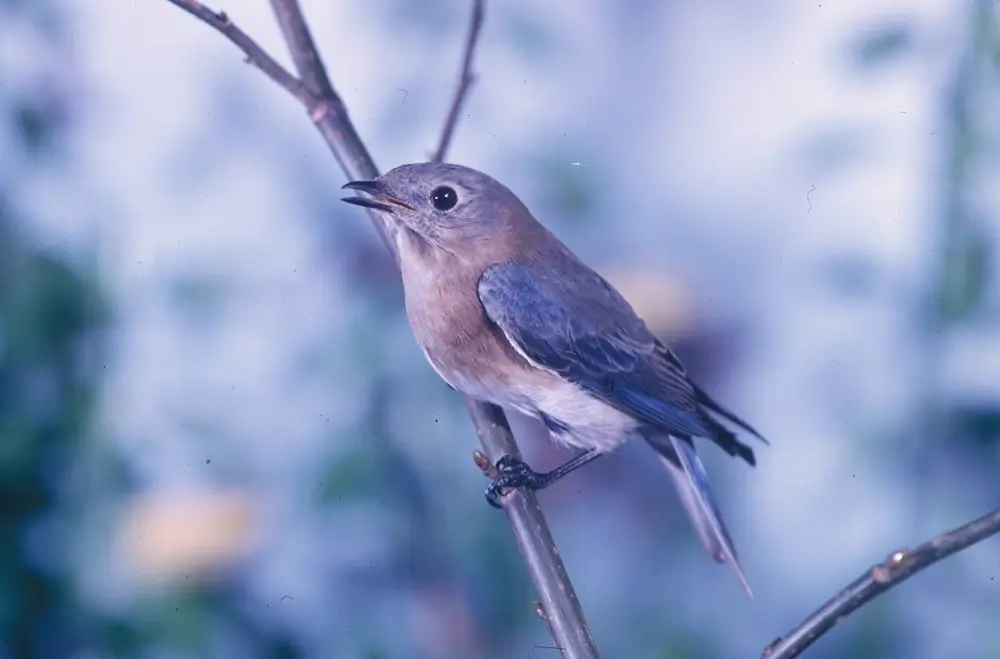
The male has a bright blue back with a rusty-red and white belly. The female eastern bluebird is gray and brown with blue areas on her wings and tail.
Habitat
The eastern bluebird is found in open land with scattered trees and other high spots for perching, nesting, and hunting. It is often found in parks, gardens, fields, and other open areas.
Diet
The eastern bluebird eats insects, including caterpillars, beetles, crickets, grasshoppers, and spiders. The bluebird swoops down from its perch to catch insects on the ground.
In the fall and winter, it eats fruit from sumac, blueberry, black cherry, tupelo, wild holly, and other fruiting plants.
The eastern bluebird seems to prefer running water rather than standing water.
Life Cycle
Breeding occurs in the spring and summer. The eastern bluebird builds its nest in a tree cavity or a man-made nest box. The female builds the nest by weaving together grasses and pine needles and lines the nest with fine grasses and soft, downy material. She may use this nest several times.
The female lays 3-7 light blue eggs, which she incubates for 13-17 days. Young chicks leave the nest 15-20 days after hatching. Both the male and female feed insects to their chicks.
The eastern bluebird has a lifespan of 6-10 years in the wild.
Behavior
The eastern bluebird has been recorded flying at speeds of 17 miles per hour (17.4 kph).
The eastern bluebird’s habitat has been threatened by land development, which has reduced the amount of available habitat. Also, bird species of the same size, such as the house sparrow, compete with the eastern bluebird for nesting sites.
Nesting boxes have been built and installed to help support their population.
Did You Know?
Support for NatureWorks is provided by:
The Eastern Bluebird in NH
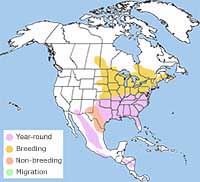
The eastern bluebird breeds in New Hampshire and can be found across the state. In the winter, they are found south of the White Mountains.
The introduction of bluebird boxes has helped the population grow.
The eastern bluebird has a very large range. It is found east of the Rocky Mountains, from Southern Canada to the Gulf Coast and into Mexico and Central America.