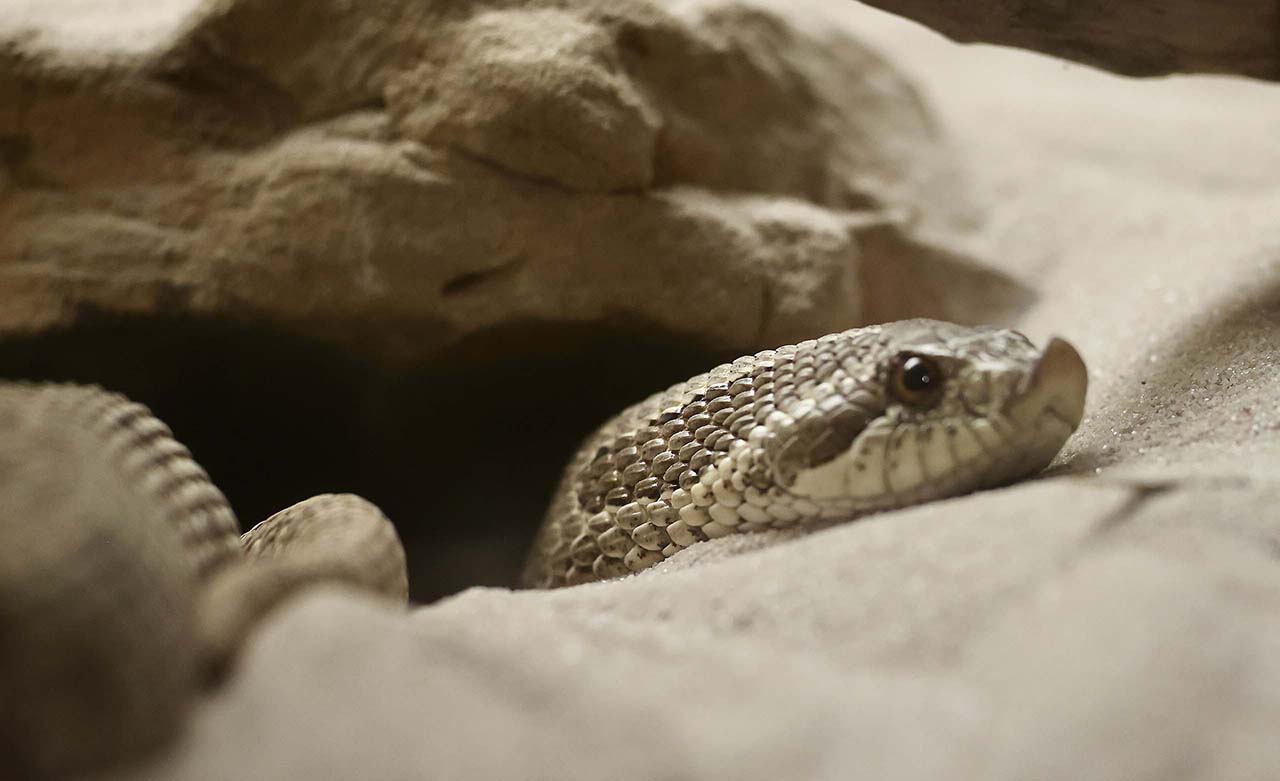
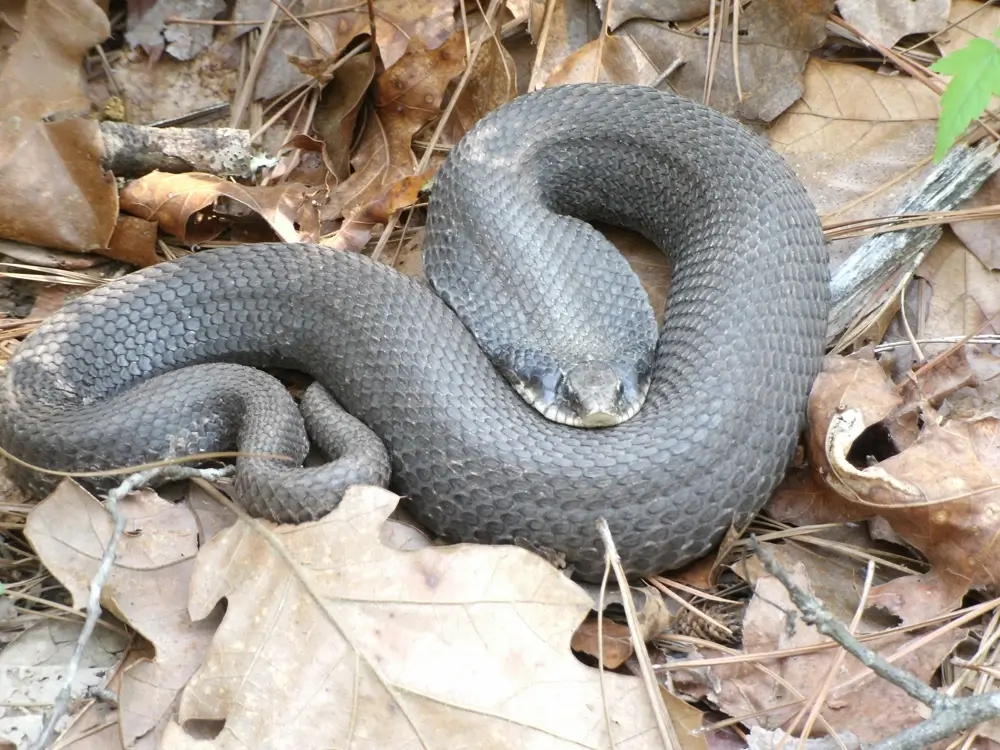
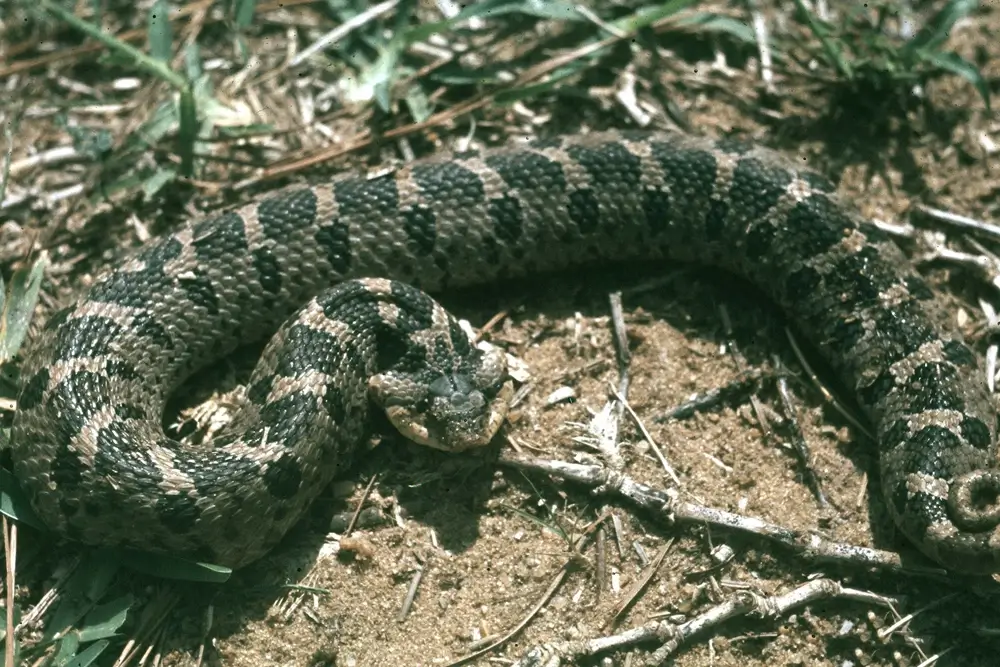
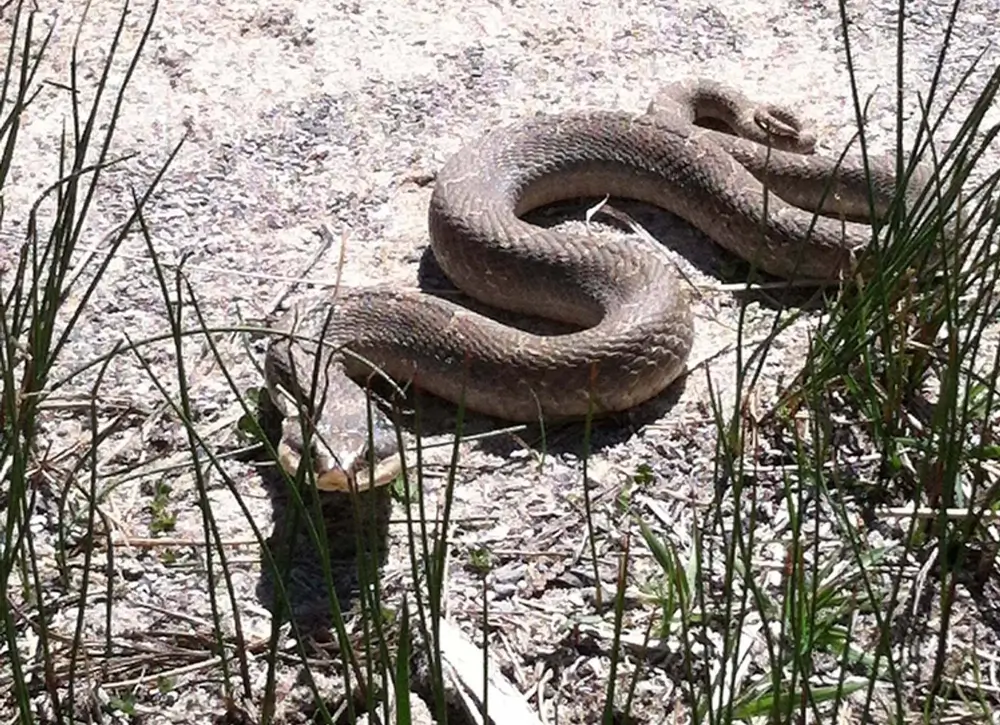
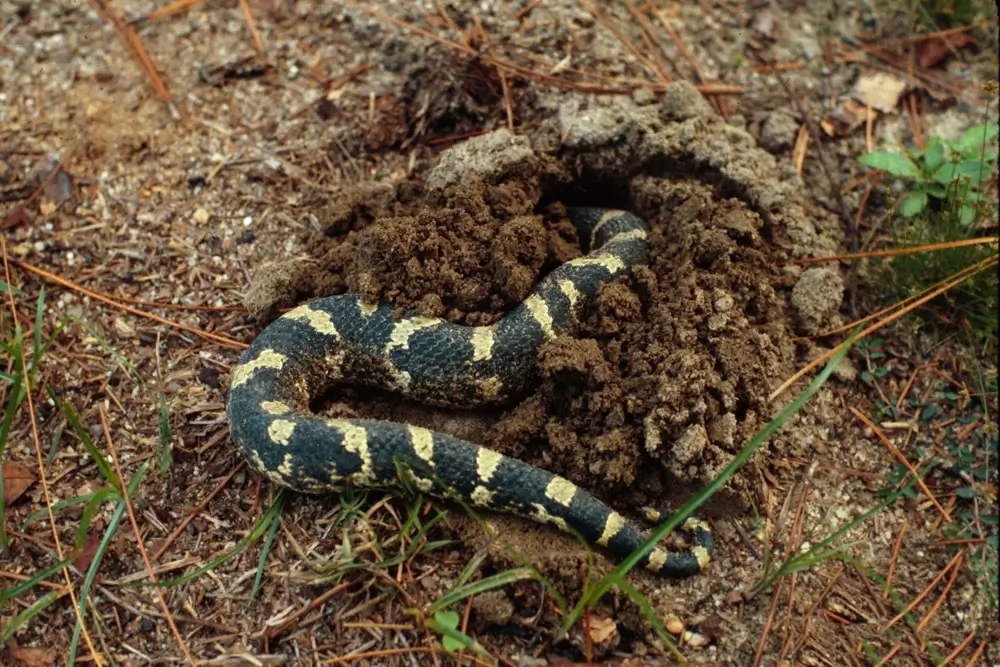
The eastern hognose snake is 20-30 inches (51-76 cm) in length. It has a thick body and a broad, triangle-shaped head. It gets its name from its upturned snout. It uses its snout to dig in the soil and leaf litter.
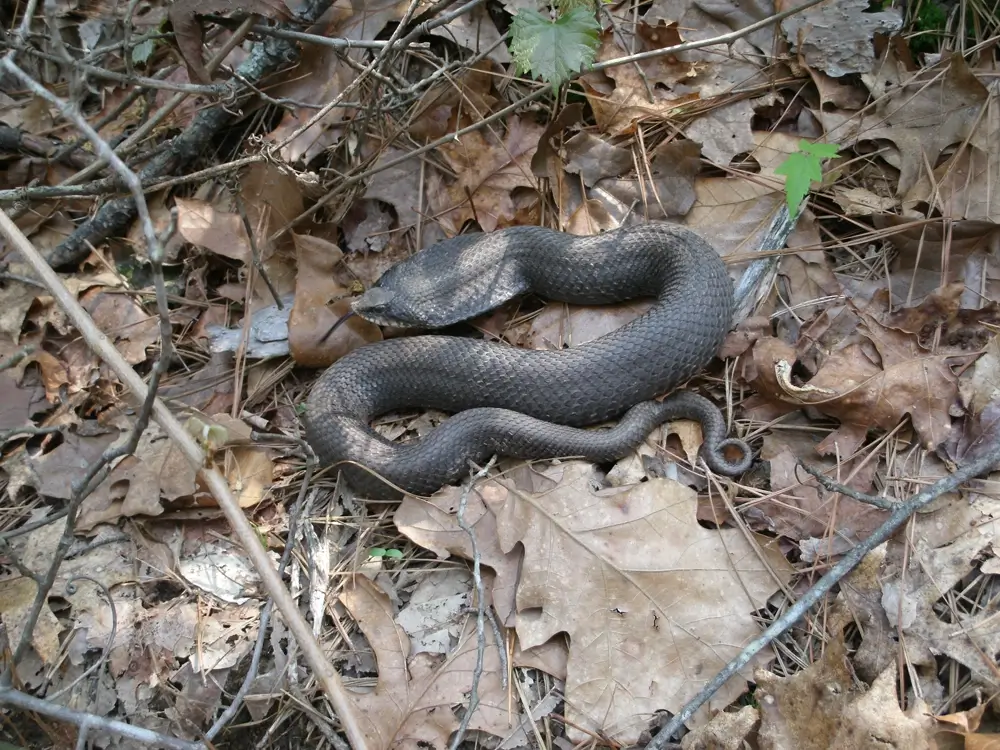
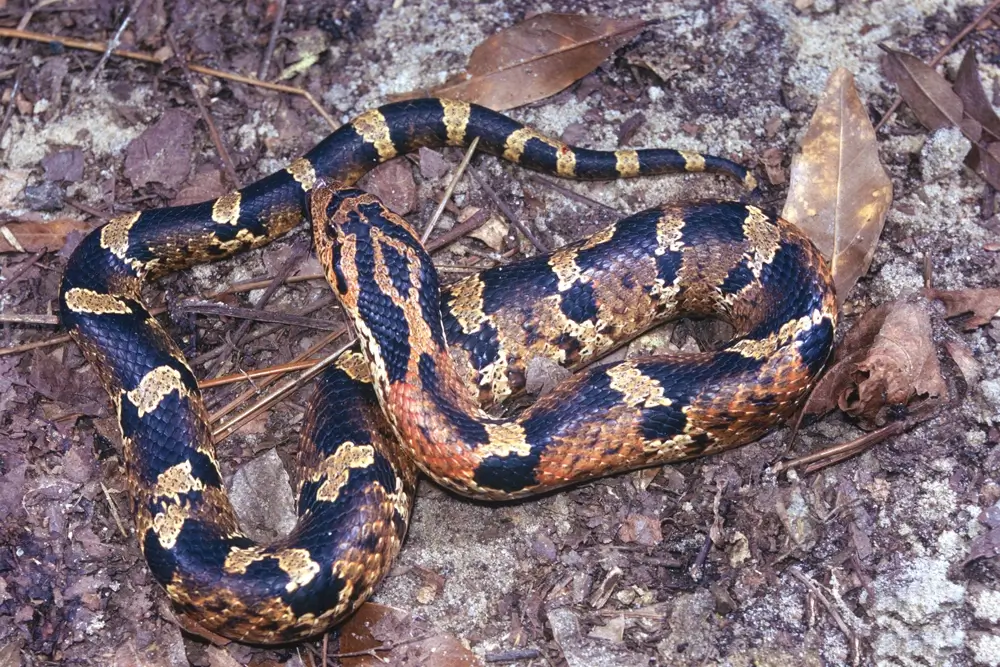
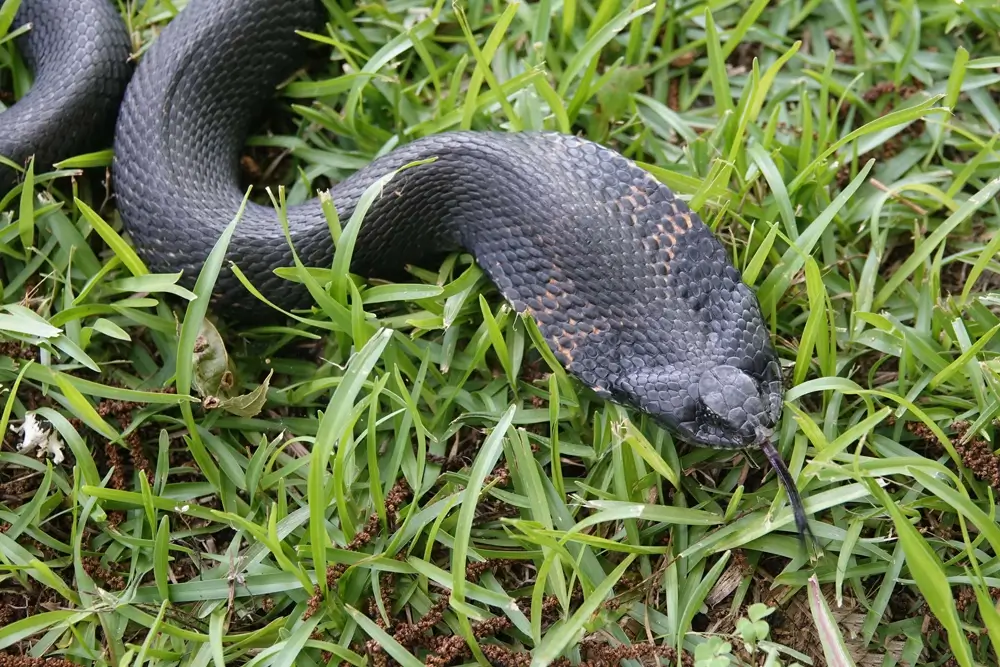
It can be yellow, brown, gray, black, olive, or even orange. It often has large rectangular-shaped spots and blotches that run down its back and sides, but it can be a solid black or gray in color. It usually has a gray, cream, or yellow belly. The underside of its tail is lighter than its belly.
It has large rear fangs on the back of its upper jaw that produce a mild toxin that is not harmful to humans. Females are larger than males.
Habitat
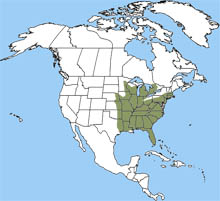
The eastern hognose snake is found in woodlands with sandy soil, fields, farmland, and coastal areas. It is active during the day.
Diet
The eastern hognose snake’s favorite prey is toads, but it also preys on frogs, salamanders, small mammals, birds, and invertebrates. The eastern hognose snake uses its nose to root around for toads in their burrows.
When a toad is disturbed by a hognose snake, it will often puff itself up like a balloon. The eastern hognose snake will use its long rear fangs to pop the toad so it can swallow it.
Life Cycle
Eastern hognose snakes first mate when they are around two years old. They mate in the spring. The female lays 15-25 eggs in a depression in sandy soil or under a rock or log. The eggs hatch in 1 to 2 months.
In the winter, eastern hognose snakes will dig a burrow to hibernate in or use an abandoned fox, skunk, or woodchuck den. Predators of the eastern hognose snake include owls, hawks, skunks, opossums, and other snakes.
The eastern hognose snake has an average lifespan of 5 to 6 years in the wild.
Behavior
The eastern hognose snake is sometimes known as the puff adder. When it is threatened, it raises its head and puffs out and flattens the skin around its neck, like a cobra. It hisses loudly and lunges toward the threat.
It is all a show. It lunges with its mouth closed. If that doesn’t work, it rolls over onto its back, opens its mouth, hangs its tongue out of the side of its mouth, and plays dead. It may play dead for several minutes before carefully turning over and looking around to see if it is safe. If it is rolled back onto its belly when it is playing dead, it will roll back onto its back.
Did You Know?
Support for NatureWorks is provided by:
The Eastern Hognose Snake in NH
The eastern hognose snake is found in southern New Hampshire.