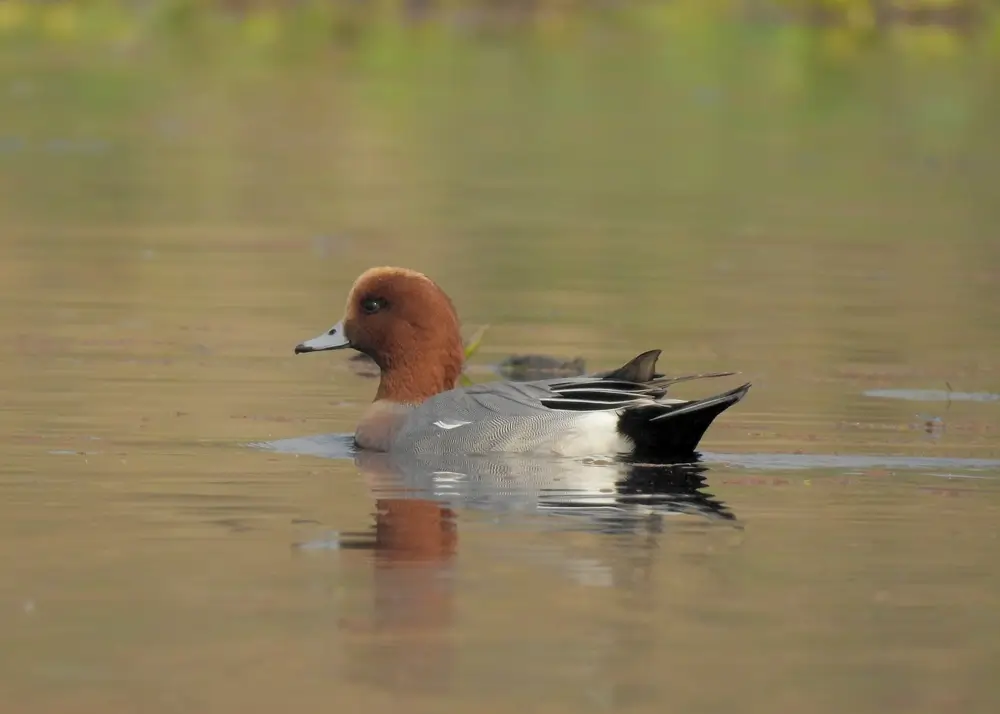
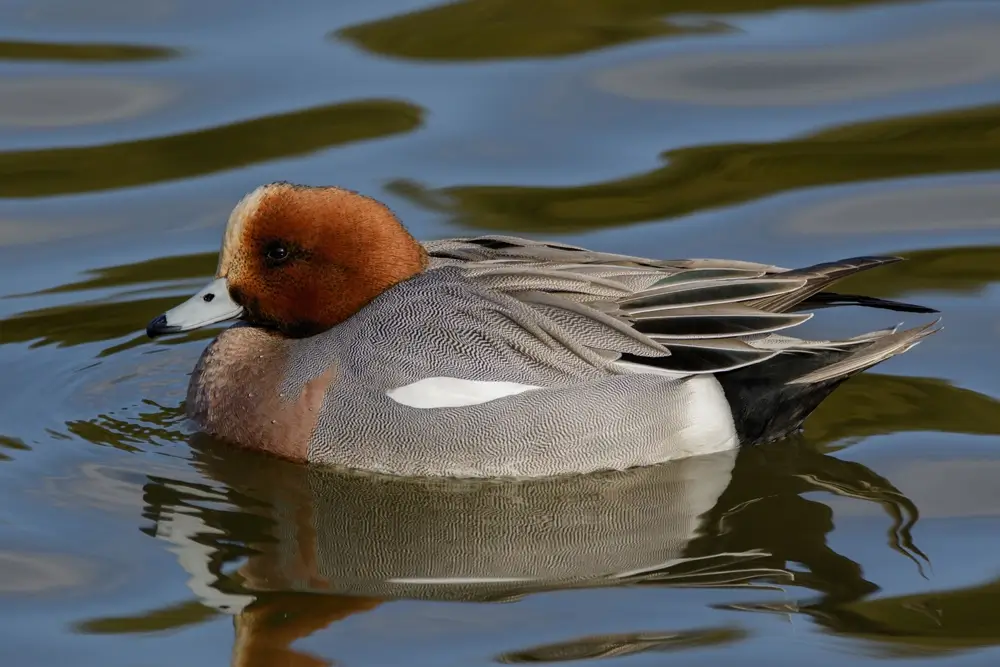
The Eurasian wigeon is a dabbling duck that is 17-20 inches (42-52 cm) in length with a wingspan of 28-31 inches (71-80 cm).
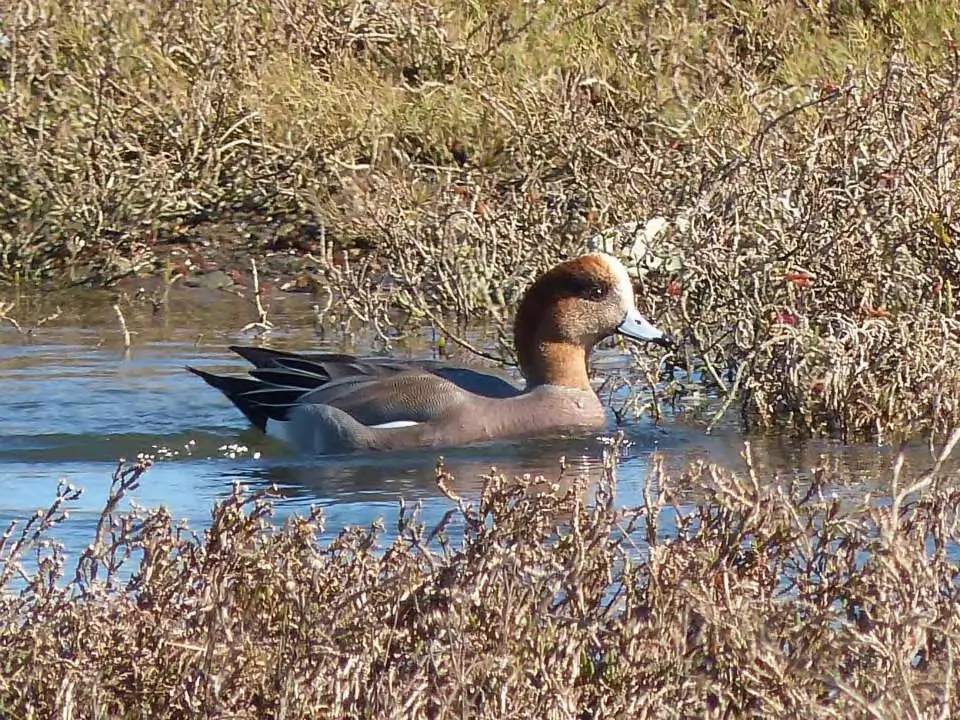
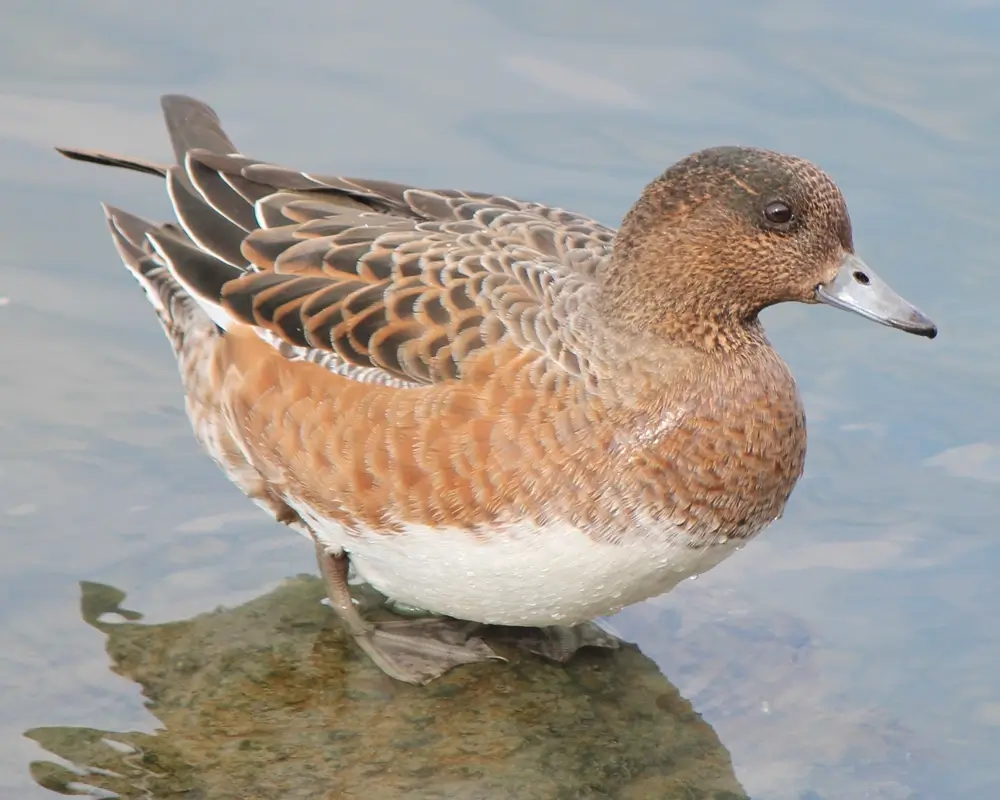
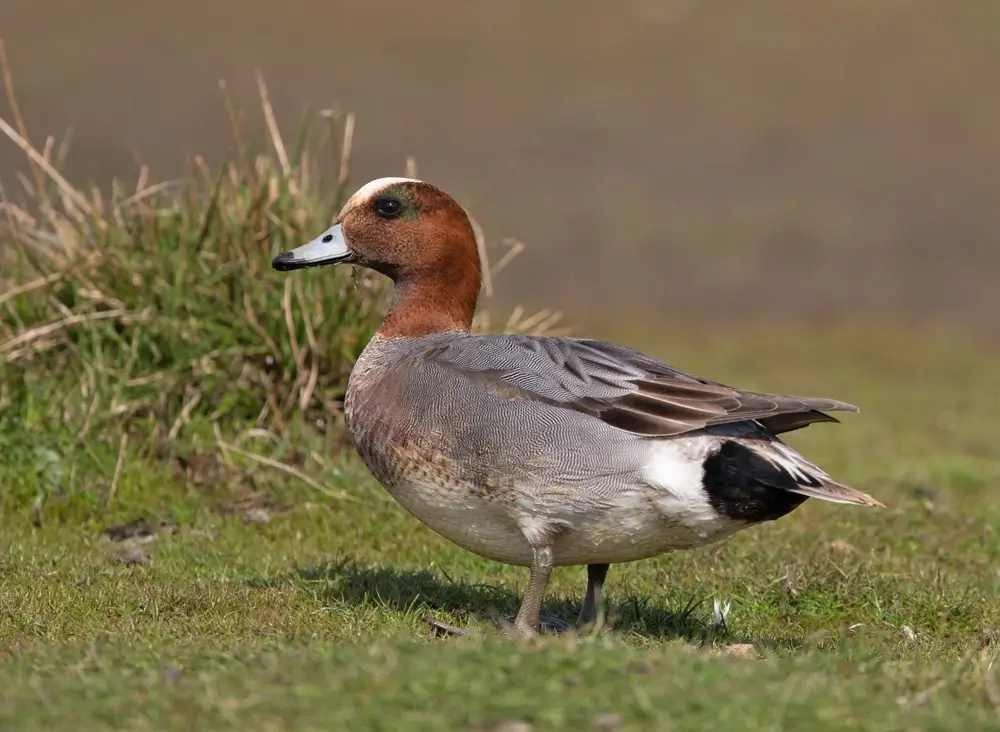
The male has a rusty-red head with a buff-colored crown, a pinkish breast, and a gray body. The female is a duller mottled brown.
The male and female have white shoulder patches and stubby grayish-blue bills with black tips.
Habitat
The Eurasian wigeon is found on marshes, ponds, lakes, bays, and fields.
Diet
The Eurasian wigeon skims seeds and other plant matter like stems, roots, and leaves from the water’s surface. It also grazes for food on land.
It sometimes waits for diving ducks to bring plants up to the surface of the water and then snatches away their food.
Life Cycle
The female lays 7-8 eggs in a down and grass-filled shallow depression in the ground. The nest is usually well-hidden by grass and is near the water. The female incubates the eggs for 24-25 days.
The ducklings are precocial and leave the nest and head to the water shortly after they hatch. They can feed themselves immediately, but the female stays with them until they fledge at 44-45 days old.
The Eurasian wigeon has a lifespan of 15-20 years in the wild. The oldest recorded Eurasian wigeon lived to be 35 years and 2 months old.
Behavior
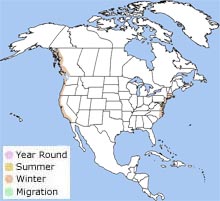
The Eurasian wigeon does not breed in North America, but it is found here in the winter. It is usually found with flocks of American wigeons.
Did You Know?
Support for NatureWorks is provided by:
The Eurasian Wigeon in NH
The Eurasian wigeon does not breed in New Hampshire, but is may show up in the winter as a vagrant.